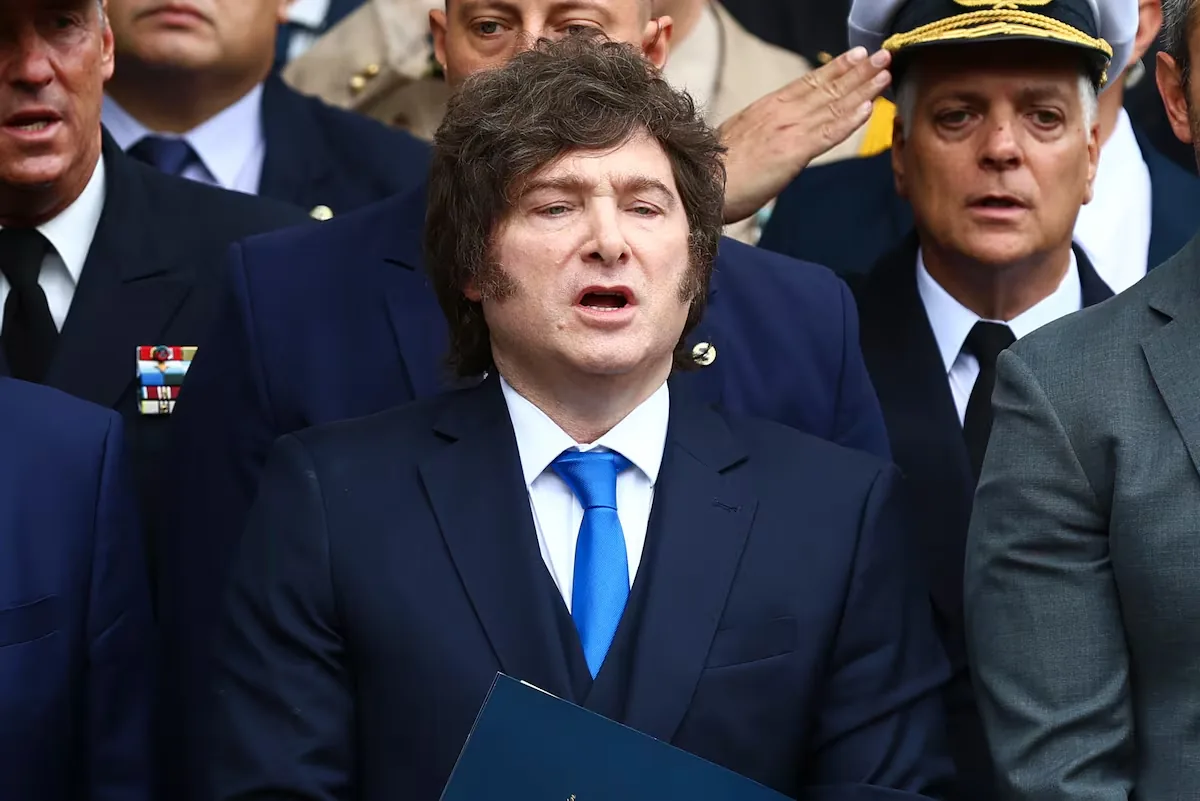





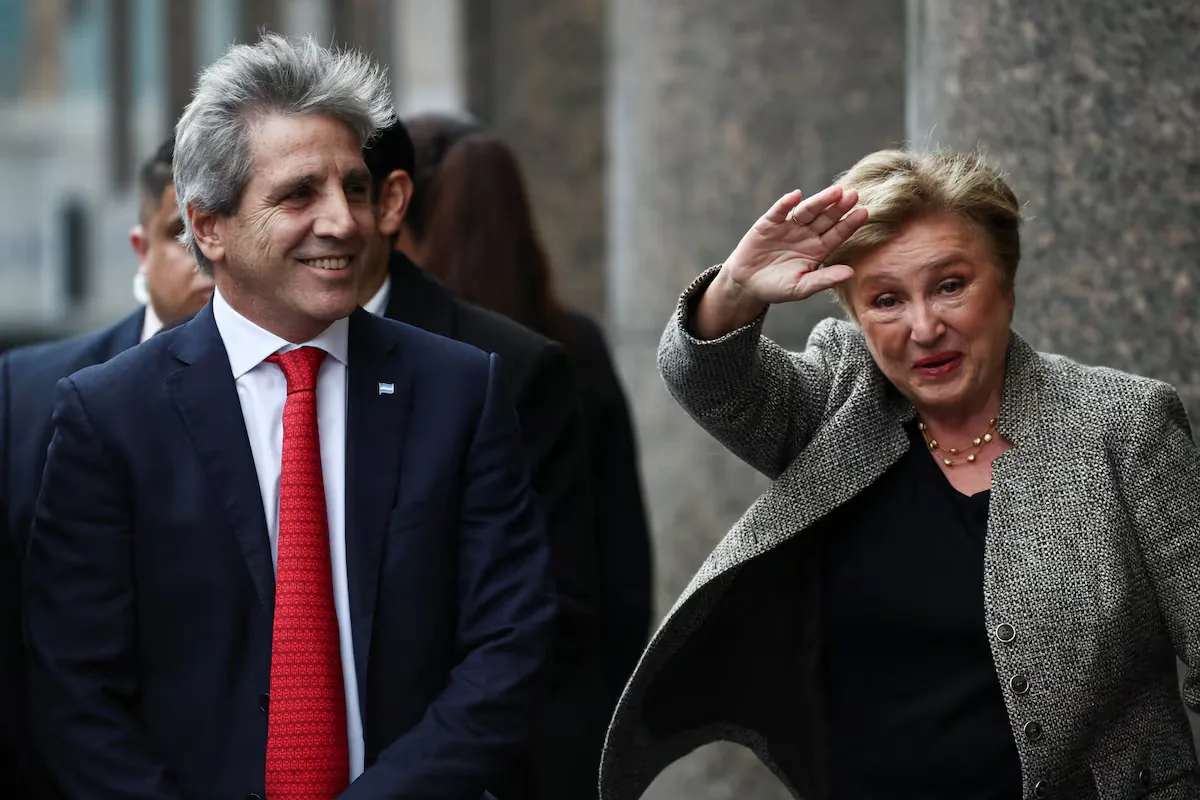
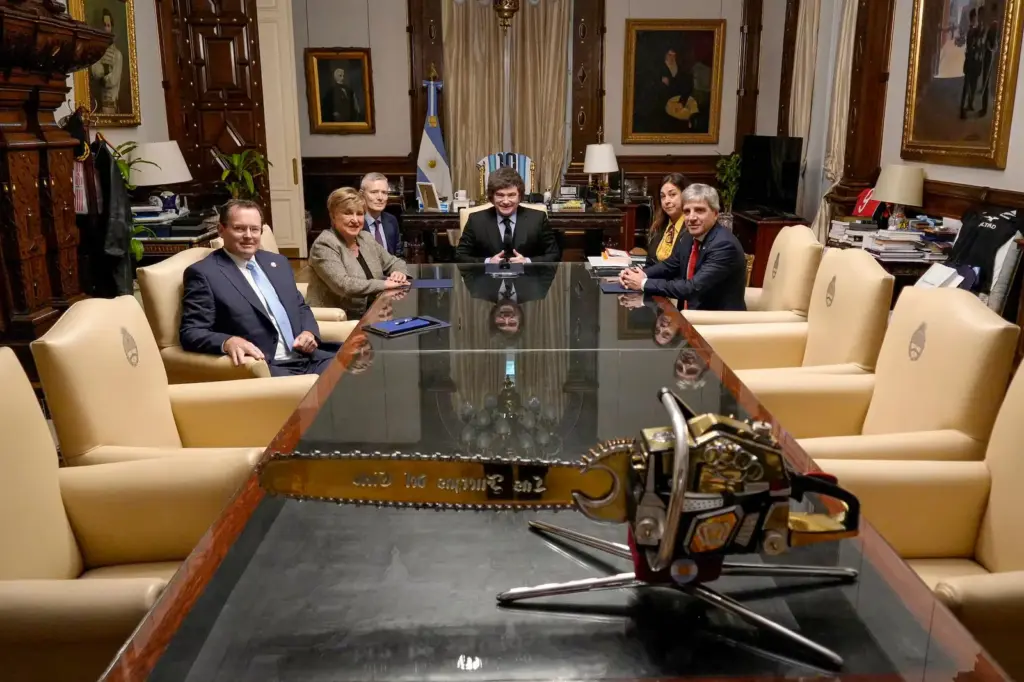
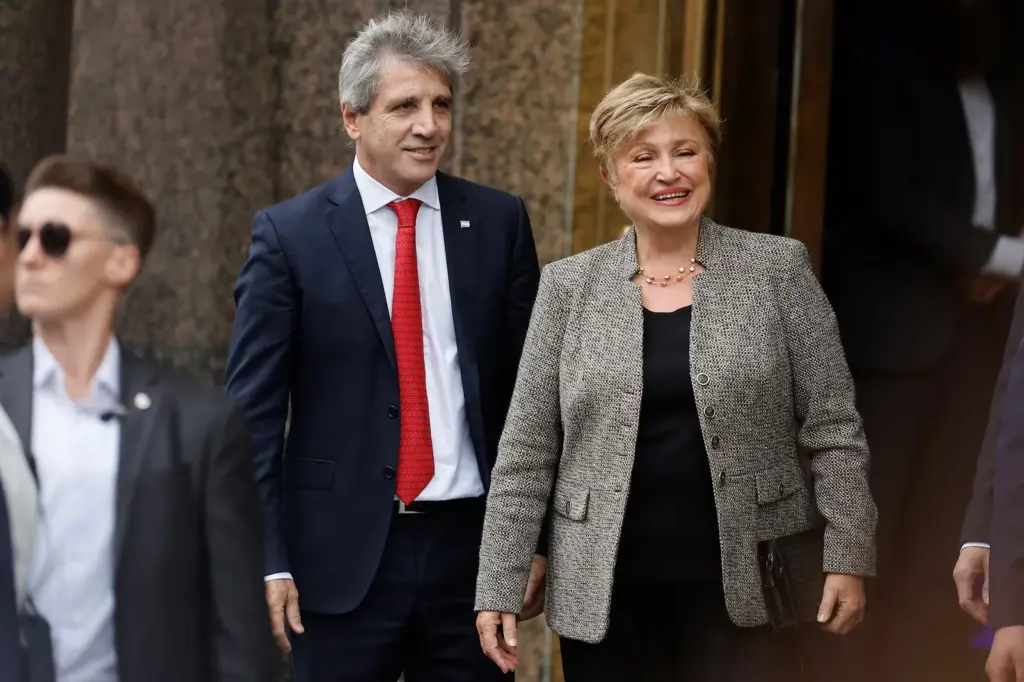
Argentina is not just another country for the International Monetary Fund. The country governed by Javier Milei owes the most money to it in the world, far ahead of any other, and that is why the organization monitors its economic policy with special interest, intervening as an authoritative voice. This Monday, Kristalina Georgieva, the managing director of the organization, landed in Buenos Aires, where she held a meeting with the president and also with his economic team, whom she congratulated on their work. “Argentina today has a solid position,” she said at a press conference in which she also supported the Government in its attempt to clear doubts about possible financial turbulences next year, when there will be presidential elections.
Sitting to the right of the Argentine Minister of Economy, Luis Caputo, Georgieva detailed the indicators that, in her view, show a “healthier scene”: a “stronger” fiscal position, which went from having a deficit to having a primary surplus; inflation that has decreased from 210% annually to 30%; and reserves accumulated of 13 billion dollars since the beginning of the year, which has strengthened Argentina’s external position. “I am not worried that Argentina has the money to pay [its debt]. Keep buying,” she said referring to the Central Bank’s reserves.
According to the fiscal program presented by Caputo this month, the country faces maturities of almost 45 billion dollars between this year and next, including both principal payments and interest on debt with the IMF and other international organizations, as well as other specific expenditures.
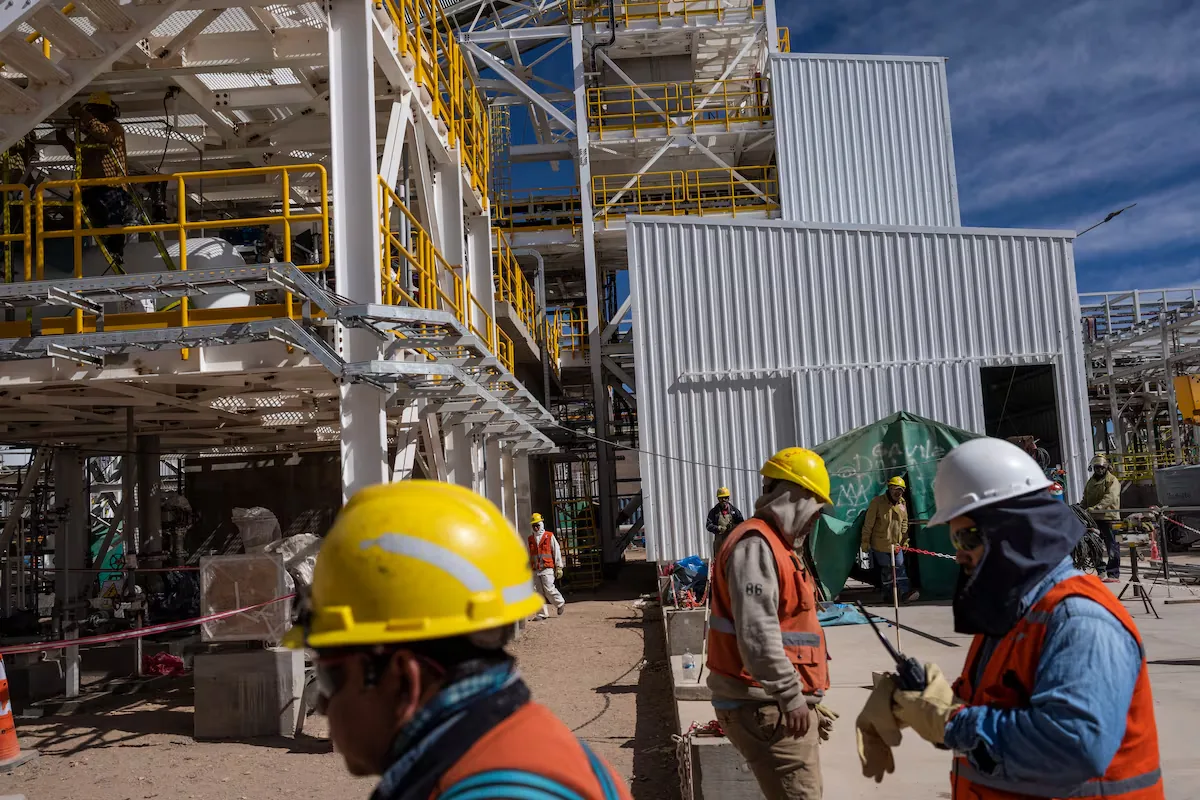
At the center of the country’s discussion with the IMF, Georgieva placed the issue of how to make growth, currently very concentrated in the oil, gas, mining, and agriculture sectors, “more widely shared.” This is the weak point shown by the model, in which sectors more linked to domestic consumption, such as construction, industry, and commerce, are very hard hit, with very relevant consequences. On one hand, this translates into a worsening of the income and quality of work of Argentines and, on the other, a drop in the State’s tax revenue, which makes it more difficult for the country to maintain the positive balance of its accounts. With little room to continue cutting spending, the decline in tax revenues in the first half of the year caused in June the first primary deficit in the Milei era and the failure to meet the fiscal target set for the first half in the program agreed with the IMF.
Georgieva referred to the possibility of improving financial conditions so that small businesses and households can take out loans, and also to managing the high delinquency that has been generated. She also mentioned the “removal of physical obstacles for the economy to function,” such as road construction and accelerating infrastructure investments.
The executive sought to empathize with the “Argentine people” by leaving them a personal message: “I know that the transformation Argentina is going through is difficult,” she assured, and reviewed the case of her own country, Bulgaria, which after going through an adjustment program in the nineties joined the European Union and the eurozone. “You, Argentines, can you be perseverant?” she urged, without being able to generate much enthusiasm in a country that, due to its history, is skeptical of the IMF’s promises of success.
Read more Brazil calls back Argentine ambassador after Milei’s attacks on Lula
In Argentina, presidential election years are usually also years of economic setbacks. The inhabitants of this country have learned that when political uncertainty intensifies, it is advisable to save and protect those savings in dollars, which increases pressure on an economy always in a very precarious balance. That is how in 2018, prior to the presidential elections, Mauricio Macri turned to the IMF to reinforce his position and obtained a huge bailout of 50 billion dollars, equivalent to almost 10% of Argentina’s GDP. That was the starting point of a new cycle of deep indebtedness with the international organization, something that then-president Néstor Kirchner had tried to settle in 2006 by canceling the outstanding balance with the IMF.
In 2022, that debt contracted by Macri was refinanced by Alberto Fernández’s team and, in April 2025, Milei’s Government reached a new agreement for another 20 billion dollars, the 23rd program between Argentina and the Fund. Currently, Argentina concentrates almost 35% of the IMF’s outstanding loan portfolio, with a pending credit of approximately 58 billion dollars. Far behind is Ukraine, second in the debtor ranking, with 15.4 billion, representing 9% of the total.
Although Georgieva said that “old risks are always there,” referring to the uncertainty of a new election year, she maintained that they are managed with “strong policies,” “fiscal discipline,” and “buffers,” something that could leave the Government in a good position to face them. “There will be no need for extra financing,” she assured when asked about the possibility of the organization granting additional funds to navigate possible difficulties.
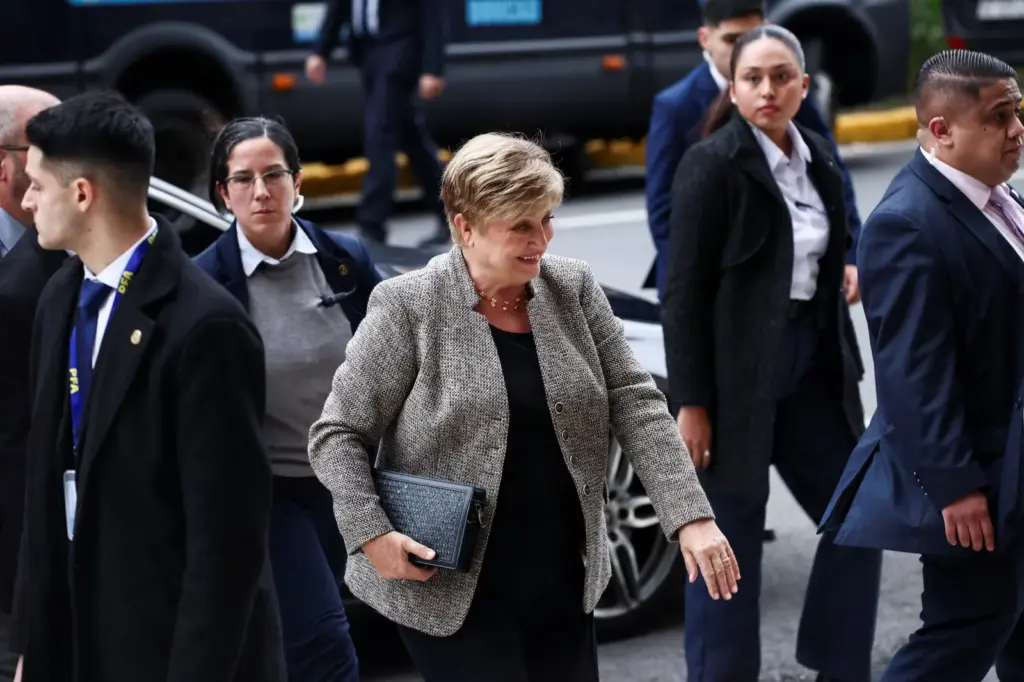
After closing her press conference, Georgieva crossed the street separating the Ministry of Economy and the Casa Rosada, where at two in the afternoon she met with President Milei. This is Georgieva’s first visit to the country since she took over the leadership of the organization in 2019, and the first arrival of a top IMF authority in Buenos Aires in eight years. The last was the French Christine Lagarde, in July 2018, during Mauricio Macri’s government and a few weeks after signing the 50 billion dollar agreement. This Tuesday, before departing for Uruguay, Georgieva plans to travel to Neuquén to visit the Vaca Muerta field, the point on the map where Milei’s great dream of turning Argentina into an oil power nests.
Read more Merlin appoints Miguel Oñate Rino as new corporate general director