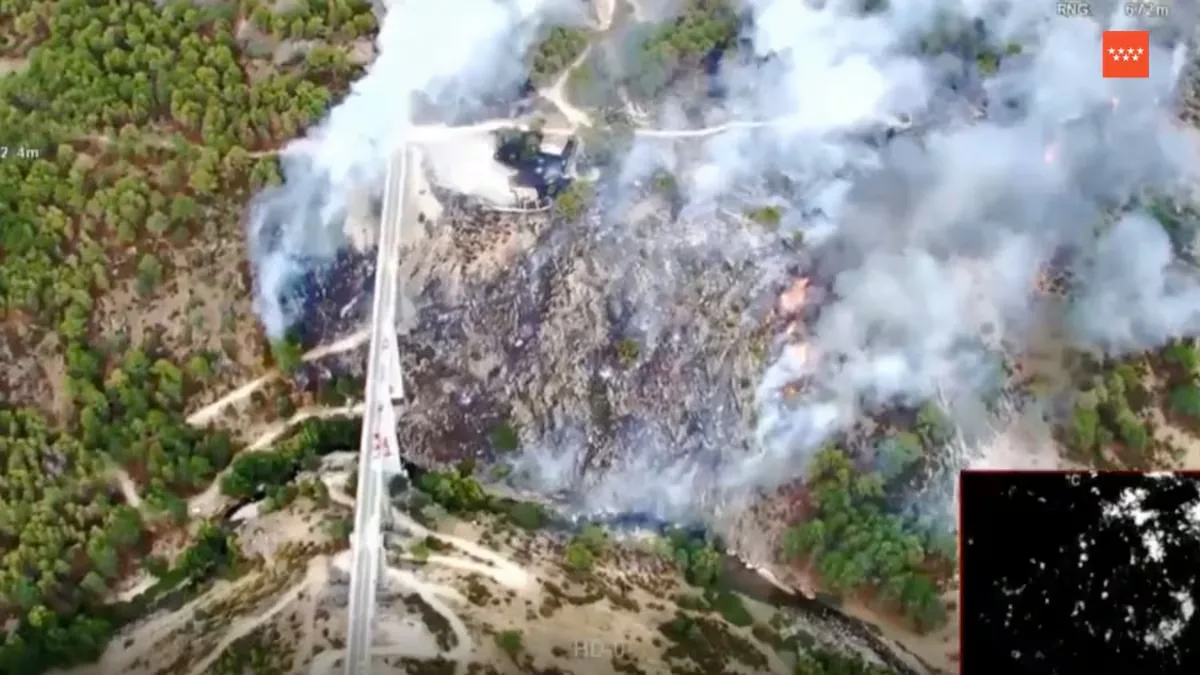







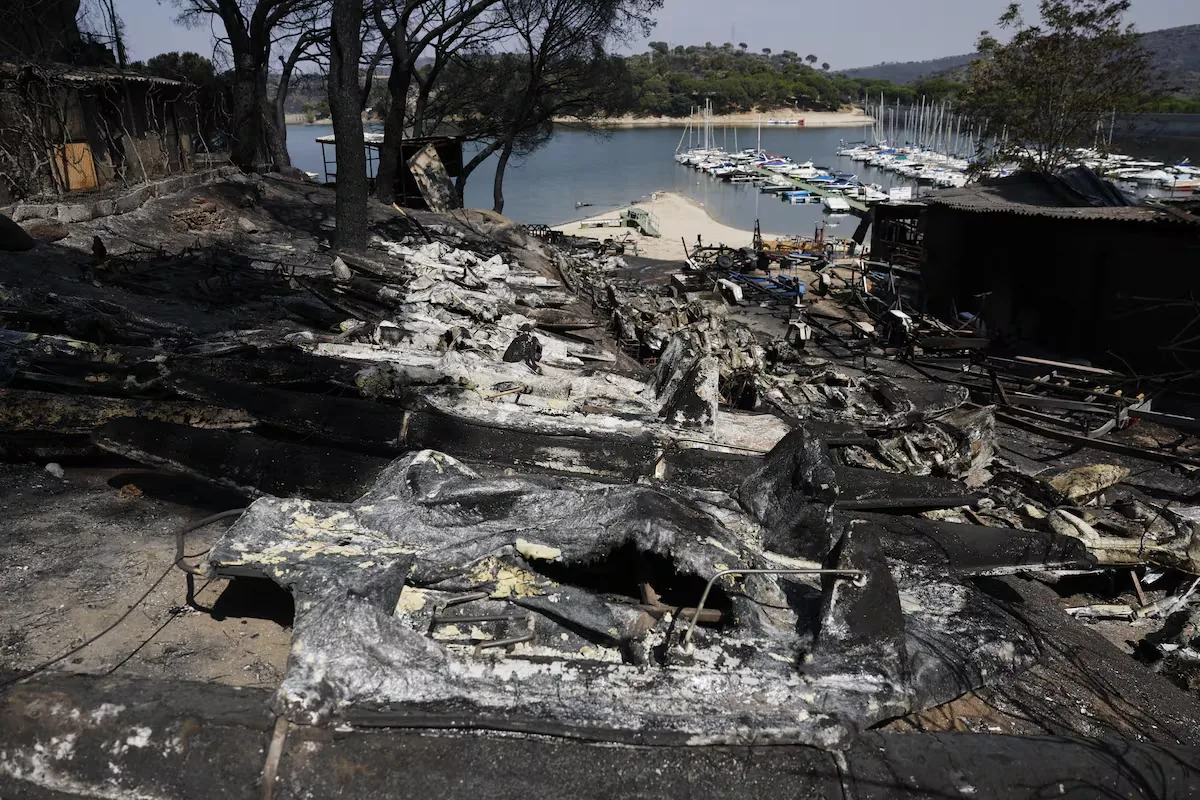
The white sand of the San Juan Reservoir in Madrid is edged by a thick black layer all around its shores, as if the water resisted absorbing the remains of the catastrophe. These are the ashes of the fire that started last Thursday, originating on the M-501 road near San Martín de Valdeiglesias, and which by dawn reached the perimeter of the recreational area of the reservoir. The flames spread rapidly through this area popularly known as “Madrid’s beach,” more than 14 kilometers of coast that six days later show a post-apocalyptic scene. Forebodingly, a soot-stained flag of the Community of Madrid waves charred at the entrance of the enclosure, guarded by several Civil Guard patrols preventing access to residents. The barriers of the access parking lot are raised, an invitation to enter that is exactly the opposite: evidence of the evacuation.
Read more Laporta recovers from an arrhythmia
The area is desolate, without a single person at its docks, beach bars, or water scooters. The sign of El ancla is barely visible now, and what was once a striking building is today a heap of smoking metal, defying collapse under the relentless July sun. Next to it, the Real Club Náutico de Madrid has lost its stately touch, and several strands of plastic materials scatter toward the water where until this week hundreds of people enjoyed water activities. Everything is enveloped by a thick, grayish mist, the result of the sun reheating the ashes and raising columns of fire dust.
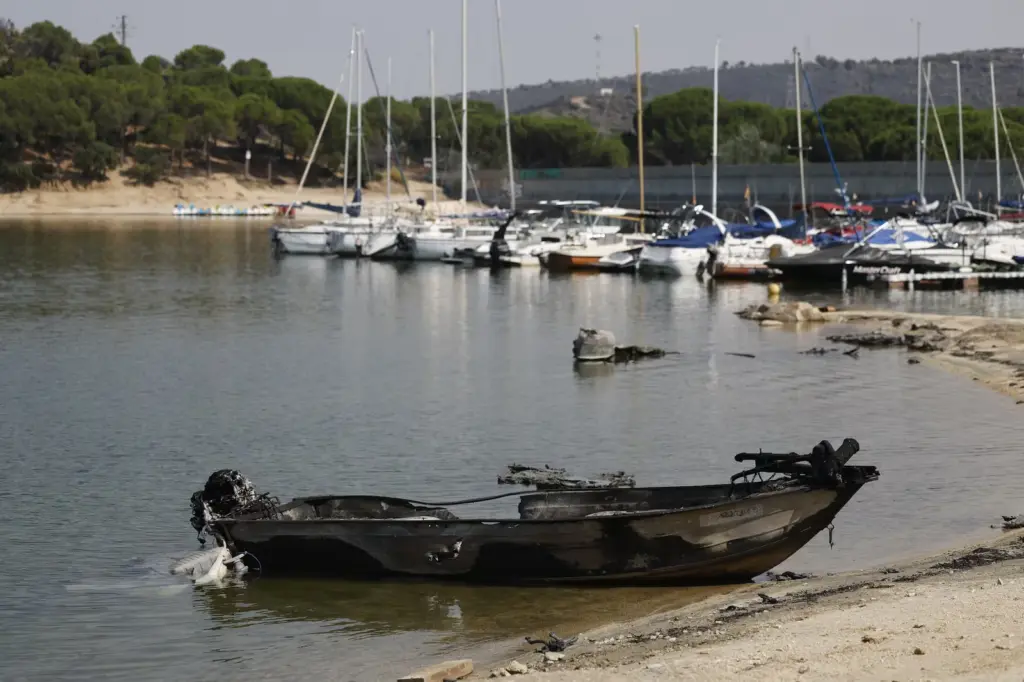
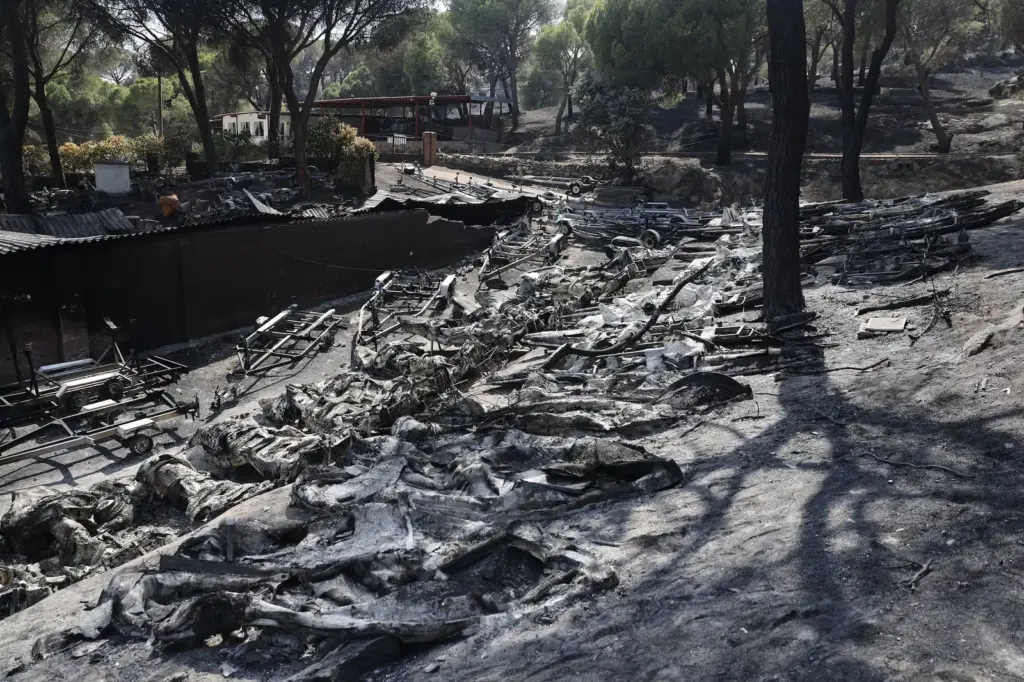
Although the scene that best shows the voracity of the fire is right on the beach, just a few meters from the water: a trail of kayaks, canoes, and small boats perfectly aligned and identically melted have formed an indistinct mass in which they cannot be distinguished from one another. The penetrating smell of plastic becomes unbearable, especially in the area of the beach bars and restaurants, and the terraces overlooking the Guisando cove are now a balcony to disaster. Two small completely burned boats float, still moored, in the Guisando cove. Minutes later, one of them sinks definitively, and the black merges with the blue.
The image of the deserted reservoir is unusual, and so is its sound. It is not complete silence; it is interrupted by the clinking of the masts of the recreational boats that have survived and collide with each other due to the same wind that fueled the flames. At five in the afternoon, when access to the reservoir is still prohibited because the forest still emits smoke, a family manages to bypass the perimeter. They are equipped with swimwear and quickly head to one of the docks, opening the gate carefully to avoid being seen. They board their boat and disappear along the waterway, the only navigators of an uninhabited reservoir.
The inventory of damages is incalculable: burned beverage machines, containers, chill out sofas, chairs, barbecue signs, and dozens of navigation tools. Perhaps that is why what has managed to resist stands out more: the water scooters with their multicolored slides and the parking machine that invites — obliges — visitors to pay two euros per hour for their visit. Nothing else has electricity as far as the eye can see, but it still demands payment.
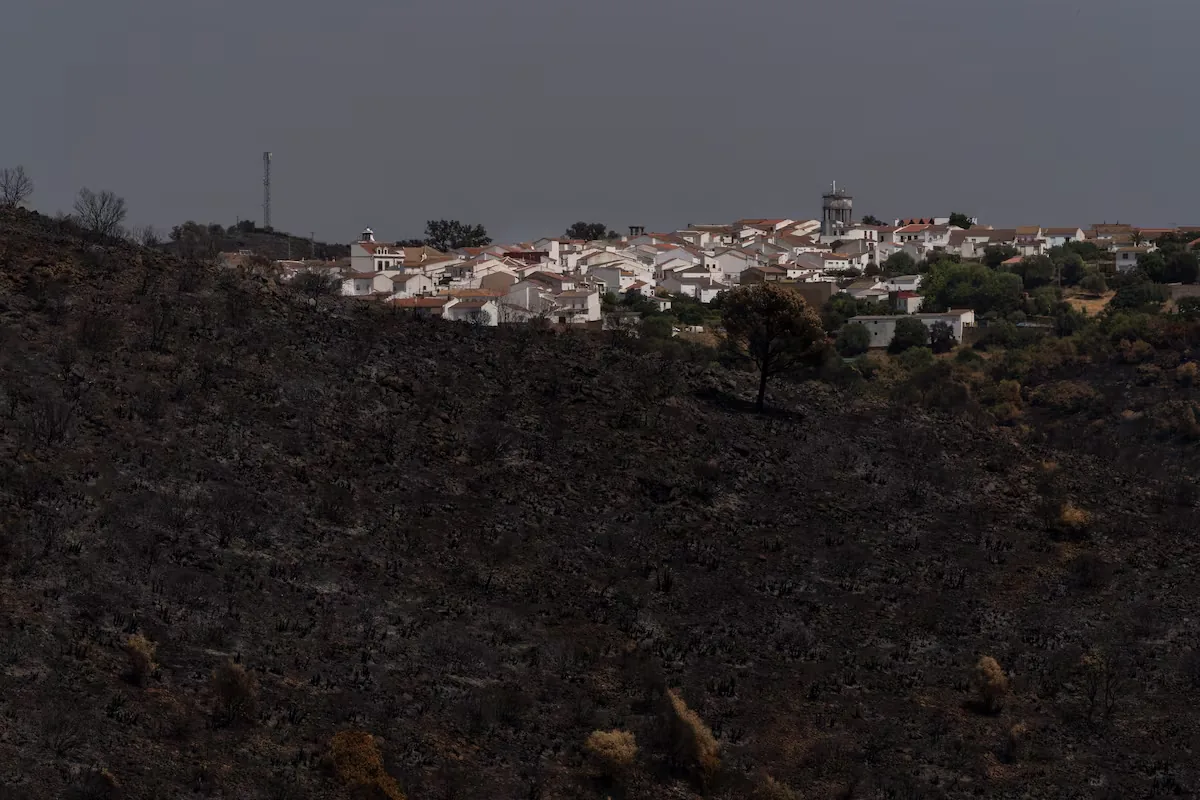
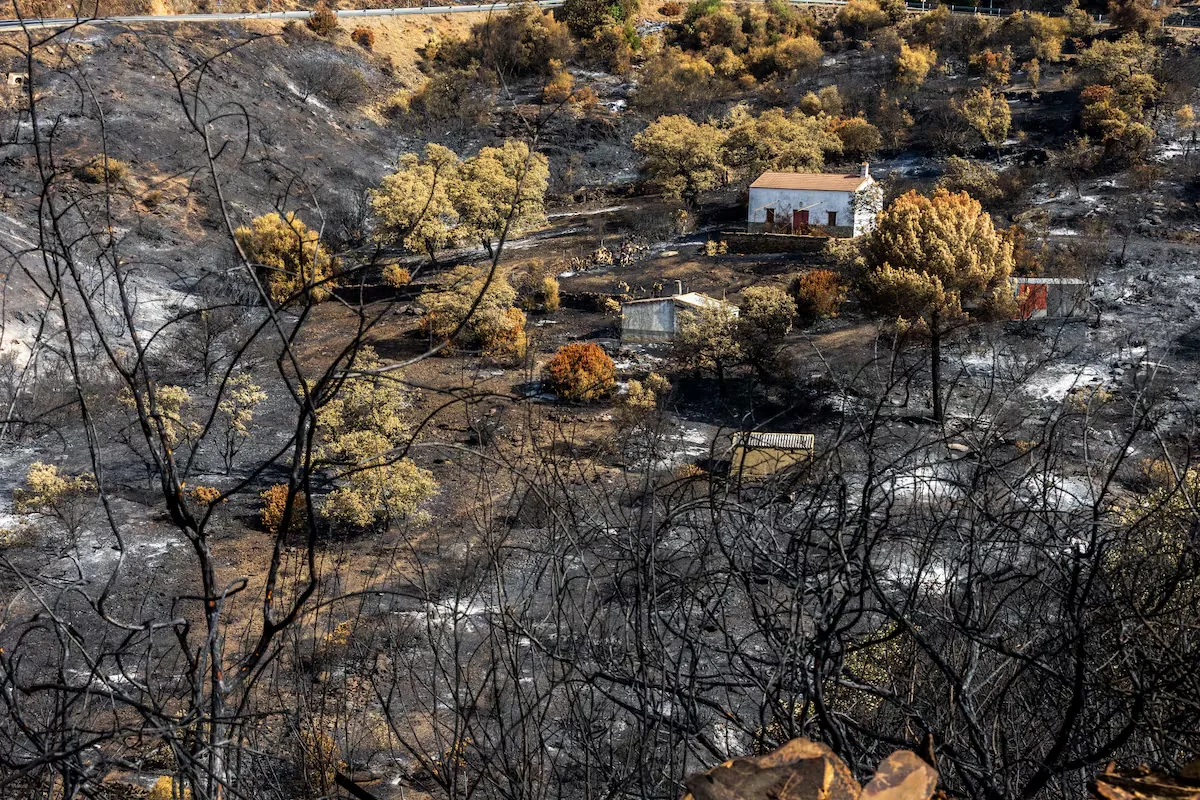
Crossing the burned forest, a few kilometers from the water, the appearance of the houses is a bit more hopeful. In the Veracruz and Boca del Río developments, most houses survive, although their large gardens have fared worse. The efforts of the emergency units stopped the flames before they could ravage the houses, which now have a blast wave around them in what were once green areas.
At the exit, on the banks of the reservoir road, fire crews are still scattered every few meters. Although some residents of the surrounding towns are already beginning to return to their homes, there are still active hotspots and many trees have fallen onto the shoulder, unable to withstand six days of fire.
Read more The return of the flames to Casavieja 21 years after the death of firefighter Javier Tirado