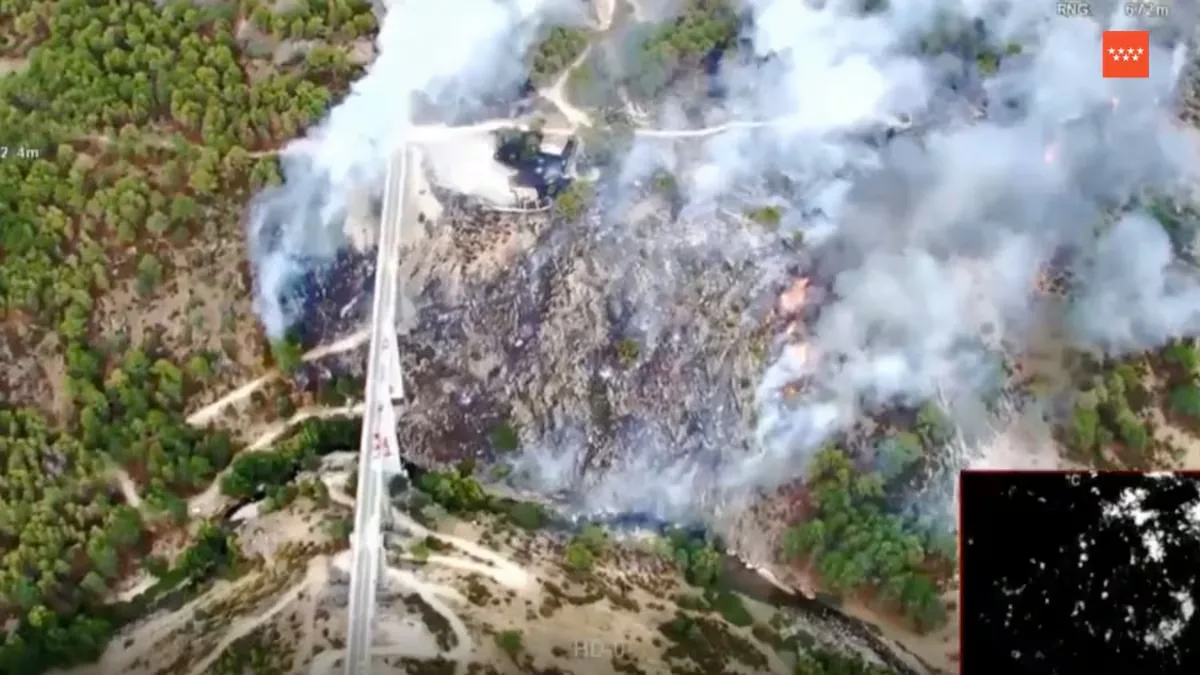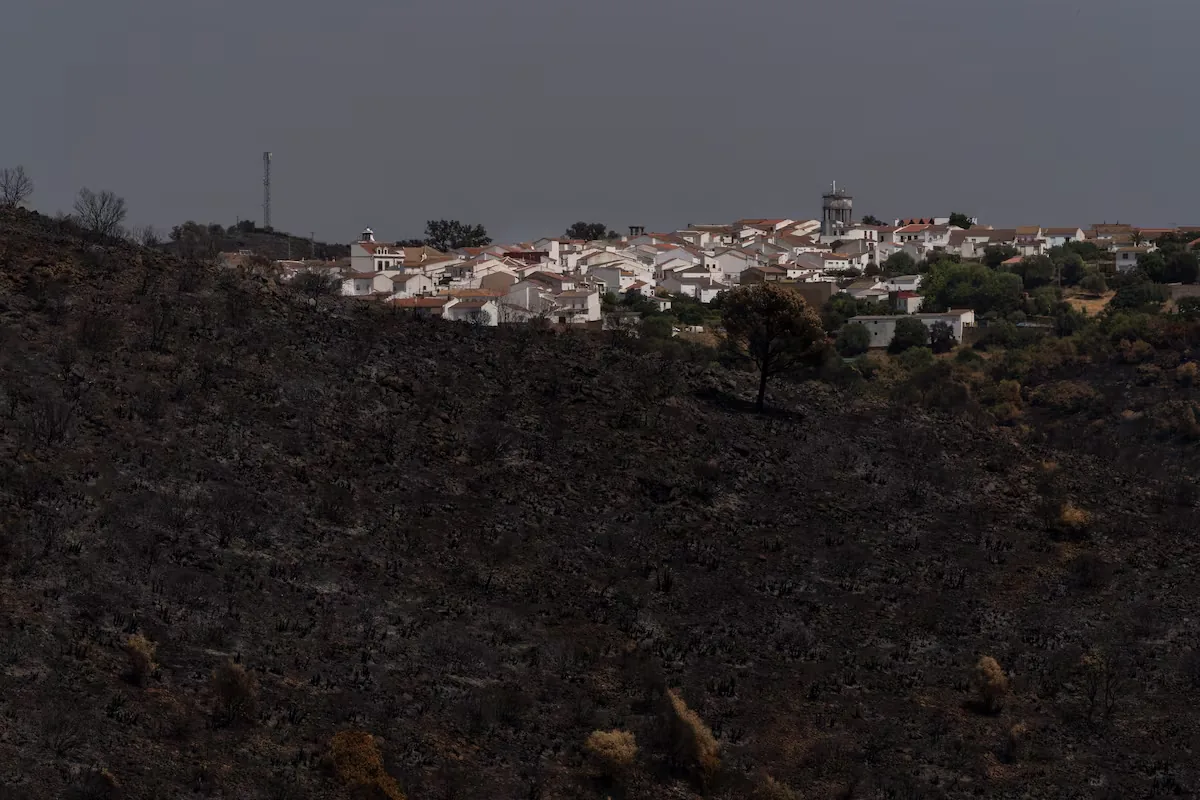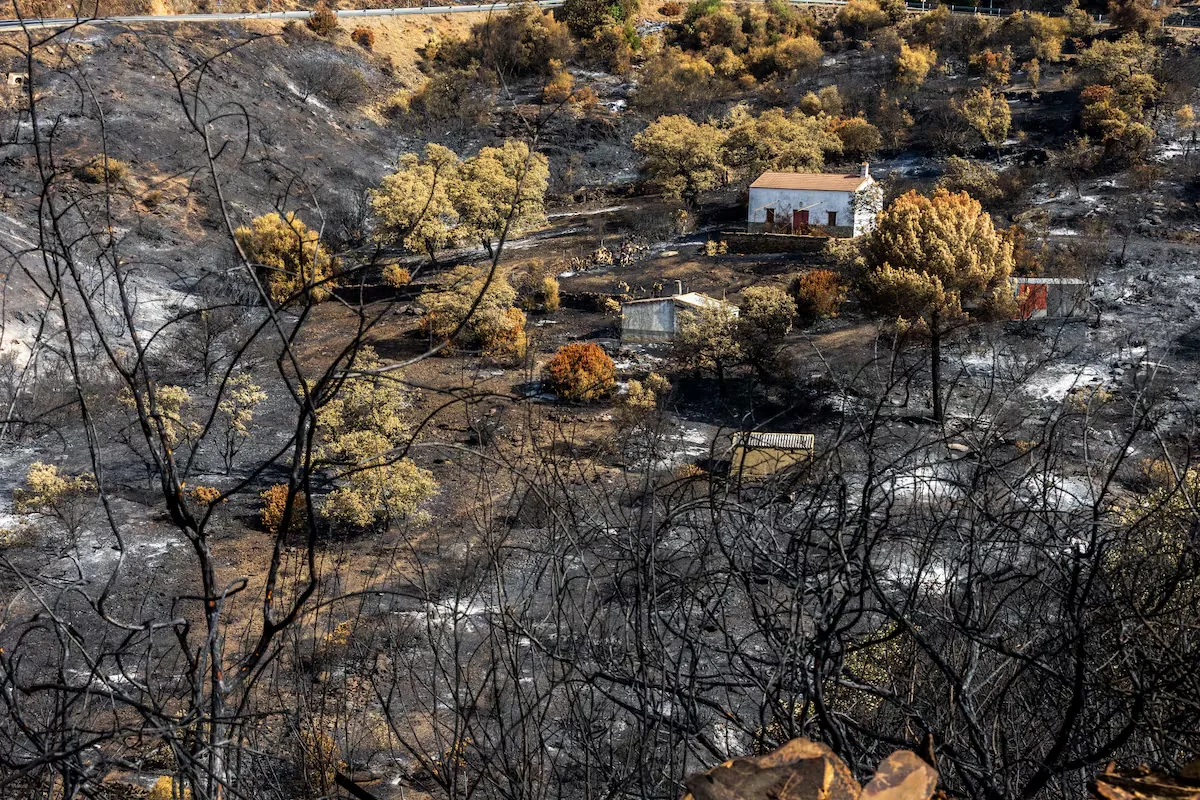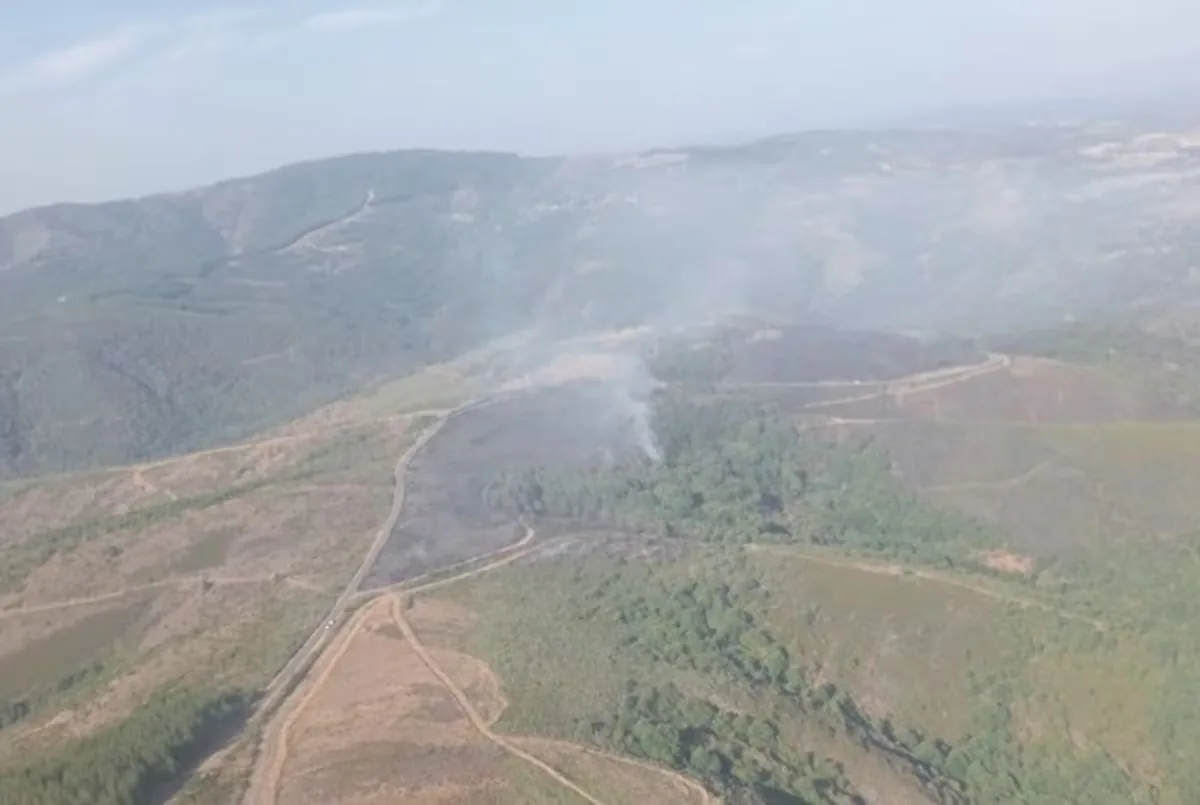






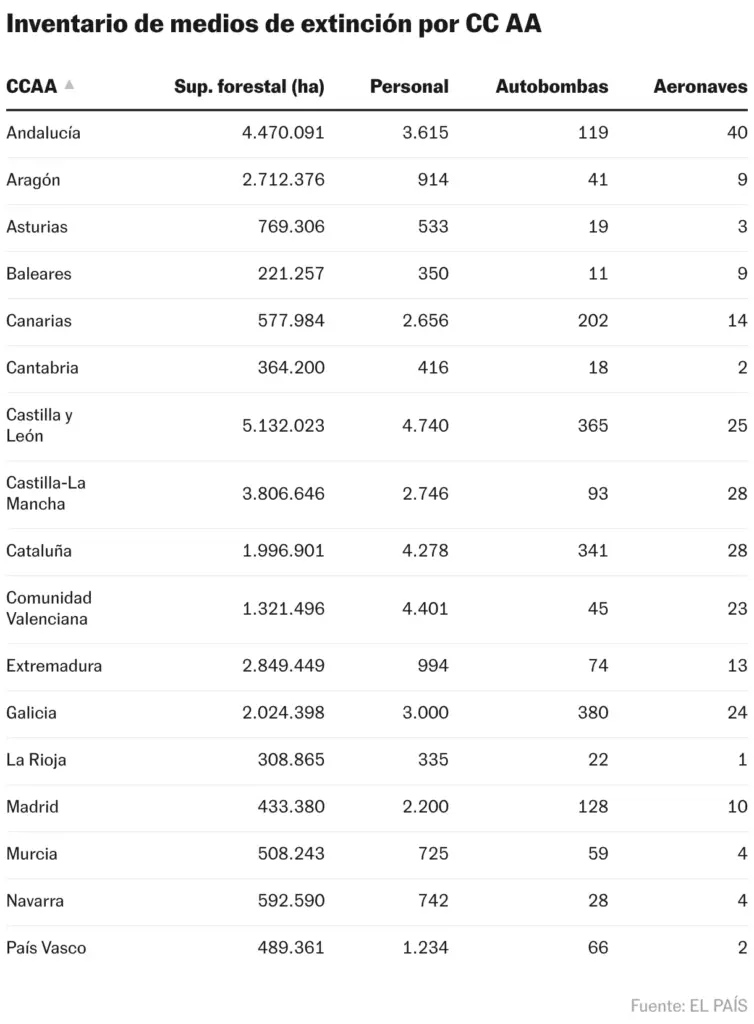
Spain has one of the largest forest fire fighting machines in Europe. Just in planes and helicopters, it has more aerial firefighting resources than Italy, Portugal, and France combined. It is often said that the problem with the current fire monsters is not about firefighters or aircraft. And that is true. However, the system also shows gaps, as the amount of resources to extinguish flames varies greatly between autonomous communities, which hold the competencies. According to data collected this summer by EL PAÍS, the regions with the most firefighting personnel per forest hectare in 2026 are Madrid and the Canary Islands, and the least are Extremadura and Aragón. Regarding aerial resources, the communities with the highest proportion of their own aircraft per forest area are the Balearic Islands and the Canary Islands, and the least are Aragón and La Rioja. While there are multiple keys to facing the new fires of enormous proportions, such as better forest management and self-protection plans in the most vulnerable municipalities, it is also essential to prepare firefighters who face the fire with more resources and training, to respond to emergencies that, besides burning more and more thousands of hectares, continuously increase the danger to the population.
Read more At least 12 dead as a Polish tourist bus overturns on a highway in Hungary
Statistics do not show a clear relationship between fewer personnel per forest hectare and greater impact of flames, although this can be explained both by the multiplicity of factors influencing fires and by the action of additional state support resources beyond the autonomous ones, such as the Military Emergency Unit (UME) of the Armed Forces and the firefighting resources of the Ministry for Ecological Transition (Miteco). As Toni Albiol, a forest firefighter and fire truck driver in Aragón, points out, “our resources are minimal; in 2022 we collapsed and this year since the last days of June it has been chaotic, people are being forced to work 20 to 22-hour shifts, and we even have problems eating because supplies do not reach us properly.” “We must be very grateful that when we go to villages people give us food from their refrigerators,” says this worker who is also a CC OO delegate of the public company Sarga, which manages the Aragón firefighting device, who assures that “there is abuse in raising fires to level 2 to automatically call the UME and there is abuse of Miteco’s resources.”
The data obtained by EL PAÍS comes from the communities themselves, after asking all of them the number of people, fire trucks, and aircraft they have in 2026 to fight forest fires. Regarding human resources, there is no common counting criterion. Catalonia has 2,883 professional firefighters, but adds another 1,395 volunteer firefighters equipped with their own vehicles and gear, a rather exceptional case in the country. Some communities count only firefighters, while others like Andalusia count 3,615 positions by including more than 800 people in logistics, watchers, radio operators, administrative staff… Castilla y León gives the number of 4,740 “professionals dedicated to firefighting,” although it does not provide a breakdown or additional explanation.
Apart from these differences in how personnel are counted, the same resources are not needed to extinguish fires in a region as large and forested as Castilla y León, as in others like Murcia or La Rioja, with 508,243 and 308,865 hectares, respectively. To better compare the figures, the ratio of firefighting resources has been calculated based on the forest area of each territory. Thus, the communities with the lowest proportion of personnel are Aragón and Extremadura, which also appear at the bottom in the fire truck ratio (along with Castilla-La Mancha and Asturias). Indeed, the regions of Aragón and Extremadura also showed the lowest figures of personnel per forest hectare in a 2018 CC OO report on autonomous firefighting resources.
“In some communities there are very powerful devices with many resources and well-paid, or at least in line with reality, and in others, besides not being so powerful, lacking people, not being well paid or well trained, they also do not have year-round job continuity, which is the goal,” comments Javier García, representative of the UGT union and forest firefighter in a BRIF, one of the elite units of Miteco that supports the autonomous communities. Although based in Puerto del Pico (Ávila), his team is helitransported to act wherever needed. In his opinion, besides Aragón and Extremadura, another community lacking resources is Castilla y León. “I say this because, apart from precariousness and temporality, this is the largest forest territory,” he points out.
In the autonomous devices, there are also elite units of great prestige such as the BRICA of Andalusia, the Forest Action Group (GRAF) of the Catalan Firefighters, the PRESA units of Gran Canaria… They are part of the more than 33,000 people that the communities include in firefighting devices, along with many other firefighters who give their all on every call, even if in incomplete crews due to lack of personnel or in very precarious conditions. And to these must be added about 3,500 UME military personnel qualified to support firefighting and another 600 professionals, including firefighters and additional staff, from the Ministry’s BRIF.
Regarding aerial resources, the communities with the most own aircraft (not counting Miteco support) are Andalusia (with 40), Catalonia and Castilla-La Mancha (28), Castilla y León (25), and Galicia (24). Looking at the proportion per forest hectare, the territories with the most own aerial resources are the Balearic Islands (with 9 aircraft), Canary Islands (14), Madrid (10), and Valencian Community (23). And the least, La Rioja (1) and Aragón (9).
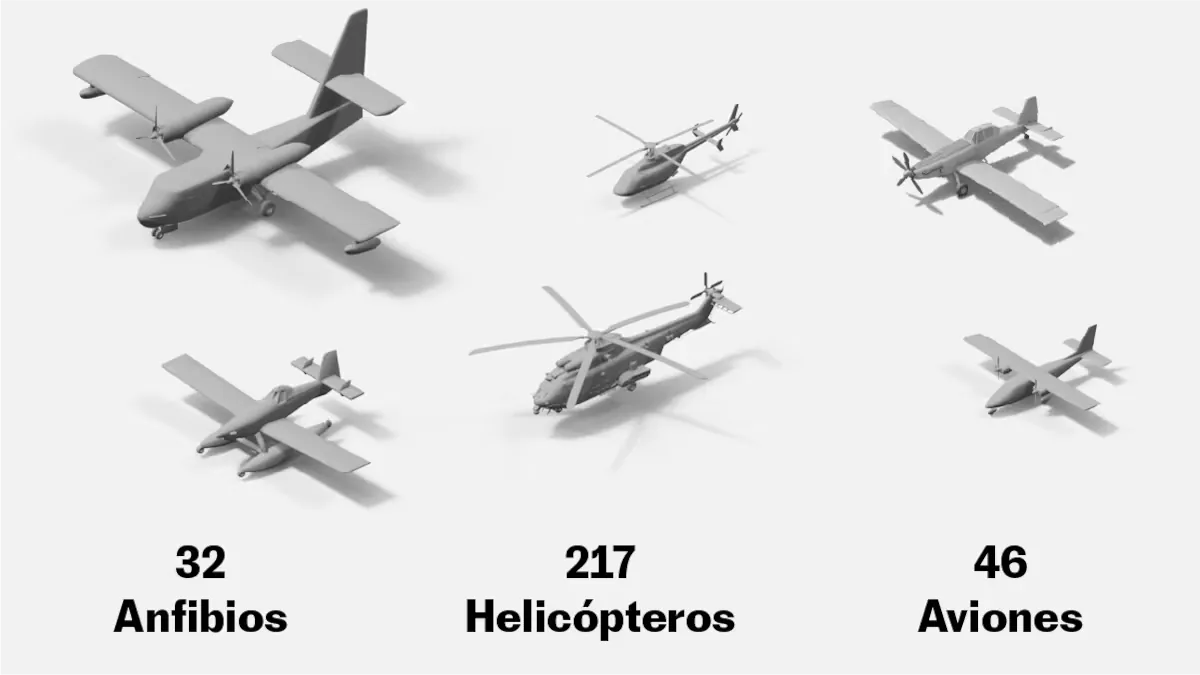
In total, the autonomous communities have 239 aircraft (17 amphibious planes, 36 planes, and 186 helicopters), to which must be added 56 Miteco support aircraft (10 Canadair FOCA, 5 amphibious ALFA, 10 planes, and 31 helicopters). Thus, Spain has 295 aircraft to fight flames. This is much more than other European countries also facing fire problems this summer: according to data collected by EL PAÍS, Italy has a fleet of 104 aircraft, Portugal 81, and France 67. If these figures are compared based on forest area, Spain’s proportion of aerial resources for 28 million hectares is much higher than France’s for 17 million and higher than Italy’s for 11 million, although lower than Portugal’s for 3.3 million. At least in number of aerial resources, without considering the type.
After another disaster with fires this summer, focus has been placed on the availability of Canadair (or FOCA), the amphibious planes that can drop the largest amount of water (6,000 liters), a model of which Spain, through Miteco, has 10 operational units (and four in maintenance, rotated for safety), France 12, and Italy 15. However, consulted firefighters downplay this issue. “If only it were as simple as having more Canadair; there is a widespread tendency to simplify complex problems,” emphasizes Ferrán Dalmau, director of the environmental consultancy Medi XXI GSA and one of the firefighting advisors involved in the emergency last July in Madrid. “Aerial resources do not put out fires, they reduce the fire’s intensity so that people on the ground can enter. But if there are no people below, the aerial resource loses almost all its functionality,” he stresses.
Read more The Iran war alters the course of a Trump urged by his low popularity
If the data collected by EL PAÍS in 2026 is compared with the 2018 CC OO report, Miteco today has the same number of aircraft, but the communities have increased by 28%. In general, fire trucks and human resources have also increased significantly. However, the CC OO inventory only counted professional firefighters, leaving out both volunteer firefighters and other personnel categories.
One of the points unions emphasize most is the model of autonomous firefighting services: some are part of the administration (like in the Valencian Community or Andalusia), some of a public company (like in Aragón or Castilla-La Mancha), some of a private company (like in Murcia), or a mixed public and private system (like in Castilla y León). Unions defend public systems that guarantee more resources and better working conditions. However, these also have their drawbacks. Raúl Mena, a forest firefighter from Andalusia and CC OO representative, assures that the 3,615 positions in the Andalusian community’s device are not yet fully covered. “It is not a budget problem, but administrative issues due to the complications of public sector hiring,” comments this professional, who nevertheless defends the quality of Andalusian resources. “If we compare ourselves with other communities, Andalusia is light years ahead in terms of working conditions, despite being stagnant in improvements for some years,” he states.
“Are there autonomous communities that need more resources? Yes. “Are we going to put out these current fires with more resources? No,” says Dalmau, who considers it essential to act on forest masses. “Even if we had the seventh fleet to fight fires, it is still necessary to manage the territory,” he highlights.
In the first eight months of 2026, there have been 6,330 surface forest fire incidents in Spain, according to Miteco. Of these, 65.7% were extinguished by firefighting services before going beyond a flare-up (affecting less than one hectare) and only 0.5% ended in large fires (over 500 hectares). The firefighting machinery ends 95.5% of fires very effectively. However, it only takes one of these fires to escape for it to become unstoppable.
After the disastrous August 2025, firefighting experts emphasized that it is not possible to set up devices everywhere to face such enormous fires and advocated improving coordination to combine efforts from different parts. If the country wants to prepare for these new fires, the BRIF representative from Puerto del Pico considers it essential to act on four factors: rural abandonment and the need for more forest management; greater investment in prevention, detection, and extinction; compliance with existing legislation; and the climate crisis. “No matter how much climate change is questioned, this is like arguing that the Earth is round,” stresses the firefighter.
Besides insisting on acting on the forest landscape and increasing funds against fire, the UGT representative highlights the importance of complying with various legal texts already in force: the 2013 civil protection directive that requires self-protection plans in the most vulnerable municipalities, the 2024 basic law that improves the situation of forest firefighters, and RD 15/2022 that requires autonomous communities to adjust their firefighting plans to the reality of each territory. “A community like Castilla y León must have a device appropriate to its enormous extension, but each region has its particularities,” García stresses. “In principle, Madrid has sufficient resources, but in this community there are hardly any forest fires as such, since they are urban-forest fires, all affecting population; therefore, forest firefighters require more training.”
Better training of firefighting personnel is another sector demand, as unions say that sometimes people are sent to fight fires simply with an online course. On this, with the new types of fires, Dalmau considers it essential to “forestalize urban firefighters and make forest firefighters more urban.”
Read more La Casa de Toño: Is the Mexican pozole empire selling cheap?