







The Amazon has been viewed from outside with a Eurocentric perspective: as an untamed, hostile territory barely traversed by small human groups before the arrival of Europeans. A study published this Wednesday in the prestigious journal Nature breaks with that theory. An international team of researchers has identified more than 20,000 earthworks, also called geoglyphs, and estimates that the Aquiry civilization, which occupied a region representing less than 3% of the entire Amazonian surface, may have reached between 1.25 and 3 million inhabitants between the years 100 and 300 AD.
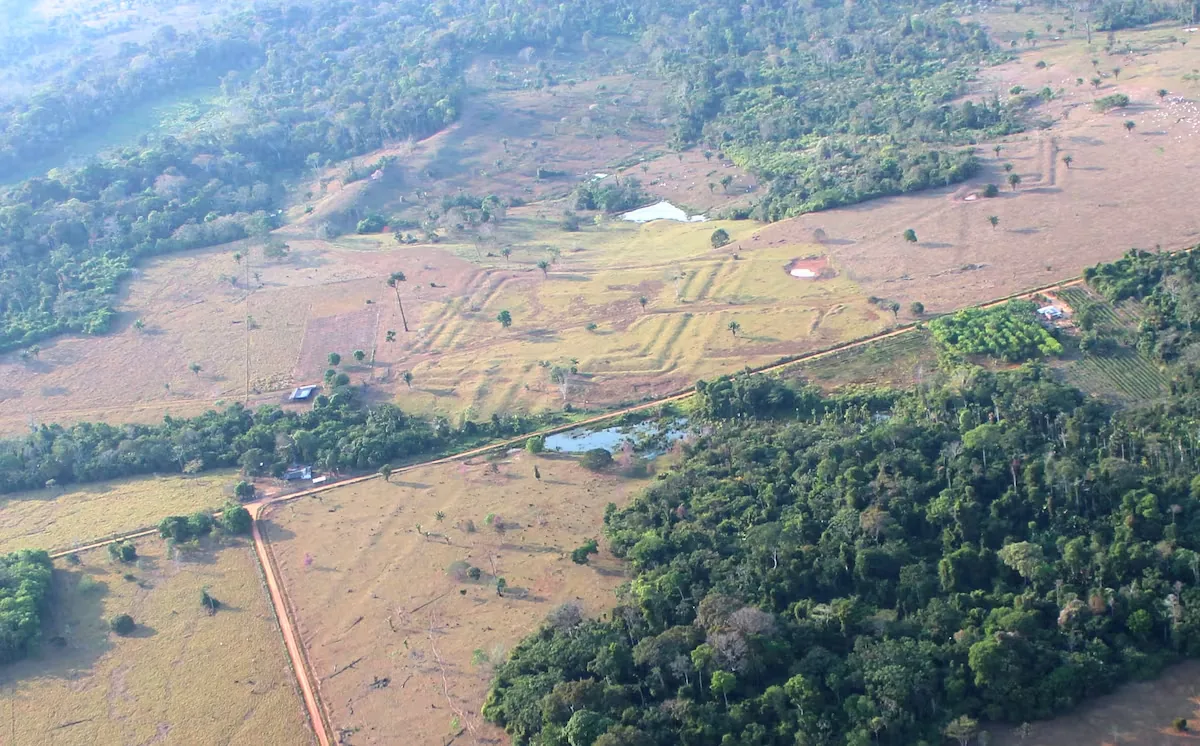
Under the dense vegetation of the jungle, these structures had remained hidden for thousands of years. To bring them out of that thickness, the authors used LiDAR technology, a laser scanning system that allows mapping the terrain relief hidden under the forest canopy, with a level of detail difficult to achieve by other methods. According to the researchers, this society of the southwestern Amazon came to occupy about 183,000 square kilometers, triple what was previously believed (60,000), an area similar to that of Syria.
Finnish archaeologist Martti Pärssinen, lead author of the study, argues that the finding represents a radical change in the understanding of the Amazonian past. “Before, we thought that about 100,000 people or fewer lived in this area. Now we are talking about millions. Demonstrating this has been surprising because we did not expect these numbers,” explains the researcher from the University of Helsinki.
Pärssinen has 25 years of work in this region alongside Brazilian archaeologist Alceu Ranzi, one of the pioneers in the study of geoglyphs in the state of Acre, Brazil. “Initially, we used satellite images and discovered about 1,300 geoglyphs and other earthworks,” details the Finnish archaeologist. But those images only allowed seeing the structures where vegetation had been removed by deforestation. It remained to find out what was hidden under the intact forest.
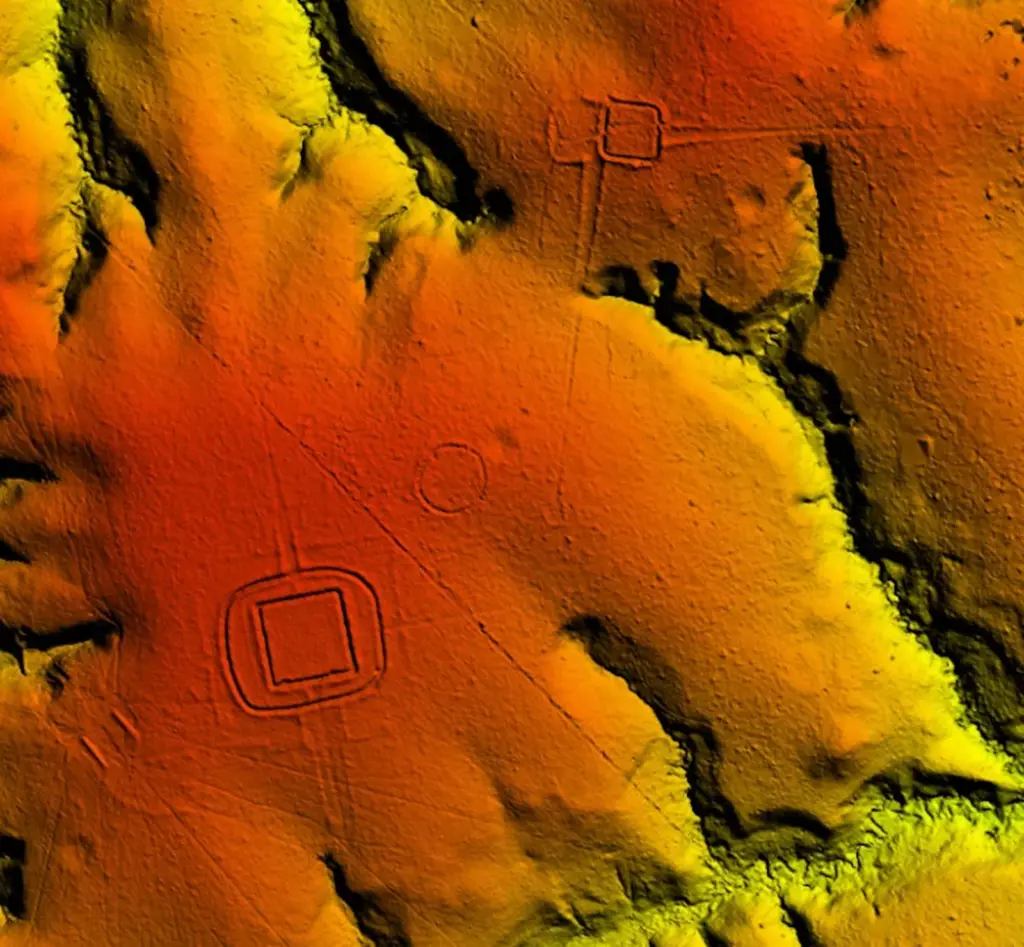
It was not until 2024 that they conducted LiDAR flights over about 4,500 square kilometers of the Amazon. The system allowed partial penetration of the forest cover and generation of digital terrain models. The first thing, Pärssinen says, was to delimit the size of the area occupied by the Aquiry civilization. “When we discovered it was at least 183,000 square kilometers, we already had an area to search for these geoglyphs and other earthworks,” he explains.
The researchers placed the southern limits of the area associated with the Aquiry geoglyphs between Pic Sidney Girão, in the Brazilian state of Rondônia; Tumichucua, near Riberalta, Bolivia; and Puerto Maldonado, Peru.
From those reference points, they made extrapolations to estimate how many structures could exist throughout the region. “We found five times more earthworks in deforested areas than those we had detected with satellite images. There, we also had not seen everything,” says Pärssinen.
Most of these constructions are huge geometric enclosures dug into the earth, bounded by ditches up to five meters deep and embankments several meters high. From the ground, they are barely distinguishable, but from the air, they form squares, circles, octagons, or complex figures of tens of hectares.
How they calculated population density
The researchers estimate that throughout the area there could be between 24,000 and 30,000 earthworks, of which approximately two-thirds belonged to the Aquiry period. Then, they estimated how much population would have been necessary to build and maintain them. They determined that an adult person could move approximately one cubic meter of earth per day with wooden tools.
After those calculations, they concluded that an average community would have needed about 300 people to build and maintain each structure. The result is between 1.25 and 3 million people.
Not all earthworks belong to the same period. The researchers used more than 160 radiocarbon datings from about 35 or 36 geoglyphs to establish their chronology. “We realized that around 60% were in use between the years 100 and 300 AD, when the civilization reached its peak,” explains Pärssinen. “Of course, it is an approximate calculation,” he acknowledges.
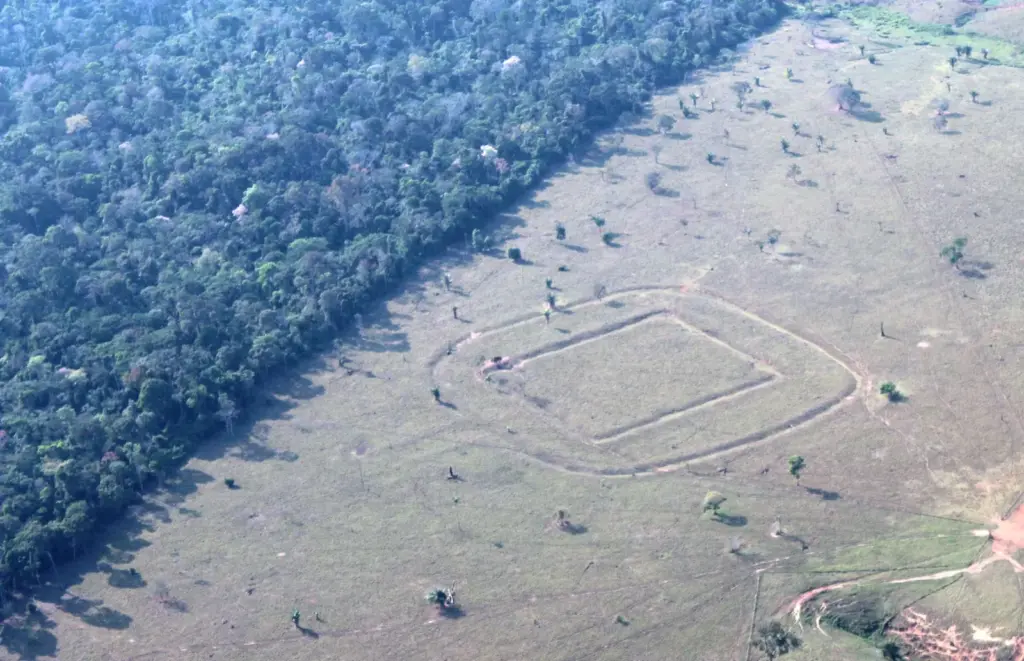
The authors argue that these places would have been ceremonial, political, and meeting centers, where different communities gathered periodically. An organization comparable to other forms of urbanism in different regions of America. “Like the Tahuantinsuyo. When the Spaniards arrived at the provincial capitals of the Inca empire, they were surprised to find them empty. They were not cities designed for continuous occupation, but centers of temporary use,” details the archaeologist.
For archaeologist Jose Iriarte, member of the Center for Archaeology of the Americas and an expert who did not participate in the research, it is an “important and ambitious” work. “Excavation and dating of these structures will be crucial to determine how they were used and whether they were related to housing, ceremonies, or other activities,” notes Iriarte, who directs the Archaeobotany and Paleoecology Laboratory at the University of Exeter, England.
However, he maintains reservations about the population estimate. He recalls that reconstructing ancient demography is one of the greatest challenges of archaeology and emphasizes that the number of inhabitants “is not directly derived from excavated dwellings or residential settlements.”
Brazilian archaeologist Eduardo Góes Neves, one of the leading specialists in Amazonian archaeology, offers a more favorable assessment. For him, the figure is “plausible” and “not impossible,” although he insists it still needs to be corroborated with new excavations. “It is a group that has worked for a long time in that area and does quality work. It seems very important for Amazonian archaeology,” says the expert who did not participate in the research.
For Neves, there is a Eurocentric view, but also a “strong internal colonialism” in the South American countries themselves toward the Amazon. “South America also has a colonialist view that conceives the Amazon as a territory without history and without people,” says the director of the Museum of Archaeology and Ethnography of the University of Sao Paulo. “Studies like this are very important because they provide new evidence that these are territories with a very long indigenous history,” he points out.
The archaeologist considers that one of the most relevant aspects of the finding is that these constructions reveal a different way of understanding the relationship between human societies and their environment. A vision that, he points out, contrasts with the capitalist logic that today drives the destruction of the jungle. “Mining or soy exploitation respond to a Western economic logic. These societies transformed the landscape, but not under a purely productivist logic,” defends Neves. “Those ways of life were different, based on ontologies that did not separate the dimensions of worlds, nature, and culture. And that is perhaps the most interesting mystery of their sites,” adds the Brazilian archaeologist.
For Pärssinen, the research has only just begun. The studied region still represents a very limited space (less than 3% of the Amazon), so other places could hide similar stories. “We are beginning to understand the Amazon, which is a huge territory, larger than the entire European Union. If we find many similar areas in different parts, we could be talking about tens of millions of people. But that is just a hypothesis; now we need to study much more,” he maintains.
Read more Santiago de Compostela joins more than 300 cities with rent price caps