






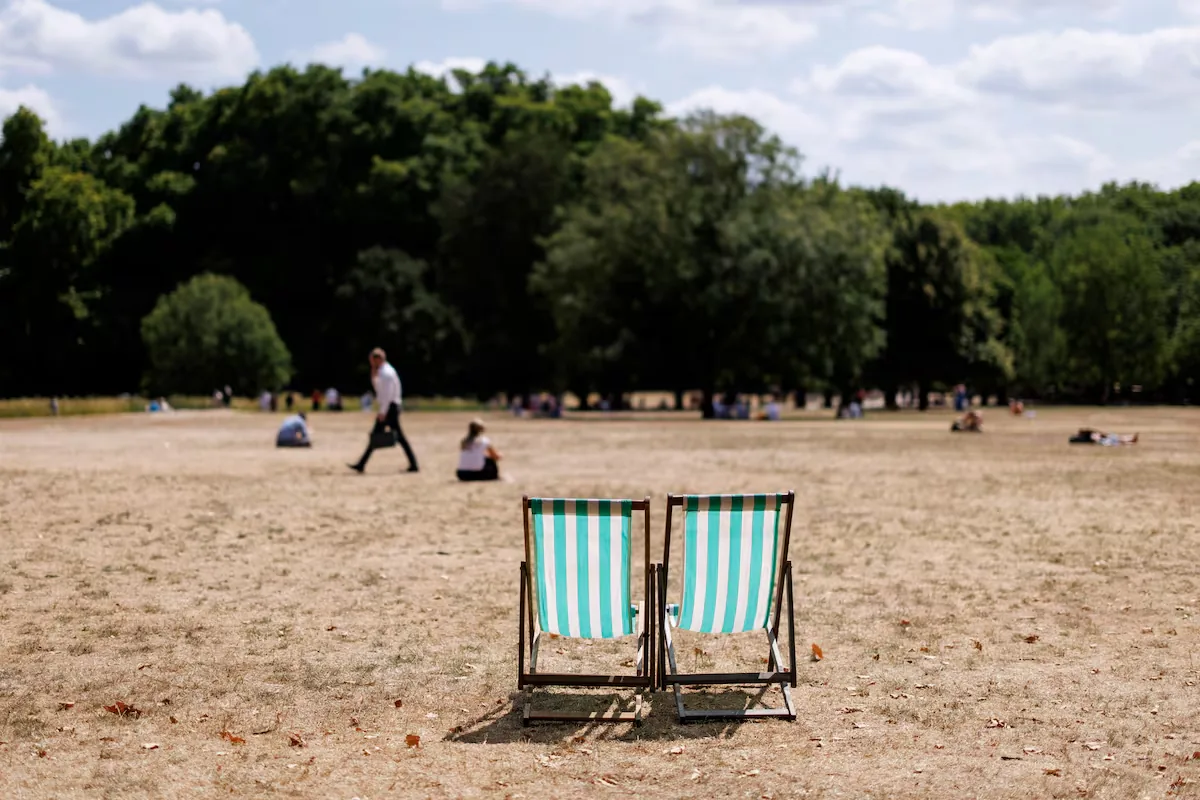
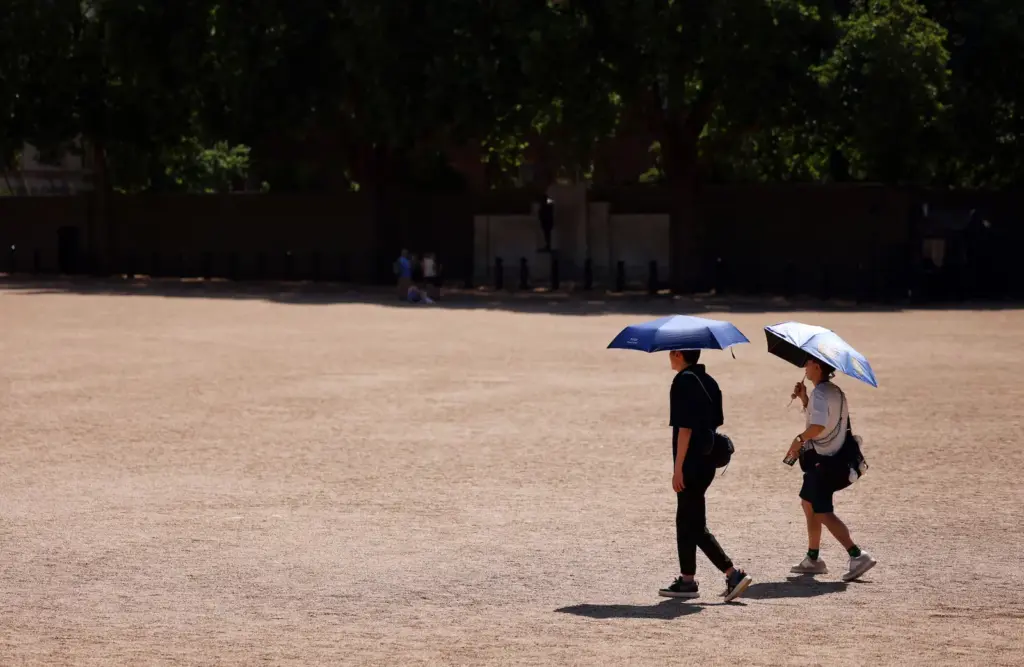
London’s parks are today ochre meadows, like huge pans that few dare to enjoy until the evening falls and the sun softens. Half of England, according to the UK Environment Agency’s warning today, is in a state of “severe drought.”
Read more Judge Pedraz asks the UCO to alert him if it feels «uneasy» in its investigations
This July has been the hottest in the country’s history, and the combination of extreme temperatures and lack of rain has placed seven English regions in a state of emergency. England has only received 7% of its average rainfall this month. In some southern areas, the amount has not reached 1%, and in regions like Devon or Hampshire, they have gone more than 50 days without seeing a drop of water.
The rivers currently have a much lower flow than usual, many farmers have started harvesting early to save the crops, and the risk of wildfires has increased significantly.
England has already suffered three official drought years (2022, 2025, and 2026) within five years, something completely unusual, which the scientific community largely attributes to climate change.
“A second consecutive summer of drought is an exceptionally serious situation that will have a long-term impact on the environment, nature, and the economy,” warned Helen Wakeham, director of the Water Department at the Environment Agency and chair of the National Drought Group. “Such a dry and warm climate causes us to consume water at a much faster rate than nature can replenish it,” she added.
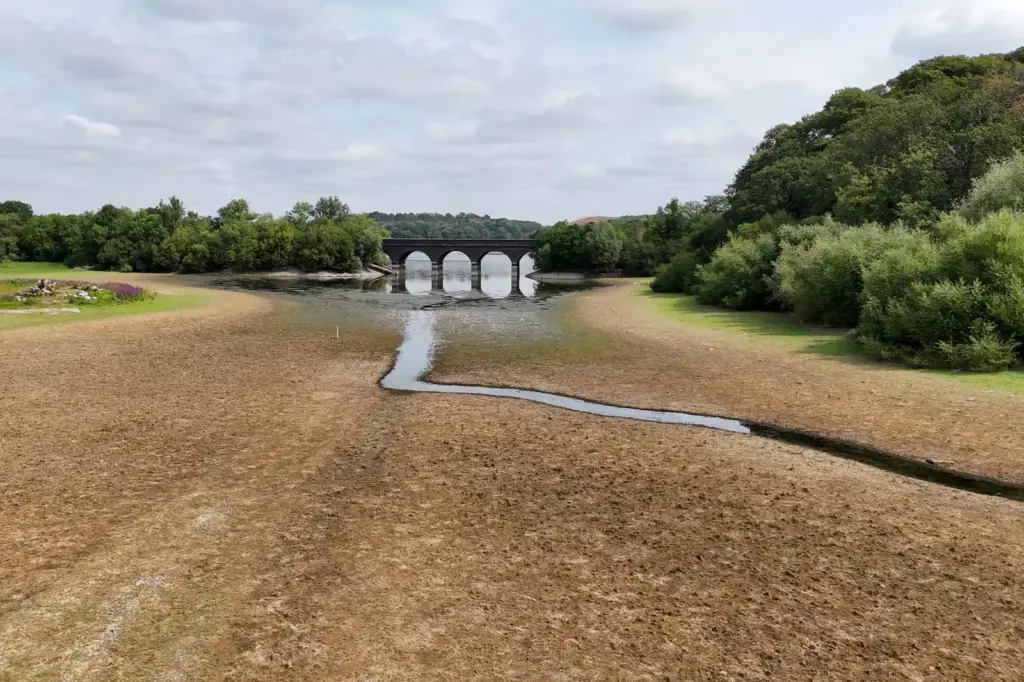
England is experiencing what scientists call a flash drought. It is due to the sudden meteorological change experienced this year by the country, which has drastically shifted from a very rainy winter, which managed to feed water reserves (especially underground ones), to an exceptionally hot and dry summer, preparing to face its fourth heatwave this week.
Read more This is how the interior of the AEON Mall shopping center in Japan looked after the earthquake
Reserves have begun to decrease rapidly, largely due to rapid evaporation that has increased the risk of fires.
“Our climate is changing, and droughts are becoming an increasingly common phenomenon. We need to prepare for this new normal,” warned the Secretary of State for Water. “We are accelerating investments in infrastructure, including nine more reservoirs. We trust that water companies will implement their drought plans and speed up leak repairs,” she added.
UK water companies lose nearly a trillion liters annually due to breaks and leaks, according to an investigation by the newspaper The Observer.
About 78% of England’s rivers are currently below normal levels. One in six is in a serious condition. Water reserves are currently 7.4% below what their average level should be at this time.
Atlantic salmon, a product widely consumed and exported by the UK, is unable to carry out its upstream migration when river levels are so low. And agricultural operations are also suffering the consequences of the drought. “Farmers and ranchers have always had to face the weather’s harshness, but what they suffer today is climate change in action. More extreme conditions make it harder, riskier, and more expensive to produce the food the country needs,” said Paul Tompkins, vice president of the National Farmers’ Union of England and Wales.
Read more Trump asks the Supreme Court to annul the $83 million compensation in favor of E. Jean Carroll