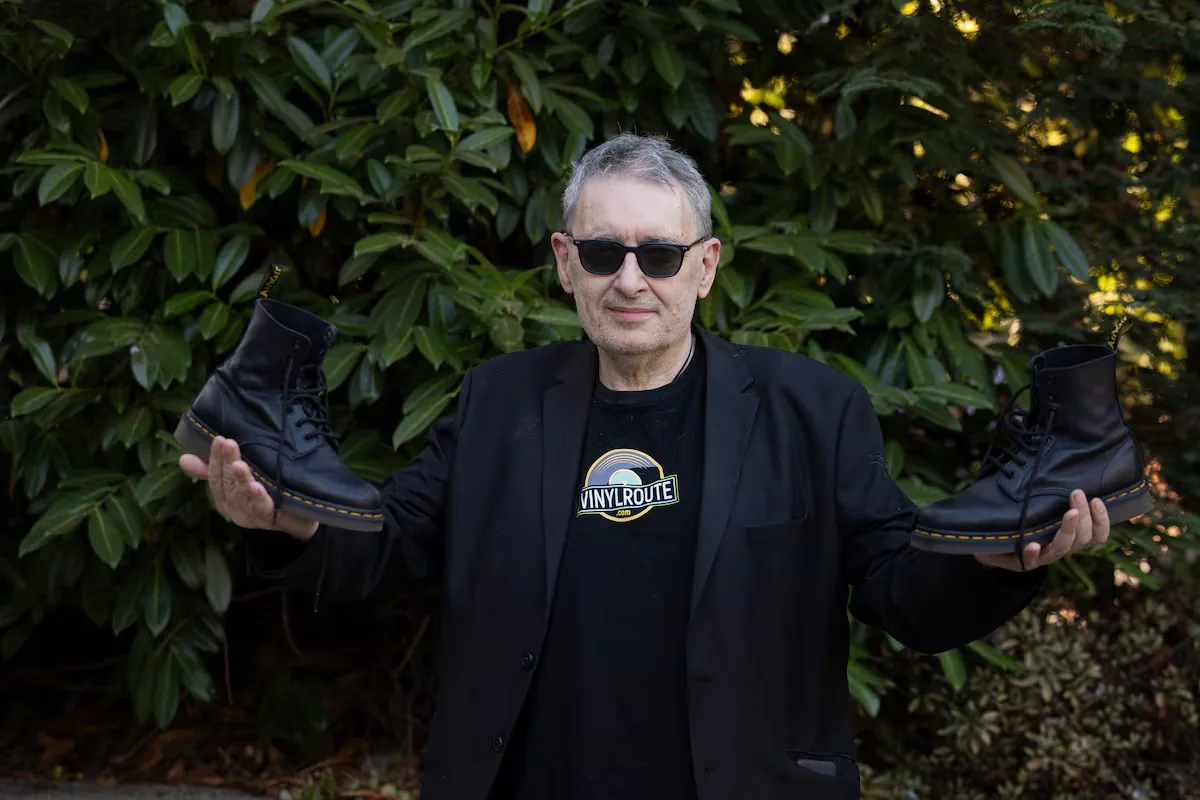




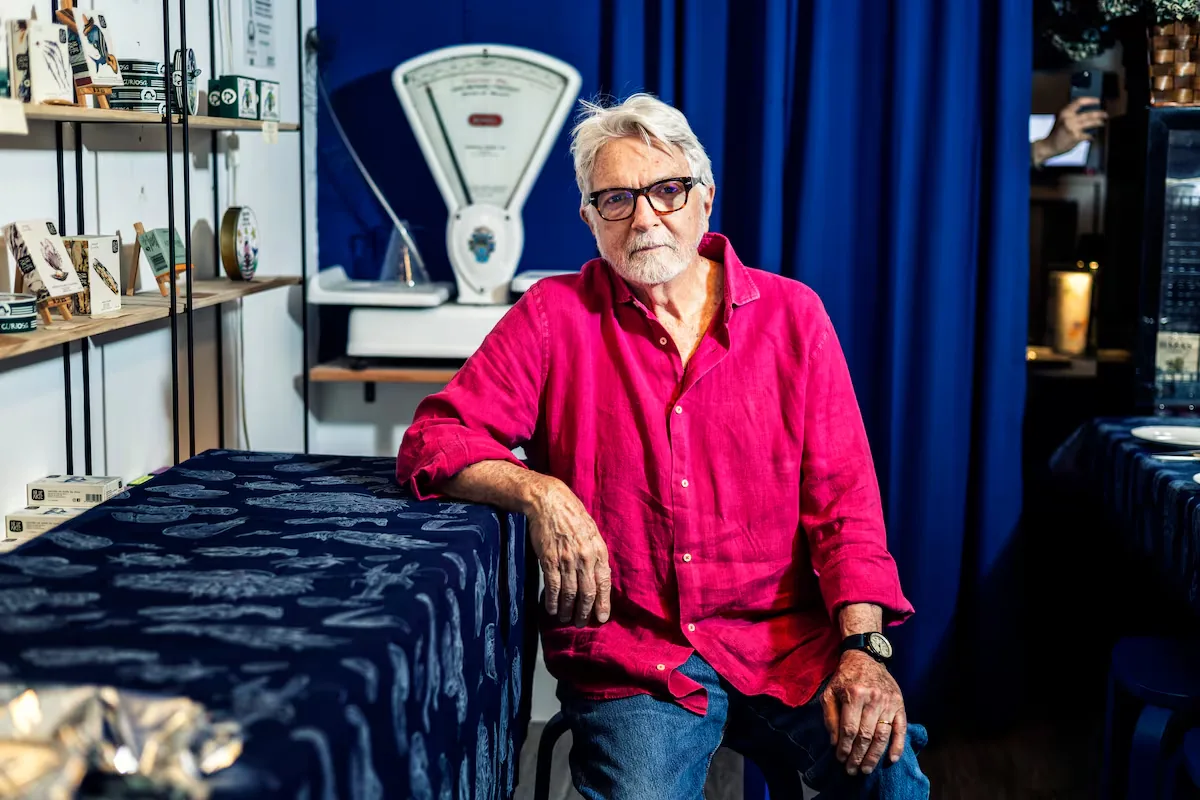
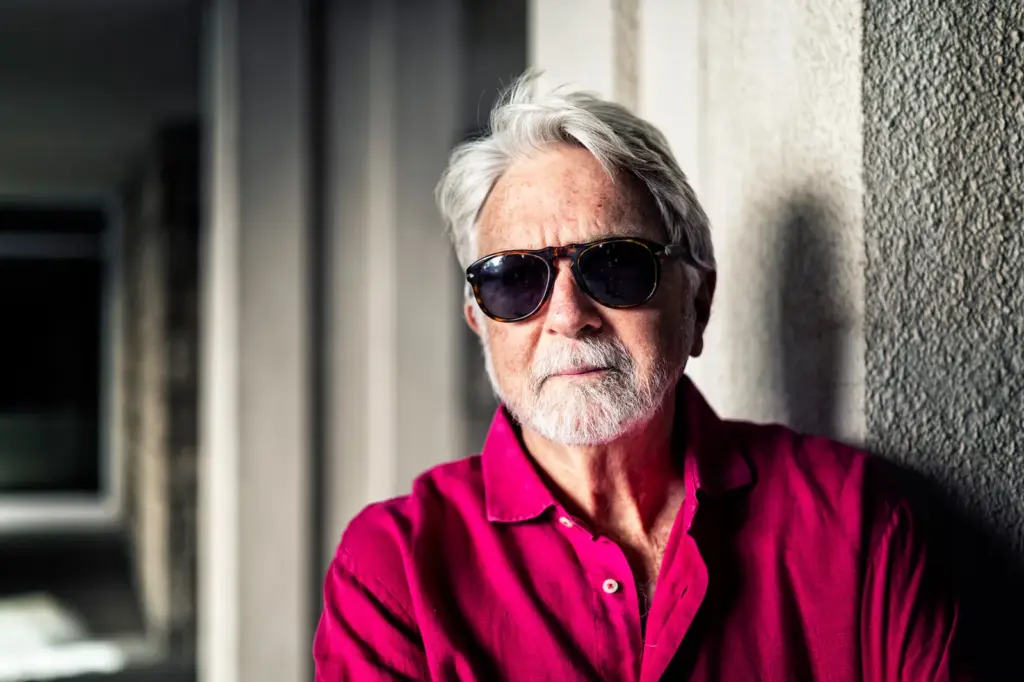
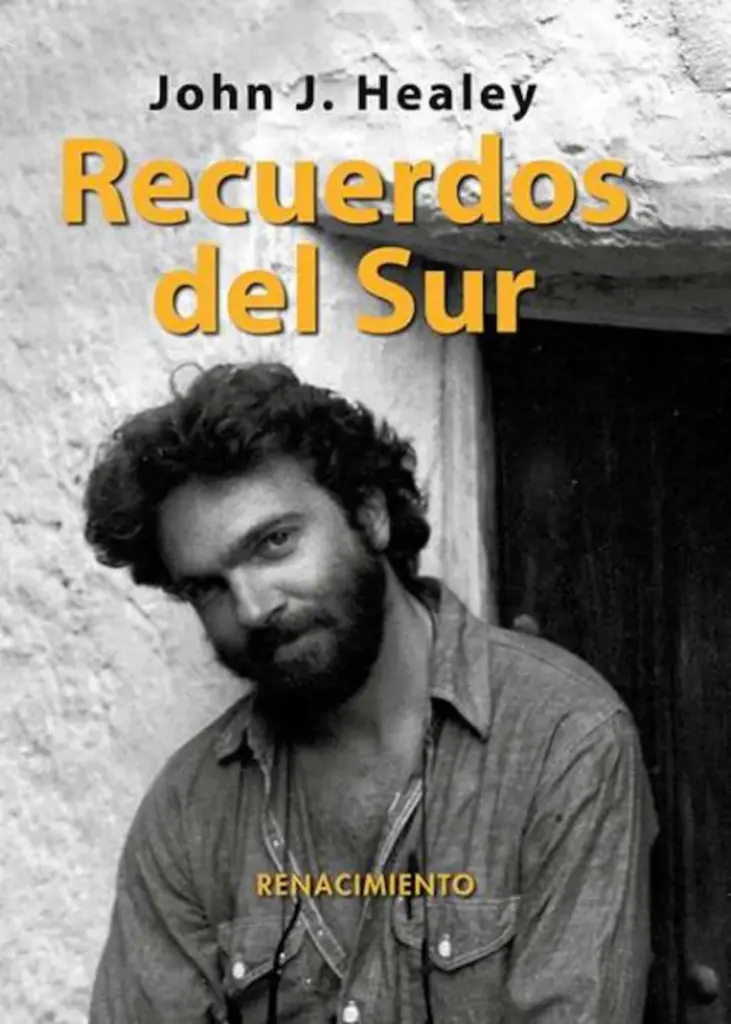
John Healey (New York, 76 years old) says that in his lean years he has done all kinds of unusual jobs: “For example, I helped build a house without nails for the daughter of Willem de Kooning.” It is by no means the only extraordinary thing that has happened to him throughout a bohemian life that led him to land in Málaga at 19. He came to spend a season at the estate of Freddy Wildman, the wayward son of a millionaire American wine importer, who offered him the chance to unleash his dream of being a writer. He left Spain several times afterwards, but Spain never left him. He met Gerald Brenan, who made him read Joyce’s Ulysses, befriended Víctor Erice, who offered him to work alongside him on The South — and led him to dedicate his life to cinema. In Memories of the South (Renacimiento), the delightful autobiography of a man with a talent for living, he tells it all.
Question. Someone who picks up the book and knows nothing about your life will have a thousand questions about you. For example, why did your father know Hemingway?
Answer. My father was a Democratic congressman and also a bon vivant. My mother died when I was six years old and, when I didn’t have a babysitter, he would take me with him to a very famous bar he used to frequent, called Toot’s Shores. There he would meet with him and Gary Cooper, whom we met during our summer vacations.
Q. Where did you spend your summers?
A. In Southampton, Long Island. The Hamptons, but in its wonderful version. Now I don’t even want to go back. Then my father went to greet Cooper and there was Hemingway, a couple of years before he committed suicide. Apparently, he asked me what I wanted to be when I grew up and told me I had to travel and get to know Spain.
Q. Do you think he was decisive in you eventually ending up in Spain?
A. Maybe he planted a seed, but a very small one because the real culprit was Freddy Wildman. I had dropped out of my humanities studies at university and he surely realized I had made a terrible mistake but that out of pride I wasn’t going to admit it. So he was about to return to Spain and said to me: “Well, if you want, I invite you to my house, I have books, typewriters… let’s see.” And that was the beginning.
Q. And how did you meet Wildman?
A. One afternoon at Warhol’s Factory. Then we went to dinner with a very strange woman named Vali Myers, an Australian artist who raised forty wolves in Italy and when she passed through New York lived at the Chelsea Hotel. Pennebaker, Bob Dylan’s documentarian, was also there.
Q. You say that when you arrived from the United States you were surprised that in Spain no one asked you what you did for a living. I have to ask you where you got the money from…
A. Well, I had something, of course, but you didn’t need much then. The dollar was very strong and the peseta not so much. I think that’s why Freddy lived like a king in Churriana.
Q. And during those years when you spent seasons in Andalusia and then returned to New York, how was your relationship with your father?
A. We always had a very good relationship. Although he didn’t worry too much about me, he had remarried and let me take my own path. Despite being Irish and Catholic, he was not at all puritanical. Also my maternal grandfather, who was a judge of the New York State Supreme Court, and my aunt, who took great care of me after my mother’s death, tolerated my comings and goings and supported me.
Q. Do you think you were so free because you didn’t have a mother?
A. Her death was a total trauma that has marked me for life. It unsettled me forever. Impossible to know, but I think if she had lived longer she would have forced me to study Law and go into politics.
Q. You say that at the time you came Spain was not exactly a desirable destination
A. In the sixties it was still a somewhat gray country, although some kind of tourism was already booming. I was very lucky to arrive in a bubble: the environment of Freddy’s estate, Buenavista, where everyone was bohemian.
Q. And did you have to compete in that environment to get attention?
A. It was the hippie era and everyone was welcome. I was and still am shy. In those years my interest was to read and let culture come in.
Q. Not even when Gerald Brenan appeared…
A. Brenan was not known in the United States, so meeting him didn’t impress me because of his fame. Besides, I was 19 and he was 80, he was a grandfatherly figure. What I do remember is that he told a lot of dirty jokes. And he was a somewhat cyclothymic gentleman. When he was in a good mood he was great. But in a bad mood… he could be very irascible.
Q. What do you think Spain had that gave refuge to so many drifting people despite being a dictatorship?
A. There are many clichés about Andalusia, but I think there is some truth in them: it is a relaxed culture, the climate is wonderful, especially in winter, and at those times it was not expensive at all if you came with dollars. Politics did not affect the expatriates who came to live here.
Q. The climate was wonderful in Málaga, because when you moved to the Alpujarras you were greeted by a good snowfall…
A. It was so romantic that I didn’t even feel cold [laughs]. And I had a good fireplace. Freddy lived next door, then Víctor [Erice] and Adelaida [García Morales] came. But after a few years I got tired of that life.
Q. Why?
A. Because I realized that making a living as a writer was going to be almost impossible. So I decided to study Medicine, which had always interested me. The faculty in Granada was and still is quite good.
Q. But you left it just when you started doing internships in New York. What happened?
A. Because I had a fantasy — I apparently had many fantasies — but one of them was to be a doctor like Chekhov, like William Carlos Williams, those early 20th-century doctors who were also writers. But in the 70s in New York being a doctor was like being a pilot. You have to like doing the same thing the same way every day and that didn’t fit my personality.
Q. You speak with great respect of Víctor Erice and describe very precisely his austere lifestyle. Do you think people disliked you because you exuded a certain moral superiority?
A. Maybe some took it that way, but Víctor did not project anything like moral superiority. He is a very special person, an artist to the core. He was not at all arrogant and, moreover, on set he handled people phenomenally. I saw firsthand how he seduced actors and the crew without changing in the slightest as a person.
Q. You make a complicated statement: that Querejeta was jealous of Erice.
A. You have to see it in the context of the film shoot. Making The South with Elías was a somewhat tense plan because they had already had problems. But I acknowledge that Querejeta has been a very important person in the history of Spanish cinema.
Q. Do you think if he were alive he would have dared to be so honest?
A. Who knows. In the book I tell my impressions. Víctor was my friend, and naturally everything that happened during the shoot I saw with great sympathy for him.
Q. Why did you connect so much with Erice?
A. Well, I don’t know. We met in Buenavista, and there we talked about cinema, books, and such. But it was in the Alpujarras where we became such good friends. We spent many very special moments. I fondly remember one time when a friend of his arrived in Capileira with a projector and many cables and we showed one of his favorite films, Johnny Guitar, on a terrace overlooking Mulhacén. Through him I discovered Nicholas Ray, about whom I must admit I knew nothing until then. I learned much more about American cinema with Víctor than in my own country.
Q. Did you have a sense of time in that village?
A. Let’s say that the passing of the seasons, night, day, marked life. And I was very young. Everything changed when I started studying Medicine, which forced me into total discipline.
Q. Maybe Erice, by involving you in the production of The South, gave you a purpose and an excuse to organize your life more?
A. He thought I would like cinema because it had its artistic side, but you lived in the world, you had to interact with people instead of being locked up writing. And he was right, I liked it and it led to working on many films as an assistant producer and director, which is a job that carries enormous responsibility.
Q. You say that Franco, whose death you learned about in the Alpujarras, was a vile person who won a vile war. Do you notice that now it is more controversial to say this in public?
A. I do notice it, yes. At the time he died, young people, not only foreigners but many Spaniards, felt that way and there was enormous enthusiasm for democracy. Now, as we are seeing a polarizing regression, it is more difficult to speak freely.
Q. Do you think you have been, like your father, a bon vivant?
A. Interestingly, now that I think about it, when I was little my father traveled to Spain from Washington with other deputies to meet Franco. We even had a photo of my father with Franco at El Pardo. And at home there was one of those pewter plates that said: “Health, pesetas and love and time to enjoy them.” So more than Hemingway, perhaps my great influence was my father, and I followed in his footsteps to Spain.
Read more The secret weapon with which mosquitoes are winning the war against humans: bypassing insecticides