







In the early eighties, one party night, a group of young people had a nighttime accident on a Galician road. The car was declared a total loss. And that’s how they named their band: Siniestro Total.
Read more From Twitter to X: the social network that polarizes the most continues to dominate 20 years later
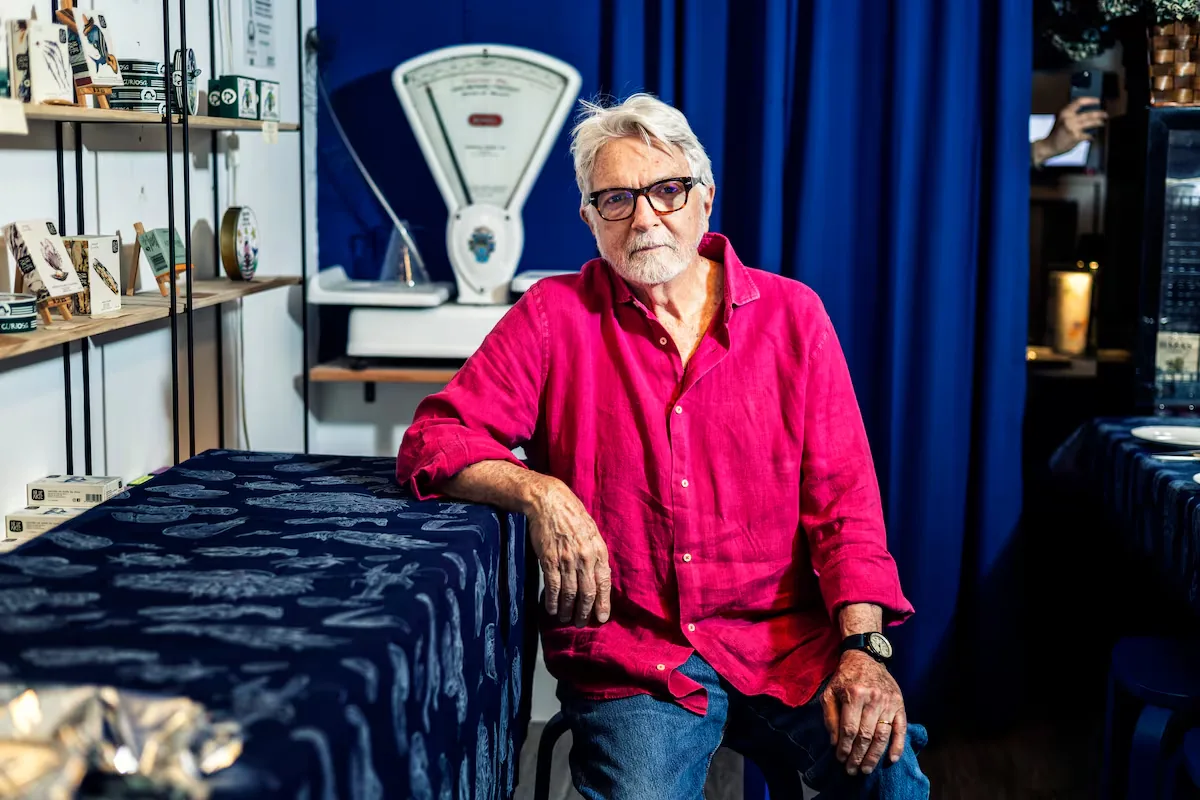
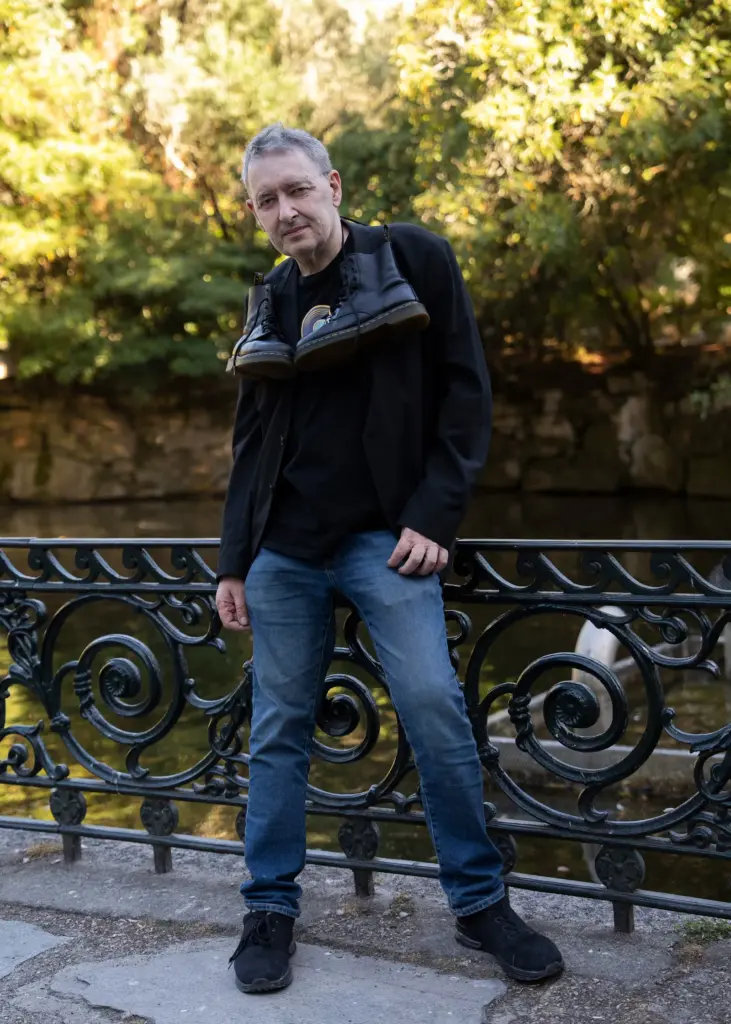
Miguel Costas (Vigo, 65 years old) was part of the original lineup, along with Julián Hernández, Alberto Torrado, and the late Germán Coppini. They started as foul-mouthed punks, became clever rockers; when the band shifted towards blues territories, Costas, who had also founded Aerolíneas Federales, left the ship to form projects like Los Feliz or start his solo career. Behind him were the most successful and memorable years of Siniestro.
Now Costas lives in a village in Lugo, “in the middle of the countryside, surrounded by cows,” where he has just recovered from some health problems. “I’m ready to play now,” he says. For many years, since he broke his calcaneus (heel bone) on a stage in Bilbao in 1990, he has suffered ailments that also affect his leg and back. An infection in 2023 almost took him down. “They found several herniated discs from the weight of the guitar; maybe I have to hang one on the other side to balance it out,” he jokes.
Some of their hits give an idea of Siniestro Total’s wildness, which said goodbye with two big concerts in Madrid in 2022: Bailaré sobre tu tumba, Me pica un huevo, Las tetas de mi novia, Opera tu fimosis, Pueblos del mundo, extinguíos, Mario encima del armario, Todo por la napia, Matar jipis en las Cíes… Costas has just published his memoirs, ¡Esas palmas, coño! (Roca Editorial), in literary collaboration with Renato A. Landeira, who imposes a good narrative pulse and makes the musician’s humor shine.
Question. What remains of punk in you?
Answer. The rebellion. Things are very bad now, especially for young people who have no opportunities. When we started as punks, we were spat on, then I had to clean the guitar for a good while, changing the strings. Luckily, the fashion passed.
Q. But it’s disgusting, isn’t it?
A. Yes, Germán [Coppini] was hit with a bottle on a leg, I was hit with an ashtray on the head and ended up bleeding… It was part of the fun to throw things, something very strange. We had a concert in the Hortaleza neighborhood, Madrid, that ended like a complete mess: the police had to get us out like in the Blues Brothers movie. It was epic. Later it seems that violence moved to football.
Q. What was the best era of Siniestro?
A. People are divided between what they called costistas, who prefer the first stage, and the julianistas [after Julián Hernández] who prefer what came after, when the band drifted towards blues and I left. On albums like Ante todo mucha calma or Made in Japan (the last one I was on), we already knew how to play well. And I think that’s where the story got messed up. We could have become much more important if we had continued down that path.
Q. You didn’t identify with the turn to blues, but you had started playing blues.
A. Yes, it’s curious, our first group was called, very originally, Sexteto de Blues. They were covers of Howlin’ Wolf or Muddy Waters. In fact, the first concert I traveled to outside Vigo was Waters, in the Basque Country, which I loved. But then something fundamental happened: we saw the Ramones. That changed everything. We wanted to play like that and adopted a more punk aesthetic.
Q. In the beginning Germán Coppini was like the Johnny Rotten of the Sex Pistols.
A. Germán went from being the most punk of Siniestro — he had an energy that scared — to the most melodic of Golpes Bajos. He had that capacity for transformation. He was a crooner, one of the best singers this country has had. When he died — he left suddenly — we were preparing an album.
Q. You had a reputation as druggies that you say was undeserved.
A. Since we came from Galicia, people asked us for farlopa. But we were a beer and Ducados group. When I left, those we would now call haters said I left because I was a junkie… and that my teeth had fallen out.
Q. You do say, though, that you had problems with alcohol, especially in your widowhood.
A. Yes… Well, in the band we drank a little before playing and a lot after. Once we had a concert, I don’t know where, it was very cold and they gave us a bottle of Dyc whisky. We came out totally drunk. The thing is, people were too. That day we decided to stop drinking before concerts. Later, over time, hangovers last a week. You can’t dedicate yourself to music if you drink. I also had to quit smoking because of a small tumor in my throat.
Q. And how is it going?
A. That I do miss. I had been smoking Ducados for 50 years: in the mornings I would wake up with anxiety and hallucinations that they were going to kill me. Now I’ve been smoke-free for three years. When I’m with people who smoke blond tobacco I still manage, but when someone smokes Ducados… I have a hard time.
Read more The ‘not’ television failure of Marc Giró
Something fundamental happened: we saw the Ramones. That changed everything. We wanted to play like that and adopted a more punk aesthetic”
Q. Was your breakup with Siniestro friendly?
A. I had a hard time, although over time I haven’t regretted it.
Q. You say your relationship with Julián Hernández froze.
A. Well, we live apart… I see the rest of the members often, with a good relationship. It’s just that I have no relationship with Julián. Since the last concert in 2022 I haven’t seen him again.
Q. They called you for the farewell concert.
A. Yes. People remember a lot the stage I was in, so they called me. I suppose I could attract an audience, for the morbid curiosity of seeing us together… I always thought about playing with them again someday, but then it excited me less than I expected. There were few of the old members, it was like going back to a place that was no longer the same.
Q. You wanted to end in Vigo.
A. Yes. At first a tour was talked about, but it ended up being one concert, then two, in Madrid. It was all Julián’s doing. I would have done a different setlist and wanted to end in Vigo. But it was good: we remembered many things, we had three months of rehearsals…
Q. You have a loyal audience, but you don’t fill stadiums.
A. I wish I did. I’m a rock and roll worker and play where I can, where they want me. But filling 10 stadiums is always done by the same people, or holograms they put there, I don’t know. For me those aren’t concerts, call them shows, shows, performances, but a concert has to have musicians. Today it matters more to have 100,000 followers on Instagram than the songs. It’s sad.
Q. They say rock is dead.
A. Just yesterday I heard Miguel Ríos say that the first day he recorded in Madrid the producer told him: “Rock is dead.” That says it all. I think rock will have more mainstream and more minority moments, but it will always be there. Now I see many tribute bands, which I think shouldn’t exist.
Q. Why?
A. In Siniestro we did a ton of covers. And there are cover bands for parties, which I think is fine. But pretending to be Héroes del Silencio or Fito, who has like two hundred tribute bands…. I don’t see it. I understand that musicians have to make a living, eh?, and I’m friends with some tribute bands of Siniestro. I’ve even heard in some venues that tribute bands fill more than normal bands…
Q. You had very crude lyrics. Are you one of those who think nothing can be said anymore?
A. I’ve never held back in the lyrics. Siniestro’s lyrics didn’t offend anyone. Well, I’ve been reproached for singing ¿Qué tal, homosexual?, although the song doesn’t talk about anything related to that…
I think rock will have more mainstream and more minority moments, but it will always be there”
Q. In Vigo in the eighties there was a scene.
A. It was a very small city, but with several groups with records, something that didn’t happen in bigger cities: Siniestro Total, Aerolíneas Federales, Golpes Bajos, Os Resentíos… People would arrive and ask, where is the scene? And you’d say, I don’t know, maybe down there to the right…
Q. In the eighties, there was a train trip from the Madrid scene to the Vigo scene, promoted by the then president of Madrid, Joaquín Leguina.
A. It was very fun… especially for them. They chartered a train with an open bar for 40 rowdies, all night. You can imagine how they arrived, completely drunk at seven in the morning. Then there was a lunch, Fabio McNamara threw a bottle, well, there were concerts… I imagine the return was a brutal hangover.
Q. You had a small controversy with Alaska, when you discovered she said that Siniestro were “country bumpkins, hillbillies, and heterosexuals in the worst sense of the word.”
A. Yes, I found those statements, and I responded; then I saw they were from more than 20 years ago. Being called a country bumpkin, I who live surrounded by cows, it touched me a bit… the little heart. But nothing, I have nothing against Alaska. Nor against anyone.
Read more Authorities investigate Taco Bell for its possible link to the cyclosporiasis outbreak