







Key moments
- France strengthens border control with Spain
- The breakwater marking the border between Spain and Morocco, a crossing point between those leaving and those entering
- Sánchez travels to Ceuta to address the migration crisis
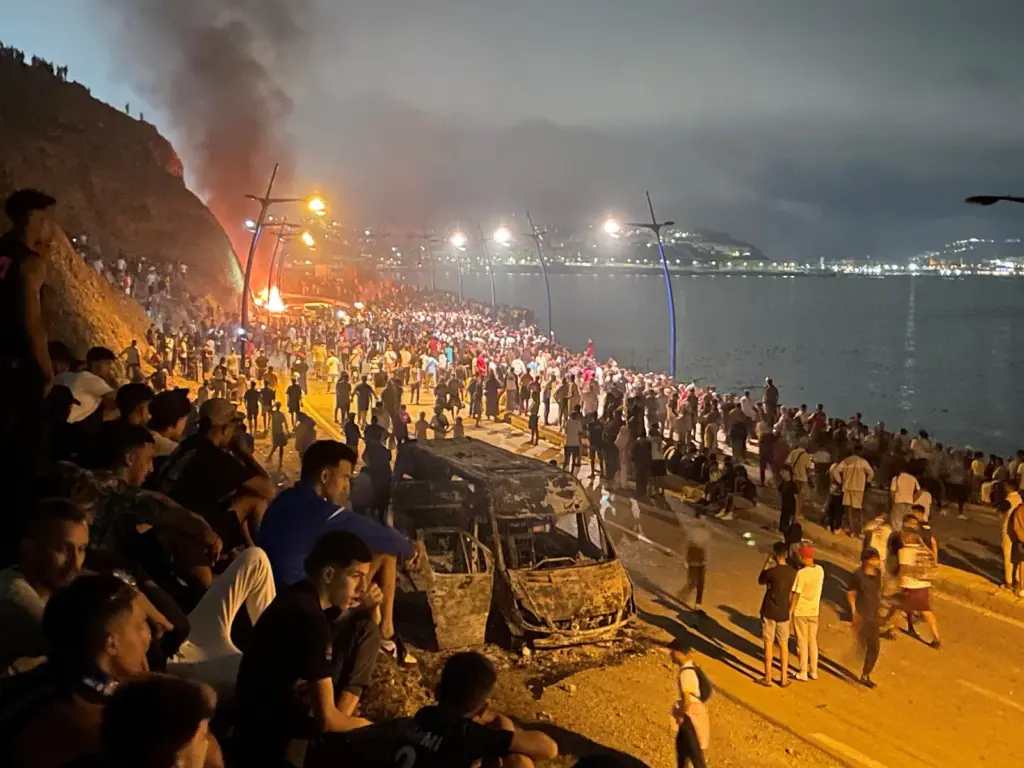
More than 40,000 immigrants have entered Ceuta irregularly in recent days, most of them last Thursday, according to initial estimates handled by security forces. This figure far exceeds that recorded in the previous migration crisis in the autonomous city, that of May 2021, when it was estimated that more than 10,000 migrants bypassed border controls. The number of entries currently handled — which some sources raise to nearly 50,000 — practically means an increase of about 50% in the enclave’s population, where 83,600 people are registered. This has resulted in a significant number of people who have been wandering permanently through the streets of Ceuta since yesterday and who have spent the night outdoors, while the crossing of people through the border from Morocco continues. The President of the Government, Pedro Sánchez, is traveling today to the autonomous city, while the death toll of migrants trying to enter the enclave by swimming has risen to 19. The Government of Melilla, for its part, has stated that between 300 and 400 people entered last night from Morocco.
Read more Héctor Gutiérrez, an unknown and brave Mexican, wins the Chenel Cup
- PHOTO GALLERY | The migration crisis in Ceuta, in images
EL PAÍS offers the latest news on the migration crisis for free. If you want to support our journalism, subscribe.

Migration crisis
This is how SER narrated a moment of tension on the Moroccan side of the border: “People start running”
The correspondent in Morocco for the station described live the moments when hundreds of people mobilized towards the border with Spain.
You can watch the full video here

Thousands of Moroccans return to their country
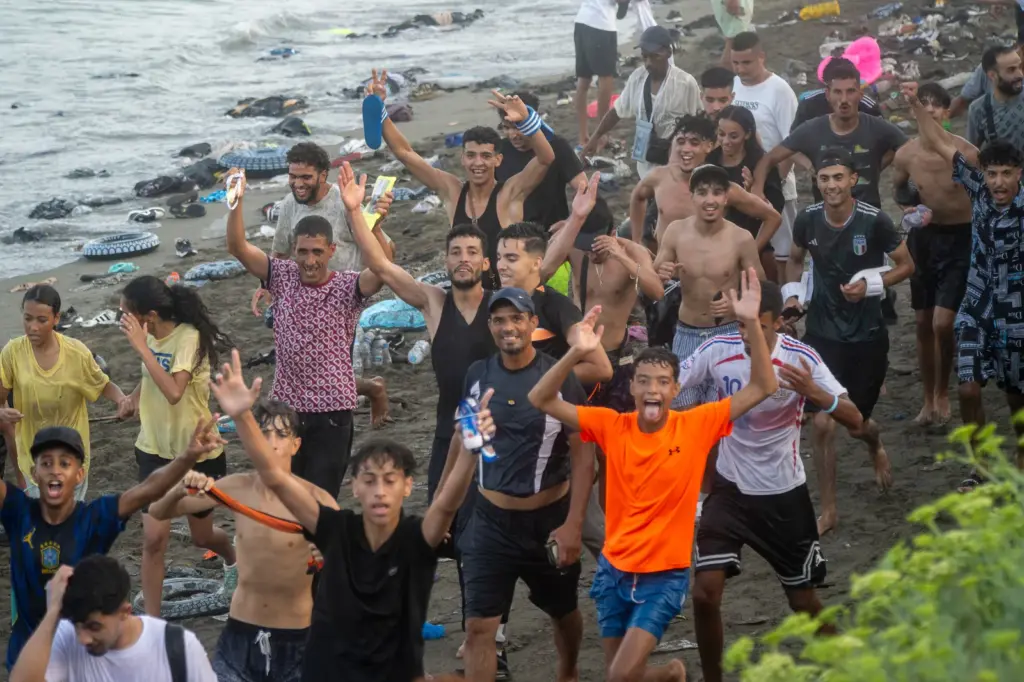
The crowd has changed direction. Now thousands are seen on the Moroccan beach heading to their land, while the last ones who intended to enter Spain are doing so amid shouts by the water. There are infinitely more leaving than entering right now. The situation seems to be normalizing at the border.
Inflatable boats and patrol boats enter Ceuta waters to rescue swimmers and return them to Morocco
In front of the large oceanic ship of the Civil Guard, Moroccan inflatable boats and patrol boats have entered Ceuta waters to rescue swimmers and return them to Morocco, which seems to be a sign of cooperation. In addition, they are clearing the mountain and the beach with water jets. Moroccans continue leaving Ceuta to return to their places of origin.
migration crisis in Ceuta
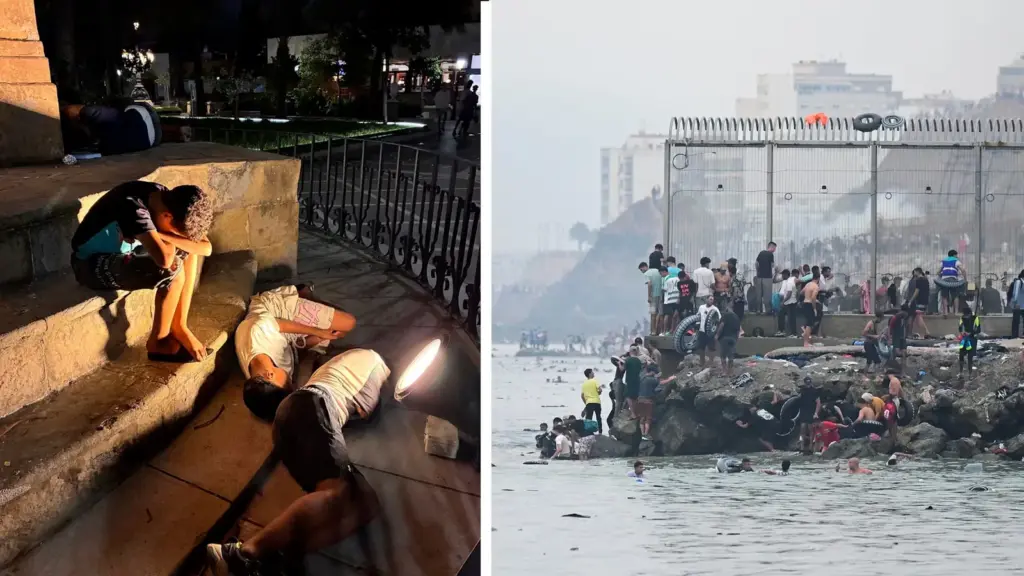
This is how Ceuta dawns after a night marked by the migration crisis
About 40,000 immigrants spend the night outdoors while the crossing of people through the border does not cease.
You can watch the full video here
Migration crisis
Hundreds of people return to Morocco after crossing the border with Ceuta
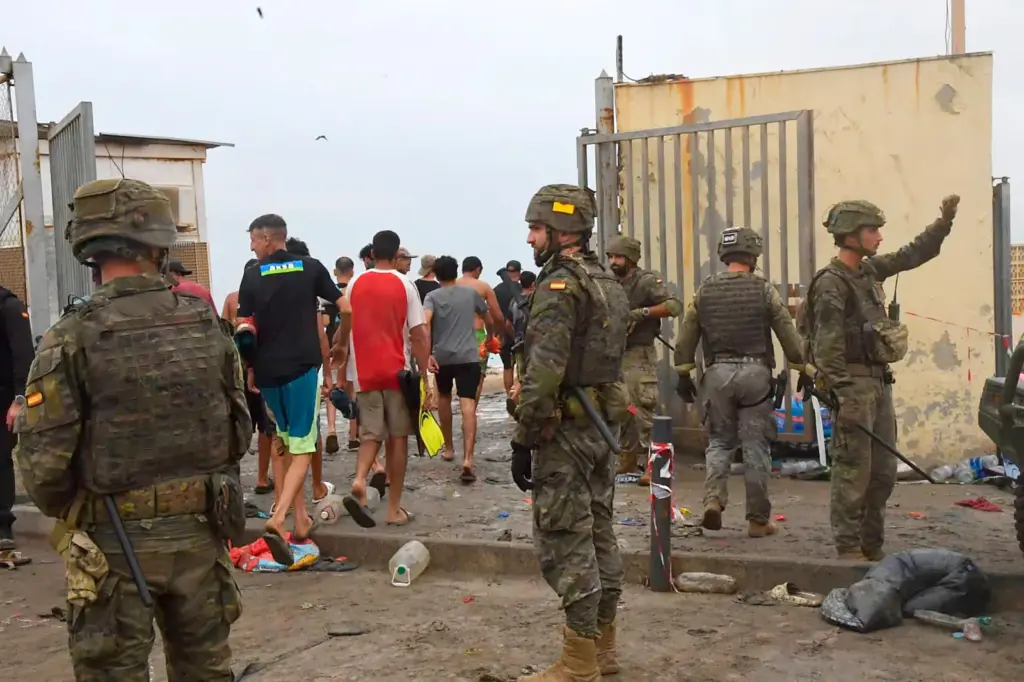
Hundreds of migrants who had irregularly accessed Ceuta in recent hours have begun returning to Morocco this Friday through the same point where they entered, the border breakwater that separates the autonomous city. The migrants themselves are being guided by the military to know where they can return.
You can read the full information here
The Police fence off downtown Ceuta and evict immigrants from the area for Pedro Sánchez’s arrival
National Police and Local Police officers have been deployed throughout downtown Ceuta since early morning to evict immigrants from the area before the arrival of the President of the Government, Pedro Sánchez, and they fenced off the streets through which he will pass.
Thus, the authorities have fenced off the section of Alcalde Sánchez Prado Avenue where the Autonomous Palace is located, the place where the City President, Juan Vivas, will receive the socialist at 12:00.
Meanwhile, the city’s cleaning services are cleaning the beaches and streets near City Hall to prepare them.
Until now, such a deployment had not occurred in the city center, where thousands of immigrants continue to wander. (EP)
The King contacts Sánchez and Vivas about the migration crisis in Ceuta
King Felipe VI has contacted by phone the head of the Executive, Pedro Sánchez, and the President of Ceuta, Juan Jesús Vivas, with whom he has held conversations analyzing the migration crisis affecting the autonomous city in recent days, according to the Royal Household. (EP)
France strengthens border control with Spain due to the migration crisis with Morocco
French Interior Minister Laurent Nuñez said this Friday that controls on the border with Spain will be strengthened and that he is in contact with the Spanish Government regarding the crisis of the massive arrival of migrants from Morocco to the Spanish North African city of Ceuta.
“Given the situation observed in the enclave of Ceuta, since last night I have given instructions to immediately strengthen controls on the Spanish border. In addition, I have activated the Rapid Intervention Border Force to carry out thorough checks,” Nuñez said on his X account.
Earlier, in an interview on the RTL radio station, the minister emphasized that he already contacted his Spanish government counterpart on Thursday and plans to speak with him again today about the evolution of the massive arrivals of migrants to Ceuta trying to cross illegally into Spain.
Asked about the reaction of the Italian government, which requested on Thursday the closure of the Schengen area with Spain, Nuñez was moderate and recalled that border controls exist and were even reinforced in recent months, with a mobile force maintained permanently.
“Of course, measures will be taken if movements towards national territory occur and, in any case, border control will be strengthened,” he asserted. (Efe)
Hundreds of migrants begin to return to Morocco
The volume of young people returning to Morocco is considerable, growing by the hour. They return by water or cross by land because they say there are too many people in the city, they can’t find a place to sleep, shops and bars only serve Ceutans, they can’t find food. Some report mistreatment by neighbors in some neighborhoods who throw stones and threaten them with guns.
More than 40,000 immigrants have entered Ceuta irregularly, according to initial estimates
More than 40,000 immigrants have entered Ceuta irregularly in recent days, most of them last Thursday, according to initial estimates handled by security forces. This figure far exceeds that recorded in the previous migration crisis in the autonomous city, that of May 2021, when it was estimated that more than 10,000 migrants bypassed border controls. The number of entries currently handled — which some sources raise to nearly 50,000 — practically means an increase of about 50% in the enclave’s population, where 83,600 people are registered. This has resulted in a significant number of people who have been wandering permanently through the streets of Ceuta since yesterday and who have spent the night outdoors. A resident graphically describes what has been seen in the city since yesterday as if there were “a constant demonstration.”
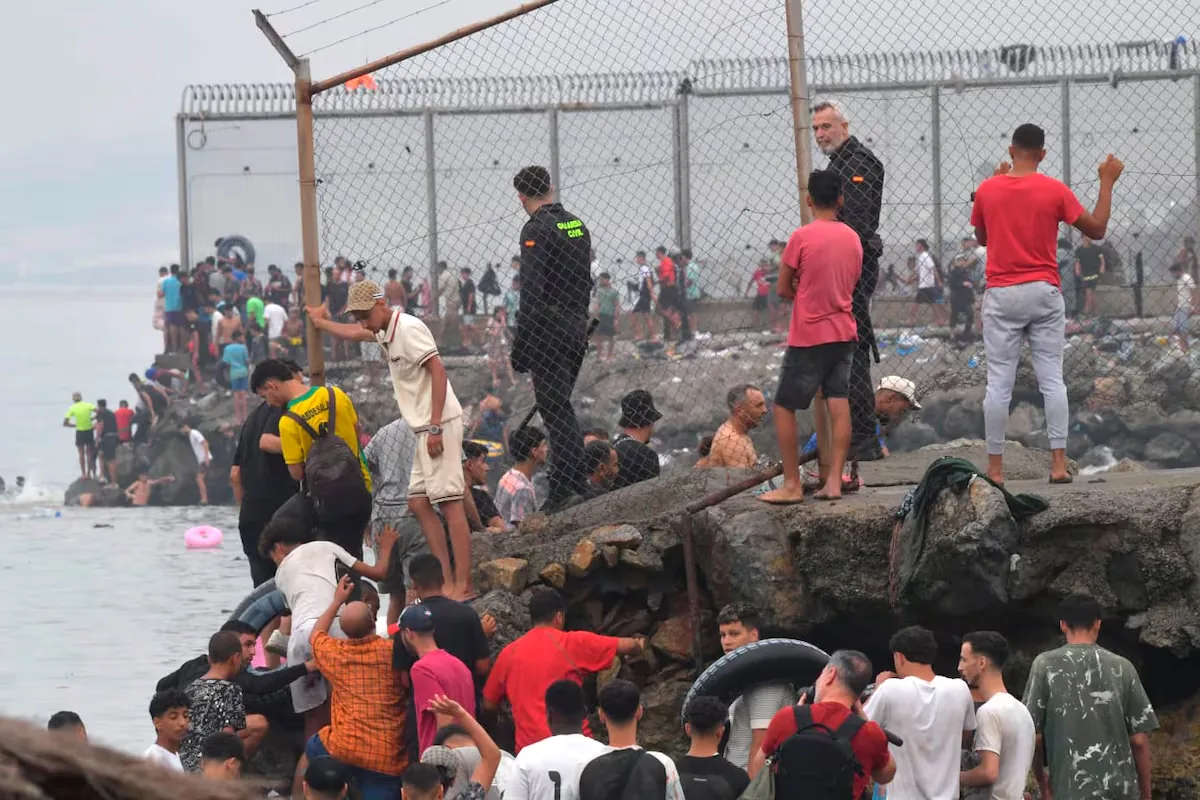
The breakwater marking the border between Spain and Morocco, a crossing point between those leaving and those entering
The breakwater marking the border between Spain and Morocco in Ceuta is currently a crossing point between those leaving and those entering, that is, those arriving in Spain and those returning to Morocco. Below in the water are those accessing by swimming with floaters. Military and civil guards are currently limited to controlling or directing the passage of people. A Moroccan nurse, Salma Zoubiri, 21 years old, says she is turning back, that everything is going badly with the police, that she passed because she has family in Ceuta. And that she doesn’t mind returning to the sea with her floater, she likes to swim, she says in broken English.
At the border, which is open for people crossing legally both entering and leaving, there are about 30 military vehicles.
Immigration
The migration crisis in Ceuta, in images
The city of Ceuta dawns with hundreds of young migrants sleeping on the streets while irregular arrivals from Morocco continue.
You can see all the images here

The Government of Melilla assures that between 300 and 400 people entered the autonomous city last night
The Government of Melilla assures that between 300 and 400 people entered Melilla last night from Morocco coinciding with the Ceuta crisis. “There was an increase in migrants in July, but not at Ceuta’s level,” said the president of the autonomous city, Juan José Imbroda, last night in an interview on Cope after the Government closed the border due to the attempted entry at the Beni Enzar crossing. “The action of the Civil Guard, the National Police, and the Local Police, who are working together, is exemplary, they are acting perfectly and have contained the situation quite well,” added Imbroda. The Government Delegation does not endorse the figure of between 300 and 400 entries provided by the regional government. “At that time of night, it was impossible to provide a reliable figure or estimate, as the operation was still ongoing and actions were continuing,” sources from the Delegation say. The special operation ended around 7 a.m., but the border remains closed.

The death toll rises to 19 in attempts to reach by swimming from Morocco
The death toll of migrants trying to enter the enclave by swimming rose to 19 this Friday.
The PP calls to change the Aliens Law to guarantee “border rejection” and Sánchez’s urgent appearance in an extraordinary plenary session in Congress
The PP has just issued a statement requesting, among other things, to change the Aliens Law “to guarantee that the figure of border rejection also applies to entries by sea to the cities of Ceuta and Melilla, in the terms of the bill registered by the Popular Party on July 16. They also request that the permanent Deputation of Congress meet to convene an extraordinary plenary session focused on the Ceuta crisis and that the urgent appearance of the President of the Government be substantiated in that forum. Alberto Núñez Feijóo’s party also insists on requesting the declaration of Ceuta as a situation of interest for national security and the “deployment of massive means.” “People have continued arriving in Ceuta all night and those on the ground describe an occupied city, with nothing sufficient being done to prevent it. About 400 irregulars have also entered Melilla,” Feijóo adds via a message on social media. “I insist that Pedro Sánchez must defend our national security, our territorial integrity, and our coexistence. As President of the Government, he has instruments and means at his disposal, and he only needs to give the orders. As serious as what is happening is the Government’s weak reaction. All Spain is with Ceuta and Melilla,” adds the PP leader.
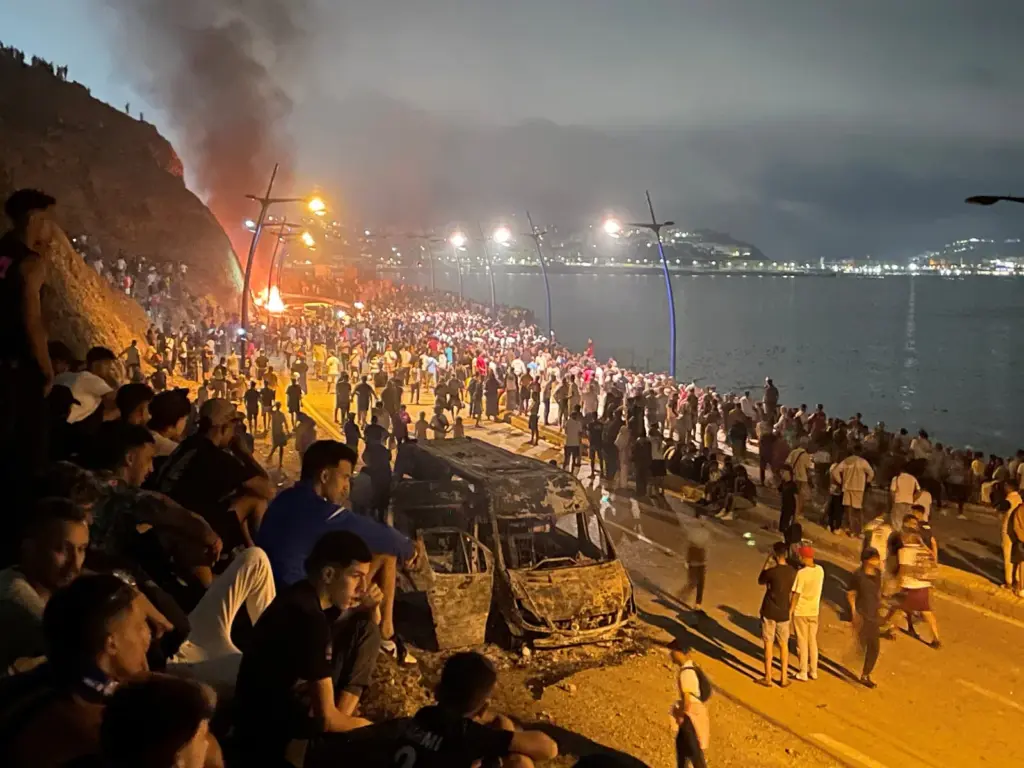
Migration crisis
Thousands of people enter Ceuta during the night amid the passivity of the Moroccan police
One. Two. Up to three successive barriers of gendarmes with riot gear, auxiliary forces, and Moroccan border police sealed the Findeq border (Castillejos in the era of the Spanish Protectorate) with Ceuta at midnight from Thursday to Friday. Dozens of police vehicles, armored vehicles, and even a water cannon truck formed a perfect security deployment aimed at sealing the autonomous city. Thousands of irregular migrants had broken into it by sea and land during Thursday, in an unprecedented human flood since 2021.
You can read the full information here
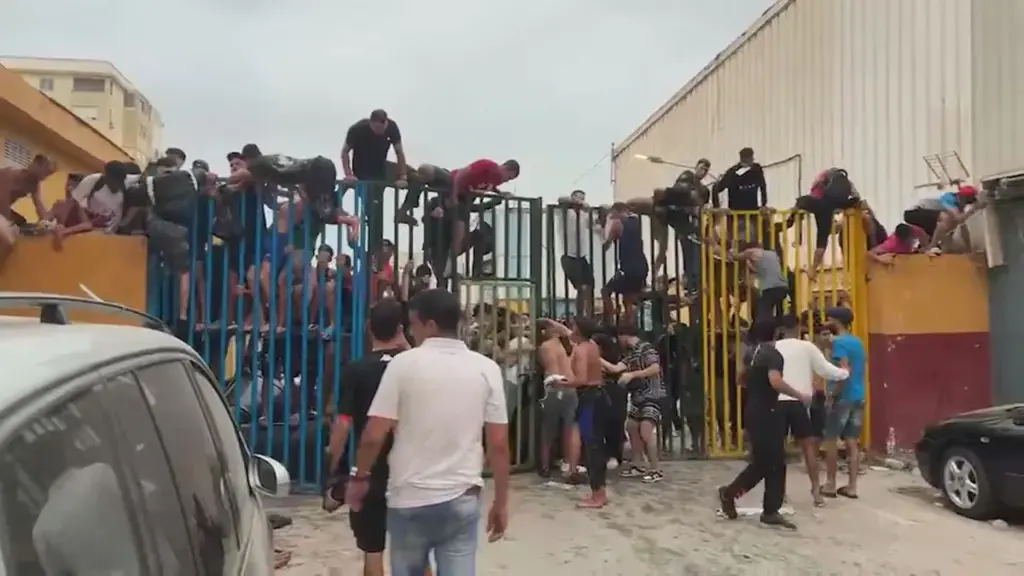
Crossing of people in the Tarajal Industrial Park
Many people continue crossing into Spain from Morocco this Friday at the Tarajal Industrial Park.
Sánchez visits Ceuta this Friday to address the migration crisis
The President of the Government, Pedro Sánchez, will visit Ceuta this Friday, accompanied by the Minister of the Interior, Fernando Grande-Marlaska, to address the migration crisis unleashed in the autonomous city with the uncontrolled entry of thousands of people from Morocco.
The head of the Executive will travel at 11:40 to the Tarajal border, where he will meet with representatives of the State Security Forces and Corps.
At 12:00, Sánchez will go to the Assembly Palace to attend a coordination meeting with the President of the Autonomous City, Jesús Vivas; the Government delegate, Miguel Ángel Pérez; the heads of the National Police and Civil Guard; and the director of the CETI and the Ceuta Red Cross. At the end, there will be a joint statement by the President of the Government and the President of the Autonomous City of Ceuta before the media. (EP)

editorial
Humanitarian and diplomatic challenge
The arrival of thousands of people by sea to Ceuta from Moroccan territory poses a humanitarian emergency and at the same time a political challenge for Spain. Those crossing the border do so by swimming around a breakwater, risking their physical integrity and life. At least 18 died this Thursday. The autonomous city has relived the images from five years ago, when 5,000 young people reached the Ceuta beach in one day amid bilateral tensions. The unprecedented influx of immigrants for a week now requires putting all possible means in place to welcome the newcomers in the best conditions and maximum cooperation among administrations — regional, state, and European — to strengthen local capacities in this situation that already overwhelms them. Considering the background, this crisis mainly demands ensuring maximum trust between neighboring countries and preventing immigration from being used as a diplomatic pressure tool, as has happened before with Morocco.
You can read the full editorial here
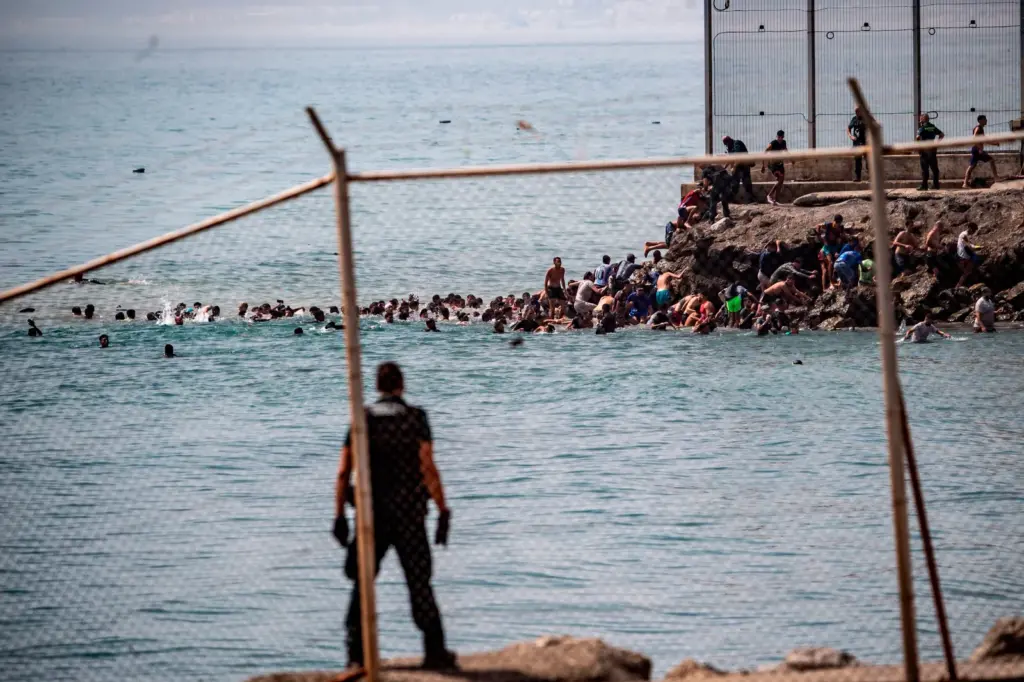
migration crisis in Ceuta
“No Morocco, no Morocco!”: thousands of immigrants enter Ceuta and beg the Civil Guard not to return them to their country
In the short span of a few hours, from noon to four in the afternoon, the city of Ceuta has radically changed its appearance: quiet streets have become crowded with barefoot young people, the lazy shade of parks has turned into a massive siesta, the beach with umbrellas and bikinis is now a tumult of immigrants cooling off. Ceuta is not the same. In a single day, Thursday, thousands of immigrants who have passed from Morocco, either swimming in open sea or simply bypassing the breakwater that borders Spain, have turned the whole city upside down, which requires urgent management two days before its summer fair. Taxi drivers call it an invasion, NGOs a humanitarian crisis, and local politicians who have to deal with it a national emergency. They all have some truth.
You can read the full information here
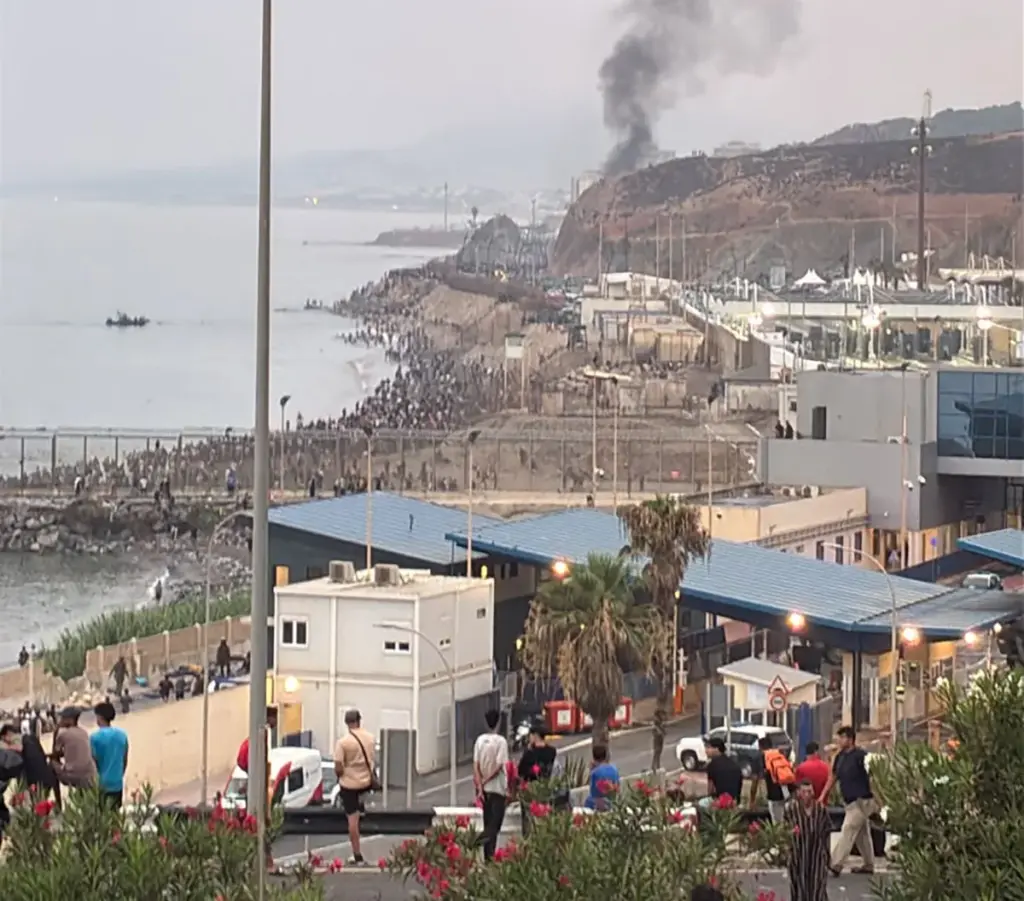
Entry of immigrants through the Ceuta border. In the background, dozens of people on the Moroccan side. / Carmen Morán
Hundreds of people enter from Morocco through the Ceuta border
Hundreds of people are entering in a continuous line from Morocco through the Ceuta border. The shouting is heard throughout the Tarajal beach. There are not one but three columns of smoke in Castillejos; in one of them, the fire and flames can be seen from the Spanish side.
Those entering are being diverted by another route so they do not reach the city, already saturated with people.
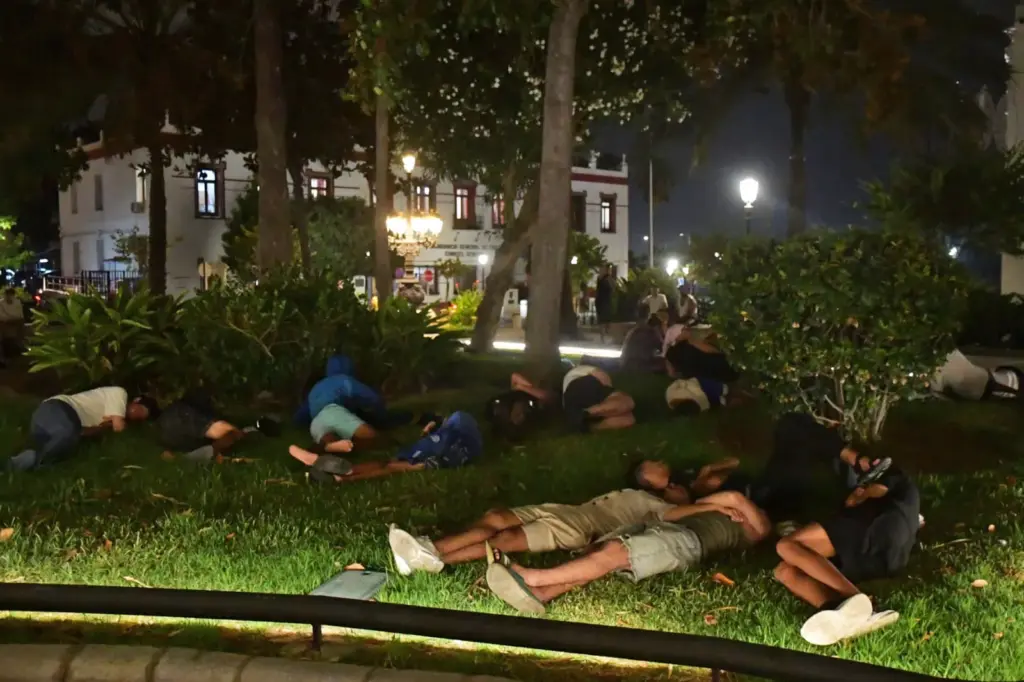
Dozens of immigrants sleep in a park in Ceuta, this Friday. / Joaquín Sánchez
Ceuta dawns with hundreds of young migrants sleeping on the street
Ceuta dawns with hundreds of young people curled up on the damp grass of parks, sleeping with barely any clothes, children at the entrances of public parking lots, some kids shivering from cold on statue pedestals. The city has become an improvised dormitory.
The promenades along the beach are full of kids as if it were noon. They wander aimlessly with their plastic bags in tow. High Mobility Tactical Vehicles of the Army pass slowly on the road. The climb to the Príncipe neighborhood is crowded with shirtless young people and trash scattered all over the street like the remains of a summer party.
The army deployment gives the city a warlike appearance.
Good morning. We start the live narration of the latest on the migration crisis, this Friday, July 31. The President of the Government, Pedro Sánchez, travels to Ceuta to monitor the situation affecting the autonomous city, to which thousands of people from Morocco arrived this Thursday, completely overwhelming its reception capacity. The Civil Guard has recovered the bodies of 18 migrants who died trying to enter the enclave by swimming. The Minister of Foreign Affairs, José Manuel Albares, has summoned the Italian ambassador to Spain this Friday after Rome announced it is considering suspending the Schengen free movement agreement with Madrid.