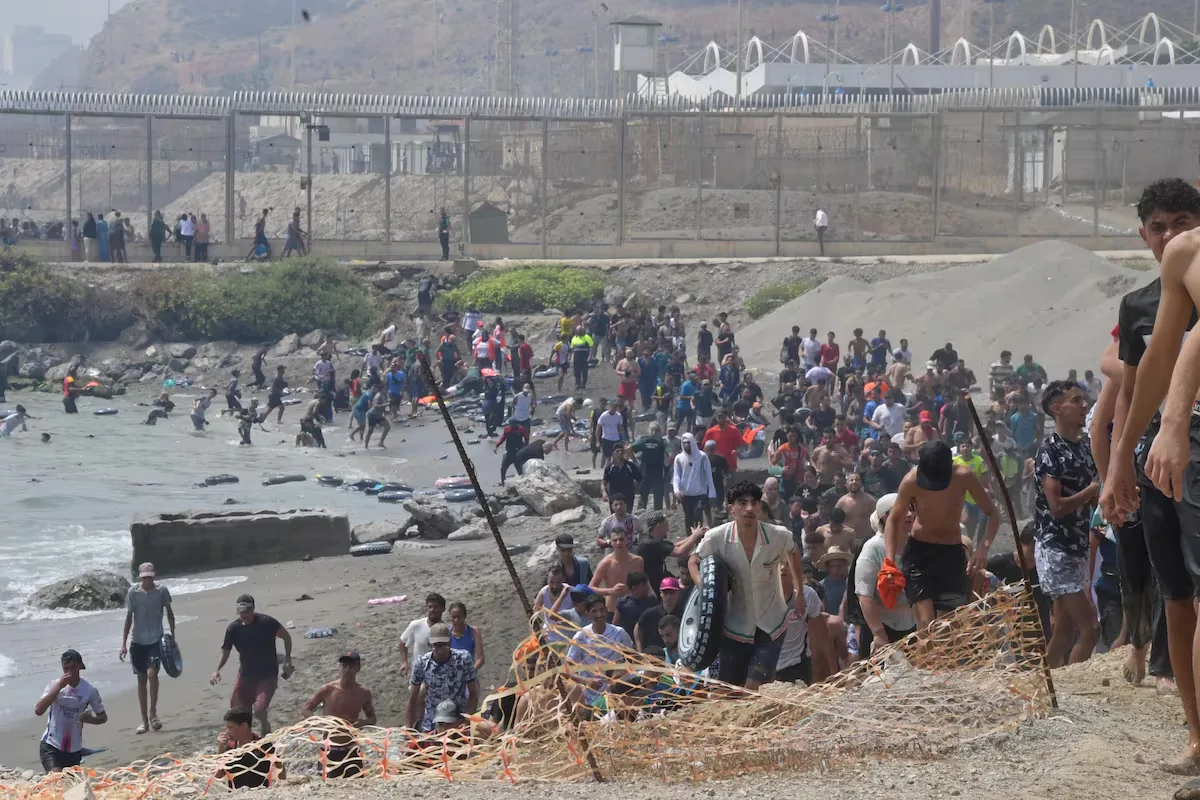









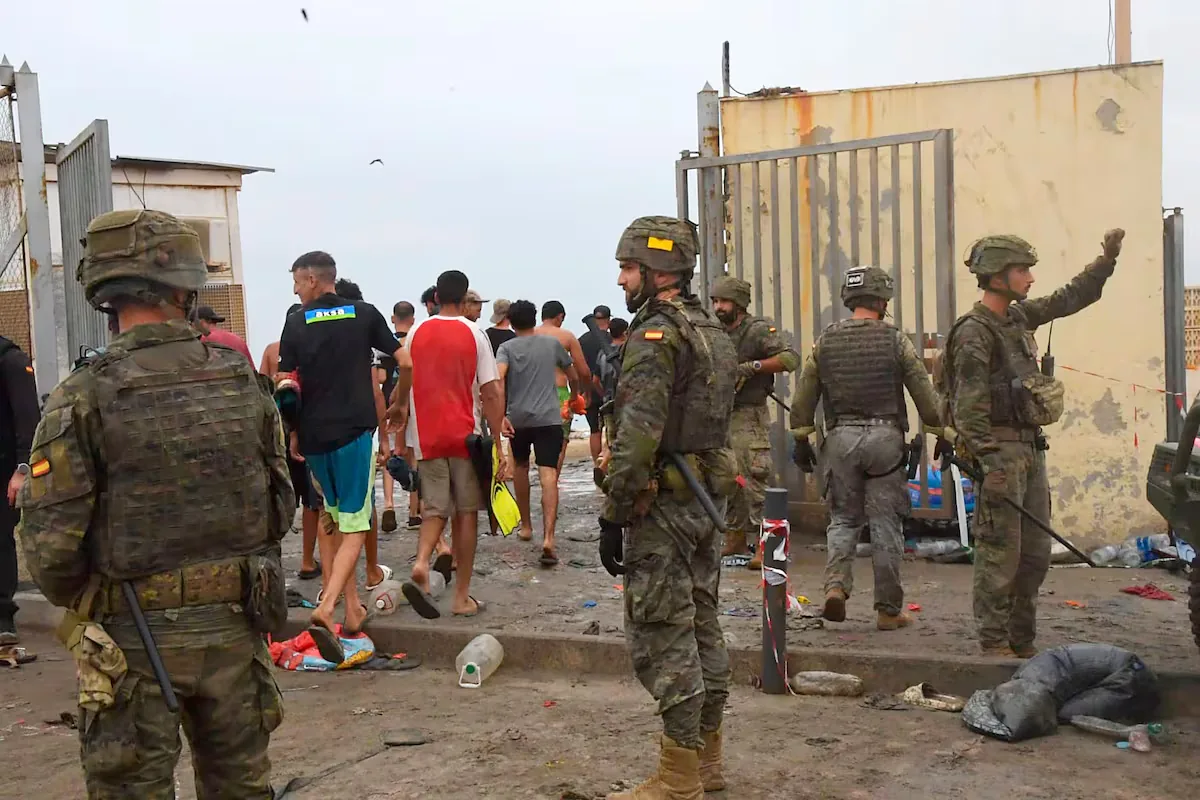
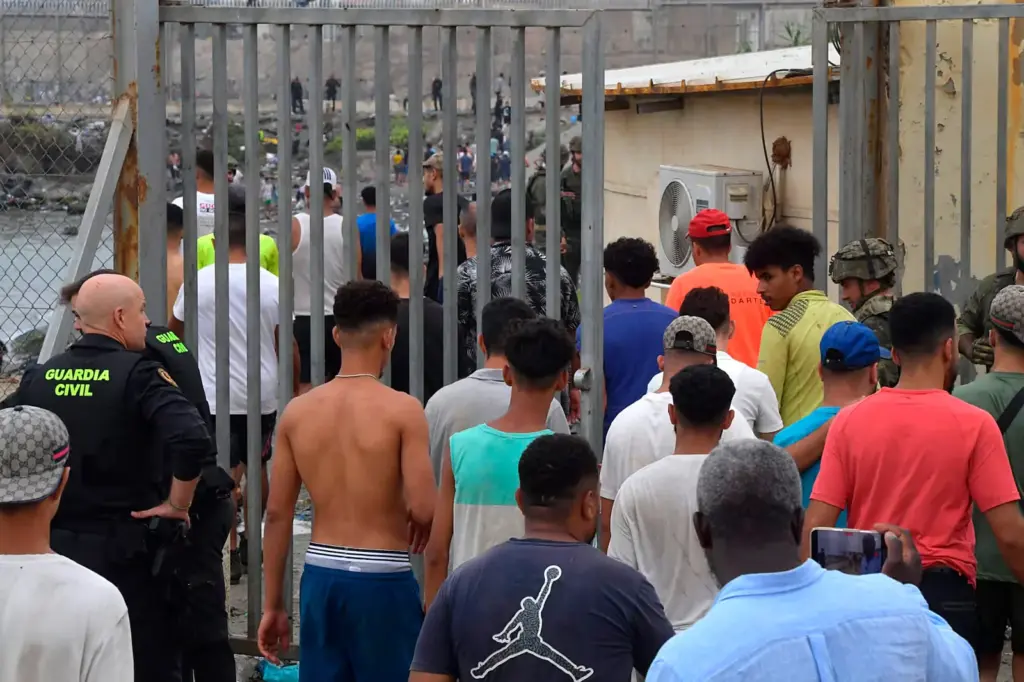
Hundreds of migrants who had irregularly entered Ceuta in recent hours began returning to Morocco this Friday through the same point where they entered, the border breakwater that separates the autonomous city. The migrants themselves are being guided by the military to know where they can return.
Read more This is how Ceuta wakes up after a night marked by the migration crisis
The number of young people returning to Morocco is considerable; it grows by the hour. They return by water or cross by land because they say there are too many people in the city, they cannot find a place to sleep, shops and bars do not serve them, only the Ceutans, they cannot find food. Some report mistreatment by residents of some neighborhoods who throw stones at them and threaten them with guns.
The breakwater that marks the border between Spain and Morocco in Ceuta has become a crossing point between those leaving and those entering, that is, between those arriving in Spain and those returning to Morocco. Below in the water are those who enter swimming with floatation devices. Soldiers and civil guards are currently limited to controlling or directing the passage of people.
A Moroccan nurse, Salma Zoubiri, 21 years old, says she is going back, that everything is going badly with the police, that she came because she has family in Ceuta. And that she does not mind returning to the sea with her float, she likes to swim, she states in broken English. At the border, which is open for people crossing legally, both entering and leaving, there are about 30 military vehicles.
Ceuta woke up this Friday with hundreds of young people curled up on the damp grass of parks, sleeping with barely any clothes, children at the doors of public parking lots, some kids shivering from the cold on the pedestals of statues. The city has become an improvised dormitory.
Read more The Barcelona Urban Guard evicts a homeless settlement in Montjuïc
The promenades along the beach are full of kids as if it were noon. They wander aimlessly with their plastic bags on their backs. High tactical mobility vehicles of the Army pass slowly along the road. The climb to the Príncipe neighborhood is crowded with shirtless young people and trash scattered all over the street like the remains of a summer party. The army deployment gives the city a warlike appearance.
In the last 24 hours, about 40,000 people have entered the city. Thousands did so in the early hours of this Friday. 19 have died, according to the provisional count, trying to swim around the breakwater that separates the two countries. This figure far exceeds that recorded in the previous migration crisis in the autonomous city, in May 2021, when it was estimated that more than 10,000 migrants bypassed border controls. The number of entries currently handled — which some sources raise to nearly 50,000 — practically means an increase of about 50% in the enclave’s population, where 83,600 people are registered.
The mass has changed direction, now thousands are seen on the Moroccan beach on their way home while the last ones trying to enter Spain are doing so amid shouts by the water. There are infinitely more leaving than entering right now. The situation seems to be normalizing at the border. Not so in the city, because this Thursday many more entered than have left so far.
In front of the large oceanic Civil Guard ship, the Duque de Ahumada, which arrived in Ceuta in the early hours of this Friday, inflatable boats and Moroccan patrol boats can be seen entering Spanish waters to rescue swimmers and return them to Morocco, which seems a sign of cooperation. They are also clearing the mountain and beach with water jets. Moroccans continue leaving Ceuta to return to their places of origin.
Read more Being neurodivergent