








“It is very controlled,” says with relief one of the forest firefighters who this Friday continues cooling the hot spots of the fire declared almost a week ago in Vall d’Uixó (Castellón). The impression on the ground matches the message conveyed by the authorities early in the morning. In the afternoon, after the Cecopi meeting at 5 p.m., the fire was officially declared stabilized, after ravaging 9,568 hectares in a perimeter of 89 kilometers. The Generalitat has also lifted the evacuation of the residents of the municipalities of Artana and Eslida, the last ones who can now return to their homes.
The Minister of Emergencies and Interior, Juan Carlos Valderrama, has reported the stabilization of the area affected by the fire and the transition to situation 1 of the Special Plan against the risk of Forest Fires, although he warned that there may be some flare-ups in the hot spots. Valderrama has asked the population not to travel on the roads or routes of the affected municipalities to avoid risks such as falling trees and to facilitate the action of the extinguishing means, since the fire is neither controlled nor extinguished.
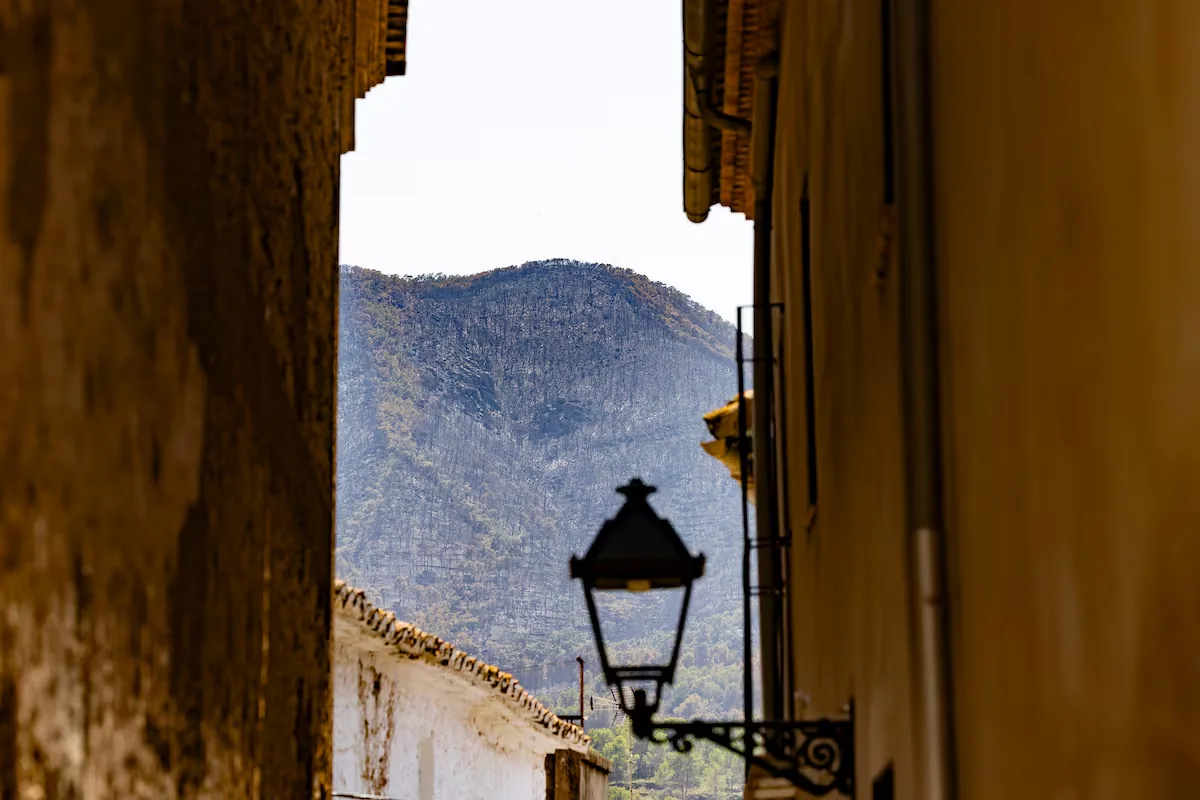
The figures remain enormous: 9,568 hectares burned, a perimeter of 89 kilometers, and nearly 12% of the surface that makes up the Sierra de Espadán natural park reduced to ashes. The protected area, with 31,180 hectares, has lost around 3,750 hectares due to the fire, 40% of the total forest area burned since last Saturday. In the first two days, the fire mainly advanced along the slopes of the mountain range through La Vall d’Uixó or Vilavella, outside the park limits, but then it moved inward toward its heart, Alcudia de Veo, but the firefighting contingent managed to stop it.
In any case, it is a devastating blow to one of the great green lungs of Castellón and the second largest natural park in the Valencian Community. The Sierra de Espadán, an imposing mountain massif dotted with springs, ravines, and lush cork oak forests, is one of the most unique natural sites in the region.
The hopeful news is that the cork oak, which grows surrounded by pine trees, is a species highly resistant to fire thanks to its thick cork bark, its ability to regrow, and its low thermal conductivity.
“The night went quite well and was quite calm,” summarized in the morning the Director of Extinguishing, Fernando Pérez. After a week of racing to stop the flames and protect the populations, the operation was no longer to stop an out-of-control fire, but to finish it off.
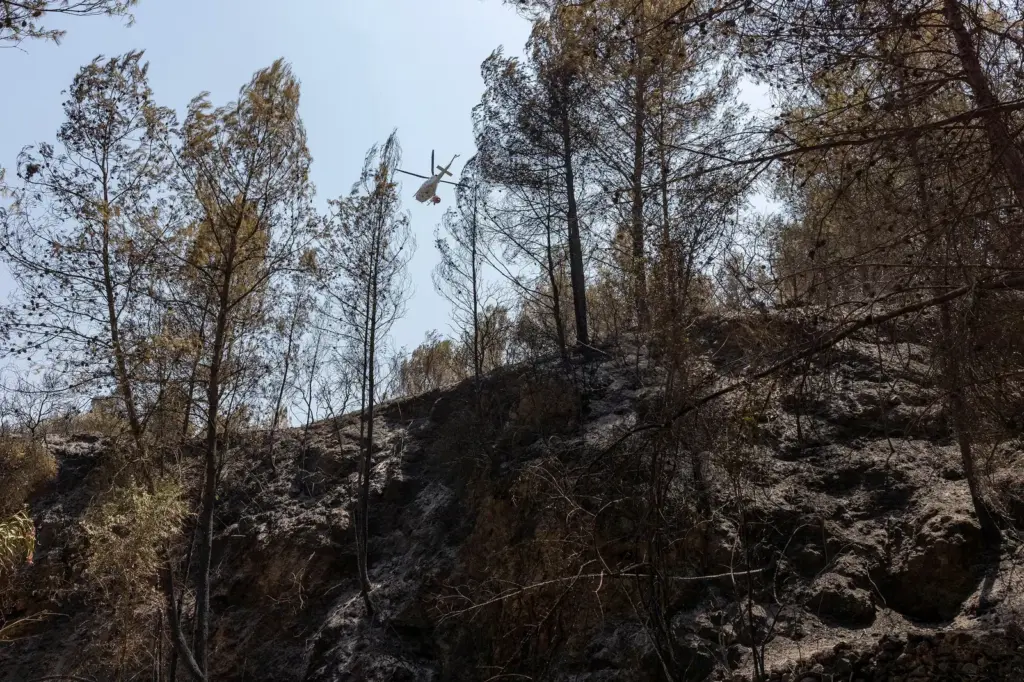
All eyes were on “four or five strategic points,” hot spots that still resist within the perimeter. “We have changed the composition of the device. Before we had a high percentage of professional firefighters whose job was the defense of the populations,” explained Pérez. Now the priority is different: to extinguish the last embers before being able to declare the fire stabilized.
Read more 2Cat breaks records with the best July in 20 years thanks to the Football World Cup
While the brigades combed the mountain, another investigation advances far from the fire front. The Civil Guard is trying to reconstruct how a fire that has kept much of the province on edge for a week began. Earlier this week, the Government delegate in the Valencian Community, Pilar Bernabé, confirmed that agents had taken statements from several witnesses. This Friday she revealed a new fact: investigators place the origin of the fire in “two distinct points in time and space,” although very close to each other, both located at the beginning of the mountain, next to the urban area of Vall d’Uixó and the neighborhoods that had to be evacuated. Bernabé has avoided confirming whether the investigation has already identified the responsible party.
For almost a week, the fight against the fire has pushed Castellón’s emergency services to the limit. There have been shifts after shifts, sleepless nights, and kilometers traveled through a mountain that barely gives respite. “People have worked a lot and very hard in a very complicated scenario,” summarized on Thursday the director of the Advanced Command Post, Fernando Kindelán.
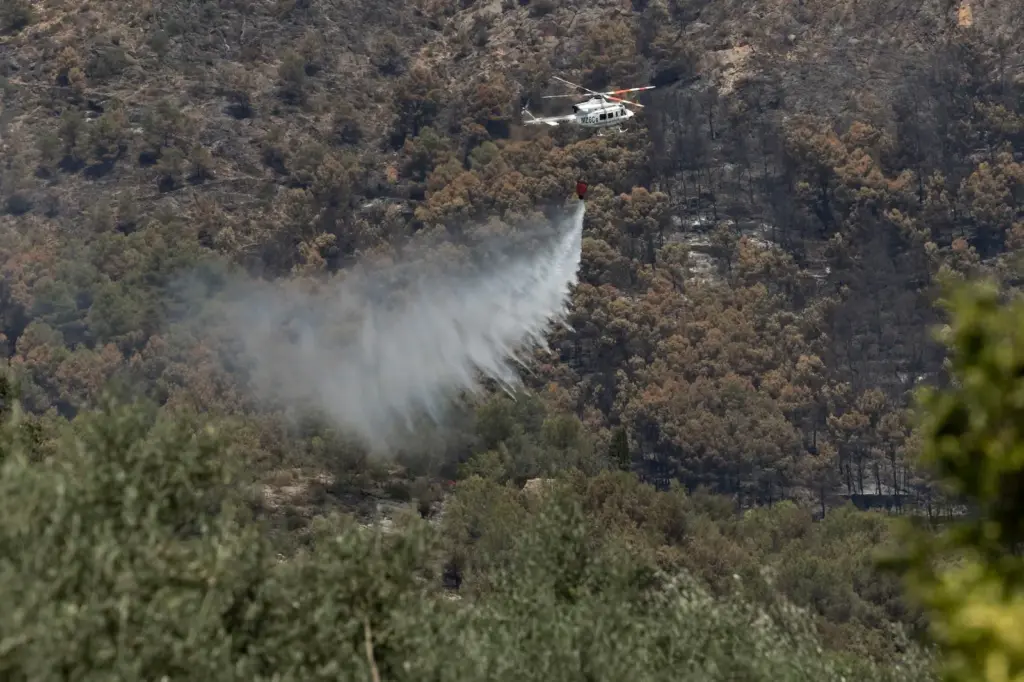
The greatest challenge has been at the head of the fire. There, in one of the most rugged corners of the Sierra de Espadán, the flames advanced among ravines, steep slopes, and a practically inaccessible forest mass. “It was one of the most complicated areas of the perimeter,” recount the forest firefighters themselves, forced for days to fight against a fire that, in many points, could only be reached on foot.
To the difficulty of the terrain was added weather determined to complicate every maneuver. The thermal inversion — a layer of warm air that traps cold air near the ground — has been one of the main headaches of the operation. The smoke was trapped over the valley, reducing visibility to almost make the mountain disappear and forcing at times to limit the action of aerial means. At the same time, this phenomenon altered the behavior of the fire and made its evolution much more unpredictable.
The firefighters know that, in these conditions, a gust is enough to change everything. “When the wind blows, the fire can travel a slope of 500 meters in just five minutes. The moment it ignites the crown of a tree, the fire begins to spread from crown to crown and there we can no longer do anything with our hoses against 15-meter-high trees,” explained one of the personnel. That is when the protagonism passes to the air. “That is why, in fires of these characteristics, aerial means do 90% of the work.”