







After almost four years of disagreements, mutual disqualifications, and diplomatic decisions that seemed to have closed any possibility of reconciliation, Peru and Mexico are beginning to exchange signals of détente. Midweek, the Mexican president, Claudia Sheinbaum, revealed that there were already direct contacts with Keiko Fujimori’s new administration. Then, this Friday, the foreign minister, Carlos Espá, responded with an unusually warm tone towards Mexico and the Mexican president.
Read more Venezuela negotiates, Washington arbitrates and Trump decides
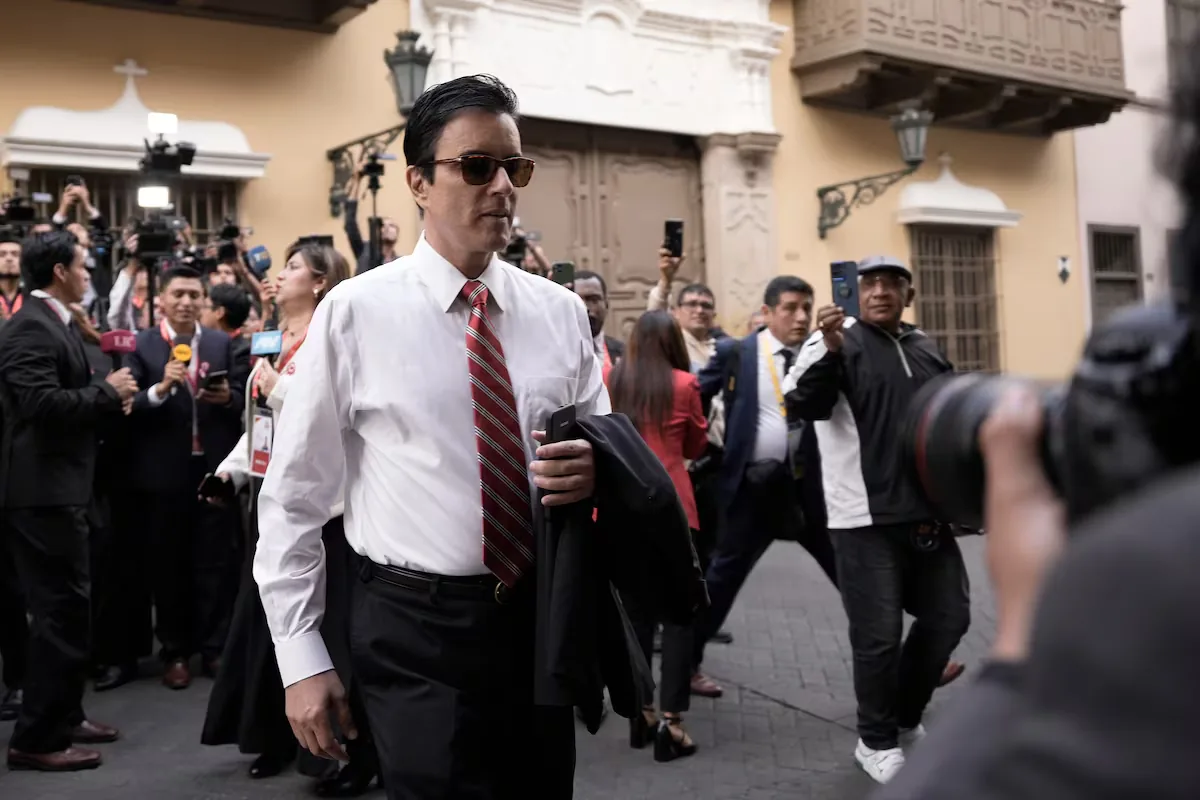
During the handover ceremony of the Ministry of Foreign Affairs, Espá surprised with personal praises towards Sheinbaum that contrast with the confrontational language used by both governments in recent years. “I personally have great recognition and respect for the president. I like the things she has; moreover, she is very similar to President Fujimori in the very correct and cordial treatment with journalists, in the way she approaches the humblest people, in the way she dresses, highlighting Mexican traditions just like our president. I find many similarities between both. I hope that, walking, they come together, they meet. They are two women presidents and both are warrior women,” he stated.
It is not just a diplomatic courtesy. The comparison between Claudia Sheinbaum and Keiko Fujimori constitutes a carefully calculated political gesture. In recent years, Mexico made support for former president Pedro Castillo a matter of principle, while the Peruvian state interpreted that position as interference in its internal affairs.
The statements come just two days after Sheinbaum confirmed that there are already talks between both governments. During her morning conference, the Mexican president revealed that Foreign Minister Roberto Velasco spoke “personally” with Keiko Fujimori and assured that “we are making progress” to normalize the bilateral relationship. “We will see how this develops. And the president of Peru also knows that we have a position related to President Castillo. It is a position that we have established. Beyond that, obviously, we do not want the rupture of relations,” Sheinbaum said.
Carlos Espá reinforced the same idea after the civic-military parade for the national holidays. “Peru and Mexico are two brother countries, they are very similar countries, we are two millenary civilizations, we are heirs of two immense cultures (…) We cannot be separated from Mexico. We have to be together and I am sure that very soon we will be able to continue walking on that path of integration,” he declared.
The deterioration of the relationship began on December 7, 2022, when Pedro Castillo tried to dissolve Congress and reorganize the judicial system. Hours later he was detained when heading to the Mexican embassy in Lima intending to request political asylum. His wife and children managed to take refuge in Mexico, where they have remained since then. From that episode, a growing diplomatic crisis was unleashed. Then-president Dina Boluarte expelled the Mexican ambassador in Lima after Andrés Manuel López Obrador called her government “spurious” and refused to recognize her as head of state. The tension even reached the Pacific Alliance when Mexico decided not to transfer the pro tempore presidency to Peru.
Read more UNAM, the bubble of Rector Lomelí
In 2024 a new source of friction arose. Mexico reinstated the visa requirement for Peruvian citizens, eliminating a free entry regime that had been in place since 2012. Peru initially responded with an equivalent measure, although it ended up withdrawing it a few days later due to the economic impact it would have had on tourism.
The definitive breaking point came in November 2025. Mexico granted diplomatic asylum to Betssy Chávez, the former president of Pedro Castillo’s Council of Ministers, investigated for her alleged participation in the failed self-coup. The Peruvian government responded by formally breaking diplomatic relations and refusing to grant the safe conduct that would allow Chávez to leave for Mexican territory. Since then, the former prime minister has remained sheltered in the former Mexican embassy headquarters in the San Isidro district of Lima.
Asked about the possibility of finally granting the safe conduct, Espá avoided anticipating a political decision. “In the Council of Ministers we will make the appropriate decisions according to the principles of international law and according to the Caracas Convention of 1954, which from my point of view is very clear,” he said.
The choice of Espá as foreign minister also offers some clues about the foreign strategy of the Fujimori government. He has received criticism for not belonging to the diplomatic service. Espá is a lawyer, former television host, who ran for the presidency in the last elections. He spent more than fifteen years leading the communications department of the United States embassy in Lima, and that experience seems to have weighed in his appointment. It is no coincidence that Keiko Fujimori has defined the United States as a “strategic ally” and has proposed Peru’s incorporation into the so-called “Shield of the Americas.”
Paradoxically, while the new government reaffirms its alignment with Washington, it also seems willing to rebuild bridges with countries with which Peru had strong political disputes. Just a few weeks ago, Peru and Venezuela announced the start of a gradual process to restore their consular relations after almost two years of rupture. Now Mexico appears on the list. It remains to be seen if these diplomatic gestures manage to rebuild a long-standing relationship.