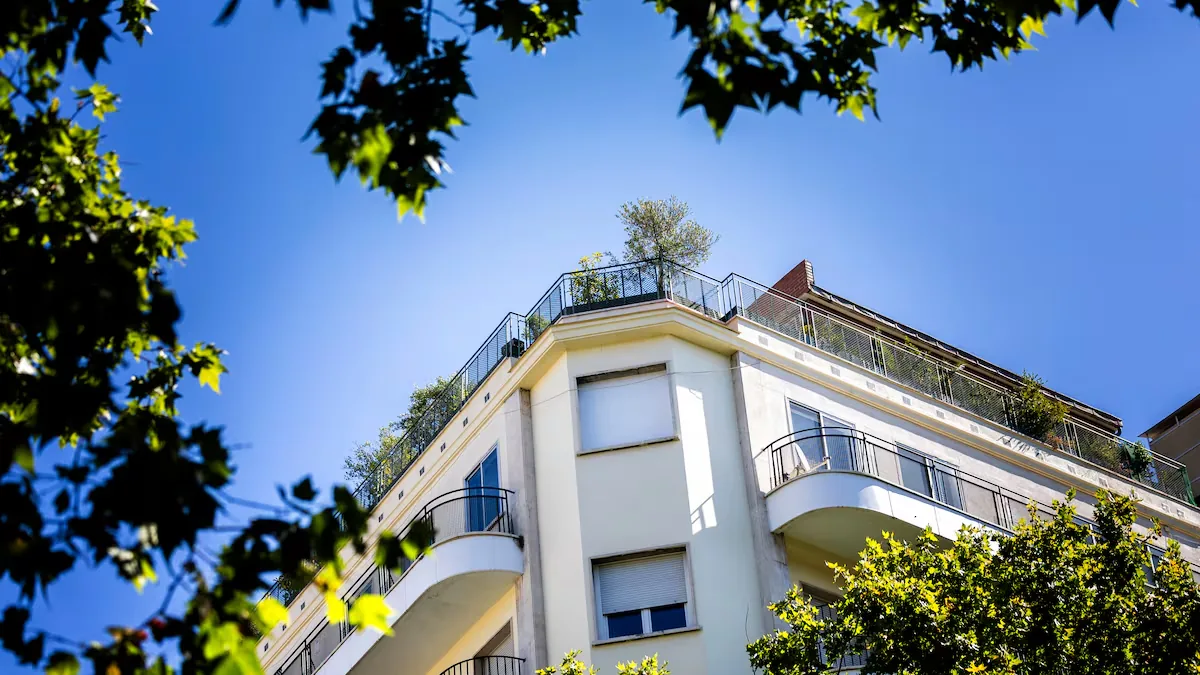






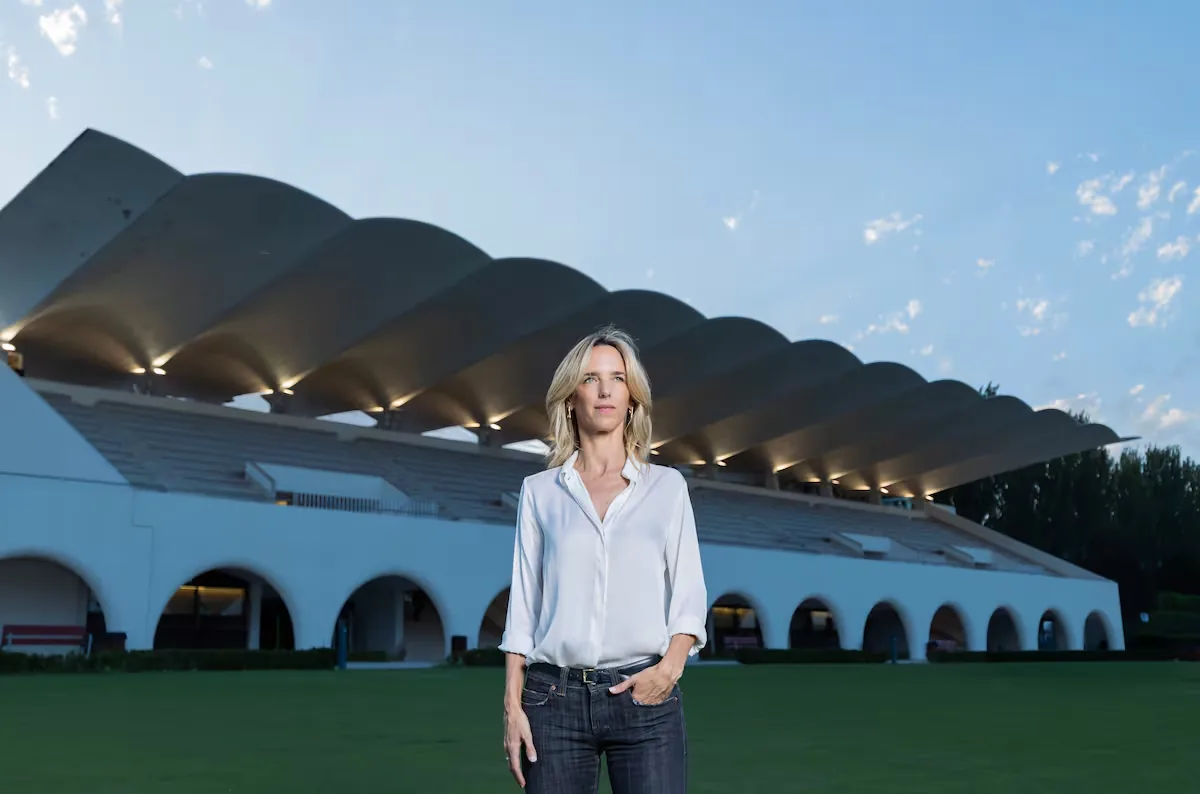
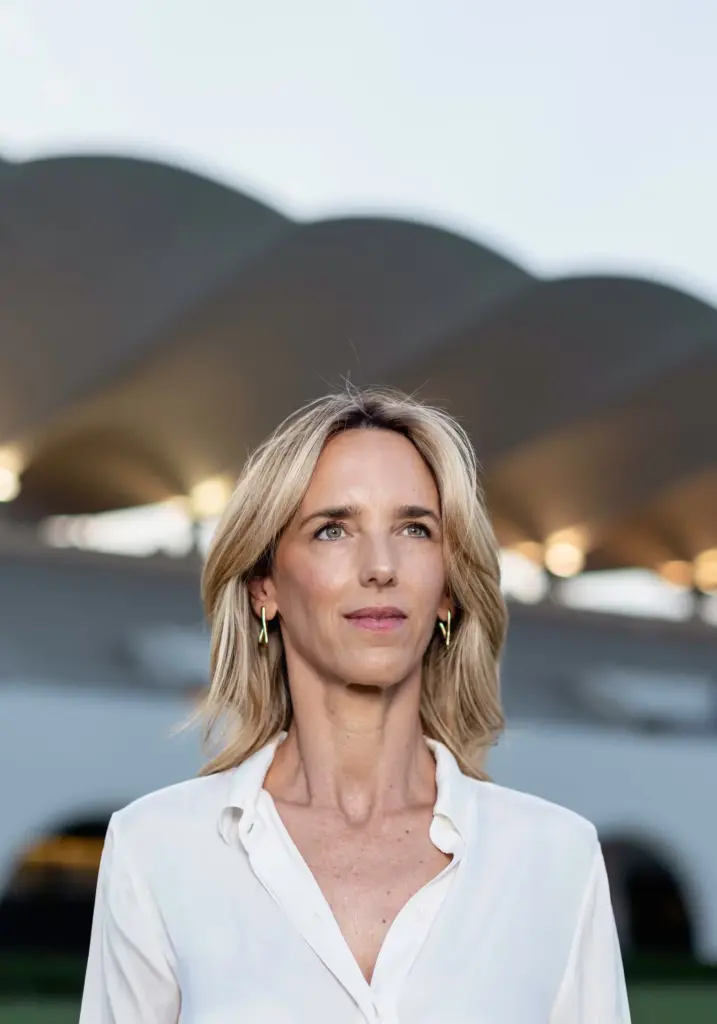
Cayetana Álvarez de Toledo (Madrid, 51 years old) is a historian, journalist, and politician; Spanish, Argentine, and French; marchioness and PP deputy. She snubbed Mariano Rajoy by letter, voted for Ciudadanos, and won a delayed duel against Pablo Casado, who dismissed her as parliamentary spokesperson in 2020. For now, she still trusts Alberto Núñez Feijóo, who brought her back to stir debates in Congress. She titled her first book Politically Undesirable (2021). The second, To the Spaniards Who Want to Be, will be published this fall. The interview takes place at the La Zarzuela Racetrack: “I grew up in Argentina, among choripanes and Creole horses. This building, very little known, is dazzling. I adore rationalist architecture, which unites reason, beauty, and truth.”
Question. She defines herself as an “Amazonian feminist,” from the school of Camille Paglia, the woman who said that “there is no female Mozart for the same reason there is no female Jack the Ripper” and who described singer Taylor Swift as a “Nazi elitist Barbie.” What difference do you think there is between politically correct and correct politically or just correct?
Answer. Paglia is a very free woman who changed the conception of feminism, advancing the idea of a brave woman, not a victim, capable of conquering any goal with her womanly weapons. Politically correct is censorship or self-censorship, disguising the truth due to taboos imposed by society, and correct or politically correct is daring to tell the truth in the most difficult circumstances. I claim my right to offend and to be offended. Tolerance is the foundation of a democratic society.
Q. Who are your female role models? Which women from the past or present do you admire most?
A. Camille Paglia and María Corina Machado [Venezuelan opposition], a great fighter who understands that there is no peace without freedom, without democracy.
Q. This year marked ten years since the “I will never forgive you, Carmena” regarding the costumes of the 2016 Three Kings parade. Have you forgiven Trump for presenting María Corina Machado as a good girl who is not very popular among Venezuelans?
A. No, I remain very demanding with the United States government, in which I see a business sector and a principles sector competing with each other. What we want is for the principles sector to prevail, not to replace one kleptocratic regime with another. Conceiving Venezuela as loot is not defending democracy in Venezuela.
Otegi, Junqueras, Puigdemont… are as Spanish as I am and I am as Spanish as Lamine Yamal or Santiago AbascalCayetana Álvarez de Toledo
Q. Is the PP afraid to talk about Trump?
A. No one should be afraid to talk about Trump. We must not be carried away by fanaticism, sectarianism, and polarization. People must be judged by their actions and conduct, not by their theoretical ideological alignments. The worst thing about polarization is that sometimes it leads you to forgive your own what you would condemn in the others. And we cannot allow that.
Q. Has that already happened?
A. It happens daily everywhere. Democracies are completely shaken by spirals of polarization, and polarization is not an accident but a deliberate strategy promoted from power for one reason: divide and conquer. When your goal is absolute power, your means is polarization. That is the famous wall Pedro Sánchez announced: you demonize the alternative, call it fascist, ultra, Francoist… to prevent some of your own from crossing to the other side.
Q. Does your side not demonize?
A. There is a chasm in Spanish democracy: the government’s agreement with a party that does not condemn political assassination, a moral red line that no one had dared to cross. If I were asked with my beloved Mario Vargas Llosa when this legislature got screwed, I would say when the PSOE decided to pact with those who do not condemn assassination.
Q. If EH Bildu did not condemn violence, it would not be where it is because it would violate the Party Law.
A. They do violate the Party Law. The extraordinary thing about Spanish democracy is its immense generosity with those who seek to destroy it. Spain’s greatness is that it does not require sentimental adhesions to be Spanish. Otegi, Junqueras, Puigdemont… are as Spanish as I am and I am as Spanish as Lamine Yamal or Santiago Abascal.

Q. You say in Politically Undesirable: “I know political death and I defy it like Cyrano de Bergerac, sword raised.” Those who criticize you within the PP often refer to your independence, that you go your own way. When was the last time, if ever, you followed a talking point?
A. Never. I defend with tooth and nail critical spirit and free voice. We have moved towards a partitocracy where the leadership controls absolutely everything, parties become increasingly shriveled, and the deputy’s voice and vote are worth less and less. Having less freedom means less responsibility and becoming a perfect irresponsible and, therefore, perfectly replaceable. I accept that there is something called voting discipline because this is not a cricket cage or a university assembly, but discipline must be compatible with maintaining the ability to question leadership decisions. I confess I read talking points very little. I know there are intelligent people making them and it is not easy to synthesize the day’s news in three or four sentences, but honestly, I am not a talking points person.
Q. Did you ever pay that fine for breaking voting discipline?
A. No. I am a staunch defender of judicial independence and opposed any trading of favors, in this case in the Constitutional Court. Casado was still in charge. They opened a file against me, I appealed explaining that the PP program included defending the independence of the Judiciary, and what happened was that the entire PP leadership fell. I won that appeal by the facts.
Q. Have you understood the Isabel Díaz Ayuso and the penthouse thing?
A. No, not yet.
Q. Who do you think has been the best PP president and why?
A. José María Aznar. Because he was Prime Minister and because he was able to unite everything to the right of the left, creating a political project of majorities. That has to be our goal. A revolution of decency is needed. Spaniards have paid with their taxes for ministers’ prostitutes and that is not even the worst thing that has happened. We have seen the constitution of a mafia paid for by the ruling party to destroy judges, prosecutors, and police fighting corruption.
Q. You refer to the Leire case, which is under investigation, but the Kitchen case has just been judged.
A. Yes, but setting up a mafia to try to destroy judges, prosecutors, and police from power is unprecedented. The old PSOE used dirty tricks against state enemies: the GAL, regrettable. The new PSOE has used them against state servants. The excellent news is that there are antibodies in Spain: prosecutors, judges, politicians, and journalists doing their job and, above all, there is, and I have seen it with the World Cup, a nation waiting to be led, eager to start a new stage.
Q. You were disappointed by Mariano Rajoy and Pablo Casado. Do you think the same will happen with Alberto Núñez Feijóo? Would you put your hand in the fire for him?
A. I would not be in politics and would not ask for votes if I did not believe Feijóo will be all that he is promising, essentially promoting a great moral political refoundation.
Q. Did you put him in quarantine when in 2024 he opened to a conditional pardon for Puigdemont or more recently, when he advocated in Catalonia to “turn the page” on the procés?
A. He did not advocate pardoning Puigdemont, who decided to make Sánchez president because he erased his crimes of coup d’état in exchange for power in an unprecedented corrupt transaction. Feijóo neither did nor will do that. I have great hope regarding what we can do in Catalonia: presence, prestige, power, and budget for those who are not nationalists; establishing an incentive system so that being constitutionalist or Spanish in Catalonia is rewarded.
Q. Now there is a constitutionalist president, Salvador Illa, from the PSC.
A. Illa is a crypto-nationalist: neither a bad word nor a good action. He is a hybrid between Zapatero and Sánchez: he has the temperament of the first and the bad politics of the second.
I am quite loyal in my loves, also in politics, and that does not mean I cannot suffer disappointmentsCayetana Álvarez de Toledo
Q. Nicolás Sartorius thinks the Amnesty Law will benefit the PP because it will restore the most natural pacts between the right wings. Do you think your party will pact again with Junts as it did with its predecessors from CiU? Would you be willing to speak Catalan in private, as Aznar once did?
A. I respect many things Sartorius says, but I strongly disagree with that analysis. The Amnesty Law disarms the state and therefore cannot benefit either the PP or the PSOE. With that law Sánchez tried to amnesty himself, just like with this last pardon to Laura Borràs, which is a scandal: Sánchez came announcing regeneration against corruption and ended up promoting a kleptocratic international that pardons corrupt politicians.
Q. The European Court of Justice ruling supports the Amnesty Law and shares the Government’s thesis that it has favored political and social reconciliation. Do you agree? How did you find Catalonia the last time you visited?
A. What pacified Catalonia was what the police heroically did on the night of October 1 [2017, during the independence referendum]. El Mundo sent me to Sant Julià de Ramis to see how Puigdemont voted and I saw the Civil Guard dismantle the entire operation, removing children from their parents’ shoulders who were being used as human shields by heartless nationalists who used their children to vote. The civil guards removed the children, protected them, kept them aside. Puigdemont could not vote. I asked him if he was prepared to go to jail and he did not answer me. It was the state, the Civil Guard, the Police, the Supreme Court, and Mariano Rajoy’s government, with which I disagreed so much, but which applied article 155, that really pacified Catalonia, not the Amnesty Law, which emboldened them.
Q. But rejection of independence increased in Catalonia after the Amnesty Law.
A. Now in Catalonia there is a new factor, Aliança Catalana, a spin-off of the process and a radically separatist and xenophobic force. What happens is that many naive Spaniards end up liking it because immigration is an enormously sensitive and controversial issue throughout Europe and particularly in Catalonia. Many people vote for Aliança Catalana thinking they are voting for a firm option against immigration when they are voting for a firmly xenophobic option against the rest of the Spaniards. The separatist process in Catalonia continues. And there is another key, the concept of plurinationality, the new euphemism that will be used for the break.
Q. A concept that more than one PP leader has pronounced.
A. Yes, some have made the mistake of pronouncing it. Otegi is telling Sánchez: I cover your corruption in exchange for you giving me my nation and we will call it plurinationality because it is easier to digest.
Q. Does Otegi have the capacity to cover up corruption scandals?
A. By supporting Sánchez in power, he covers his corruption. Bildu has a political project called plurinationality and it is the break of Spanish civil peace and democracy. The more cornered he is, the more Sánchez will advance in that direction.
Read more A group of migrants riot at the Tapachula migrant station
Mariano Rajoy and Felipe González are quite similar in many thingsCayetana Álvarez de Toledo
Q. When Casado hired you, he said you were “the Messi of the PP.” Around that time, Aznar said of Casado that he was “a leader like a castle.” Does love last less in politics?
A. I am quite loyal in my loves, also in politics, and that does not mean I cannot suffer disappointments. But I am neither of great hyperboles nor a supporter of subsequent resentment.
Q. Who do you love more: Rajoy or Felipe González? Which speech do you like more?
A. Rajoy and Felipe González are quite similar in many things. They are defenders of the constitutional and democratic order born in 1978, they understand it deserves to be preserved. It is the coincidence between social democracy and liberal conservatism.
If the PP does everything it should, Vox would cease to existCayetana Álvarez de Toledo
Q. You recently said in Congress: “Spain is experiencing a moral eclipse, but the sun will rise again.” To what extent are you worried that Santiago Abascal acts as the moon, that is, as vice president of the government?
A. I prefer an absolute majority for the Popular Party and I work for that. People look at me incredulously, but socially, in Spain there is a center-right majority that wants a regeneration of public life. Am I afraid that Abascal will be vice president? No, I am much more terrified of having a continuation of Sánchez with political forces that destroy the democratic order and coexistence.
Q. Why do you think the splinter party, Vox, has grown so much? Has it been fed by the matrix, that is, the PP; the situation; or both?
A. If the PP does everything it should, Vox would cease to exist. If we have a great political project, that will dilute the strength Vox has. There is a wave in many countries of which Vox is part, and against the typical self-flagellation of the right in Spain; while classic liberal conservatives in Europe are being swept away by forces to their right, the PP is resisting extraordinarily.
Milei put to work a country where the mentality was to wait for the handoutCayetana Álvarez de Toledo
Q. You have shared talks and compliments with Iván Espinosa de los Monteros, who left Vox in 2023. What do you see as more likely: that he ends up in your party or you in his?
A. Iván has no party and I don’t think more parties are needed. I am in favor of uniting from the base. I once proposed that Inés Arrimadas, who was in Ciudadanos and is a good friend of mine, be number one for Barcelona. If we cannot unite among ourselves, how are we going to unite the nation?
Q. You voted for Ciudadanos.
A. Yes, when I left the PP.
Q. The Argentine president, Javier Milei, says he has “the worst opinion” of you. Is it mutual?
A. No. I disagree with him and I think liberals have to be able to accept criticism not only from adversaries but also from supposedly friends and allies. I am blocked [on social media] by two people: Óscar Puente and Javier Milei. I must be a centrist. Puente is a trickster, a person who has made insult a way of being in politics. I don’t know if he aspires to succeed Sánchez and thinks that way he will stir the membership, but I want to end that way of doing politics. I am tough and claim to be firm in politics, but I believe that manners perfect the truth and that there must be respect for language, for the interlocutor, and even for beauty in public discourse.
Q. You also insult.
A. I do not claim the right to insult, but to tell the truth, however harsh it may be.
Q. The “I like fruit,” which was actually “son of a bitch,” from Isabel Díaz Ayuso to Sánchez, what did you think?
A. She said it to herself on the floor [of Congress] after Sánchez, who now claims the presumption of innocence, accused her brother of corruption. They read her lips.
Q. But they even made T-shirts about it…
A. Yes, then, indeed, they make a campaign of vindication, skillful propaganda from her environment. Do I like it? No, I do not use insult in politics.
Q. Was it a mistake for Díaz Ayuso to give Milei a medal “for his defense of freedom”?
A. Not at all. Milei has done something admirable in Argentina: a cultural revolution. He told the country: to get ahead, you have to work, not live off subsidies. Populist politicians who say they will pay for everything deceive people and destroy the country. Argentina was a destroyed country with entire generations going into exile. What it lacks is institutional respect.
Q. Doesn’t it sound strange to mix culture and Milei? His speeches are coarse, full of insults.
A. I am talking about something much deeper. I don’t like his manners. The intolerance of criticism is very illiberal. I say cultural in the sense of mentality: he put to work a country where the mentality was to wait for the handout.
Q. Do you think Argentina is better now?
A. Argentina is coming out of the very deep hole into which populism plunged it.
Q. Isn’t Milei a populist?
A. His manners may be demagogic, strident, and the insult is intolerable.
Q. Where do you see yourself in the future? Would you like to make the leap from ideas to management?
A. Of course. Management is embodied ideas. The great mistake of the right, not only in Spain, is to think that ideas are one thing and management another. Good management is good embodied ideas and that is the ultimate goal of any politician.
Q. Do you see yourself in a ministry, holding a portfolio?
A. Of course. I am here to be a great politician. Neither spectator, nor commentator, nor analyst. Politics is defending ideas and putting them into practice. And especially at this moment: undertaking the great regeneration of Spanish democracy, decolonizing institutions, reforming the Congress rules to strengthen accountability, ending the tyranny of minorities, removing the earpieces, which is the first thing I would do.
Q. Was the earpiece in Congress such a big deal?
A. It is an authentic nonsense, an absurd boundary and with a touch of farce, because deputies come down from the podium speaking perfect Spanish. That common language has a moral value because it allows us to get closer to the different. We have to start closing fissures and see what we have in common. What do I have in common with a leftist; or a Catalan nationalist with a child born in Extremadura?
Q. The Spanish national team?
A. The national team is the happy expression of that definition of Spain: the stubborn will to live together the different. We are a heterogeneous country and we will be more and more because the migratory phenomenon will increase, with control, because it cannot be a mess, as we have seen in Ceuta.
Q. What do you attribute what we have seen in Ceuta to?
A. It is not a migratory crisis caused by any mafia. It is a hybrid and premeditated attack against Spanish sovereignty. And it is the definitive proof that Sánchez’s legacy is a failed state. Like in the Green March, Morocco takes advantage of the agony of a twilight leader to redefine Spain’s borders. And a state that allows a neighbor to define its borders is a failed state. Spain needs to shield Ceuta and Melilla. Regain effective control, expel every last attacker. Not one should remain, as Europe demands, to which, by the way, Sánchez has dedicated more insults than to the invader.

Q. Are you comparing Sánchez to Franco?
A. In what is comparable.
Q. What is comparable?
A. What is comparable.
Q. You said that when you told Pedro J. you were leaving El Mundo to work for the PP, he said: Don’t you realize journalism is politics without responsibility?” Do you think he was right?
A. He has denied it, but I see him with his suspenders spinning like a top in his office, outraged because I was going to a party. I replied that politics was precisely assuming your responsibility. Sánchez told Rajoy he had to resign because he was the political responsible for Bárcenas. By his own standards, he could no longer be in office. We have to articulate a doctrine of political responsibility: when someone has to resign.
Q. Where would you place the threshold?
A. The ideal would be that a political leader assumes responsibility and if later it is proven that there is nothing, returns. But whatever the doctrine, it must always apply, not only when you are in opposition.