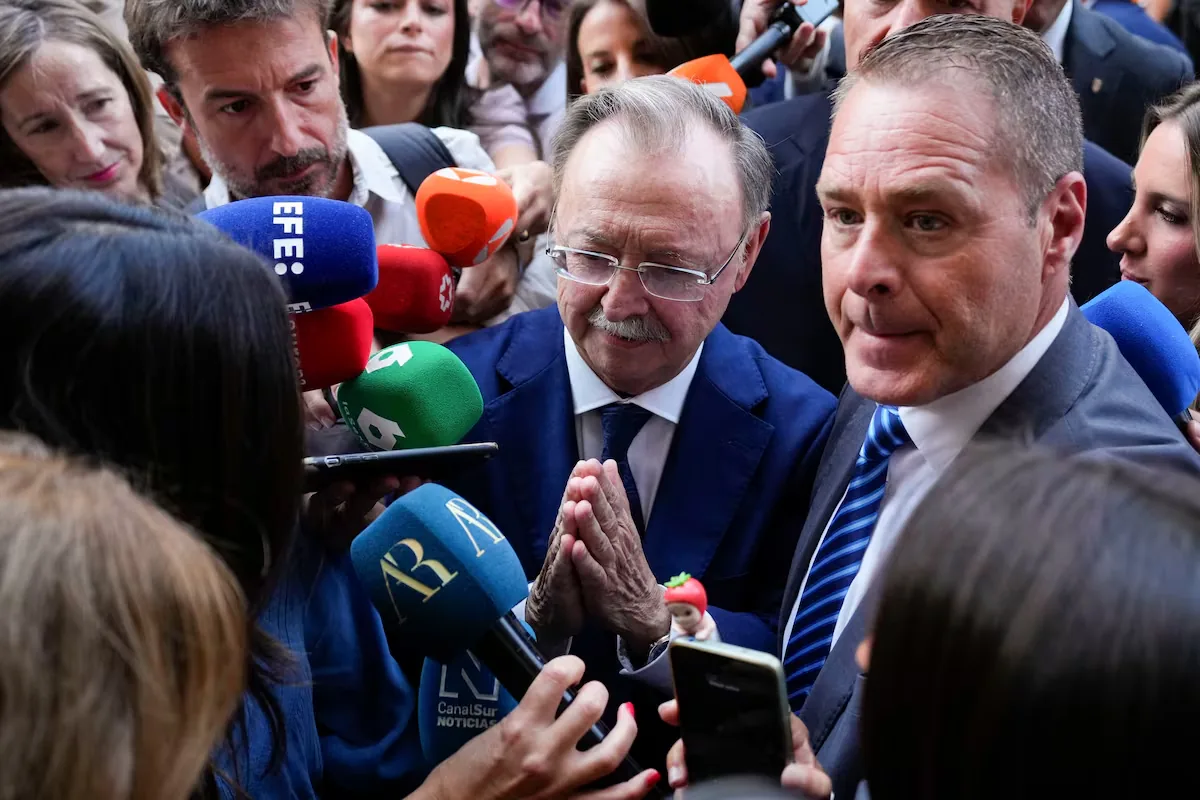



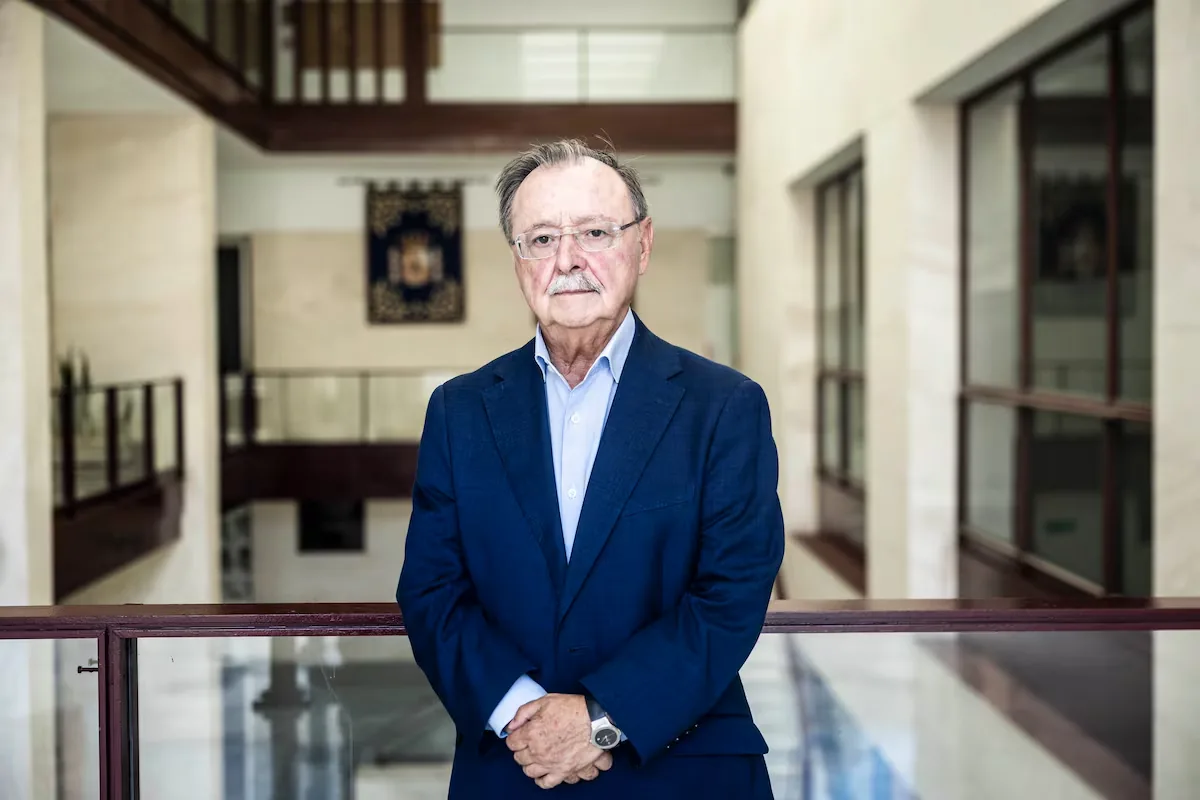
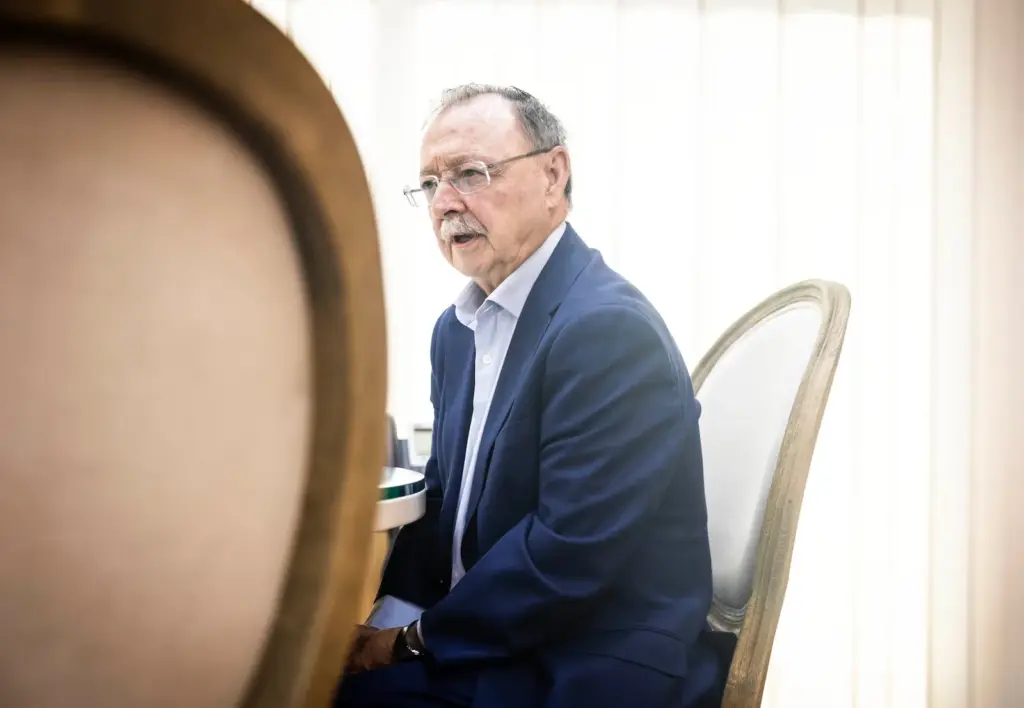
Ceuta is a city “that does not lose its composure even with its soul on edge,” says its president, the popular Juan Jesús Vivas (Ceuta, 73 years old), who has been in power for more than 25 years and today shows himself “outraged by what happened.” Ceuta, indeed, is a unique enclave, both because of its geopolitical situation and its diverse population, both Muslim and Christian, of Spanish and Moroccan origin, living together in harmony. You had to see these days the military giving instructions to the migrants in their own dialect, Dariya. Another peculiarity of the city is the president himself, a moderate man in times of political stridency, from whom it is difficult to get any kind of outburst against the socialist government or to get upset with his party which, embracing Vox’s theses, presents an adverse face to the solidarity distribution of foreign minors among the communities it governs. No anger, but firmness, yes: Vivas clings to the law and the Constitution and does not move from there. In his office, there are photos with presidents of the PSOE and the PP. And of course, a chapiri of the Legion, the cap of the most representative military force of that Spanish North Africa.
Read more A group of migrants riot at the Tapachula migrant station
Question. How has Ceuta felt these days?
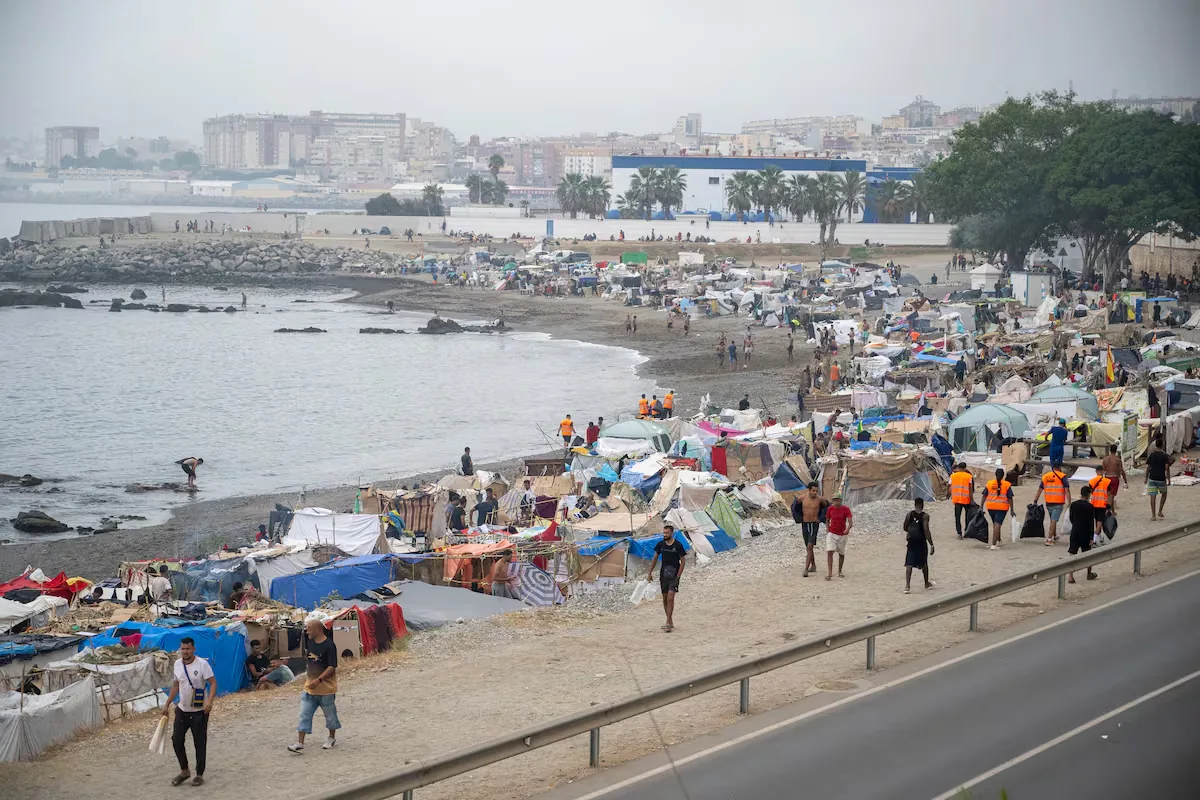
Answer. With sadness, unease, concern, and anguish. Apart from political assessments, the perception of the people is unequivocal. This was a besieged city and I do not want to dramatize, but if it is not a siege, it is a blockade. People perceived that this was not a migratory crisis, it was fundamentally an attack, a violation of Spain’s territorial integrity. There are figures that about 73,000 people have left and Ceuta has 83,000 inhabitants. It is difficult to call that a migratory crisis. People had the perception that this, if not orchestrated, was favored or allowed by Morocco.
Q. Were people afraid?
A. Yes, yes. People were afraid, they went into their homes, but it is a very mature society. Because in May 2021 we already had another episode, but of lesser magnitude in terms of numbers. The city is used to living with statements and pronouncements related to geopolitics.
Q. You say there are still 5,000 people in the city.
A. I do not have exact data, but that is what we perceive based on the work being done. Normality means that all those people who have arrived in Ceuta massively and irregularly and do not want to return voluntarily must be expelled through a legal procedure, but immediately and also through the Tarajal border.
Q. And do you trust that this will happen?
A. Well, I think it must happen. Because this violation of our territorial integrity must have a strong response from Spain and Europe, because otherwise, the people of Ceuta will be left with the impression that this goes unpunished and at any moment it can happen again. Clear rules must be established and European regulations applied regarding border rejections, returns, and asylum. The European Pact on Migration and Asylum must be fully applicable at this land border that Europe has in Africa. If a return file is denied, it must be executed and through the Tarajal border. And Morocco must behave consistently with European regulations in this regard, because Morocco’s relations with Spain and the rest of Europe are very strong in many areas. This must also be the case here.
Q. Do you think Spain has the capacity to bring Morocco to order?
A. We all want good relations, but if Morocco does not want to have them, then we will have to ask it at least to respect. We cannot ask it to change its policy, not even its foreign policy; its positions are legitimate, but it must respect Spain’s territorial integrity, the security of our borders. We must ask and demand it. And I think Spain must ask and demand it with the support of the rest of Europe.
Q. How have you seen the adverse or defensive reactions of certain European leaders, such as France or Italy?
A. I believe that the statement by 22 member states has been very favorable, because it is being recognized that Ceuta is Europe and is Europe’s border. Our main strength is that we are part of the European Union, that has been very important for the whole of Spain and fundamental for us, who are a border.
Q. The government was slow to react, they say it did not see it coming. How do you rate that?
A. It pains me to say it. I believe that our behavior, and mine in particular, with the national government has always been based on loyalty, responsibility, and a sense of state always. We had it in May 2021, but in this case it is different because then there was no persistent warning from the city government, which now was given as a result of arrivals by sea, which already put us in a critical situation. We told them that we could see ourselves like in 2021 in a few days and the response was that this would be fixed, that it was the same every summer, and we said no, it did not look like it, and there we had it.
Q. Has the government apologized for not having been accurate enough?
A. I do not think it has to apologize to me personally. What must be done now is to prepare so that it does not happen again. This has to be a before and after. Otherwise, it will be very difficult to restore the trust of the citizens of Ceuta. The first measure must be the immediate expulsion of those who have stayed and through Tarajal, using all necessary resources so that the files can be formalized; that is only a matter of means. And then… I do not want to be misunderstood, but Morocco has shown us that it is not reliable. So, there is no choice but to put the necessary means so that it does not do this again.
Q. What means?
A. It must be studied, not improvised, but it involves physical infrastructures, staffing, personnel, material means, technological… We want good relations: if it is with Morocco’s collaboration, perfect. This interests everyone. Now, the border cannot be subject to that permanent doubt of when Morocco, another day it feels like it, will open the doors and let everyone in. We have always been in favor of collaboration and understanding, but there is the answer.
Q. The mobilization of the Army was also delayed, right?
A. There was no reaction with the use of capacities and means proportional to the magnitude of what was happening. The Army has fulfilled a very important function, it is prepared, there has been no use of force and it conveys security.
Q. Do you know the number of unaccompanied minors currently in Ceuta?
A. Before the sea arrivals began, we already had about 180 minors when Ceuta’s ordinary capacity only allows for 29, according to the law. When the first sea entry crisis ended, before the avalanche, we found 750. We do not know what there is now. But we will comply with the law, as we have always done, but we cannot do it alone, we need the support of the State. We have a very good relationship with the Ministry of Youth and Childhood and I believe they will continue to support us now. Together we will try to assess the situation and find a solution.
Agreement between the PP and Vox
Q. Do you find the same support from the presidents of your party who govern in other autonomous communities and who have rejected this solidarity distribution of unaccompanied minors?
A. There are restrictions, but minors are being taken out [to the Peninsula]. We must invoke the imperative of the law. We support Royal Decree-Law 2/2025 [on the distribution of unaccompanied minors among communities] and we continue to support it. It is a necessary instrument. We will strictly comply with the law, because this is no longer only national legislation, these are community directives and international conventions that Spain has signed.
Q. But now the situation will be more complicated, due to the pacts with Vox in Extremadura, Aragón, Castilla y León, Andalusia.
A. I hope it does not complicate it. We have applied the law, we consider that the law is in force and, therefore, it must continue to be applied. This administration, certainly, will do everything possible for the law to continue to be applied.
Q. Feijóo has been in Ceuta with you. What has he told you about this?
A. We have not discussed that matter, I tell you honestly, because of course, here we had the mayor. In the meeting I had with the president of the government, I was accompanied by the city’s Presidency counselor, who is in charge of the Minors area, and he told the president that the city cannot bear that number, that is, if the city had to bear only the reception of the 750 counted, it would go bankrupt.
Q. What do you think of Vox’s statements about Muslims? The ultra politician Alvise was shouted at on Saturday in Ceuta that this was not Torre Pacheco and was cornered.
A. In Ceuta, the feeling of Spain is carried in a very clear, emphatic way, shared by all Ceutans, no matter how they pray or what they are called. Ceuta is a model of coexistence among different faiths, cultures, and origins. Therefore, it is a concentration of the principles and values that are at the base of our Constitution.
Q. But the PP’s pacts with Vox have a marked anti-Muslim tone. In Ceuta, they will have difficult relations.
A. We defend the equality of all Ceutans, no matter how they pray or what they are called. And a model of society where every citizen feels free to express their beliefs and celebrate their traditions and feel proud of their origin. That model of society and that equality are non-negotiable for us. We do not allow that, they are our neighbors, soul friends, companions.

Q. In that sense, do you feel the full support of your party? Because some PP statements are very similar to Vox’s in this regard.
A. Well, I have only been in the Popular Party, and this opinion I am expressing I have defended from day one. And no one has called me to order. And the day I cannot defend this, I will not be here. Here we either live together in peace and harmony or we sink together. That is, there is no other option. We are inflexible on that… I do not want to finish without talking about the dead…
Q. Of course.
A. We feel this irreparable drama as our own. There are 88 bodies in the morgue [at noon on Saturday] and also on the other side of the border. It is a barbarity. An irreparable drama that could have been avoided.
Read more The deceased at the border continue to fill the large makeshift morgue in Ceuta