




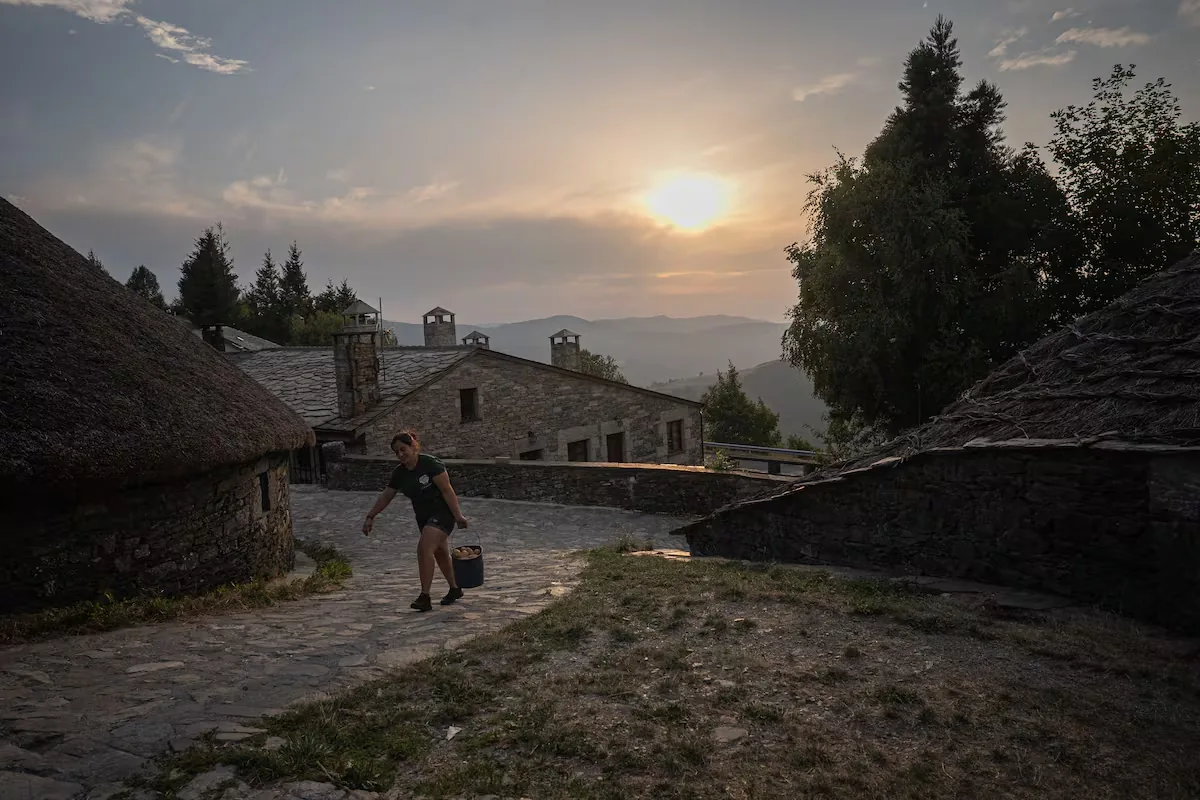
The minute and a half of fame for empty Spain
The first total solar eclipse visible on the Peninsula in over a century will focus, for one day, on some of the most depopulated provinces, where observation conditions will be ideal. EL PAÍS travels from today until Sunday to six points along the path of totality in empty Spain to tell how they are preparing for August 12
Read more Ice creams and popsicles from worst to best: a personal ranking from Fantasmiko to Frigopie
The Camino de Santiago will be plunged into darkness in broad daylight, at 20:28 on August 12. At that time, an elongated shadow will arrive at hypersonic speed (more than 7,000 kilometers per hour) and will cover almost the entire Jacobean route simultaneously for about 1 minute and 30 seconds. Only the final destination — the last stretches, already in Compostela — and the initial stages of the pilgrimage — up to passing Pamplona — will continue to see sunlight, as they lie outside the eclipse’s path of totality.
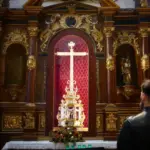
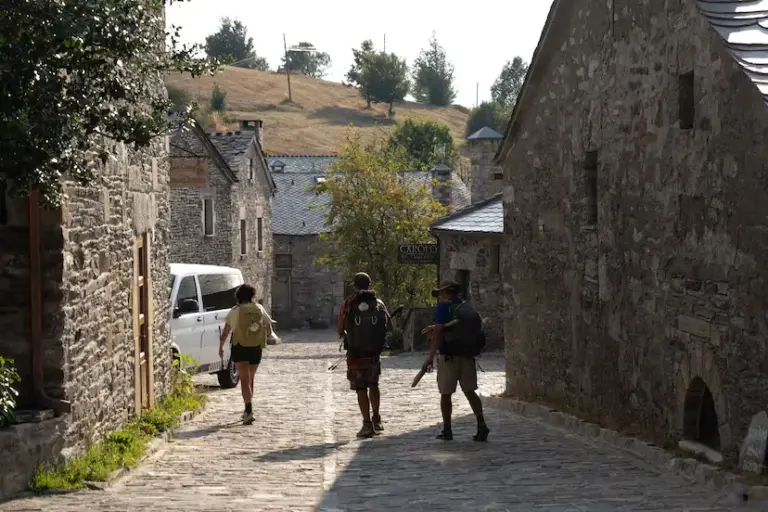
Just days before the phenomenon, excitement about this astronomical prophecy begins to reach the queen stage of the French Way, which culminates in O Cebreiro (Lugo) and marks the entrance to Galicia. In the middle of this steep ascent, which many consider the hardest part of the route, is the Leonese village of La Faba, with a parish hostel next to the Church of San Andrés, built between the 16th and 18th centuries. The hostel keeper who welcomes pilgrims, the German Andreas Braun, lights up when hearing about the eclipse. He recalls one he experienced that crossed central Europe on August 11, 1999: “I was 24 years old and was in Abensberg [Germany]. We left the city to watch the total eclipse in the middle of the countryside. It was incredible. There was a large flock of birds flying and, as soon as the shadow arrived, they abruptly landed on the ground.”
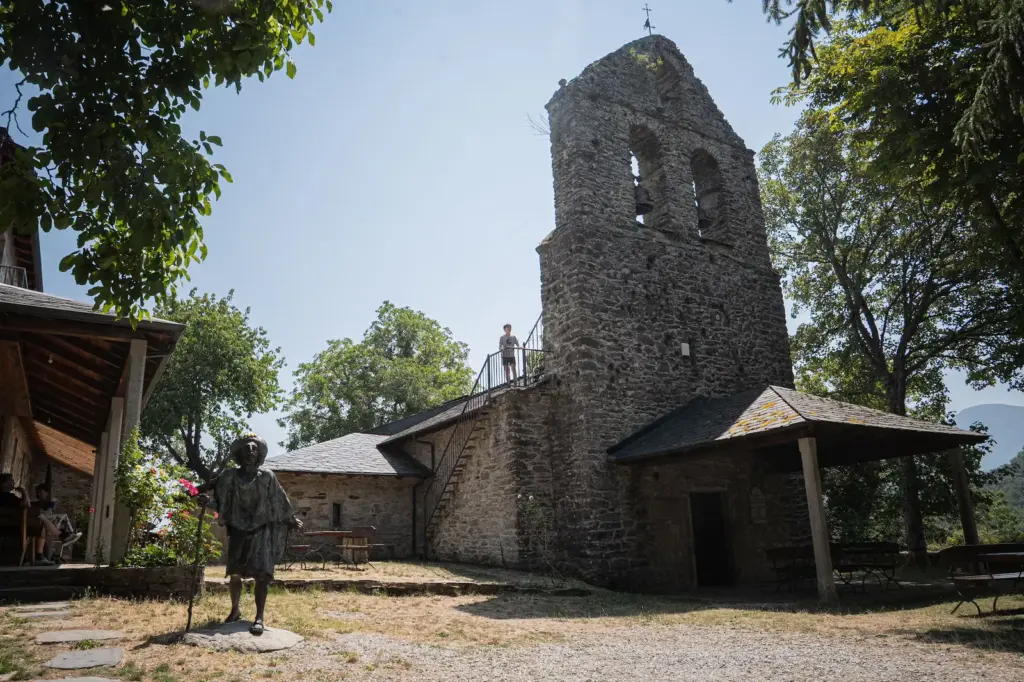
For him, having the chance to see a total eclipse again is a fortunate accident. Braun belongs to a German association that manages the hostel and when he committed to being its hostel keeper this summer, he had no idea it would coincide with the astronomical phenomenon. “Luckily, my return ticket is just for the next day,” comments the German volunteer. An official eclipse viewer check in Spain shows how the maximum solar occultation will occur at the La Faba hostel with the sun already half-covered by the mountain leading to O Cebreiro. Andreas frowns and then smiles again, pointing to the church bell tower. His son Valentin, 12 years old, climbs the delicate staircase and verifies that from up there it will indeed be possible to see the sun during the totality phase.
At the La Faba hostel, no reservations are made, so Andreas cannot confirm if pilgrims are planning their pilgrimage to coincide with the eclipse. To know that, he recommends talking to Fray Paco, the Franciscan who guards the sanctuary of O Cebreiro. Following the route, the next village is La Laguna, still in the province of León. There, at the pilgrims’ inn — which is also the bar where locals gather — reservations for the eclipse have already been made; even some for two nights, which surprised the village. “Yes, we know an eclipse is coming here, but we still have to keep an eye on the cows,” comments Rosa, the oldest resident of La Laguna, with irony and modesty. “Here we live 24 all year round. But in La Faba only six or seven people spend the winter. In summer, those who live in Bilbao or Barcelona return, and there are more than 30.”
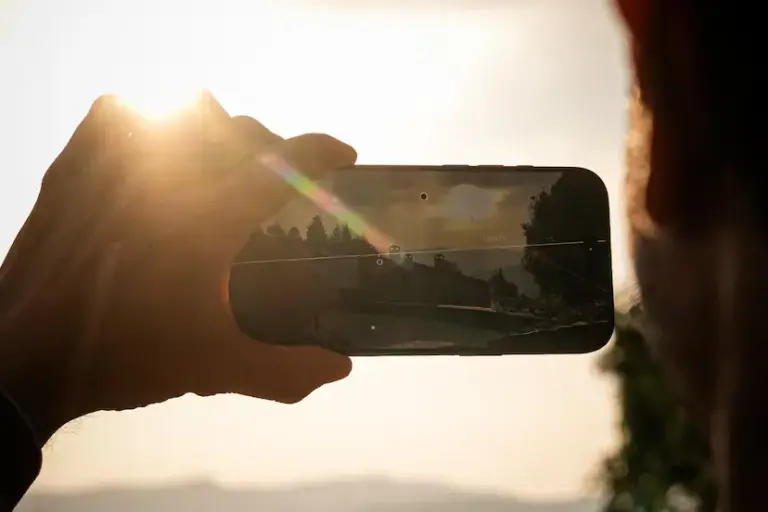
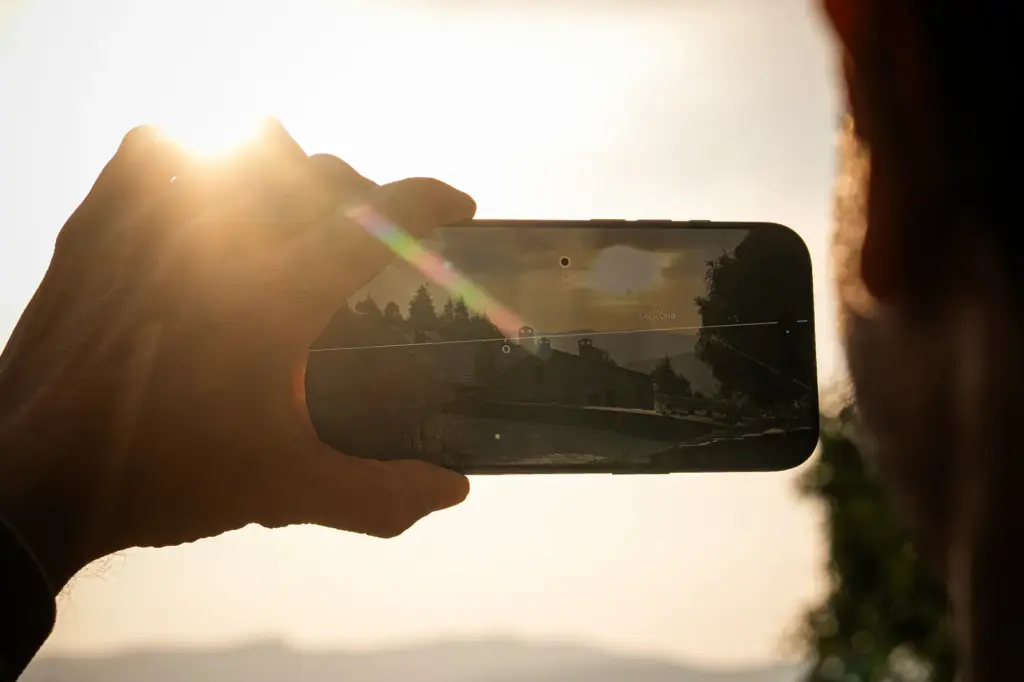
At the end of the climb to O Cebreiro, the landscape opens up. Despite the proximity of other mountains, the sunset area has a fairly clear horizon. Using augmented reality apps, it is easy to check with a mobile phone that the first Galician village on the Camino de Santiago has numerous ideal places to see the eclipse at its peak. “We just hope the fog doesn’t come in at that hour, which can happen any day and at any time here,” say Elvira and Rosa, who eagerly await the sunset on August 12.
Rosa recalls having experienced a total eclipse: “I was a child, in El Bierzo [the neighboring region, in León], I think in the late 1960s. The sky darkened and the animals fell silent. To watch it, we used the smoked glass from the bottom of some bottles.” Elvira looks at her surprised: “Well, I don’t remember any of that.” The archives side with the second: the previous total eclipse on the Iberian Peninsula was in 1905. Both work in a rural hotel (Casa O Cebreiro), where there are still quite a few rooms available for the eclipse, something uncommon that night within the path of totality.
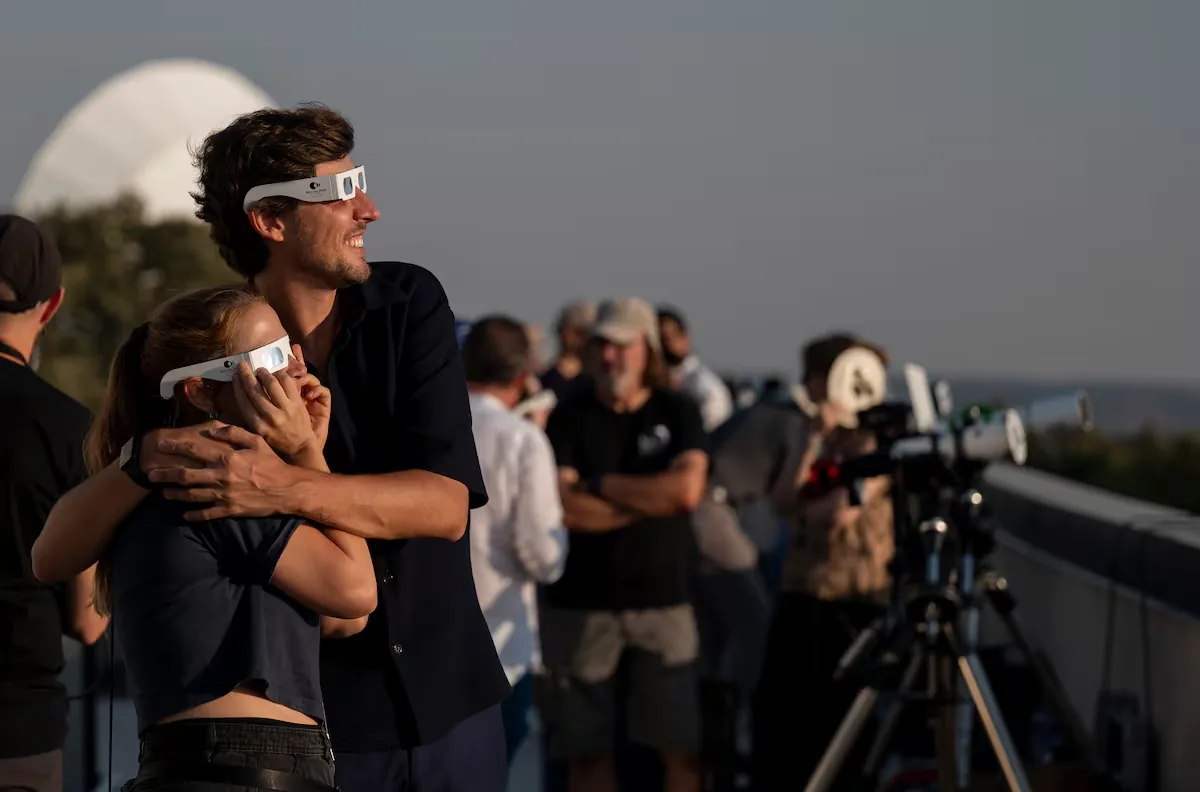
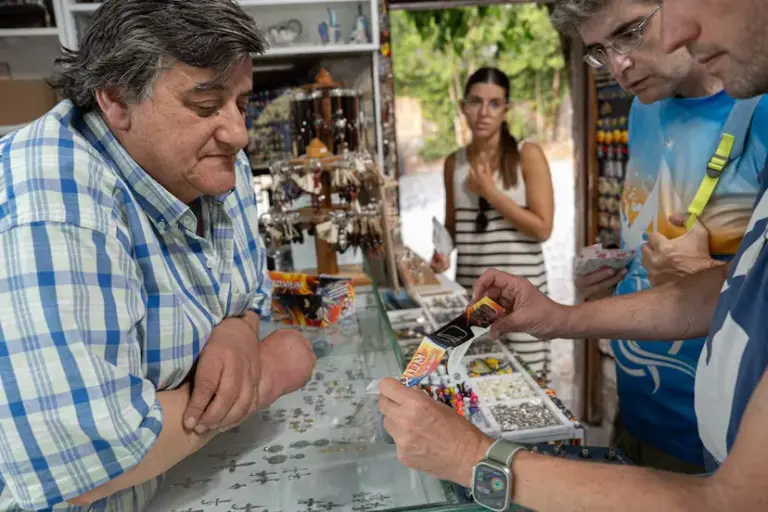
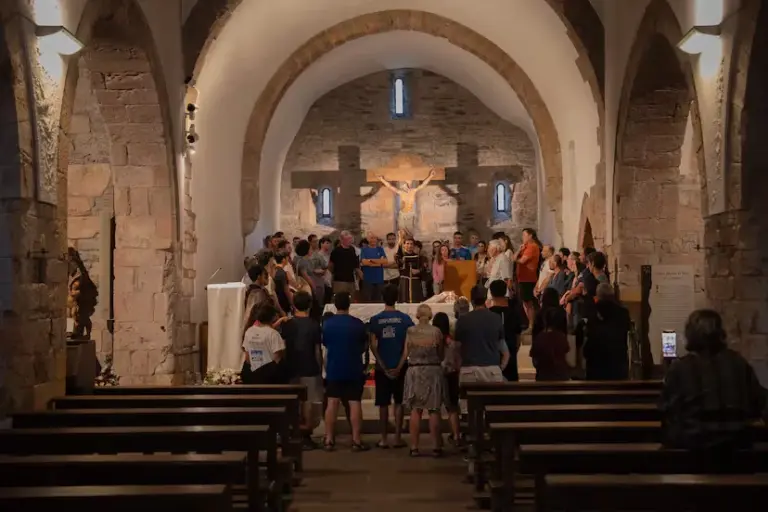
After the daily pilgrims’ mass at 19:00, Fray Paco says he is not aware of “any specific activity for the eclipse” at that emblematic point of the Camino. The charismatic parish priest, the reference for the four people who sleep there all year round and for those who go up daily to work in the restaurants and lodgings, awaits the eclipse with anticipation: “I feel a connection with all things astral. After the blessing, I will encourage those attending the mass to come with me to see the eclipse, which will then be starting. The pilgrims’ hostel area is ideal,” explains Fray Paco. When asked if he will have glasses to distribute, he refers to the nearest shop. There, José proudly shows a box of protective glasses, which stand out among all kinds of Camino souvenirs.
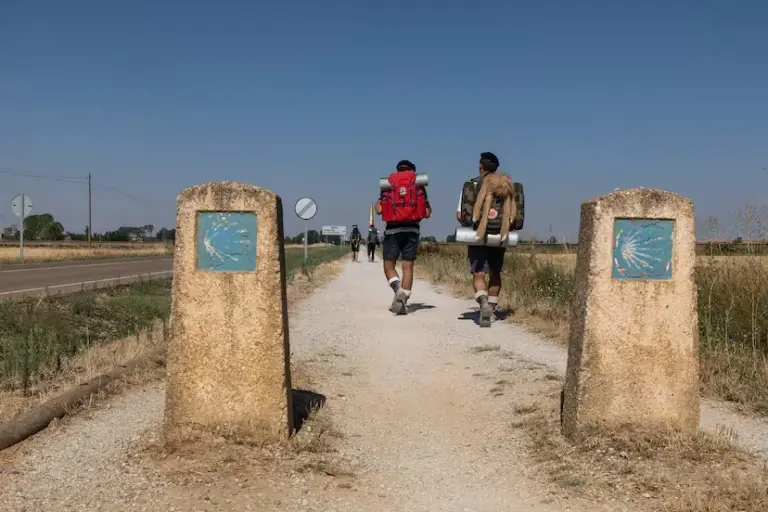
The whims of celestial mechanics and the waltz danced by the Earth and the Moon together around the Sun have made the Camino de Santiago the central axis of the shadow of this total solar eclipse, at the beginning of its passage through Spain. It is a route very similar to that of the 1905 eclipse. History repeats itself; and the central part of the pilgrimage route — in the provinces of Palencia and Burgos — is again an ideal place to observe the phenomenon, due to its plains and the high probability of clear skies. But everything has changed in a century. Back then, the Camino was abandoned. Elías Valiña, parish priest of O Cebreiro and revitalizer of the Jacobean route, began painting the yellow arrows in 1984. And in 1905, many more people lived in the villages now passed by hundreds of thousands of pilgrims each year.
Hope and concern in Palencia
In this 2026 eclipse, however, the protagonist will be empty Spain. One of the villages the Camino passes through that continues losing inhabitants is Carrión de los Condes (Palencia), which in the last 30 years has gone from 2,595 to 1,997 registered residents. In the coming days, Carrión will recover a symbol of the 1905 eclipse. Scientists from the Canary Islands Astrophysics Institute (IAC) have restored and brought back the telescope that Jesuits from the San Zoilo monastery used then to observe the solar occultation. The monastery was built over 10 centuries ago on the Camino de Santiago, just after passing Carrión. This initiative is part of a scientific project aimed at investigating the solar corona during the total eclipses of 2026 and 2027.
The outreach work of the IAC astronomers has helped raise awareness in many towns in the province of Palencia about the need to prepare for a massive influx of visitors on August 12. Luis Miguel Medina, mayor of Carrión de los Condes (PP), says they have been preparing a plan for those days for months and worries that hospitality infrastructures may be overwhelmed. “It is very difficult to know how many people will come, but we will do everything possible to guarantee safety and also so that our neighbors can enjoy the eclipse,” explains Medina, who highlights that they are delimiting ideal observation zones and involving various cultural and artisan associations. He adds that “between the Camino and several local festivals, accommodations in Carrión are almost full all summer.” That is why, he says, he preferred not to set up an official observation point in his town, after talks with the Junta of Castilla and León.
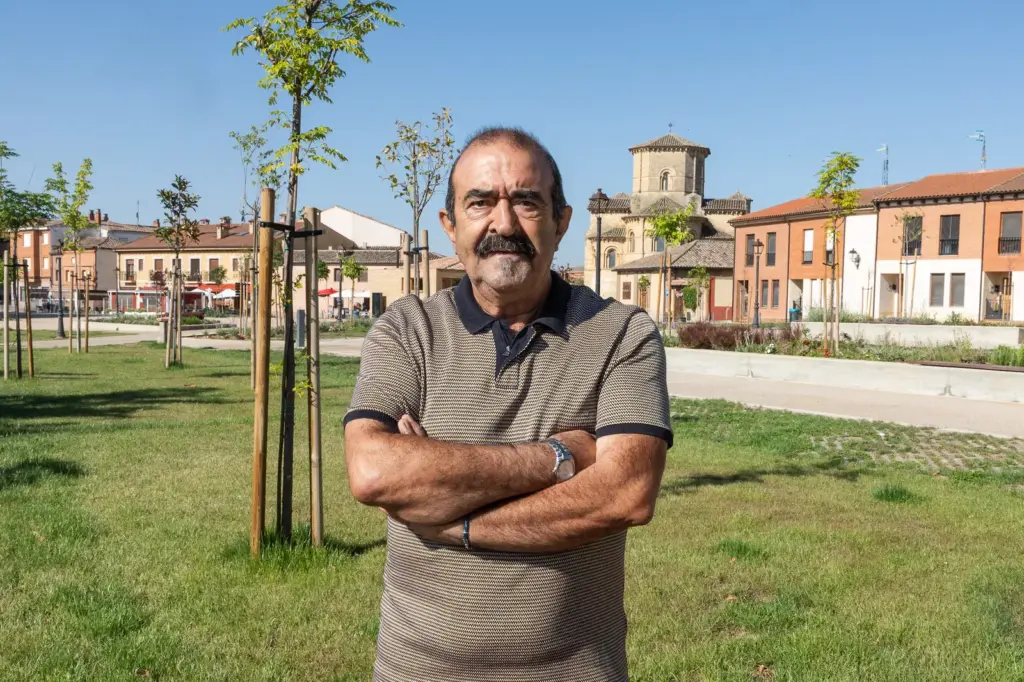
Following the pilgrimage in the opposite direction almost 20 kilometers, the next stop is Frómista, a Palencia town of 727 inhabitants, which has been a destination for astronomical tourism for years. At the Eco Hotel Terrafranca, Reyes recalls her surprise when she started working there three summers ago and could not accept a reservation request for August 12 this year because all rooms were full. Mayor Feliciano Montes (PSOE) regrets that, with this double link to astrotourism and the Camino, the Junta did not agree to his request to locate an official viewpoint in his town. Montes shows EL PAÍS the place, among fields of cereals and sunflowers, and explains that he prefers not to publicize the location much to avoid attracting more people than those already going. “Our priority is the safety of the neighbors. That is why we give protective glasses to every registered resident.”
“What scares me are the fires. Initially, this is not a very high-risk area, but what if it is?” he adds. “Also, with our modest means, we cannot attend to hundreds and hundreds of people and ensure that everyone is attentive to the precise instructions we will give about when to put on and take off the glasses.” The announcer of that typical ritual of every total eclipse will be Ángel de Francisco, in charge of the newly finished municipal star observatory in Frómista; decorated with his own astronomical images. This astrophotographer spends sleepless nights capturing spectacular images of the Milky Way passing over the emblematic Church of San Martín de Frómista, an 11th-century Romanesque temple. His next challenge is to capture a total eclipse with his camera: “I have never seen one. But, beyond photography, there is the excitement of living it with my neighbors.”
And how will you experience the eclipse?
At EL PAÍS, we want to know how you, our readers, are preparing for the astronomical phenomenon on August 12. Send us your testimony of how you are preparing or how your town or city will receive the eclipse to participacion@elpais.es. You can include photos if you want. Next Monday, August 10, we will publish some of our readers’ eclipse stories.