

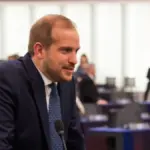



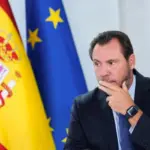



Kaja Kallas has had on her desk since this Friday a joint letter signed by three EU Foreign Ministers, those of Spain, Ireland, and Slovenia, urging the Commission not to ignore the debate on suspending the association agreement with Israel. In light of the military escalation undertaken by the Hebrew country since 2023 and the tightening of its legislation, including the recent approval of the death penalty, the Foreign Ministers revive and promote a request that is not new: the European Commission approved in September 2025 to suspend part of the agreement but left the final decision in the hands of the States. In Spain, Pedro Sánchez appealed to it just a week ago, “for coherence and also for empathy” and to avoid “a new Gaza in Lebanon.” The ministers seek for the High Representative of the European Union for Foreign Policy to take up the challenge and bring it back to the EU Foreign Affairs Committee table after a previous proposal did not gain unanimity among the Twenty-Seven.
Read more The second place for the final round in the Peru elections is decided in the courts
In the text, previewed by Cadena SER and accessed by this newspaper, the Foreign Ministers, “in a situation of such gravity” in the Middle East, with the forced displacement of 1.2 million people from their homes, urge the EU “to assume its moral and political responsibility, and to defend the fundamental values that have supported the European project since its foundation.”
The ministers specify the request that during the next meeting of the Foreign Affairs Council of the Twenty-Seven, a debate on the EU-Israel Association Agreement be included and argue that the Hebrew State has breached it. “The prior review of Israel’s compliance with its obligations under Article 2 of the Agreement was clear in pointing out that Israel is failing to meet its human rights obligations, and the situation has only deteriorated since then.”
“We express our deepest concern over various measures adopted by the Government of Israel, including executive decisions, military decisions, and laws passed by the Knesset [Israeli parliament], which contravene human rights and violate international law and international humanitarian law,” begins the joint text, which insists that the written request echoes many previous statements and direct appeals to the Jewish State to back down, but which, they conclude, “have been ignored.”
“For coherence of principles and for the sake of its own credibility, the European Union can no longer remain silent or inactive in the face of such violations,” appeal the Spaniard José Manuel Albares, the Slovenian Tanja Fajon — who, besides being Foreign Minister, is Vice President of her Government — and the Irish Helen McEntee.
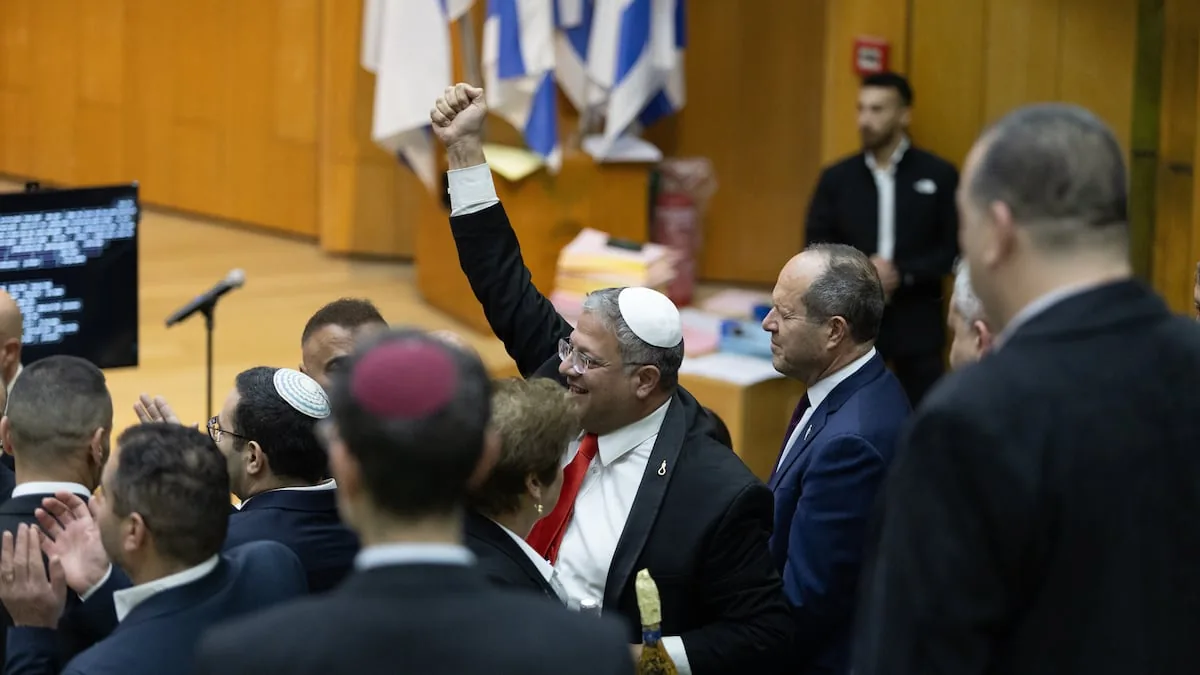
The three cite as the latest example of Israel’s drift the approval of the death penalty, to the indignation of Brussels and numerous countries, which “not only constitutes a serious violation of fundamental human rights but also a setback in Israel’s commitment to democratic principles,” which they understand violates Article 2 of the EU-Israel Association Agreement. “The bill approved by the Israeli Parliament represents another step in the systematic persecution, oppression, violence, and discrimination exercised against the Palestinian population.”
The text elaborates on the “unbearable” conditions suffered by the Gaza population, due to the “continuous violations of the ceasefire agreement” and difficulties in the entry of humanitarian aid. In the West Bank, the three ministers accuse, there is “an escalation of violence” with “radical settlers” who “act with total impunity” and also due to military operations by the Israel Defense Forces that cause “the intolerable death of innocent civilians.”
The Foreign Ministers add references to the “recurrent attacks against religious freedom and its exercise by Muslims and Christians” as they “call into question the traditional statu quo of the Holy Land,” but they also welcome “the ceasefire in Lebanon” decreed this Thursday for ten days.
“Given the level of violence and the seriousness of the current situation, it is necessary to urgently reconsider the European Union’s response, including the proposals put forward by the Commission President. Decisive and immediate action is required, and all options must remain on the table,” urge the three ministers.
On the 10th, the EU Foreign Affairs spokesperson, Anouar El Anouni, recalled that the issue does not have unanimity among member states but noted that it almost does, with 26 of the 27 states in favor, so the only dissenter is Hungary. The country has just chosen to end Viktor Orbán’s 16 years of government, a free verse within the EU also in foreign policy.
Read more Trump, about the Government of Spain: “They have not been there for us”