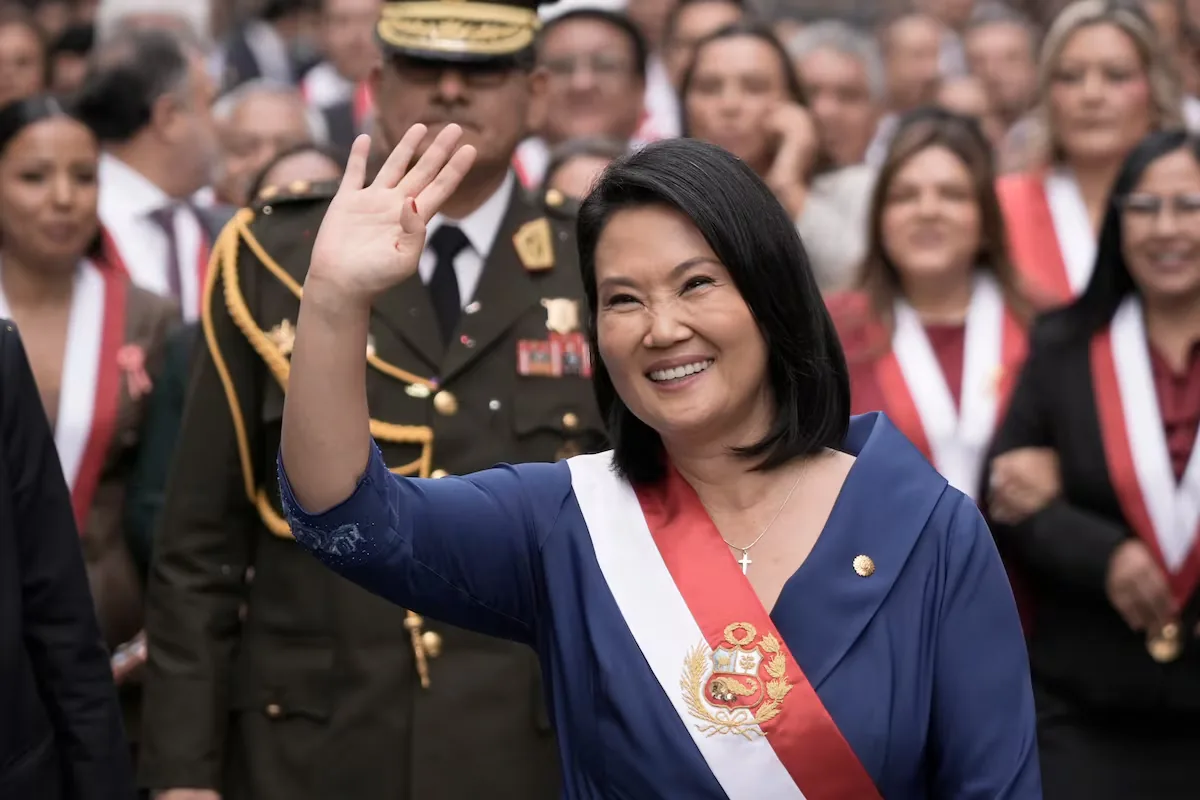






Keiko Fujimori, the Fuerza Popular candidate who has just passed to the second round for the fourth consecutive time in Peru, requested in 2021 the annulment of 200,000 votes to overturn the results that awarded the presidency to Pedro Castillo. Those votes, spread across 802 records, came from two regions of the highlands and one from the Peruvian jungle. The electoral authorities declared the request inadmissible as they found no basis, but it was recorded how an attempt was made to erase the popular will from the interior of the country.
This practice is repeated five years later. In a tight first round with 35 presidential candidates —which is still unresolved a week before the elections— the Renovación Popular party, of the far-right candidate Rafael López Aliaga, has submitted a hundred requests for electoral annulment against 98 polling stations in the Cajamarca region, in the northern highlands. These are stations where his main rival for second place, the leftist Roberto Sánchez (Juntos por el Perú), has obtained majority support with 4,116 votes.
With 93.3% of the records counted by the National Office of Electoral Processes (ONPE), Keiko Fujimori has a guaranteed ticket to the second round, scheduled for June 7, with 17% of the votes. That has never been in jeopardy. Her rival, on the other hand, is an enigma that keeps Peru on edge and divided. These are two candidates who understand politics from opposite sides: Roberto Sánchez (12%) and Rafael López Aliaga (11.9%). The difference between them fluctuates daily: on Thursday it narrowed to 7,000 votes, but on Friday it stretched again to more than 13,000.
ONPE reported until Friday that 5,645 records, representing 6% of the total, must be reviewed by the Special Electoral Jury. It is a significant batch that will move the needle in such a tight contest. The records are challenged for inconsistencies or irregularities, and the process could take between one week and ten days, as it must go through two instances. The uncertainty will not leave soon.
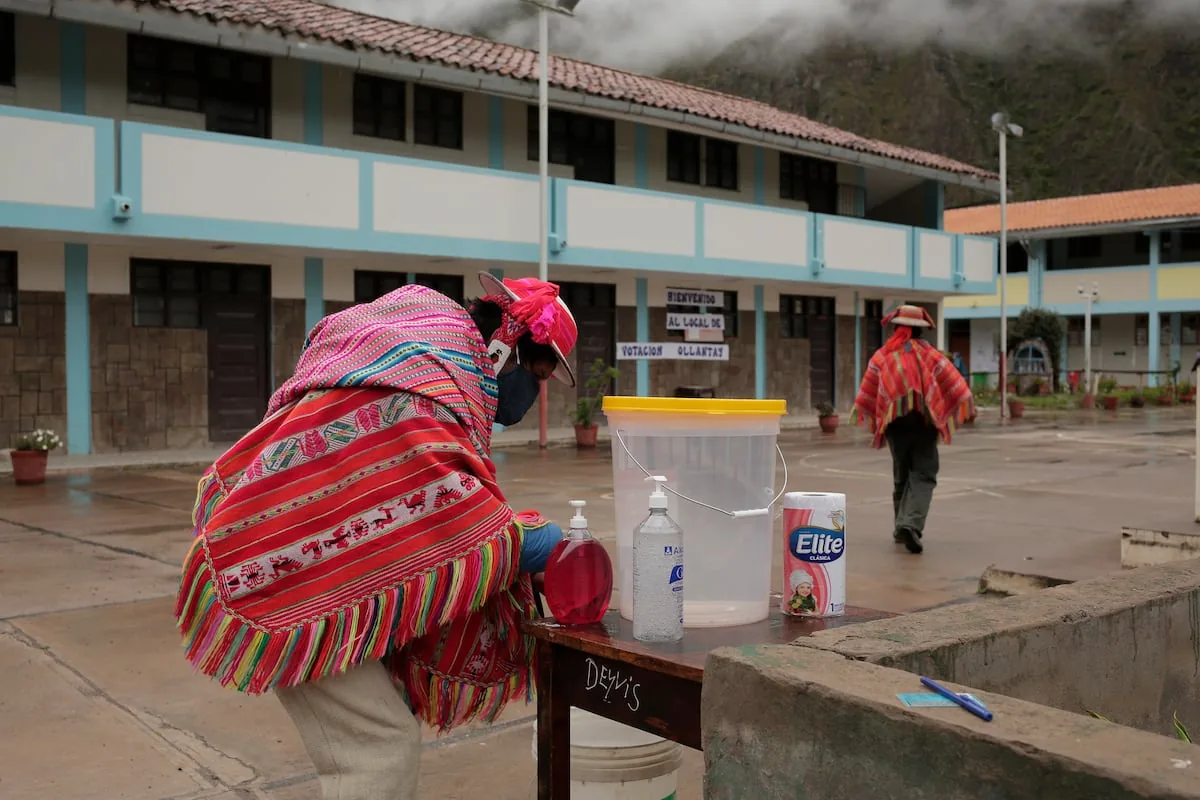
Every vote counts and, for that very reason, Renovación Popular’s request for annulment against the 98 polling stations in Cajamarca has sparked rejection from a large sector of the population. Tania Pariona, executive secretary of the National Coordinator of Human Rights, points out that “questioning the vote from the interior is not an isolated event: it reproduces historical relations of exclusion that have marginalized indigenous, rural, and Andean populations.”
Read more Trump, about the Government of Spain: “They have not been there for us”
“When a candidate like Rafael López Aliaga states that ‘in the provinces they don’t know how to fill out a record,’ we are not facing an opinion, but an expression of racism and discrimination that undermines the dignity of millions. And worse, these speeches are being replicated by his followers through insults like ‘cholos’ or ‘serranos,’ which is not freedom of expression; it is violence that reactivates a historical wound in the country,” explains Pariona.
López Aliaga cast doubt, during a recent interview with Argentine Agustín Laje, that citizens from the highlands had the “training” to process the records properly. The former mayor of Lima called a rally to denounce an alleged fraud and demand the annulment of the elections. He threatened to assault the head of the National Jury of Elections (JNE), Roberto Burneo, and announced a reward of nearly $6,000 for any electoral official who provides him with evidence to prove the alleged irregularities. Alerted that his proposal to pay for information could constitute a crime, he deleted the original statement and published another addressing the general public and no longer the workers of ONPE or JNE.
The rural vote was what achieved Roberto Sánchez’s temporary comeback, because the records are processed as they arrive and, given social gaps, the rural vote is among the last to be counted. Certainly, the vote from abroad —which tends to lean right— is what could reverse the trend, and López Aliaga’s supporters hold hope in that. However, the resolution of the challenged records will also make the difference.