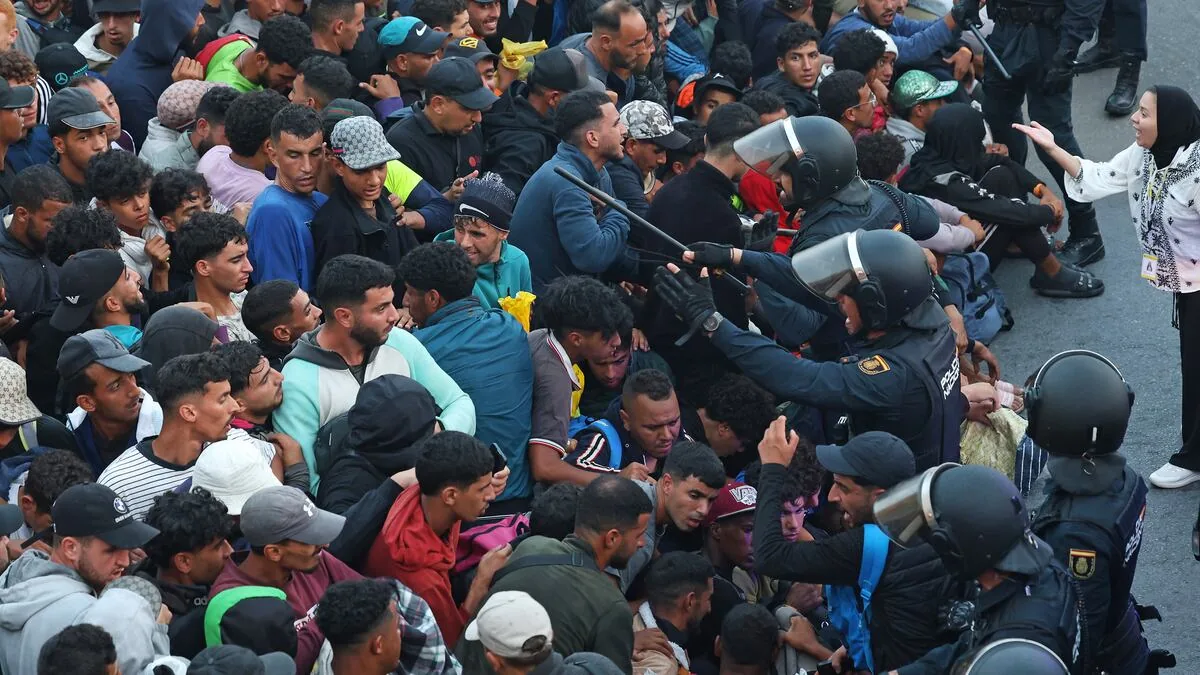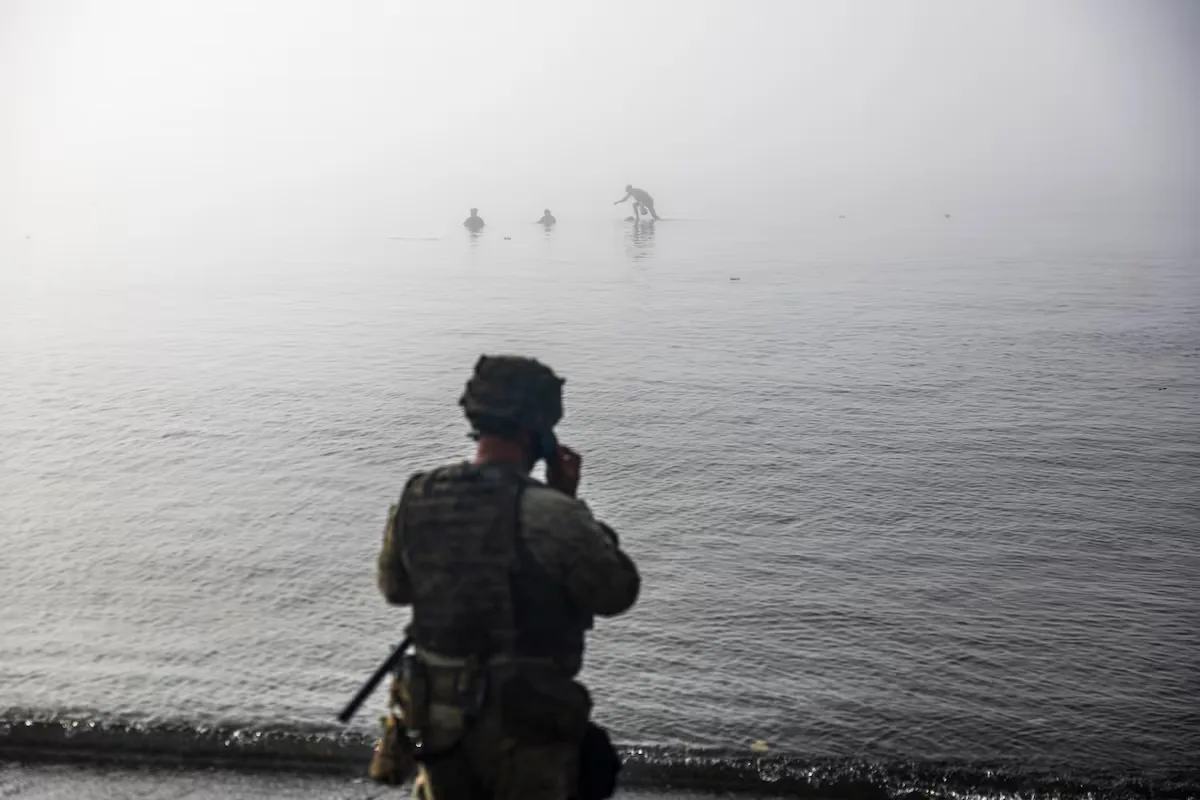
The irregular entry of more than 70,000 people into Ceuta from Morocco, which mainly occurred last Thursday, is beginning to be judicialized. The National Court has requested the Civil Guard to report whether it had any indication or information, in the days prior to the avalanche, that warned that it was going to happen. The investigation was initiated following a complaint from the Iustitia Europa party, which asked the court to investigate crimes “against the security of the State, crimes against the Nation, facilitation of illegal immigration and human trafficking, criminal organization, and omission of the duty to prosecute crimes.”
Read more Telefónica, MasOrange, Vodafone and Cellnex set up a special device for the eclipse
The question of whether there were prior indications or alerts that could have prepared the forces stationed at the border, who were completely overwhelmed by the human avalanche, is one of the key points of this crisis. The Minister of the Interior, Fernando Grande-Marlaska, insisted this Wednesday that the National Intelligence Center (CNI) did not alert of a massive arrival of migrants in Ceuta. But he did admit that there were warnings in the days before that, as is usual in summer, there could be “an increase, a rise” in the number of irregular entries by sea into the autonomous city and that on this occasion they could be “encouraged” by the Supreme Court ruling from early July that prohibited hot returns of those who entered by swimming.
In an order accessed by EL PAÍS, the presiding judge of the Central Court of First Instance number 3, María Tardón, also requests the Intelligence Headquarters of the armed institute to provide details about the most critical days of the migratory crisis — July 30 and 31 — “particularly regarding the rescue operations of people located in Spanish territorial waters, their known personal circumstances, as well as, in the case of deceased persons, if the cause and date of death are recorded and, in the case of survivors, their identity and location data.”
The provisional death toll is 77. In the first hours, after the irregular entry of more than 70,000 people on Thursday, 20 bodies were recovered from the sea. The next day it was about 40. Their bodies are now kept in a refrigerated hangar in the old military hospital of the autonomous city. The autopsies are almost finished and ways of collaboration with Morocco are being sought to identify the deceased.
This is not the first decision by the investigating judge in this, so far, incipient case: this Tuesday, the judge requested a report from the National Police on the “massive irregular” entry of migrants into Ceuta in recent days to determine whether it was a “concerted or directed action” by some “criminal group.” The request seeks to establish whether the National Court is competent to investigate and later judge the crimes reported by Iustitia Europa, a party that is part of the popular accusations in, among others, the trial of Pedro Sánchez’s brother or the case against the wife of the Prime Minister, Begoña Gómez.
Read more Junqueras proposes agreeing on permanent teams of education experts that go beyond each government