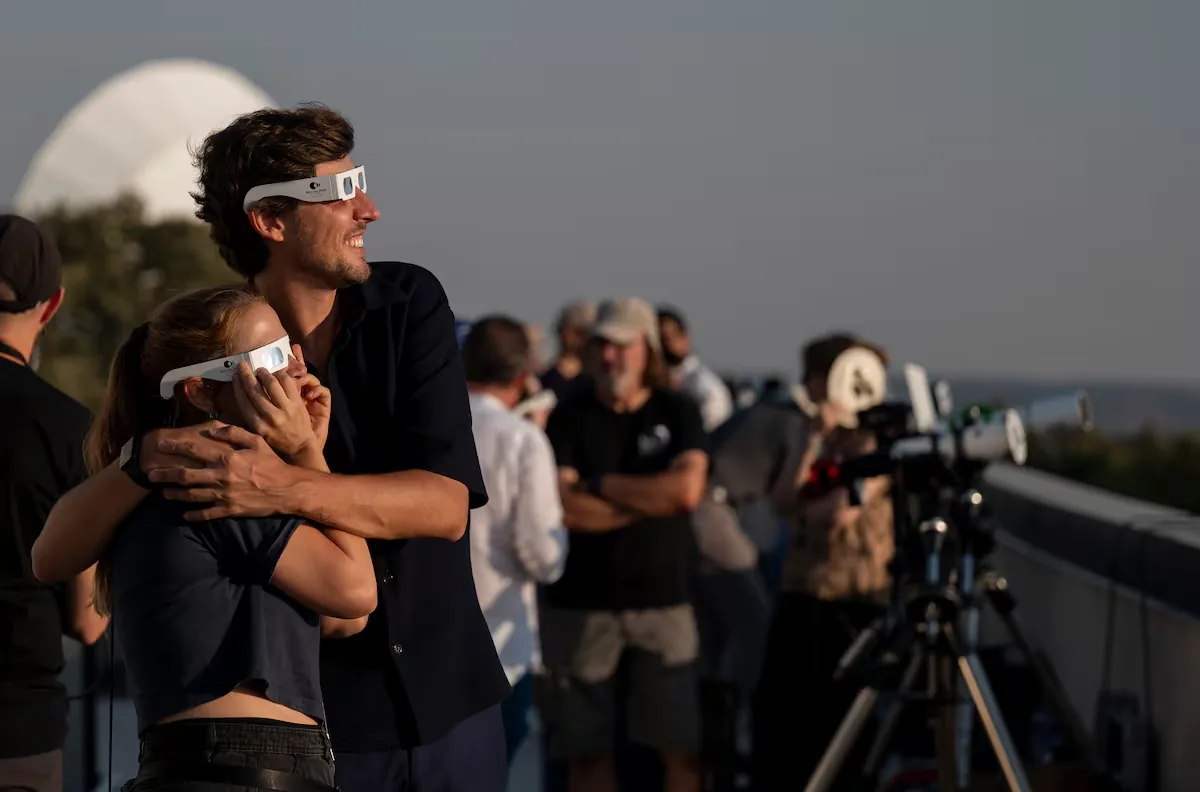
No home remedy works. Certified glasses are the only safe protection to enjoy the eclipse on August 12. They will also be necessary to look directly at the Sun in places where the eclipse will only be partial.
Distribution points
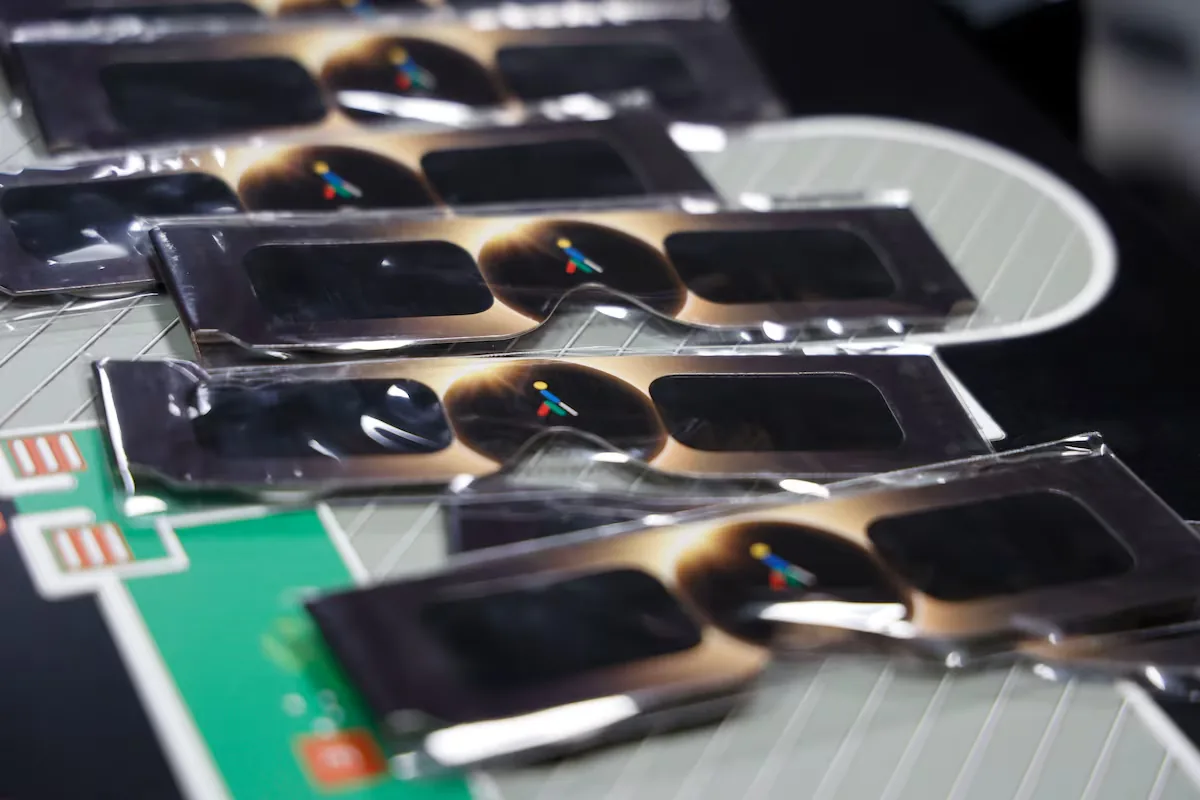
From this Tuesday, ONCE is distributing 1,700,000 glasses free of charge at more than 23,000 coupon sales points throughout Spain. This is the result of an agreement signed with the Ministry of Science, Innovation and Universities, which will also distribute 300,000 units in its network of museums and scientific centers: the list of these institutions is on this page of the official Trio of Eclipses website. The National Organization of the Blind clarifies that “eclipse glasses are not purchased in exchange for coupons, but are given away, while supplies last, to regular customers.”
This protective material is also available for sale in specialized stores, both astronomy shops and optical stores. Eclipse enthusiasts have created a collaborative list of these establishments (both online and physical stores), where prices per unit start at 3 euros. Buying batches of multiple glasses reduces the cost.
Why eclipse glasses are safe
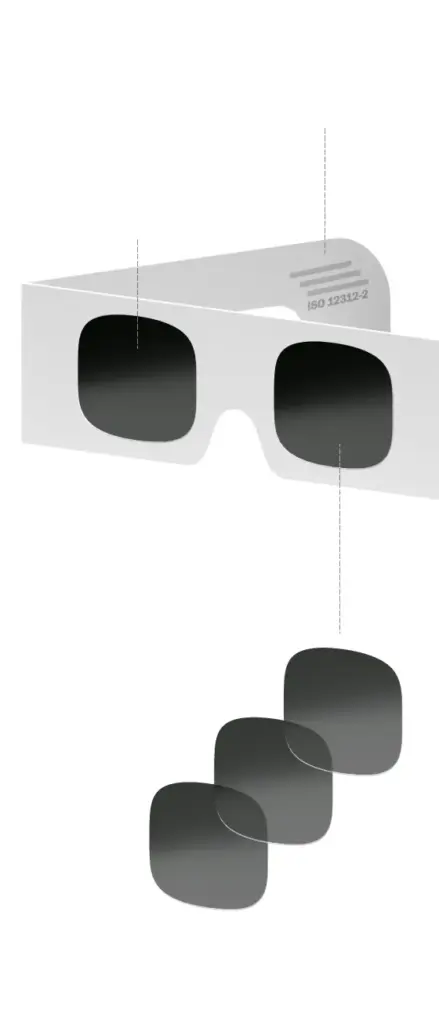
They must comply with
theISO 12312-2 standard
from 2015.
Opaque sheet that
reflects or absorbs
dangerous radiation
Each sheet has a
triple filter that blocks:
At least 99.9968% of visible light and ultraviolet rays UV-A and UV-B
Visible
UV-A
UV-B
IR
97% of infrared radiation
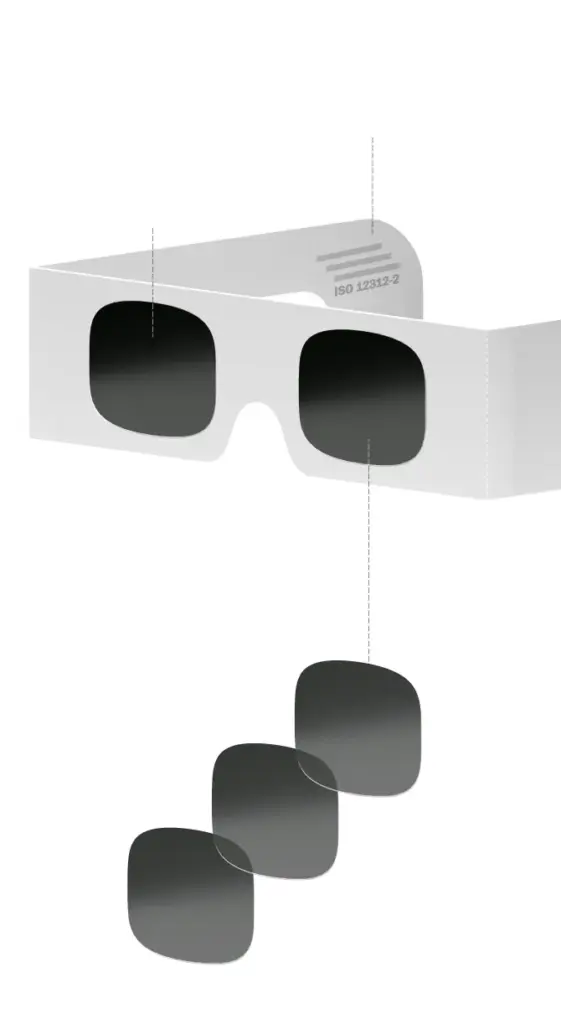
They must comply with
theISO 12312-2 standard
from 2015.
Opaque sheet that
reflects or absorbs
dangerous radiation
Each sheet has a
triple filter that blocks:
At least 99.9968% of visible light and ultraviolet rays UV-A and UV-B
Visible
UV-A
UV-B
IR
97% of infrared radiation
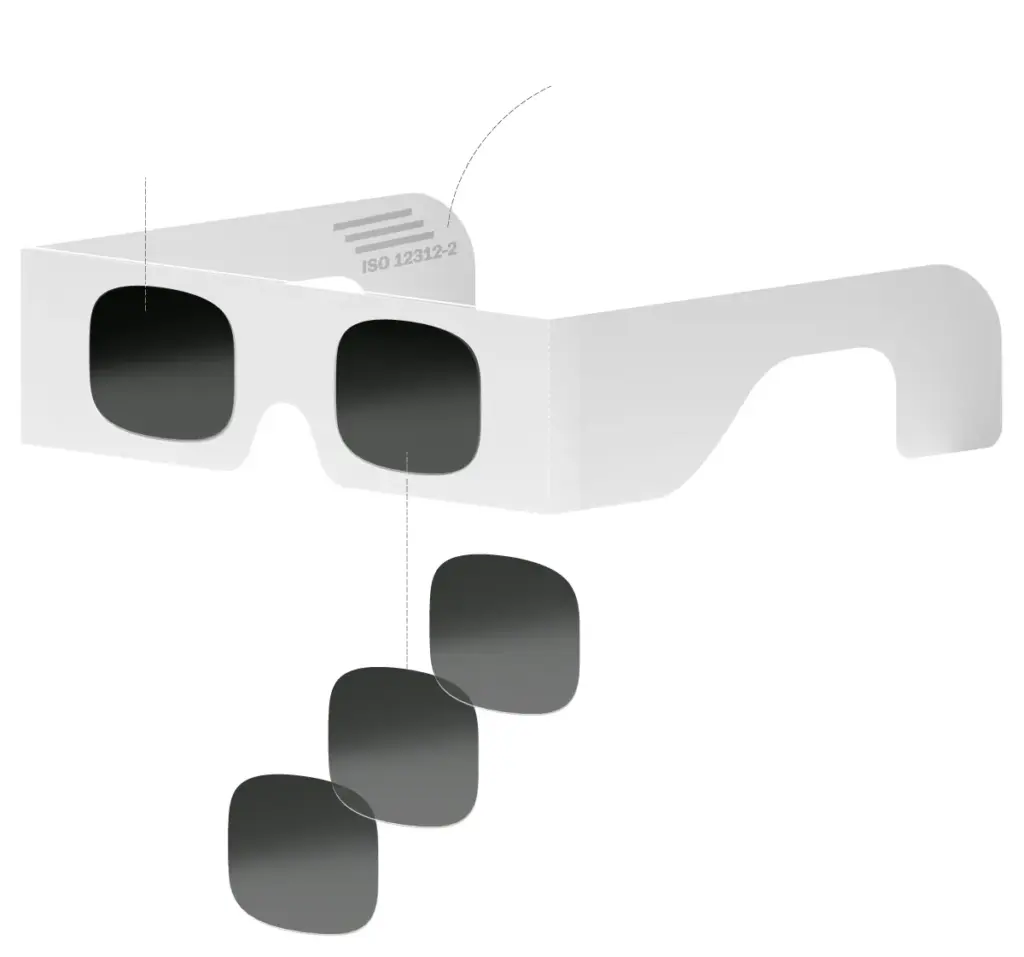
They must comply with the
ISO 12312-2 standard
from 2015.
Opaque sheet that
reflects or absorbs
dangerous radiation
Visible
Each sheet has
a triple filter
that blocks:
At least 99.9968% of visible light
UV-A
UV-B
The same amount of UV-A and UV-B radiation
IR
97% of infrared radiation
How to check if they are good?
In the days leading up to the great Spanish eclipse, all kinds of businesses are giving away eclipse glasses to their customers. They are also sold in non-specialized stores. Only glasses that comply with the ISO 12312-2 standard are safe. Certified glasses must indicate that certification and, obligatorily, also carry the European Union CE mark, the manufacturer’s address, the expiration period, and usage instructions in the language of the country where they are marketed.
Read more Telefónica, MasOrange, Vodafone and Cellnex set up a special device for the eclipse
The first thing to do with glasses, whether bought or given away, is to try them briefly. Through them, only the Sun should be clearly visible; other very intense light sources (LED spotlights, incandescent bulbs) may be faintly seen if very close. Their materials are delicate: always check that they are not scratched, whether new or from previous eclipses. It is also essential to keep them well protected (in an envelope, in a case for regular glasses) until the moment of use.
Both astrophysics researchers and the Ministry of Consumer Affairs, as well as the corresponding regional departments, are reviewing the glasses on the market. So far, no batch of glasses that do not provide adequate protection has been detected.
Why using eclipse glasses is the only safe way to look at the Sun
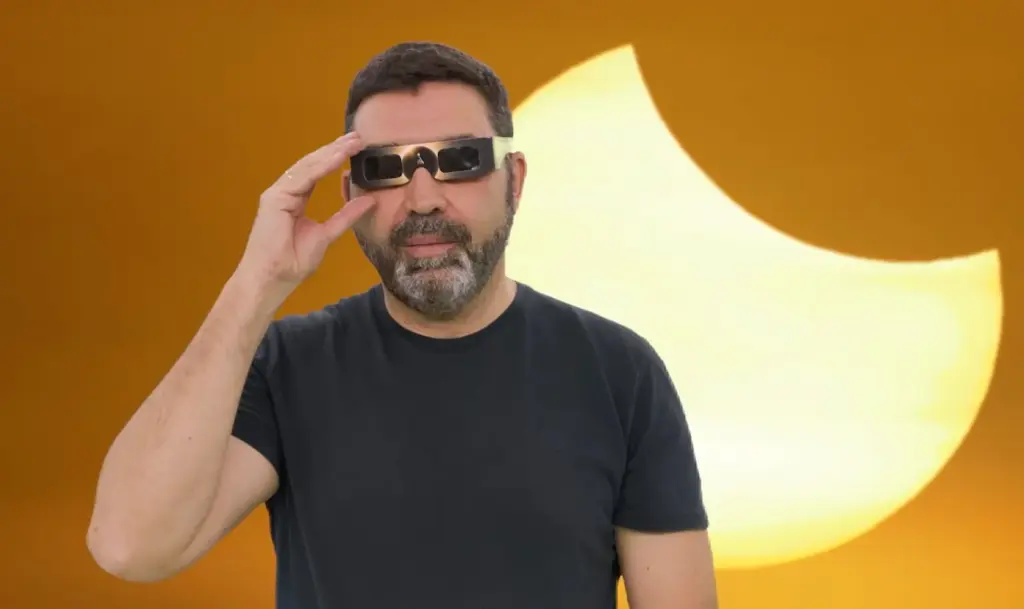
To avoid serious eye injuries, certified glasses are the only protection that works, against the still widespread beliefs that there are home methods that also work (such as X-rays, photographic negatives, or smoked glass). Welding filters that protect do not provide the adequate sharpness to properly observe the eclipse.