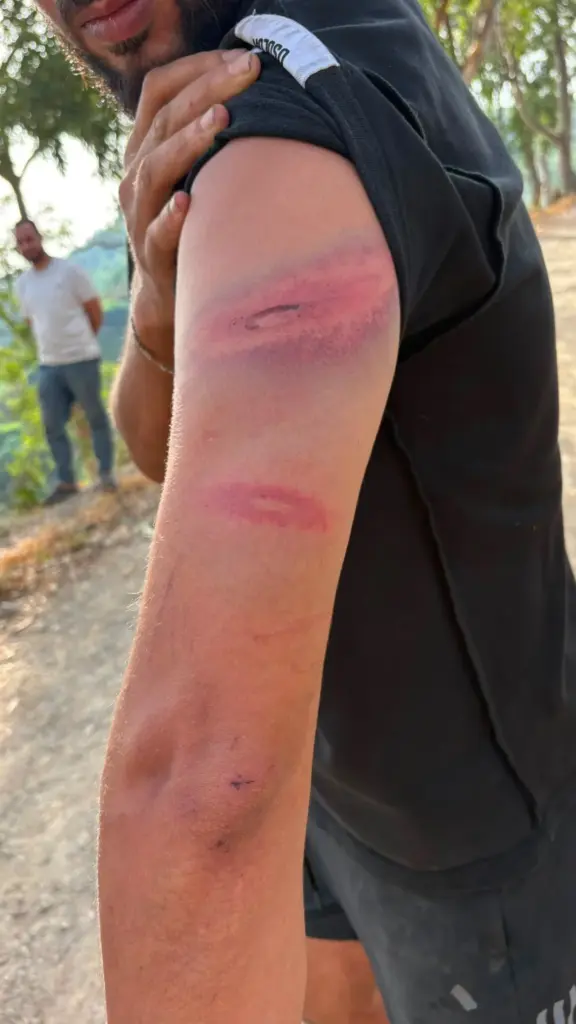
Sandra López, secretary of Institutional Policy of the PSOE of Ceuta, stumbled last Saturday afternoon upon a group of immigrants while walking her dog around the shooting range. One of them asked her in halting Spanish, aided by expressive gestures, how to get to the Ceutan neighborhood of Benzú. His name was Adil and he was about 25 years old. She pointed out the shortest route, crossing the Postigo area. He flatly refused. Faced with her insistence, as she did not understand his resistance to follow the directions she gave, he ended up lifting his clothes and showing her his body. He showed scratches on his legs and torso and, above all, wounds, some deep, on his left arm, marks of the blows he said he had received in that neighborhood. She photographed the injuries with her phone and asked him why he did not report what happened to the police. He dismissed the idea. He was afraid that if he went to the police station he would be arrested and expelled from Ceuta. Both Adil and his companions began to walk towards Benzú, taking a detour of several kilometers to avoid the supposed aggressors.
Read more Uruguay, Argentina and Peru will welcome Pope Leo XIV in November
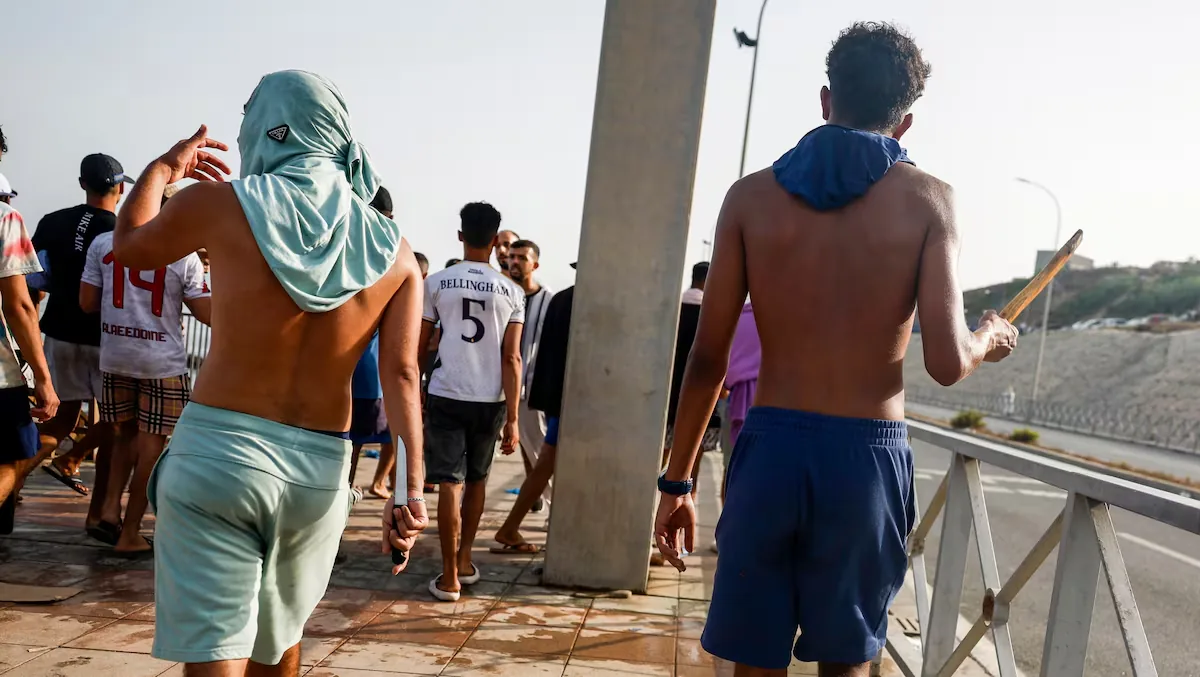
At the entrance to Postigo, Sandra López saw that several cars were blocking the way and a group of neighbors was standing guard. Among them, a young woman with a dog and a man carrying a baseball bat. A little further up, next to the Animal Shelter, she encountered the man with the bat again. He was in an SUV with a companion. Both got out of the vehicle and approached a group of immigrants in the area. They urged them to leave. Sandra did not see them hit anyone.
Although Ceutan society has largely rejected any violent response to the influx of tens of thousands of immigrants, the formation of citizen patrols is not an exclusive phenomenon of Postigo. In other neighborhoods, such as Los Rosales or Benítez, groups of neighbors have blocked entrances with fences and stand guard 24 hours a day to block outsiders. The vast majority of the 72,000 people who, according to official estimates, entered through the Tarajal crossing on July 30 have already left, but between 2,000 and 6,000 remain, according to various sources. They were evicted from the city center days ago, but now they roam the outskirts hiding from authorities and approaching neighborhoods in search of water, food, shelter, after five days exposed to the elements and without the basics. Neighbors complain that they sneak into their homes, steal from them, and relieve themselves in the street.
But the civilian patrols that intend to clean Ceuta of immigrants, according to their language, do not limit themselves to acting in their own neighborhoods. EL PAÍS has verified how, through WhatsApp groups, they coordinate to go out in the middle of the night to hunt immigrants hiding in the hills or breakwaters to avoid being returned to Morocco. They exchange photos and videos in which a crowded group can be seen on a small terrace or lying on the ground in a dark alley. When they locate them, they set off: “Even if we are [only] seven, I don’t care. We’re going after all of them. They run [because] they are afraid,” writes who seems to be one of the leaders.
Someone uploads a message from a soldier to the chat: “Look, I’m military and all. We are doing patrols, but they don’t let us do anything. We have the [Hacho mountain] area assigned. I don’t want to talk in the group so I don’t get in trouble for giving information.” The one who posted the screenshot comments: “See how we have to organize ourselves? They [the military] are tied up.”
Read more United States halts avocado exports from Mexico due to violence in Michoacán
“We are seeing cockroaches among the stones,” writes one of the chat participants, apparently a warning to the others, who have been wandering around most of the night without success. When they are about to take action, the more experienced give instructions to the rest: “Don’t record anything. [Because] later it comes out that we are very bad and we are defending what’s ours.” It is not clear from the message exchange whether they carry weapons or blunt instruments, but the boldest urges the others to join him, well into the early morning. “Put on a T-shirt, I have a balaclava and the whole car full of stuff, come.” The presumed leader is clear that what they are doing is illegal when he urges everyone: “Gentlemen, whoever has tattoos should cover them well, in case someone decides to record, there’s always an idiot who doesn’t stop, don’t get exposed.”

“Clean Zurrón,” writes one, referring to a Ceuta neighborhood. “Clean Benítez breakwater,” adds another. “My neighborhood clean,” a third emphasizes. However, the operation must be abruptly suspended. Several neighbors alert the police to the presence of the immigrant hunters. “Literally [they are] telling the police van [that there are] armed hooded civilians causing trouble,” says a group member on the ground. “Gentlemen, doesn’t the police let us patrol?” wonders another. “Neither the police nor the neighbors anymore,” laments the first. “If they see us, we will be proposed for sanction,” the agents have warned them. “Run now,” orders the presumed leader. No arrests are made.
Vox has been the only party to theorize the right of Ceutans to self-defense. “When you see your own threatened, your comfort zone, your family, your children, you have every right in the world to defend yourself. Let everyone defend their family with whatever they have in hand. With a stick or whatever. That is Vox’s message,” declared the party’s Security and Immigration spokesperson in Ceuta, Samuel Vázquez, a national police officer by profession.
Despite this, both the neo-Nazi group Núcleo Nacional, which traveled from the Peninsula intending to join the civilian patrols, and the ultra activists Alvise Pérez and Vito Quiles, who arrived in the city over the weekend to capitalize on the discontent, ended up expelled by the police or by the protesters themselves who were demonstrating against the Government. The Spanish far-right, which has the defense of Ceuta and Melilla as one of its banners, is not welcomed in the North African plazas. Its Islamophobia clashes with a society that has more than 40% Muslims and closes ranks against any external aggression regardless of the neighbor’s religion.
Read more The end of TPS for Haitians is now official: 350,000 migrants face the risk of deportation