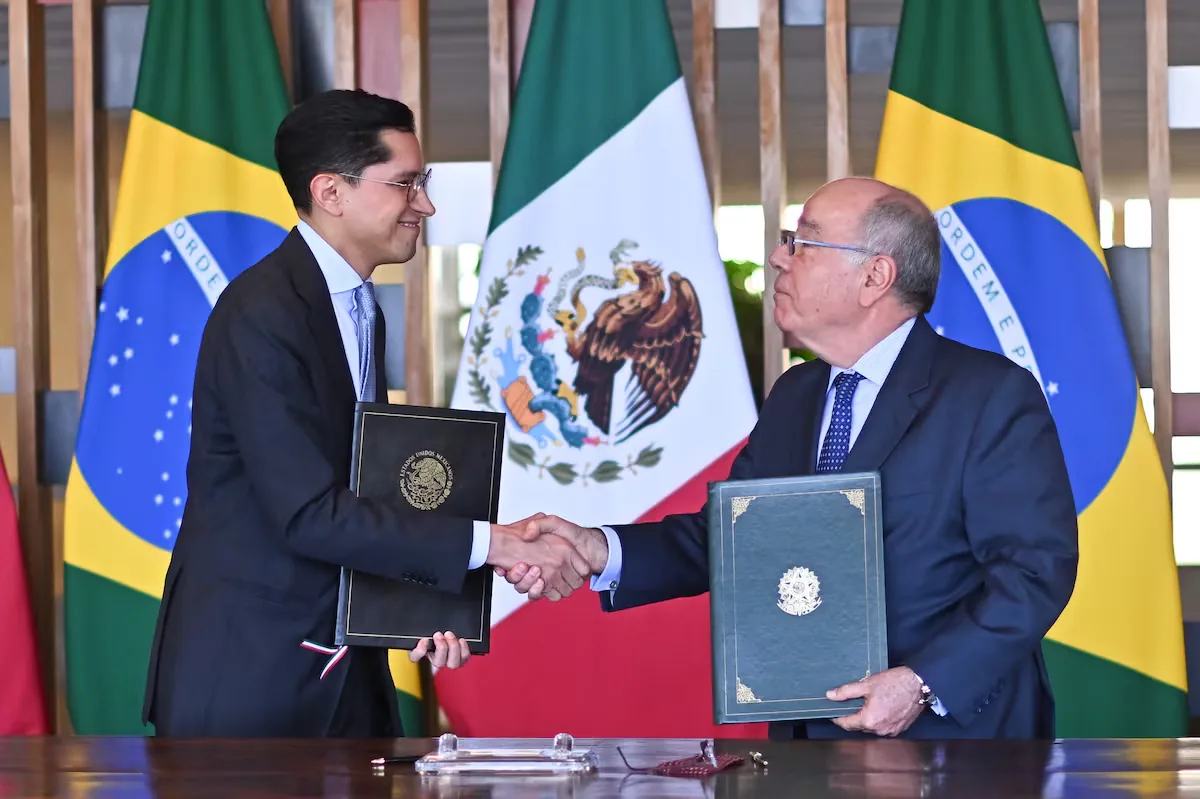
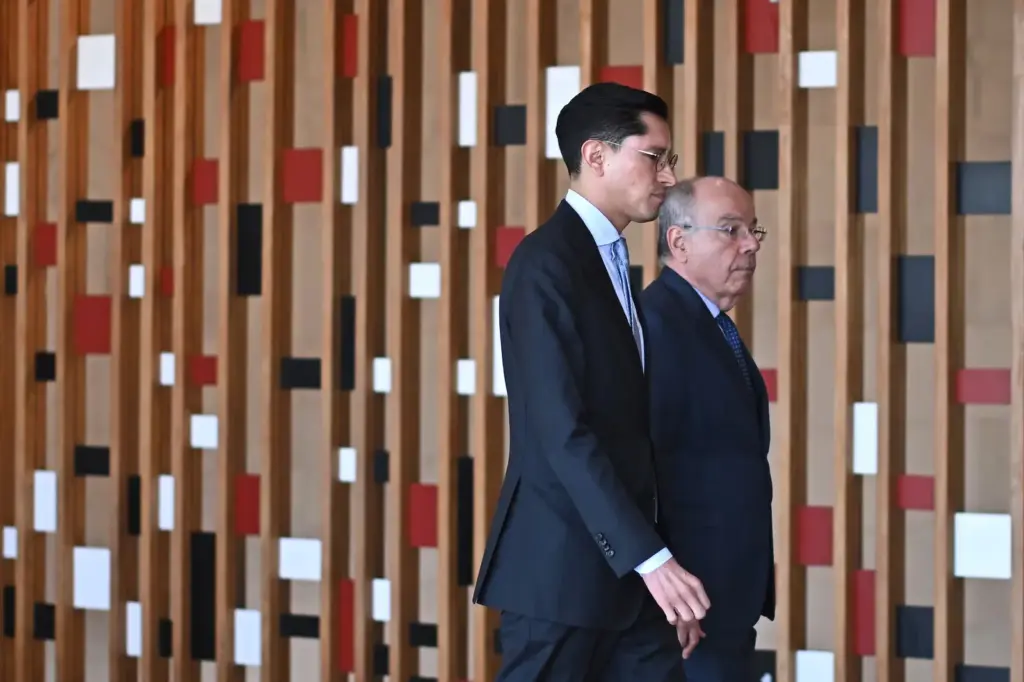
Mexico and Brazil are increasingly isolated in a continent that responds almost entirely to the baton of Donald Trump, and the increasingly adverse landscape from the north and south forces them to look at each other. Against this backdrop, Mexican Foreign Minister Roberto Velasco went to Brasilia this Thursday to co-chair, together with his counterpart Mauro Vieira, the VI Meeting of the Mexico-Brazil Binational Commission, “the main mechanism of political dialogue and bilateral cooperation between the two countries,” according to the Mexican Secretariat of Foreign Affairs. The moment is especially sensitive for Brazilian President Luiz Inácio Lula da Silva, who is increasingly close to facing re-election at the polls and in the midst of escalating disagreements with the U.S. president, following the cancellation of the Brazilian ambassador’s visa.
Read more The ‘fracking’ enters a zone of uncertainty after experts’ restrictions
In the meeting that later took place directly between Lula and Velasco, who was representing Claudia Sheinbaum, they discussed, among other things, the “situation of democracy in Latin America,” according to the Brazilian, who once again extended his invitation for the Mexican leader to visit the country. After the spring defeat of Gabriel Boric’s party in Chile and this summer’s defeat of Gustavo Petro in Colombia, Lula’s victory in the fall is more important than ever for Mexico. Even more so for Lula to feel Mexican support.
The administrations of Lula and Claudia Sheinbaum are practically the last progressive stronghold in the region, the main barrier against the interventionist drive coming from the Anglo-Saxon country, eager to sink its teeth into both territories. Both have suffered Trump’s tariff threat, carried out against Brazil twice: a 50% tariff a year ago and another 25% this summer. Mexico has fared better, but the threats of trade punishments as a form of political pressure force its neighbor to remain always alert and to seek allies abroad. Brazil is the main natural partner: due to its economic power and ideological alignment.
Efforts are made on both fronts. Brazilian Petrobras and Mexican Pemex, the two largest oil companies in Latin America, signed a cooperation agreement in June to explore the waters of the Gulf of Mexico in search of oil, another topic discussed this Thursday at the binational working table. The autonomy of the two largest economies in the region is as important as the political containment of the far right. According to data from the Brazilian government itself, projections for 2025 speak of a trade exchange of 13.9 billion dollars. Brazil is also the main Latin American exporter to the Mexican market and Mexico, the second in the Brazilian market.
In their ability to boost these figures, both countries also play for the defense of national sovereignty, the axis of Mexican foreign policy and the principle that once again structures the geopolitics of the continent. Sheinbaum fights to avoid Trump’s interventionism in his crusade against drug trafficking, and Lula faces the explicit support that the Republican extends to former president Jair Bolsonaro, imprisoned for an attempted coup d’état, and the rest of his family. The 50% tariff imposed the previous year, in fact, unsuccessfully sought to prevent the politician’s conviction, who is serving a 27-year sentence. Now it will be his eldest son, Senator Flávio Bolsonaro, who will compete against Lula in the elections next October.
Read more The deals of the week on Amazon: discounts of up to 60% on fashion, home, and technology
Within the framework of the upcoming elections, Lula has read Trump’s latest actions as a “deliberate escalation of hostile measures” that can only be understood, he claims, in ideological terms. The United States has just canceled the visa of the Brazilian ambassador, Maria Luiza Viotti, a response, the U.S. government has argued, to the delay by Lula’s administration in granting approval to the ambassador designated for Brazil. Washington also reproaches the rejection of visas to two diplomats who wanted to visit the country. The Latin American’s argument was then that they sought to encourage the Brazilian far right and cast doubt on the credibility of the electoral system.
The tension is total between the two leaders, who speak openly of their mutual rejection. Sheinbaum is more subtle, sharing a 3,000-kilometer border with her northern neighbor and not wanting to provoke the Republican too much. Still, the board forces taking positions, and the Mexican is raising her international profile, a sign of distance from her predecessor, the also Morena member Andrés Manuel López Obrador, who was not prone to travel.
The current leader has attended various forums and this April responded to the call of Spanish President Pedro Sánchez to attend the IV Meeting in Defense of Democracy, where she closed ranks with the progressive leaders of the region. A month later, she reaffirmed with Lula the common front against U.S. pressure in Colombia and Cuba. However, in just a couple of months, Petro had already fallen out of the family photo. Efforts are now focused on keeping Lula in it, with whom Mexico also seeks to promote the candidacy of Chilean Michelle Bachelet as UN Secretary-General. Anything can help in an increasingly uneven scenario. The leaders have yet to fully exploit the potential of the bilateral relationship, and that is perhaps the last lifeline for progressives against the rightward shift in the region.
Read more The pharmacy secret to eliminate adult acne and restore smooth skin without irritating it