Kit Aqua Lux Pro 100
Fluval Flex
Starter Line
LED glass aquarium set
Glass aquarium with cover
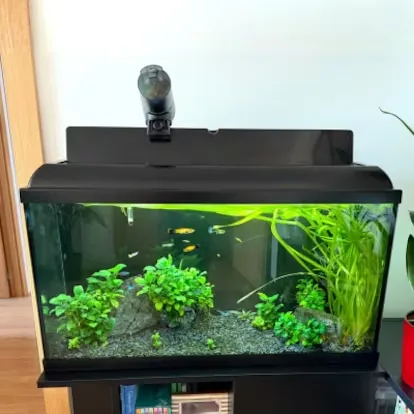
The best aquarium for beginners
Although starting in the world of aquaristics may seem easy at first glance, nothing could be further from the truth. Setting up the aquarium, ensuring the water is in optimal conditions, choosing fish species that best adapt to its parameters, and avoiding unexpected events that spoil weeks of work is a process that takes time and requires learning.
The aquariums featured in this comparison bring all the essentials to take the first steps in this world: a tank (of different sizes, so they also adapt to different types and quantities of fish), a LED light system that helps recreate the day-night cycle, and a filter according to their liter capacity. Only two of the models analyzed include a heater; in the rest, it will be necessary to acquire an additional one if tropical species are chosen.
How we chose and tested the products
Anyone who has set up an aquarium knows it is a process that cannot (and should not) be done overnight: weeks can pass from filling the tank with water until the necessary bacterial community is created for the ecosystem to be viable. Therefore, to carry out the tests for this comparison, I started from a 150-liter aquarium that has been set up for four years: I used part of its filtering material (ceramic rings and perlon), its water, its sand, and some plants.
When the test strips indicated that the parameters were adequate, I introduced the fish (depending on the model) and placed each aquarium on a living room table, with natural light but no direct sun exposure. For a month, I monitored the evolution of water parameters, performed periodic maintenance (20% water changes), and closely followed values such as pH and KH. I also analyzed the different LED lighting modes, access for feeding the animals (whether the lid needed to be lifted or not), and ease of assembly and cleaning.
For this comparison, I tested five beginner aquariums of different sizes, materials, and designs. They range from 7 to 100 liters capacity, and to evaluate them I considered the following aspects:
- Capacity. Amount of water in liters they hold and number of fish (and their size) that can live in that space.
- Filtration system. What is the filtration system like? What stages does it include? What materials does it use for filtration? Is it easy to change? How is its performance?
- Design. Refers to the shape of the tank and glass (whether it favors fish viewing), weight and dimensions, as well as the materials used for its base or cover.
- Lighting. The type of lighting integrated, where it is located, or its customization and/or programming possibilities.
- Others. Ease of installation, cleaning, openings to introduce food, additional accessories…
Why can you trust me?
Throughout my journalistic career, I have always sought to turn complex information into clear, practical, and easy-to-understand content for the reader. Therefore, in comparisons, my goal has always been the same: to understand the characteristics of the products I test and explain which models are most suitable according to each need. I like to put myself in the reader’s shoes and imagine their doubts, which is why I do not limit myself to describing specifications; I contextualize them and highlight the best (and worst) of their performance, use, and design. My purpose is that each analysis inspires confidence and helps make informed decisions.
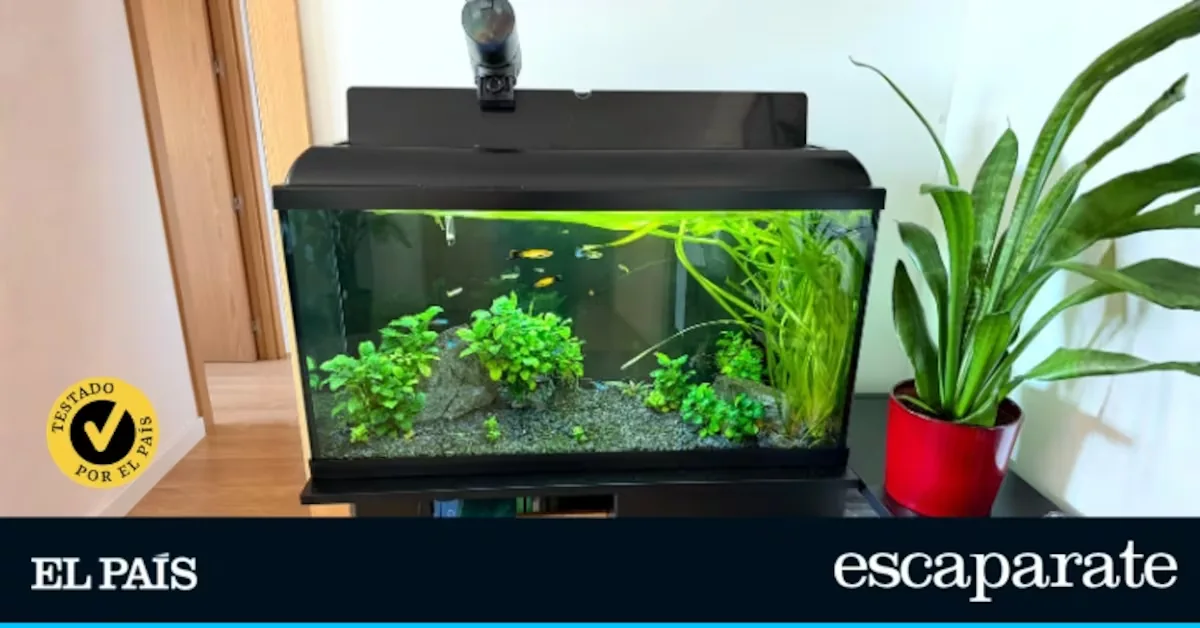
1) The one that offers the most possibilities: Ica Kit AQUA LED PRO 100 L
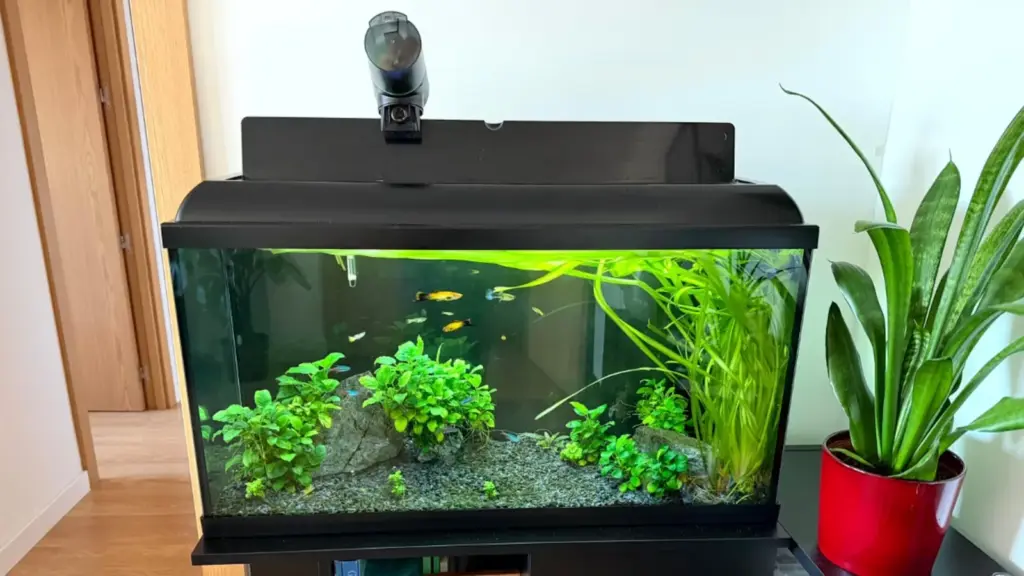
Who is it for: perfect for those looking for a ready-to-use aquarium with enough space to keep a good variety of fish.
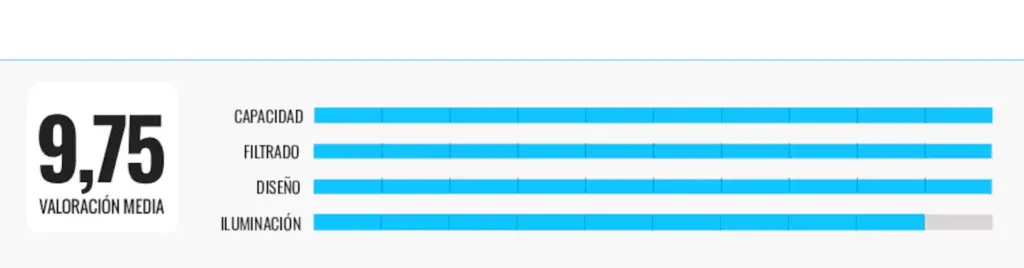
Why we recommend it: its 100 liters capacity makes the difference. Not only does it allow creating an attractive landscape with plants, logs, or rocks, but it also offers room to keep a much more varied fish population than other models analyzed.
During the tests, I had a group of 10 neon tetras, although this aquarium can house a much larger community. In fact, thanks to its 80 centimeters length, which provides a wide swimming surface, it could have housed, for example, 20 neon tetras along with seven guppies and three platies. Additionally, the lid includes a practical opening that facilitates both daily feeding and maintenance tasks.
Another strong point is that it arrives practically ready to start. It includes OP400 internal filter, LED lighting, heater, thermometer, fish food, conditioners, and a very easy-to-follow installation guide. In just over half an hour, I had everything assembled and ready to operate.
The filter kept the water clean and clear for about two weeks without needing additional cleanings, and I found it very easy to maintain, as you just need to open the top compartment to access the filtering material and replace it when necessary. Also, the water circulation is uniform and sufficient for an aquarium of this size, without generating a current too strong that could bother the fish.
Regarding lighting, the LED strip offers a homogeneous light that enhances the colors of the fish. The only drawback is that it is not possible to adjust the intensity or switch between different lighting modes.
Its weak points: it is the model that takes up the most space, so it is advisable to ensure you have suitable furniture before installing it.
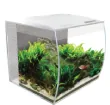
2) The one that best keeps the water clean: Fluval Flex
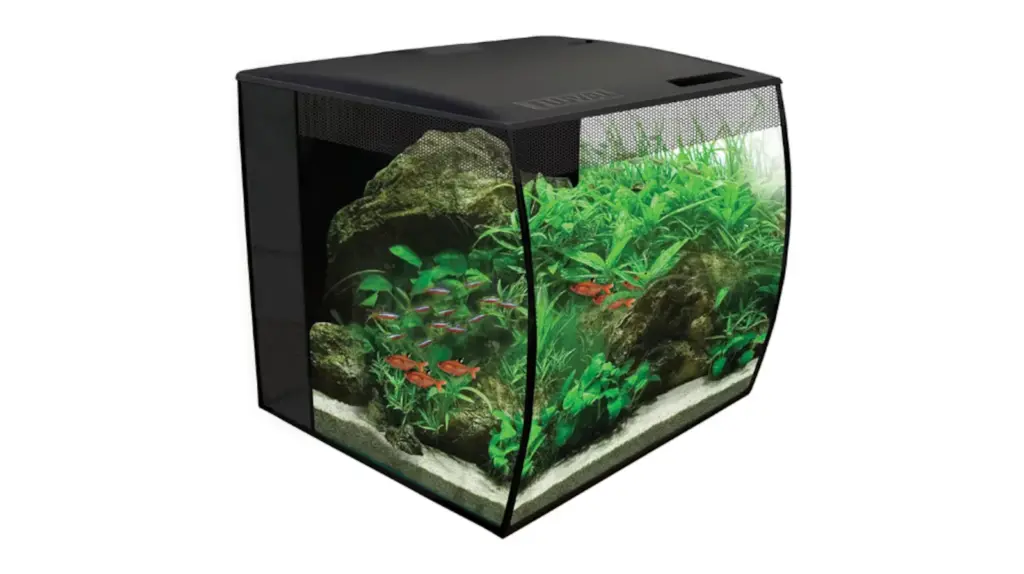
Who is it for: for those looking for a complete model, with good filtration and a design to enjoy the aquarium from different angles.
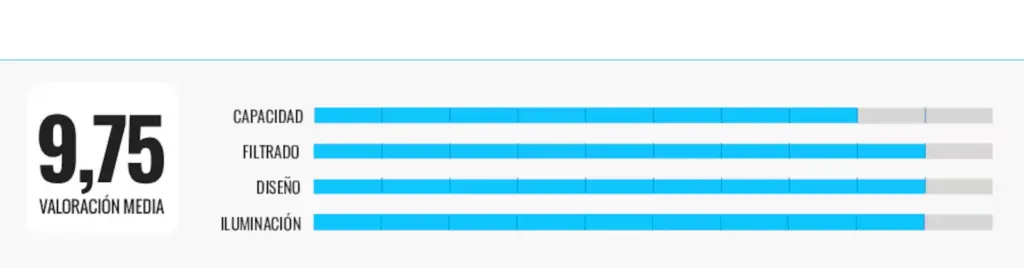
Why we recommend it: its 34 liters capacity allowed me to house a small group of six pygmy corydoras. Observing them through its concave front panel was very comfortable and pleasant, as it allows viewing the aquarium from different perspectives. I also liked that all the technical equipment was hidden at the back to leave the aquatic landscape free of visual distractions. The lid has a small opening that allows feeding without lifting it entirely, which is very practical daily.
Another aspect I found useful is that the water outlet nozzles are multidirectional: this allows directing the flow to improve oxygenation or avoid bothering the calmer fish. Also, changing the filter materials is easy, as the rear compartment where they are located is well organized and accessible.
The three-stage filtration system is one of its great assets, although it is a bit noisy. The mechanical sponge traps large debris, the activated carbon handles chemical compounds, and the Biomax ceramic rings promote beneficial bacteria growth. The result, after several weeks of use, was clean and crystal-clear water, odorless, which stood out among all models analyzed.
The lighting is equipped with low consumption LEDs and remote control. With the remote, it is possible to adjust colors (RGB and white), control intensity, and activate effects like sunrise, daily cycle, or even storms. I mostly used the blue light at night because it creates a relaxing atmosphere without bothering the fish.
Its weak points: although very complete, I missed that it included a heater, especially if tropical species are desired.
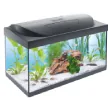
3) The most complete out of the box: Tetra Starter Line
Who is it for: ideal if you want a large kit ready to operate from day one, without additional purchases.
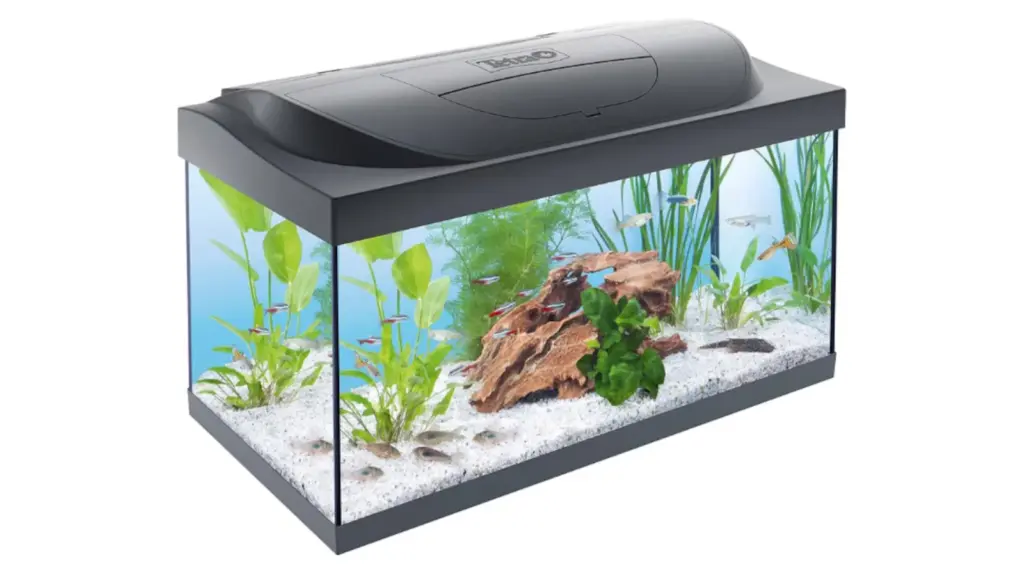
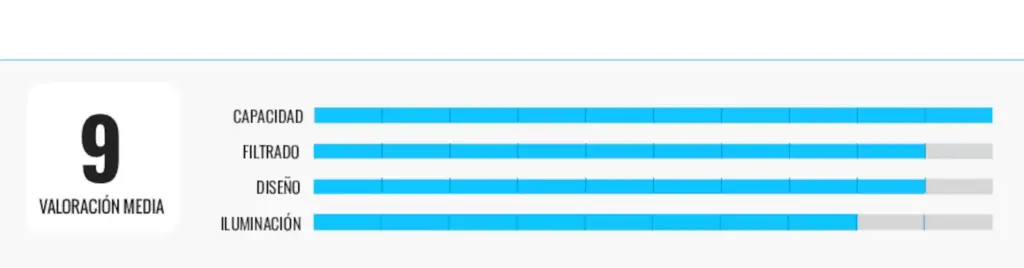
Why we recommend it: this model brought the most accessories compared to the rest: besides the heater — essential for tropical species — it also includes basic food and water conditioner. I assembled and started it in just half an hour, without needing additional purchases to get started. The design seemed sober but practical. The curved lid gives a certain sense of robustness, and the feeding hatch is wide and easy to open. I also found it useful that it includes a beginner’s start guide with basic recommendations, such as the most suitable number of fish or the frequency of water changes during the first weeks.
Its 54 liters capacity allowed me to house a larger fish community than in the other models, maintaining a balanced environment throughout the test period. The filtration system is very convenient; I could remove the cartridges from the top without getting my hands wet and verified that the water circulation was efficient and without generating annoying turbulence. The heater is preset to 25 °C and maintains a constant temperature, which I checked with an additional thermometer.
Regarding lighting, although simple, it fulfills its function. It has two modes, day and night, activated with a switch on the cable. It does not allow adjusting intensity or colors, but the night mode offers a dim light sufficient to observe the aquarium at dusk.
Its weak points: it is bulkier than the rest, so it may not fit well in small spaces. It also does not allow lighting customization or include effects.
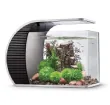
4) The most panoramic: Hygger glass aquarium set
Who is it for: for those looking for a compact aquarium with a different aesthetic than usual.
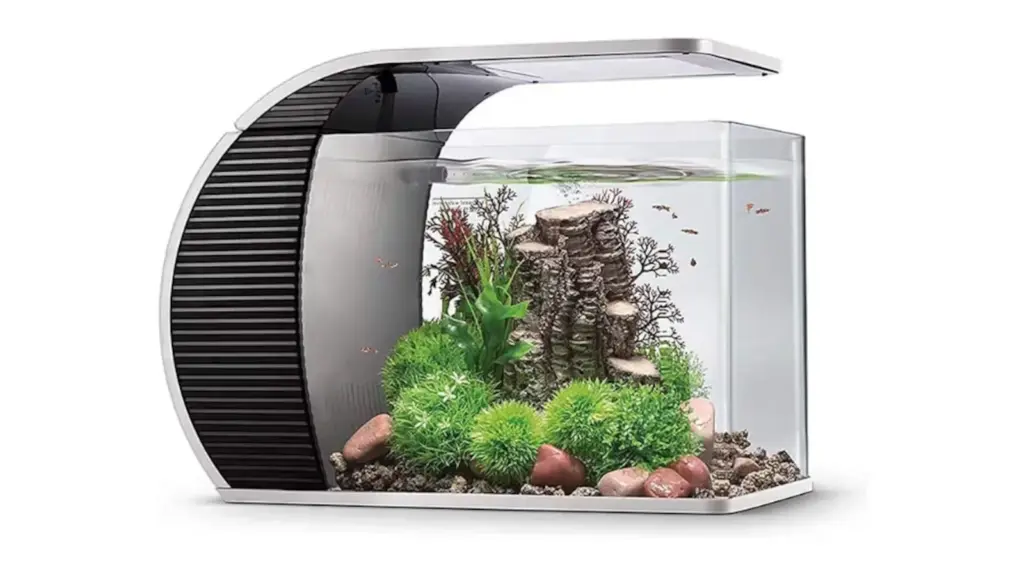
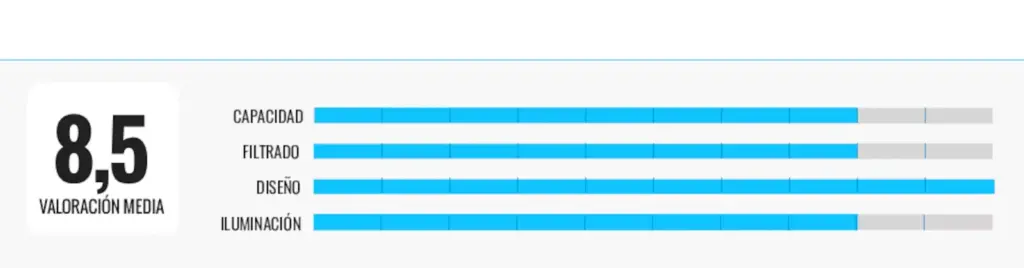
Why we recommend it: its curved design was the first thing that caught my attention. Its glass offers a clear view of the interior, with a wide panorama where I observed even the most subtle details. It has a capacity of 19 liters, suitable for introducing a small group of small-sized species. Feeding them was very comfortable thanks to its lid, very easy to remove and with a small opening through which I added the food.
The filtration system, on the other hand, is discreet and quiet. Also, the pump is well integrated at the bottom of the aquarium, without tubes or elements that bother the view. For its operation, it uses a combination of sponges and ceramic balls that, after two weeks of use, managed to keep the water quite clear without needing intermediate cleanings. The water circulation seemed quite smooth, which is important for fish that do not tolerate strong currents.
It also includes three lighting modes activated with a button: white light, mix of white and blue, and blue only. It is not programmable lighting nor especially powerful, but it works well if no demanding plants are used — that is, plants that require a lot of light, CO₂, or specific care.
Its weak points: the wiring is quite visible, especially if the aquarium is placed in a very exposed place. It also does not include remote control option for the light or timer.
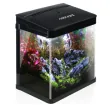
5) The most compact: Glass aquarium with cover and LED lights
Who is it for: it is a good option for those looking for a small aquarium to house few fish or species that get along well together.
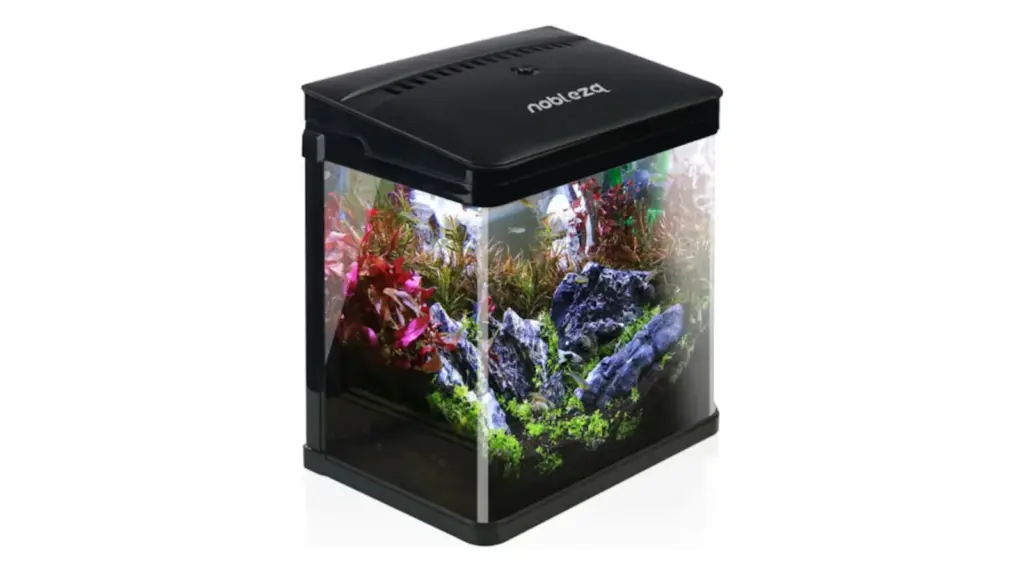
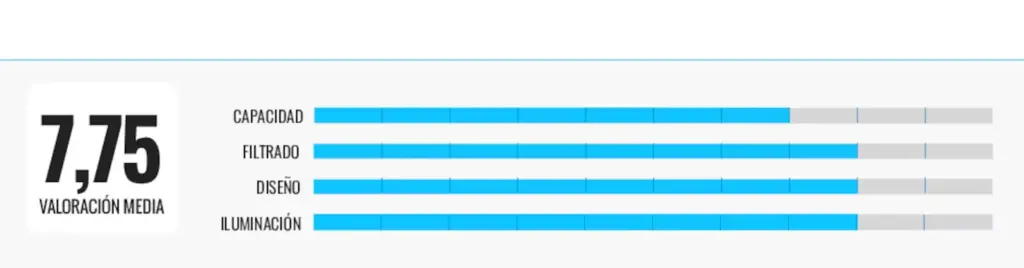
Why we recommend it: its 7 liters capacity makes it the smallest model of all analyzed. Available in white or black, it fits on shelves, desks, or other areas without taking up much space and is also quite light, weighing only 3 kg (when empty). Thanks to its curved front design, I could observe panoramically the three small fish I introduced, as well as some decorations.
During assembly, it is possible to learn how the filter and water pumping work; although installation took me some time, joining the pieces and placing them was easy. Once done, the last step is to fill the tank with water up to the indicated level and connect the motor cable so the pump that filters it works.
This system is located in the lid and is easy to change (just lift the cover and replace the material). It uses high-efficiency filter cotton so that the water passes and is purified, becoming oxygenated and clean for the fish. After a week, the water was still clear, although I noticed a slight accumulation at the bottom.
Additionally, it includes light: a 3.5 W low consumption LED strip, with a mix of white, blue, and red light that mimics natural light, protects fish colors, and promotes plant growth. However, the intensity is not adjustable.
Its weak points: the pump can generate too much current if not properly regulated.
Other interesting aquarium models
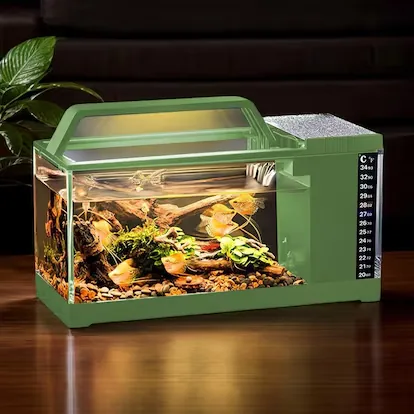
If you are looking for options with natural light simulation
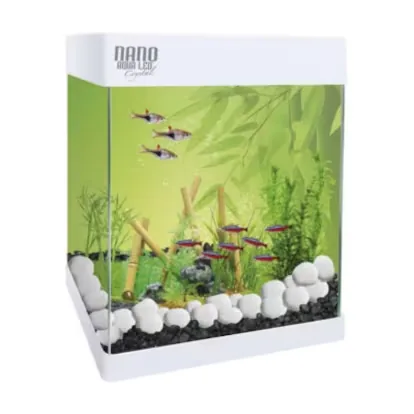
If you are looking for a compact design with a striking finish
Frequently asked questions about beginner aquariums
How many fish can you have in an aquarium?
The number of fish depends not only on the size of the aquarium but also on the species, behavior, and needs of each. Some fish are territorial and need more space, while others can live in groups without problems. Filtration, water oxygenation, and maintenance must also be considered. Overloading the aquarium can cause stress, diseases, and environmental imbalances.
What equipment is needed to set up a complete aquarium?
Besides water and fish, it is essential to have a filter, a heater (if tropical fish), thermometer, lighting, conditioners, gravel, decoration, and food. It is also recommended to have a kit to measure water parameters and a net to handle fish safely.
How often should the water be changed?
It is not necessary to empty the entire aquarium, but a portion of the water should be renewed regularly. Usually, between 10% and 25% is changed every week or every two weeks, depending on the type of aquarium and biological load. This helps maintain stable ammonia, nitrite, and nitrate levels and ensures a healthy environment for the fish.
[Remember that if you are an Amazon Prime user, all purchases have free shipping. Amazon offers a free and commitment-free trial period for 30 days.]
*All purchase prices included in this article are updated as of August 8, 2025.
You can follow EL PAÍS ESCAPARATE on Instagram, or subscribe here to our Newsletter.