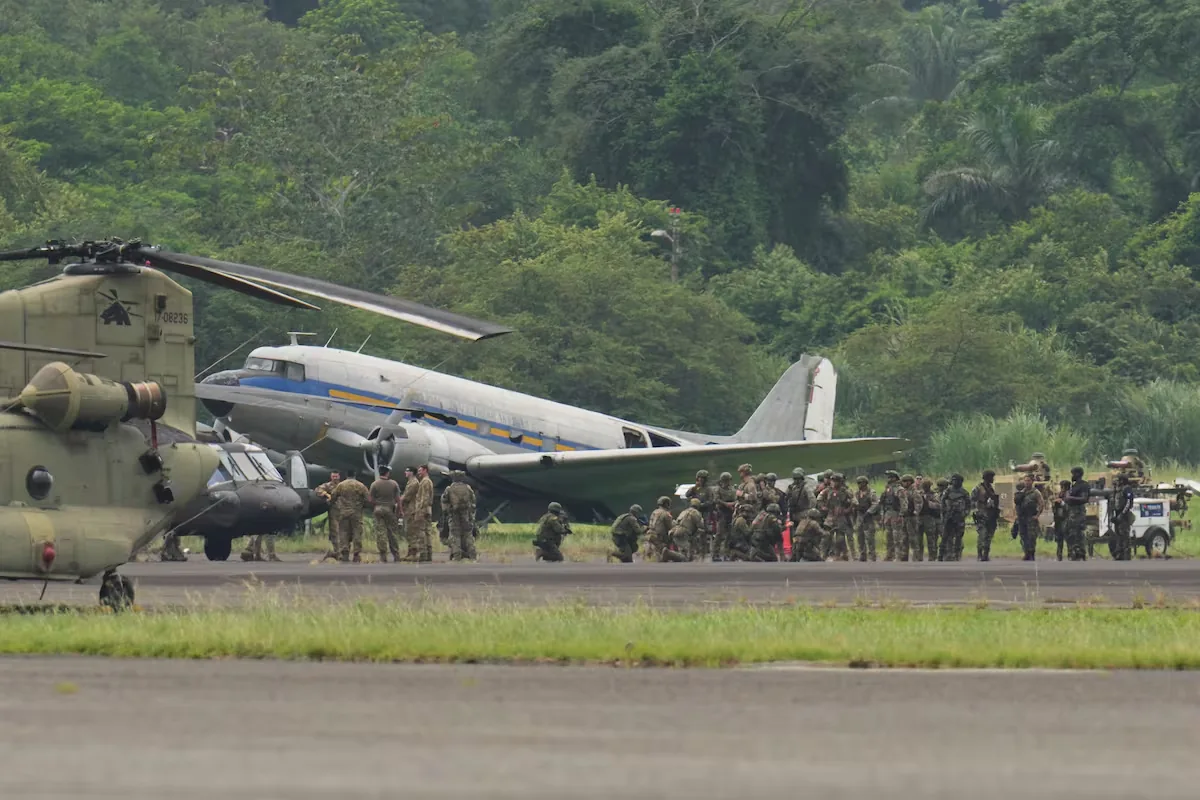
When the focus of the relationship between the United States and the countries of the continent is on trade, it is advisable to broaden the analysis to a geopolitical level: what matters is not the exchange of goods, but the exercise of power. In November 2025 Washington launched its national security strategy, with a clear stance regarding Latin America and the Caribbean: “to restore U.S. preeminence in the Western Hemisphere, and protect our territory and our access to strategic geographic points throughout the region.” This vision is not just rhetoric: the document describes it as a necessary condition for security and prosperity.
Read more The most effective barbecue brushes to remove dirt and leave the grill like new
The objectives are concrete: influence over strategic routes and resources, and preferential treatment for U.S. goods and companies. The threats are three labels —drug trafficking, terrorism, and irregular migration— which often merge with each other. Added to this is a fourth, more geopolitical: the role of non-hemispheric powers in the region. About the latter, the text is explicit: it seeks to prevent them from “positioning forces or other threatening capabilities, or owning or controlling strategically vital assets, in our hemisphere.” It is a way of saying, without fully saying it, that Washington considers the continent its exclusive zone of influence, and the warning is particularly aimed at China, as a non-hemispheric power.
The strategy has its own name: the Donroe doctrine, Trump’s corollary to the Monroe doctrine. And it does not remain theoretical; in addition to political and economic pressures, the strategy expanded and deepened military intervention on the continent, an unprecedented fact in this century so far.
Washington has designated criminal associations in the region as foreign terrorist groups. Since September last year, according to various media, it has carried out dozens of military attacks —which have cost the lives of more than 100 people, most of them unidentified— against vessels classified as drug-running boats in the Caribbean and the Pacific. In November 2025, Secretary of War Pete Hegseth announced Operation Southern Spear, with a military deployment that included all branches of defense and more than 15,000 personnel.
On January 3 of this year, the Pentagon reported an attack against Venezuela. After a series of bombings, dictator Nicolás Maduro was kidnapped along with his wife and both were transferred to New York. This was the first direct military attack by U.S. troops in Latin America since the Cold War. On June 12, in a military operation between both countries, the leader of the Aragua Train, El Niño Guerrero, was killed by a bombing.
The military actions described were carried out without the authorization of the U.S. Congress and without respecting international law and international humanitarian law.
Several countries have supported Washington’s actions. Colombia maintained a complex relationship during the Petro Administration. However, the newly inaugurated president, Abelardo de la Espriella, has expressed alignment with U.S. security and defense policy and seeks to intensify joint work. In Ecuador, although President Noboa lost a referendum he promoted to allow the entry of foreign troops, he nonetheless authorized military operations alongside the U.S. with troops from both countries. President Santiago Peña of Paraguay agreed to jurisdictional immunity for U.S. military personnel, facilitating the presence of soldiers in his country.
Read more The beach bag that is conquering the summer: it transforms into a towel and costs less than 16 euros
Mexico maintains a tense relationship with the U.S., which has threatened to militarily attack the cartels on Mexican soil. Added to this are threats of intervention against Cuba and sanctions against Nicaragua.
Other countries have publicly expressed their support and strategic alignment with these initiatives. In addition to the cited examples, there are: Argentina, Bolivia, Chile, Costa Rica, El Salvador, Guyana, Panama, Peru, Trinidad and Tobago, among others. Part of this strategy has been executed through the coalition of countries Shield of the Americas and continues to blur the line between internal security and defense.
On July 8 at the Conference of Defense Ministers of the Americas, held in Cusco, Peru, U.S. Undersecretary of War Elbridge Colby pointed out that regional investment in defense was low and should be raised to the level required of other allies: 5% of GDP (3.5% in basic military spending plus 1.5% in security-related expenses). The global average is close to 2.5% of GDP and in Latin America it is around 1.4%. If such an increase were realized, it could destabilize the region and trigger an unprecedented arms race; even a smaller increase would already be complex.
The political interference and military intervention strategy of the Trump administration is geopolitical and goes beyond trade pressures. The way the U.S. exercises power, combined with the permissive response of most countries in the region, is one of the most important changes of recent decades and should be a warning sign.
In times when the international order since World War II is in question and the use of force is imposed on the continent, it is vital not to remain silent and to defend a different path. The threats are diverse and not all have a military response: the securitization process advancing unchecked across the continent must be limited and the separation between police and military tasks must be reaffirmed; and, especially, an unjustified increase in defense spending that could destabilize the continent must be avoided. Finally, the region must reactivate its regional organizations, promote multilateral coordination —and not a simple alignment with the U.S.— and honor its international commitments, restoring international law and respect for human rights.
Read more Why plant lovers are ditching drip irrigation for this microalgae gel