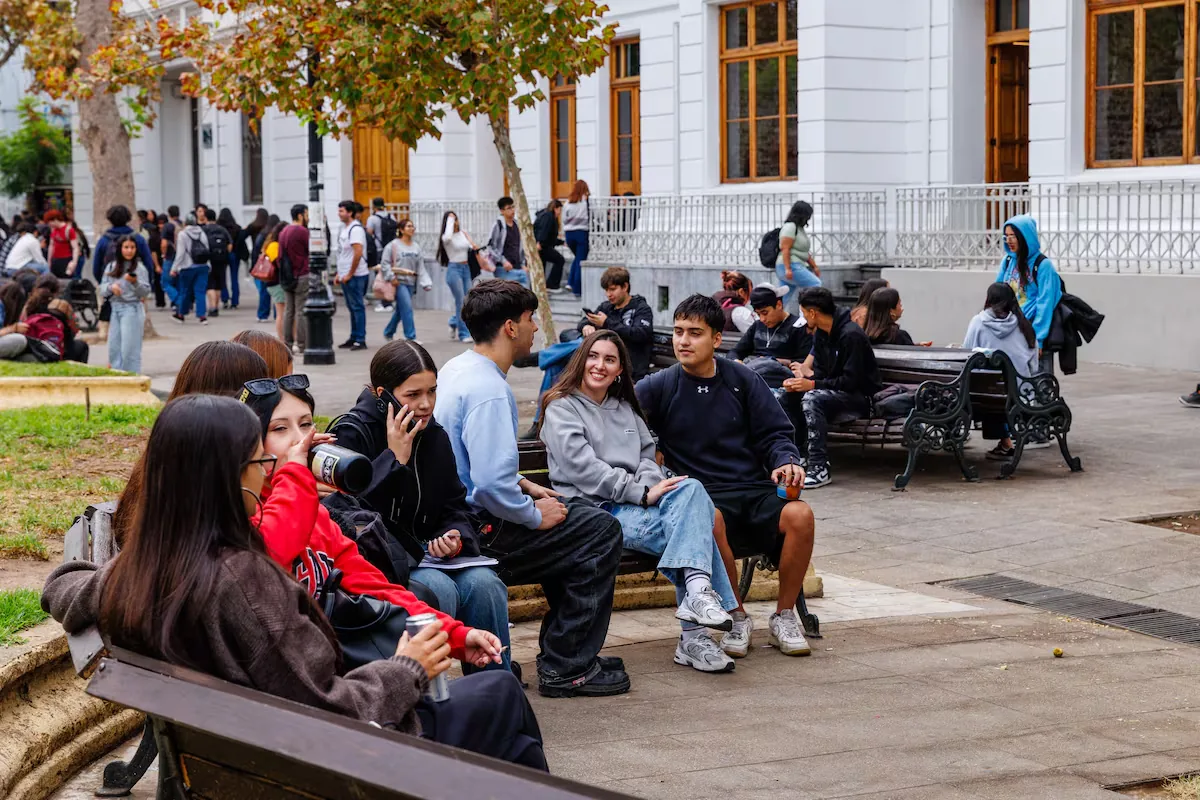
For eight months, Melissa Miranda (35 years old), a geographer graduated in 2023 from the Catholic University, kept selling a collection of Pokémon cards she had accumulated over the years. “I had no idea how highly valued they were,” she says. “The Pokémon cards fed me for eight months.” Her specialty is geographic information systems: satellite information, geolocation, and digital maps. While studying, she says, she participated in projects linked to various ministries and hoped that the degree would allow her to access better jobs. Since graduating, however, she has mainly found temporary replacements and sporadic jobs.
She used to rent, but a few years ago she returned to her mother’s house in Quinta Normal, Santiago. She also lives there with her partner because, she says, neither of them can afford to rent elsewhere. Melissa contributes by paying for electricity, water, internet, and gas. “We survive on whatever comes up: some replacement job, a small pega [job], or continuing to sell things we have left.”
The labor market Melissa is trying to enter today has many more graduates than 15 years ago. In January-March 2010, 21.1% of the Chilean workforce had completed higher education; in the same quarter of 2026, it was 41.5%, according to the Economic Context Observatory of Diego Portales University. That same quarter, unemployment among those who had completed those studies reached its highest level in the series, excluding the pandemic. “I thought that even having the degree I would be able to access better jobs, maybe it would open a few more doors,” says Melissa.
Adulthood in parts
Felipe Tello-Navarro, researcher at the CIELO Center of the Faculty of Social Sciences at Santo Tomás University and lead researcher of the Fondecyt Transition to adulthood and future expectations of Chilean youth: an analysis by gender and social stratum, studied along with Carlos Mellado and Verónica Gómez-Urrutia six markers of adult life: having a stable partner, children, living outside the parents’ home, working, considering oneself head of household, and not attending formal education.
By combining these indicators, they found different paths. One was those who work but still live with their parents: this corresponded to 23.8% of men and 31.6% of women aged 18 to 29; among them, it was the largest group. In 2025, moreover, 53% of people aged 25 to 29 lived with their mother and/or father, according to INJUV. None of these measurements establish why they remain there.
In the interviews he currently conducts, Tello-Navarro finds this difference: there are young people who could become independent but prefer to allocate their resources to studying, traveling, or saving, and others who do not have that possibility. For some, especially from middle and lower-middle sectors, he says, staying in the family home may be the only available option. “Regardless of whether they have a job, those jobs may not be enough to live completely independently.”
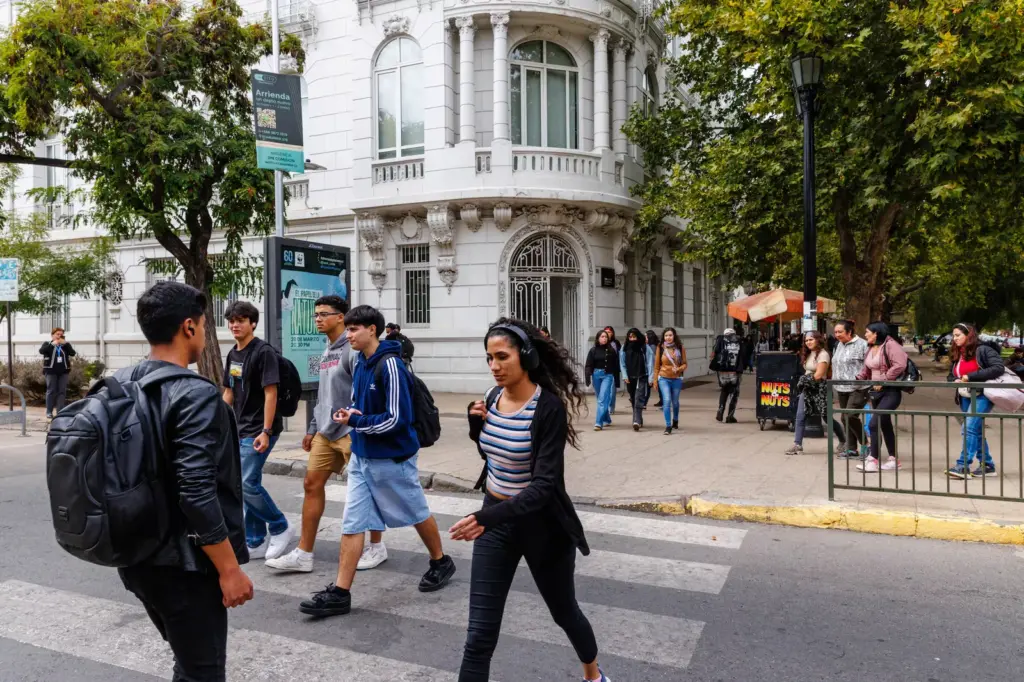
During the last two years, for example, Lorena Olivares (40) has been an extra in commercials for 18,000 Chilean pesos (20 dollars) or 20,000 (22 dollars) per day, has washed dishes in a restaurant for 25,000, and has done telephone work for similar amounts. After those days, she says, she would come home and count the coins, thinking about how to pay rent in Santiago, bills, common expenses, and the State-Guaranteed Loan (CAE).
By then, she already had a technical degree in communication and public relations, had studied Journalism at a traditional university, and completed two diplomas. She pursued her first career while working in a call center. There she recalls being told: “Little girl, you know what? Don’t stay here. Study, finish a degree so you can have a better job option.”
That’s what she did: she worked and studied. When she finished the technical degree, she says, some jobs in that area offered lower salaries than she earned at the call center. That’s why she went back to studying. At 26, she entered Journalism with the CAE. Later, she completed two diplomas. In 2019, she settled in Santiago, found jobs related to her field, and reached stable income, with which she obtained a mortgage loan and bought an apartment in the Valparaíso Region.
Until she lost the stable job.
Since then, she has applied for professional jobs lowering her salary expectations and also for jobs that do not require her training. In some professional ads, she says, they asked for fewer years of experience than she had. Outside her profession, she faced the opposite problem: to sell clothes or work in a warehouse, they required experience in areas where she had never worked.
In April 2026, a study by the Public Studies Center by César Gamarra, Sandra Quijada, Sarita Undurraga, and Emilia Vicuña analyzed underemployment by qualification among people with completed higher education. Using Casen data from 2006 to 2024, they found that more than 30% worked in occupations that required a lower educational level.
For 2024, the study reveals, they estimated that underemployed higher technicians earned about 19% less per hour than comparable workers whose jobs did require that level. Among university graduates, the difference reached 49%.
Read more The most effective barbecue brushes to remove dirt and leave the grill like new
Another question, say César and Sandra, was how long that mismatch lasts. César Gamarra, associate consultant at FV Consulting, commercial engineer with a mention in Economics from the University of Chile and student of the Master’s in Economic Analysis at the same university, says they wanted to know if starting in a job below qualification was a stepping stone or a trap. “The first job is so important that it often defines your career path,” they point out.
Sandra Quijada, coordinator of the Public Opinion area at CEP and master’s in Economics from the University of Chile, explains it this way: “Labor markets do not adjust at the pace of education decisions.” While the number of graduates increased, she maintains, the labor market did not generate jobs demanding those qualifications at the same rate.
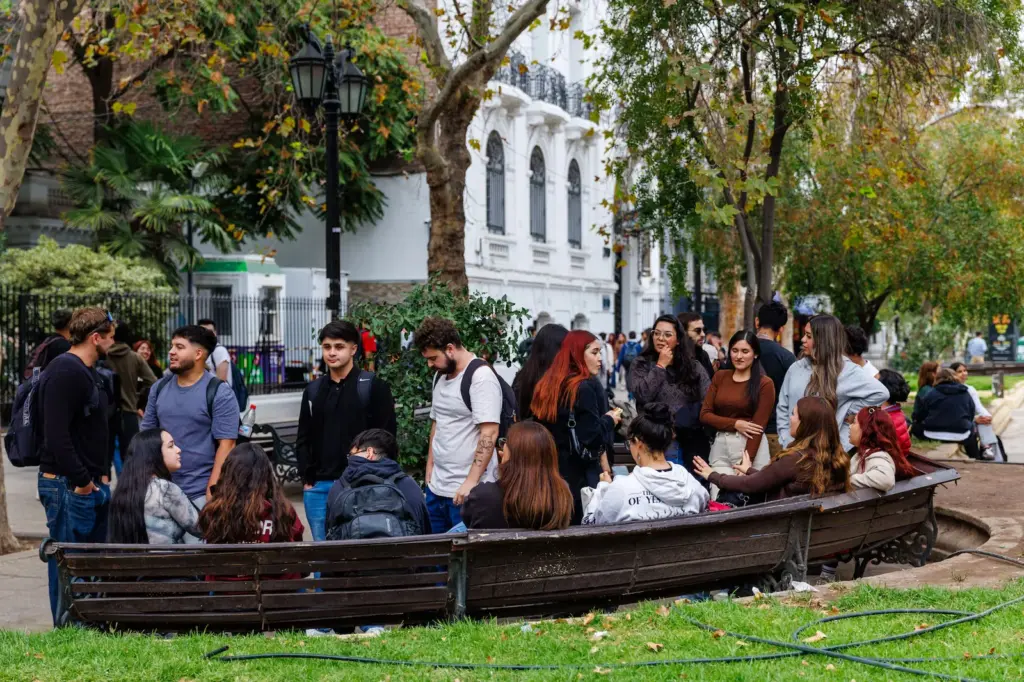
The mismatch also occurs in the opposite direction. Quijada cites geriatrics as an example: while in some areas there is an oversupply of professionals, there are regions of the country where there are no geriatricians, at a time when population aging will increase the need for specialists in older adults. For her, part of the problem lies in how information is provided to those who must choose a career. Data on employability and income exist, she says, but they do not always reach applicants. To illustrate this, she cites a report from the National Economic Prosecutor’s Office according to which users stay only a few seconds on Mi Futuro, the Ministry of Education’s portal. “The information exists,” says Sandra, “the point is that it is not communicated properly.”
“The responsibility falls on me”
Melissa estimates that between rent, transportation, food, and basic bills she needs around 800,000 pesos (875 dollars) monthly to live outside her mother’s house. The jobs she has found, she says, offer between 550,000 (602 dollars) and 650,000 pesos (711 dollars).
When Lorena lost her job, she left the rent in Santiago and moved to the apartment she had bought in the Valparaíso Region. Over time, she also could no longer pay the mortgage. Since then, she says, she has received documents related to the debt and possible seizures. The lawyers she consulted explained that she would need a stable job to attempt a renegotiation. That is what she has not achieved so far.
Her mother, an older adult, now lives with her. “For food,” says Lorena, they depend on her pension. Three or four years ago, she was in the 90% bracket of the Social Household Registry and says that even after spending a year without work, she remained there. “I went from 100 to zero,” she points out. Water, electricity, and common expenses are usually paid late. She also stopped requesting the suspension of CAE installments after several frustrating procedures for which she even had to pay money, such as a certificate of being single signed before a notary.
“Studying was a sentence for me,” Lorena assures. “Today it is a sentence,” she adds.
In the interviews Tello-Navarro currently conducts, mental health also appears. He clarifies that he does not study it directly, but the topic arises during conversations. “They are social phenomena, but then they are experienced very individually,” he explains. “Ultimately the responsibility falls on me and I start questioning my own aptitudes, my own abilities, my own decisions,” he adds.
Melissa also talks about mental health. She says her partner and her pets are her emotional support and that, after the pandemic, both went through severe crisis moments. When she needs help, she says, she turns to free support mechanisms because she cannot afford psychological therapy or medication. “I think I’m still here just because I’m stubborn,” she says. “I don’t give up because you shouldn’t give up. But it’s hard.”
Melissa came to the Catholic University from a public school and with scholarships. She had good grades and wanted to dedicate herself to music, but in her humble family, they preferred that she pursue a career that offered better opportunities. Her father made furniture, welded, did freight, or took whatever jobs appeared. In 2012, while she was studying, he got cancer. Melissa then began to combine university with night shifts and to take fewer courses to be able to care for him without dropping out. The doctors had given him two months to live. He died two and a half years later.
More than a decade later, Melissa returned to live with her mother. Now her partner also lives there. She says her mother does not understand how, after having studied at the Catholic University, she ended up again in that house and is not able to work to buy her own. At the end of the interview, Melissa sums up her journey: “You did the whole supermarket checklist: behave well, graduate with good grades, get scholarships.” She pauses and adds: “And all that effort, darn, comes to nothing.”
Read more The beach bag that is conquering the summer: it transforms into a towel and costs less than 16 euros