









A crowd of people connected to the internet finances housing promotions and solar plants every day, lends money to companies, advances invoices, or acquires shares in start-ups. With contributions that in some cases barely exceed 100 euros, these small investors help boost business projects and initiatives that until recently depended almost exclusively on banks or large funds. In just over a decade, crowdfunding has ceased to be a marginal and niche formula to become a financial industry that channels hundreds of millions of euros to companies seeking to grow, launch new businesses, or complement traditional capital access routes.
Read more Jorge Messi dies, the man who guided Leo Messi to the top of the world
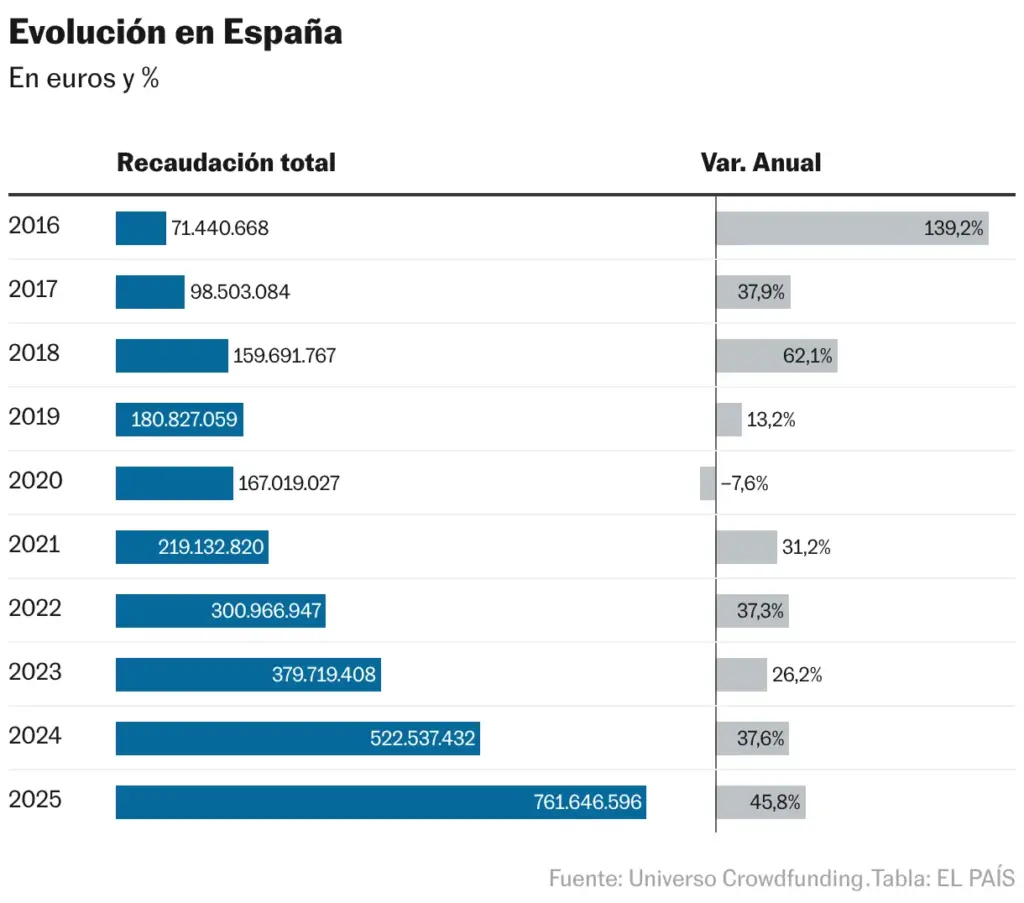
In Spain, this alternative financing channel has marked a milestone: the sector exceeded 700 million euros for the first time in 2025, reaching 761.6 million, 45.8% more than the previous year, according to the report prepared by the consulting firm Universo Crowdfunding, which estimates the impact at 15,234 jobs, 45.3% more. The evolution is even more striking when looking at the historical series: in 2016, it barely moved 71 million. Since then, it has channeled 2.887 billion euros.
Ángel González, CEO of Universo and co-founder of the Spanish Crowdfunding Association, attributes part of this expansion in Spain to the digital acceleration after the pandemic and rejects that it is a passing fad. “It has become a mature, regulated financial tool with growing macroeconomic relevance. The change is structural,” he says.
The traditional image of crowdfunding as an alternative means to finance albums, solidarity projects, or films—for example, one of the first major media cases was El cosmonauta, a science fiction film that raised more than 400,000 euros from thousands of patrons—has long ceased to reflect the sector’s reality. Today, thousands of users turn to digital platforms to channel their savings into business, real estate, or social projects.
Moreover, all that money moves in a much more regulated and professional environment than in the early years. Platforms must be registered as providers of participatory financing services and are supervised by the National Securities Market Commission (CNMV). All act as intermediaries: they are actually just a regulated bulletin board and never become owners of the shares or loans. There is another layer: the European Regulation on Providers of Participatory Financing Services (ECSP), applicable since 2021 and fully implemented since 2023, which establishes strict transparency and investor protection requirements. It also facilitates cross-border platform activity, expanding the potential market for both companies and investors.
Early Failures
Regulation came after an initial stage marked by some controversial episodes. The best-known case was Housers, a pioneer of real estate crowdfunding in Spain, which became involved in conflicts with investors, problems in several projects, and CNMV proceedings. That was a wake-up call for the sector to raise demands on transparency, risk management, and investor information. Still, González warns that “pseudo-platforms” or projects spread through social networks that escape controls still exist. “If you want to invest or get financing, you must go to a regulated platform,” González warns, because the main platforms have much more sophisticated analysis methodologies and risk departments than in the early years.
But regulation does not mean absence of risk. As with any investment, projects can suffer delays, fail to achieve expected returns, or even generate losses for investors. González himself admits to having lost money on some investments. “The main risk is that the company cannot repay the capital within the agreed deadlines. All of us, to a greater or lesser extent, have experienced some of these situations in recent years. Zero risk does not exist in any financial instrument, and anyone who says otherwise is not being honest,” says Alessandro Miori, CEO of the crowdlending platform Ener2Crowd. Miori points out that the platforms’ first line of defense is the selection of initiatives. In fact, “most of the projects analyzed do not pass the first filter,” says Javier Villaseca, CEO of the Sego Finance group.
Gradually, this channel has become a part of the financial strategy of many companies. It is not last-resort financing. “Companies and projects that turn to crowdfunding do not necessarily have a profile excluded from the banking channel but have a strategic project that fits better with alternative models,” says Pablo Alonso Montes, partner in the financial services legal area at KPMG Abogados.
In many cases, they are real estate developers, expanding SMEs, technological start-ups, or projects linked to renewable energies seeking to diversify their funding sources without relying exclusively on bank credit, raise funds quickly, and access hybrid debt and equity structures. For some companies, it also means gaining visibility and creating a community of investors around their project.
However, this route is usually more expensive than bank financing. Also, “it involves greater transparency and continuous reporting requirements to multiple investors,” Montes warns. Added to this are “possible reputational risks in case of non-compliance and less predictability in financing execution.” In other words, this channel expands capital access options but also forces companies to be accountable to a much broader and more demanding investor community.
The phenomenon is not exclusive to Spain. Globally, the crowdfunding market could exceed 5.53 billion by 2030, according to the US consulting firm Grand View Research. Spain still lags behind more mature markets such as France, which leads with 1.763 billion euros raised in 2025, as well as Germany and the Netherlands. According to the CNMV, there are currently 27 registered entities, still a modest number. Although the gap is narrowing. “Spain cannot be classified as a lagging market but as a market in accelerated growth and convergence phase,” say KPMG Abogados.
All in Real Estate
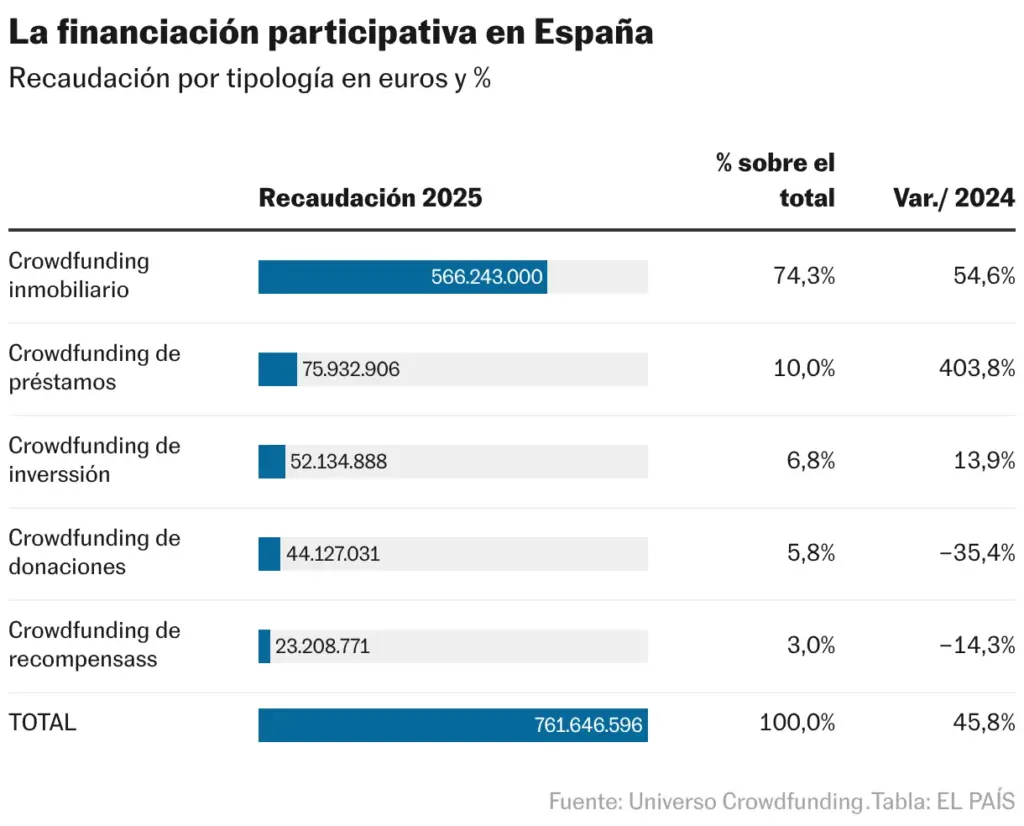
The growth of participatory financing is not evenly distributed. The true protagonist of the boom in Spain has a real estate accent: the sector concentrates 74.3% of all financing raised. In 2025, it mobilized 566.2 million euros—almost three out of every four euros raised—driven by the rise of platforms like Urbanitae, which consolidates as a giant: it exceeded 280 million euros raised in 2025, 36.8% of all fundraising. Followed by Civislend (133 million) and Wecity (101 million).
Although the weight of this channel remains small compared to the nearly 39 billion euros moved by developer financing, it has consolidated as one of the most dynamic segments. The phenomenon responds to a dual trend. On one hand, the need for developers to find capital sources complementary to banks at a time of severe housing deficit—700,000, according to the Bank of Spain. “It has gone from being a very niche formula to becoming a structural layer of developer financing,” summarizes Diego Bestard, CEO of Urbanitae. This platform alone, which obtained CNMV license in 2019, has financed more than 9,000 homes since starting its activity in Spain and Portugal.
In real estate, banks remain king, concentrating between 53% and 55% of sector resources, but no longer cover all capital needs of a development. Alternative capital represents between 33% and 35%, while crowdfunding contributes between 9% and 11%. “We are not seeing a bank substitution but a more hybrid, sophisticated, and healthy model, where each actor enters at a different project phase,” says Bestard.
On the other hand, more savers are seeking investment opportunities in real estate. “It has ceased to be a rarity to become a logical way to access real estate with low tickets and diversification,” says the executive. The average ticket at Urbanitae is around 3,000 euros.
Bestard dismisses the idea of a bubble forming. “Alternative capital is growing to cover a real market gap, not to artificially inflate the system. It responds to a structural financing need, not irrational exuberance.” In his case, he rejects about 90% of projects analyzed for solvency and viability criteria.
Within real estate, two financing models coexist. In some cases, investors participate in project equity (equity crowdfunding) and share potential profits. In others, they act as lenders through crowdlending formulas, receiving an agreed return.
This latter modality is gaining weight in sectors beyond real estate. In fact, it was the fastest-growing segment in 2025: it reached 75.9 million euros, 403.8% more than the previous year, driven by the emergence of new platforms, mainly French and Italian, linked to renewable energy projects. “It has been the boom in the renewables field,” summarizes Ángel González. Crowdlending works simply: a company obtains financing through loans provided by small investors. In return, they receive capital repayment plus agreed interest.
For Alessandro Miori, the appeal of the loan-based model lies in its complementarity with banks. “It is not a bank substitute, and it would be a mistake to present it as such. Many of our promoters use both channels sequentially and consciously. Or even in parallel,” says the CEO of the Italian-origin platform Ener2Crowd, whose activity ranges from photovoltaic installations or industrial energy efficiency projects to sustainable agriculture and other decarbonization initiatives. The platform, which has mobilized more than 58 million euros and financed 240 projects, recorded a 5% delinquency rate in 2025 after years near 1.5%, although still well below the sector average, which stands at 8% and 30% on some platforms.
Read more A drone with explosives from Romania crashes near a gas pipeline in Bulgaria
Alongside participatory loans, the other major pillar is equity crowdfunding, which allows investors to become shareholders of start-ups and growing companies. In 2025, this channel raised 52.1 million euros, 14% more than the previous year, according to Universo. Platforms like Sego Venture (venture capital division of Sego Finance), Fellow Funders, or Capital Cell operate in this segment. Javier Villaseca explains that this formula enables companies to raise funds without assuming periodic debt payments, although in return they must share part of the company’s ownership. Sego Venture has channeled more than 100 million euros since its creation, supporting more than 50 companies—mainly in the aerospace sector and related to artificial intelligence—at different growth stages, some of which have gone public.
According to Villaseca, many companies turning to equity crowdfunding are in phases too early to attract institutional venture capital. “Our platform represents a financing window that otherwise would not exist,” he says. “It’s not that they are lower-quality projects; it’s that the traditional system in Spain is not designed for that specific moment in their development.”
The rest of the participatory financing business is divided among crowdfactoring—a growing modality that allows a company to obtain immediate liquidity by advancing invoice collection—donations, and rewards. The first surprised in 2025 by mobilizing 319 million euros, driven by platforms like Sego Factoring, Circulantis, or MytripleA. Behind were donations, with 44 million euros—a 35.4% drop after the boost from the 2024 Valencia flood—and rewards, with 23 million, areas in which platforms like GoFundMe, Teaming, Mi Grano de Arena, Verkami, Kickstarter, or Indiegogo operate.
This is how crowdfunding has laid the foundations to continue gaining weight in Spain. The next step will be greater market concentration leading to groups with pan-European dimension favored by community regulation. “Conglomerates of platforms operating in several countries are already beginning to form,” says González. However, the big challenge remains expanding the investor base. Experts agree that financial education of the population needs improvement. “There are millions of people with savings in current accounts losing purchasing power, not for lack of alternatives but for lack of information,” concludes Javier Villaseca.
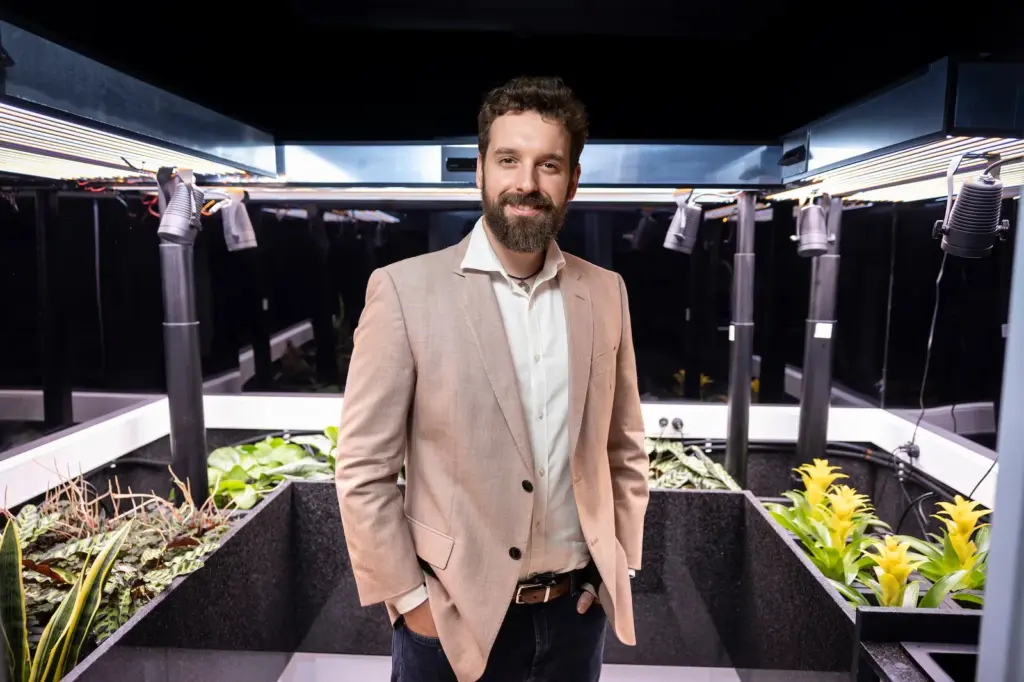
Pablo Vidarte. Bioo
“It allows anyone to be part of the company”
When Bioo went to market in 2022, after more than seven years dedicated to research and development, Pablo Vidarte was clear that he wanted to open part of the company to small investors. The biotech company, founded in 2015 and specialized in technologies to transform cities—from bioreactors capable of generating energy and water from the soil to bioluminescent plants to reduce light pollution—has turned to equity crowdfunding, a formula through which investors enter the company’s capital in exchange for shares. “It has always gone very well for us. It is a quite important vehicle for us because we get people to be part of the project,” Vidarte explains. “Not so much to avoid depending on funds, because we have those too, but to give people a chance to be part of the company.” Since then, Bioo, with offices in Barcelona, Riyadh, and Shanghai, has carried out three financing rounds with participation from small investors. The first was a pre-market round; the second was growth-oriented, and the third, still open, seeks to finance the company’s international expansion, mainly to the US. Launched just over a month ago, the round aims to raise six million euros and already has about a third of that amount committed. The forecast is to close it before the end of the year.
The company has raised about three million euros to date through platforms like Sego and AKKA. However, Vidarte insists that this route does not replace other financing formulas. Bioo has received nearly five million euros from the European Commission and a similar amount from private funds. “It is not the bulk of our financing, but it is not irrelevant either. In fact, in more than one round it has saved us.” For the entrepreneur, one of the main advantages of crowdfunding is speed: it allows raising funds in one or two months compared to the six months a venture capital fund may require. “It is also a form of validation,” he adds.
The main risk, he admits, is the same as in any capital increase: “We dilute and lose shares.” Still, he considers the advantages outweigh. “One of the things that has always driven me is to make symbiotic technologies between nature and human civilization. So, the least is to count on people in general and not just one or two funds.”
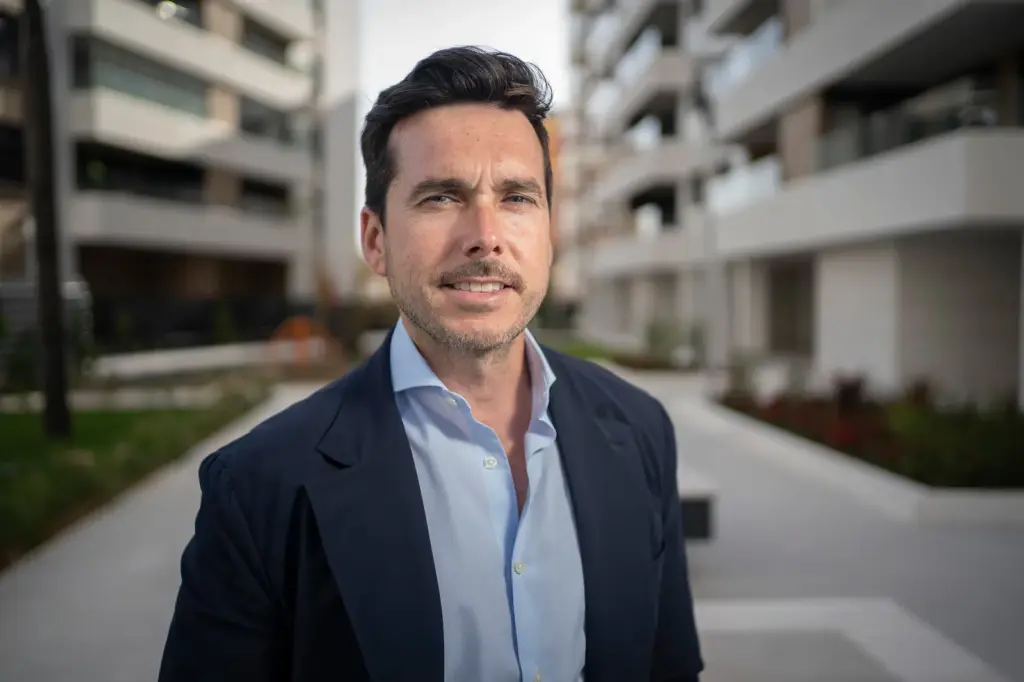
Fernando García Romero. Iniciativas Inmobiliarias
“It will not replace banks, but it will occupy an increasingly relevant space”
Fernando García Romero approached real estate crowdfunding in 2019 out of “pure professional curiosity.” His group, Iniciativas Inmobiliarias, a developer active in western Andalusia with a portfolio close to 3,000 homes to develop in the next four years, wanted to understand how this new investment channel worked. After analyzing different platforms, he chose Urbanitae. The first operation was debt financing of 300,000 euros for a development that was already practically finished. Since then, he has developed six projects, all but the first structured through equity.
“We believe this model fits especially well with the nature of real estate development, as it allows the investor to participate in the project’s value creation and co-invest with the developer,” he says. García Romero insists that crowdfunding does not replace banks. “All our projects are financed through traditional bank financing, and we have the trust of the country’s main financial institutions,” he says. Its usefulness, he argues, lies in complementing own resources and expanding investment capacity. “Bringing in investor partners in specific projects allows us to optimize our investment capacity, develop more projects simultaneously, and undertake larger operations.” That is why he believes it will continue to grow in the coming years. “It will not replace banks, but it will occupy an increasingly relevant space as a complement to traditional financing and as a way to access real estate investment for investors,” García concludes.

María A. González. Tenerife Multiple Sclerosis Association
“It helps to alleviate deficiencies, but it should not be the only response”
The Tenerife Multiple Sclerosis Association (ATEM) uses donation crowdfunding as a complementary tool to finance projects that improve the quality of life of people with multiple sclerosis and other neurological, physical, and organic diseases. Its president, María Ángeles González Rodríguez, explains that these campaigns arose to cover initiatives that “do not always have sufficient funding through public aid.”
Since 2016, the entity has promoted several campaigns aimed at rehabilitation, adapted physical activity, research, or resource improvement. The most successful was Equipatem, which raised 6,919 euros thanks to 172 donors, 355% of the initial goal. More recently, the campaign Movimiento por la vida raised 4,444 euros to finance aquatic rehabilitation and adapted exercise. “Most donations come from family, friends, users, professionals, the local community, and people sensitized to our cause,” González explains. Social networks play a key role in reaching new audiences, mobilizing support, and giving visibility to campaigns. The association also observes a change in donor profile: more people are collaborating, although with smaller contributions.
ATEM considers crowdfunding still a very valuable tool, although insufficient to sustain services stably. “It allows financing rehabilitation programs, psychological support, accompaniment, or autonomy promotion that should have broader and more stable coverage,” says the president. Therefore, she warns that it helps cover deficiencies but “should not be the only response.” An example was the campaign ATEM stays home thanks to you, launched during the pandemic. With the 6,088 euros raised, the association was able to start a home delivery service for medicines for vulnerable people who could not travel to the hospital. “It was an example of how it can provide a quick and effective response to an urgent need.”

Francisco Guerrero. Moneleg
“We have been able to accelerate investments without compromising financial stability”
Moneleg has found in crowdlending a tool to finance part of its growth in renewable energies and energy efficiency. Francisco Guerrero, CEO of this company based in Chiclana de la Frontera (Cádiz), explains that the company began using this formula two years ago as part of a financial diversification strategy. Since then, it has carried out four campaigns linked to specific developments and uses it recurrently, along with bank financing and other capital sources. “It has contributed to executing projects in shorter timeframes, optimizing treasury management, and maintaining a diversified financial structure.”
The company has used this route mainly to finance solar communities in the province of Cádiz and energy-saving certificates nationwide. According to Guerrero, these are initiatives with predictable cash flows that allow proper financing structuring and offer security to both the company and investors. Through these operations, it has mobilized about 883,600 euros. The impact, he assures, has been positive. “It has allowed us to accelerate investments without compromising the company’s financial stability. We understand crowdlending as just another tool.” In his view, the main value lies in the speed of access to funds and its ability to adapt to project execution schedules. Although he acknowledges that in some cases the financial cost may be higher than some traditional alternatives, he believes the comparison should not be limited to interest rate. “When analyzing the total opportunity cost, it can be a very competitive alternative.” The executive highlights that the biggest challenge when using this type of alternative financing is “greater transparency and rigorous financial planning.” And he adds: “Projects must be well structured and able to generate trust among investors, which we consider positive because it fosters stronger business management.”
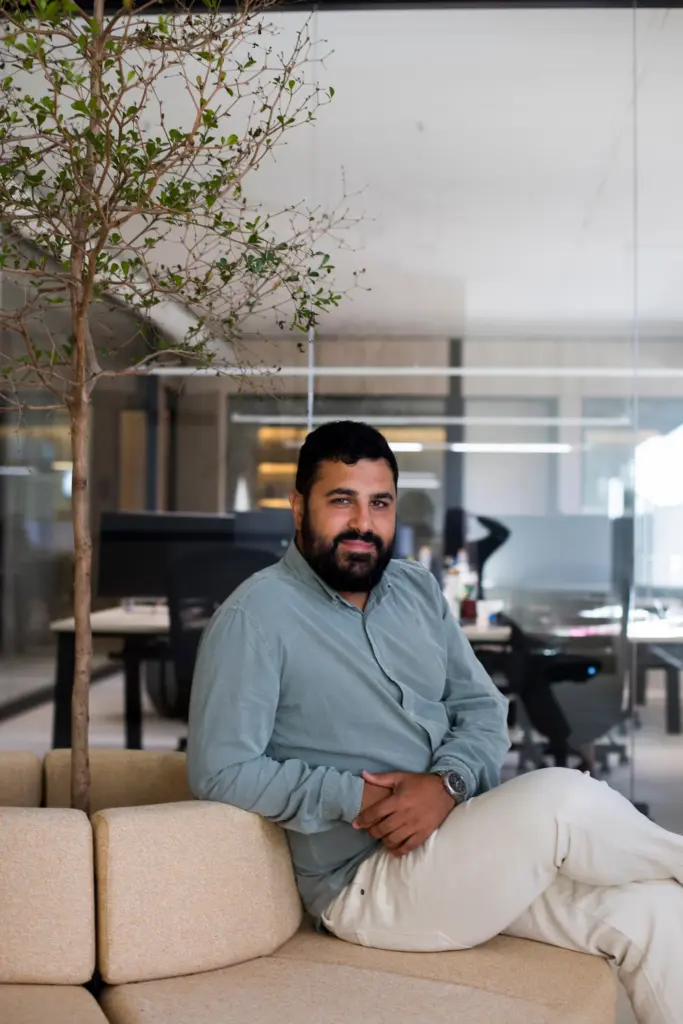
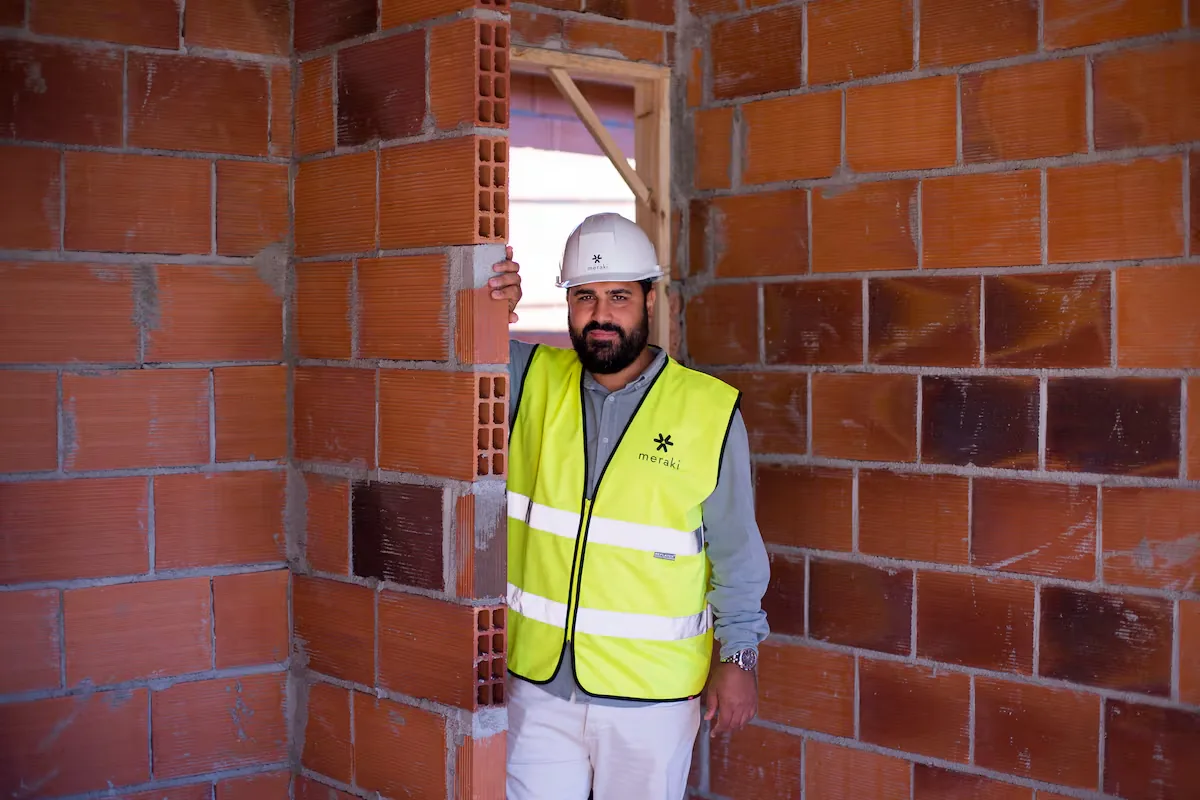
Rubén Ferrero. Meraki
“We transform issued certifications into immediate liquidity”
The Galician construction company Meraki, founded in 2021 and based in A Coruña, has found in crowdfactoring a tool to accompany its rapid growth. Its CEO, Rubén Ferrero Pérez, explains that they began using this formula at the end of 2022, when activity growth outpaced available financing. “As with many young companies, our activity volume grew faster than the financing capacity normally granted during the first years of life.” Between 2021 and 2025, the firm went from a turnover of 250,000 euros to over five million euros annually. “Crowdfactoring helped us pace activity growth with the liquidity needs typical of the sector,” he says. It also contributed “to improving treasury management and undertaking new projects with greater financial security.”
The goal was not to replace banks but to complement them and better manage working capital needs of a business with significant gaps (between 30 and 60 days) between work execution and effective invoice collection. Although 60% of its clients are public administrations and solvent payers, “daily activity requires attending to payroll, suppliers, subcontractors, materials, and other operational commitments,” the executive says. “It has allowed us to transform already issued certifications into immediate liquidity and continue growing without generating unnecessary treasury tensions,” he adds. Meraki has worked with different platforms but maintains its most continuous relationship with Sego Finance. The operation is simple: once a certification or invoice is issued and validated, the platform advances its amount, allowing liquidity before the effective collection due date.
According to Ferrero, the main advantage is flexibility, although he warns it is not a valid solution for every operation. “Not all invoices are eligible for financing, the cost may be higher than some bank lines, and it depends on the payer’s quality and solvency.”
Read more Video analysis | Between prayers and military, Espriella sworn in as president of Colombia