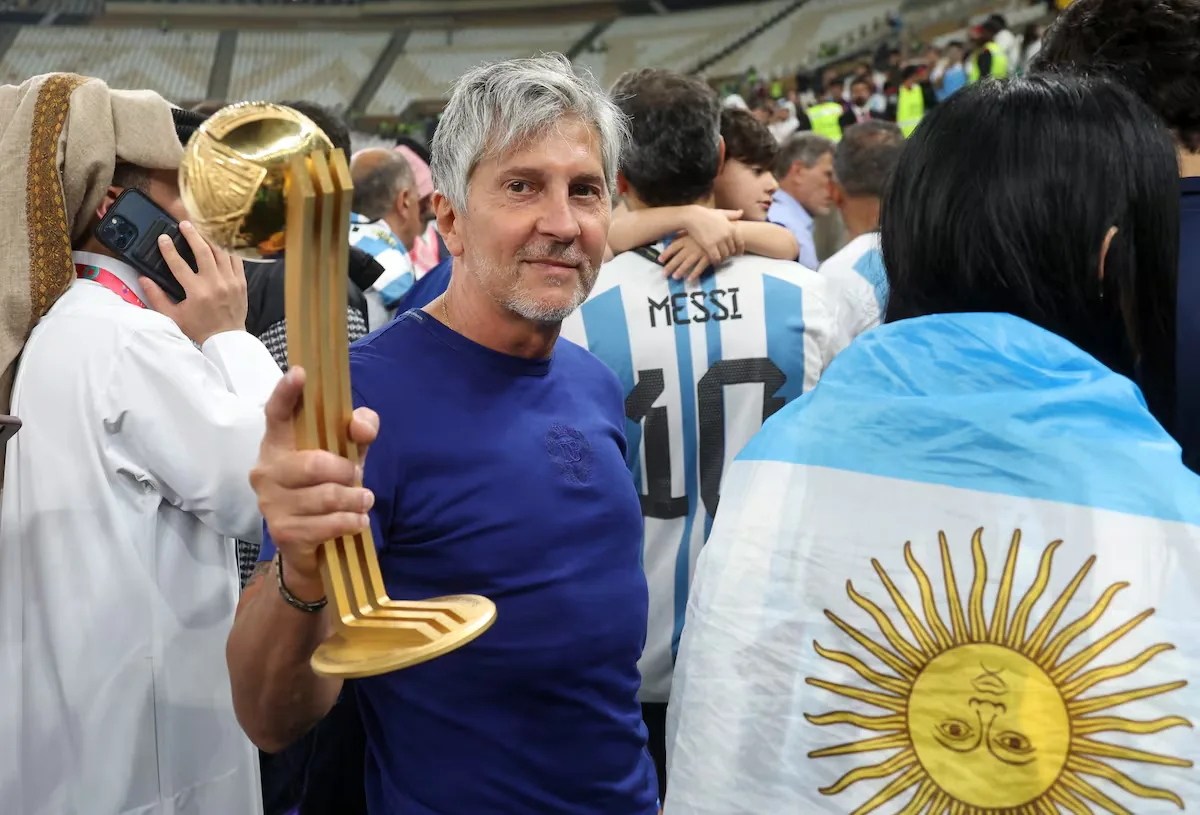
When does a father begin to perceive that his son is on the path to becoming a prodigy? Jorge Horacio Messi, who passed away this Friday night in Rosario at the age of 68, noticed it very early, when Lionel – the third of the four children he had with Celia Cuccittini – had just turned four years old. The revelation happened during an afternoon in 1991 when the family was playing football at the door of their house in a neighborhood far from the center of Rosario, on Lavalleja street, which was still dirt, unpaved at the time.
Read more A drone with explosives from Romania crashes near a gas pipeline in Bulgaria
“My son Rodrigo was carrying the ball at his feet and Leo was in the middle, chasing it. At one point he lunged at the feet and took it away. We all looked at each other, surprised. No one had told him how to do that. It came out naturally,” Jorge himself would tell years later to Argentine journalist Ramiro Martín, author of the book “A genius in the football school.”
Club Atlético Newell’s Old Boys bids farewell with deep sorrow and regret to Jorge Messi, who passed away at the age of 68 in the city of Rosario.
— Newell’s Old Boys (@Newells) August 8, 2026
A recognized Newell’s fan, businessman, and father of the captain of the Argentine national team, Lionel Andrés Messi.
Jorge was the support and the… pic.twitter.com/8dFPMRdM9Z
Since then, every time the boy left his small house – a kitchen, a living room, and two bedrooms, one for the couple and the other for the siblings – Jorge did not stop noticing that Lionel “was different.” According to what he would say in one of his first interviews, when his son was beginning to become a figure for Barcelona and the Argentine national team and his fame was skyrocketing to become what he is today, “at four years old he did juggling and slept with the ball on the tip of his boot. We couldn’t believe it. A little older, he played with his brothers, who are seven and five years older, and he danced circles around them. It’s a gift, it’s something he was born with.”
Born in January 1958 in Rosario, 300 kilometers north of Buenos Aires, Jorge had dreamed of being a footballer, and in a way he was during the four years he played as a midfielder in the youth divisions of Newell’s, his and the whole family’s favorite team. However, the call to fulfill military service, which was mandatory even before the dictatorship that struck Argentina between 1976 and 1983, and the early formation of his family – he married at 20 years old to Celia, a young woman he met in Las Heras, the neighborhood where they lived – cut that possibility short: Jorge had to work and earn income to support his children.
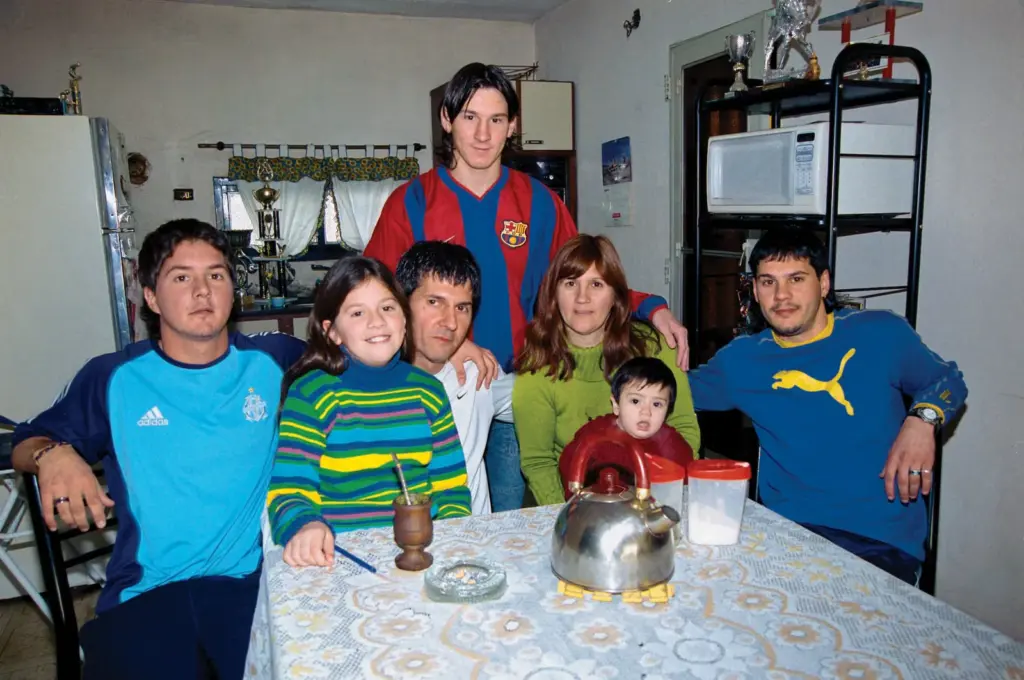
First Rodrigo was born, in 1980, then Matías, in 1982, third Lionel – on June 24, 1987, a name chosen in tribute to Lionel Richie, one of Celia’s favorite musicians, then at the height of his fame with the songs All Night Long and Say You Say Me – and finally María Sol, in 1993.
Jorge’s love for football preceded his intuition that the family lamp would shine on a genius, although on his first birthday he already gave him a Newell’s jersey. Between the late 80s and early 90s, he would gather with his friends to watch on a VHS player the goals that Diego Maradona, his idol, had scored against England in the 1986 World Cup. Jorge was even one of Lionel’s first coaches: it happened in a neighborhood team, Grandoli, located a few blocks from their house, which the family stopped attending after one of their children was not allowed to enter because he didn’t have the two Argentine pesos (two dollars) to pay the entrance fee. His next step was Newell’s.
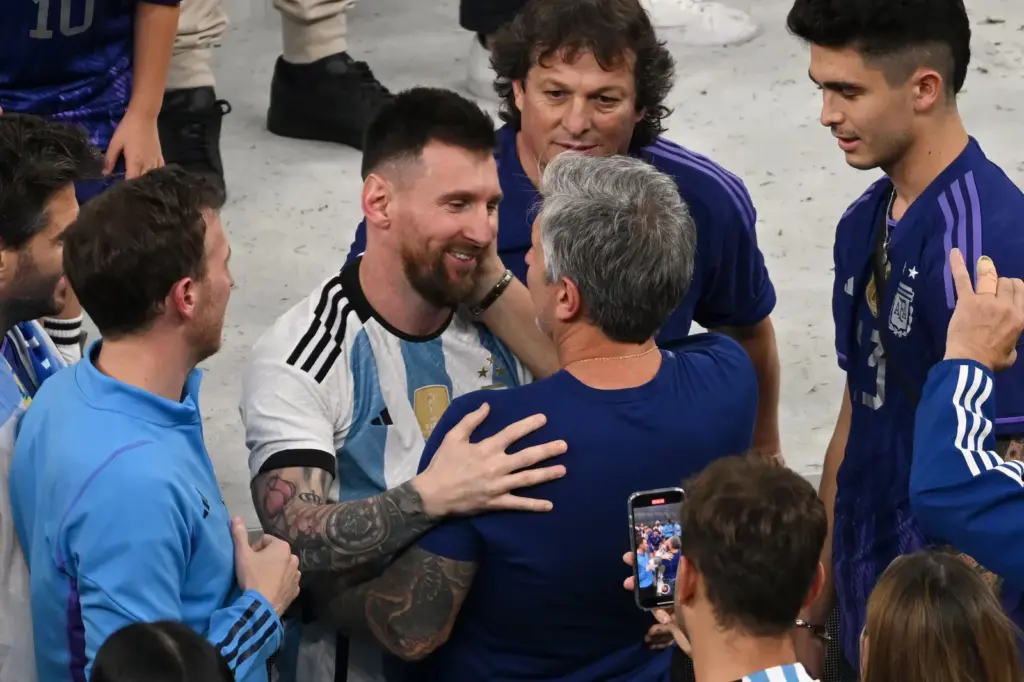
By then, Jorge and Celia noticed that their son was not growing enough. After visiting a Rosario endocrinologist, the couple understood that Lionel had to inject growth hormones, a simple treatment to follow but very expensive for the family: at the beginning of this century, Argentina was heading towards the collapse of its economy. While Celia worked in a magnetic coil workshop, her husband learned to be multifaceted: inspired by his father, Eusebio Messi – a bricklayer by profession – Jorge chained different jobs in his working life, from tightening screws in a metal workshop to collecting monthly payments at a medical institute, without stopping studying at night to become a chemical technician. According to the book “Messi,” by Spanish journalist Guillem Balagué, “it took him eight years to finish the degree.”
Read more Video analysis | Between prayers and military, Espriella sworn in as president of Colombia
By that time, Jorge had already been working since 1980 at Acindar, one of Argentina’s main steel producers, a company located in Villa Constitución, 50 kilometers from Rosario. “Competitiveness was encouraged and Jorge took on responsibilities until he reached the position of manager. The salary was enough to support a family of three without hardship. Even four,” added Balagué. “My dad was a worker; we never lacked anything, but always humble as now. We always fought and all the brothers were able to study well, in the best schools. We never lacked anything,” defined Matías, the second son.
The treatment for Lionel to grow in centimeters, however, was not covered by social security: it cost 900 dollars per month and Jorge earned 1600. Although he tried to get Newell’s – and also River Plate, interested in his transfer – to cover the cost, Jorge and Celia understood that the only solution would be Barcelona, which soon became interested in the little Argentine who was barely 13 years old. The family traveled to Spain in February 2001. In gratitude for the agreement, Jorge walked 75 kilometers to the Virgin of San Nicolás, one of the most venerated by Argentine parishioners.
Three years later, in 2004, during a brief return to his home in Rosario, the phone rang at the Messi house and Jorge answered. According to “Messi, the complete book,” by Argentine journalist Ariel Senosian, an unknown voice – that of Omar Souto, an administrative employee of the AFA – introduced himself on the other end of the line:
-Jorge, I’m from the AFA Selections Department. I’m calling because we are interested in calling your son Leonardo.
-My son’s name is Lionel. And finally they call him. He only wants to play for Argentina. They called him from Spain but he wants Argentina.
Years later, already turned into his son’s manager and therefore at the head of a family business that simultaneously transcended borders, Jorge would become involved before the Spanish Justice for tax evasion. Sitting in the Gavá court to face the debt (4.1 million euros plus interest), Jorge took full responsibility before a judge and exonerated Lionel. “My son doesn’t know how money is made,” he said in that only uncomfortable moment, a father who, by then, had already finished knowing that his son had a gift and was different from the rest of millions of footballers.
Read more Trump lost the Latinos. The Democrats still can’t find them