EL PAÍS offers the América Futura section openly for its daily and global informative contribution on sustainable development. If you want to support our journalism, subscribe here.
Read more Mass trials without guarantees in El Salvador: “The judges are afraid, they are condemning everyone”
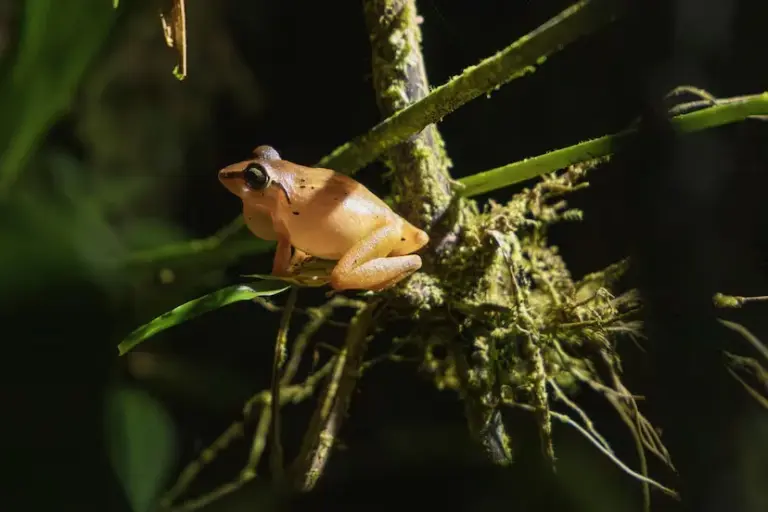
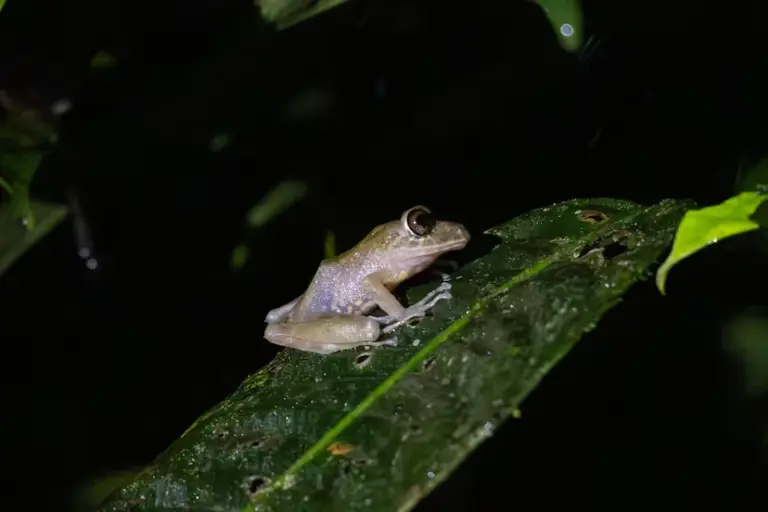
The sound of the jungle is a random playlist that is anything but casual. The mornings start with the sound of the yellow-throated toucans (Ramphastos ambiguus) and their characteristic “diostedé, diostedé.” This blends with the mountain guans (Penelope ortoni and Penelope purpurascens) and the mantled howler monkey (Alouatta palliata), with a howl that floods everything. A few hours later, the cicadas activate, undeterred by the warmest hours of the day, the woodpeckers, and Boulenger’s nurse frog (Epipedobates boulengeri), one of the few diurnal frogs that roam Mashpi-Tayra, in the heart of the Ecuadorian cloud forest. At dusk, the croaking of the frogs drowns out the sound of the birds, which fall asleep and become easy prey for their predators. Near the streams, the glass frogs and torrent frogs (Hyloscirtus mashpi) sound. The night is a feast of sounds. And it could soon become intangible world heritage.
The very high number of endemisms that inhabit these 3,200 hectares of private reserve make this biodiversity orchestra something like a designation of origin. Additionally, the enormous variability of altitudes in such a small space (about 500 meters difference) further broadens the range of songs. Gustavo Pazmiño, ecosystem manager at Fundación Futuro and percussionist, has been obsessed for years with proving that the music of the jungle is also an indicator of its health. To prove it, he devised a plan: capture the sounds of Mashpi-Tayra and compare them with neighboring plots flooded with livestock, monocultures, and logging. “At some point, everything must have sounded this incredible. Today, the reserve is the relic of the biodiversity of the Andean Chocó. And what sounds just a few meters from here are cows, chainsaws, or people. Not all these animals,” laments the biologist.
Fundación Futuro set out to draw UNESCO’s attention so that it would recognize the Ecuadorian biodiversity orchestra as intangible heritage. For months, they placed recorders at different heights and latitudes, recording one out of every ten minutes, until obtaining broad sound windows of a noisy, alive, and exciting biodiversity.
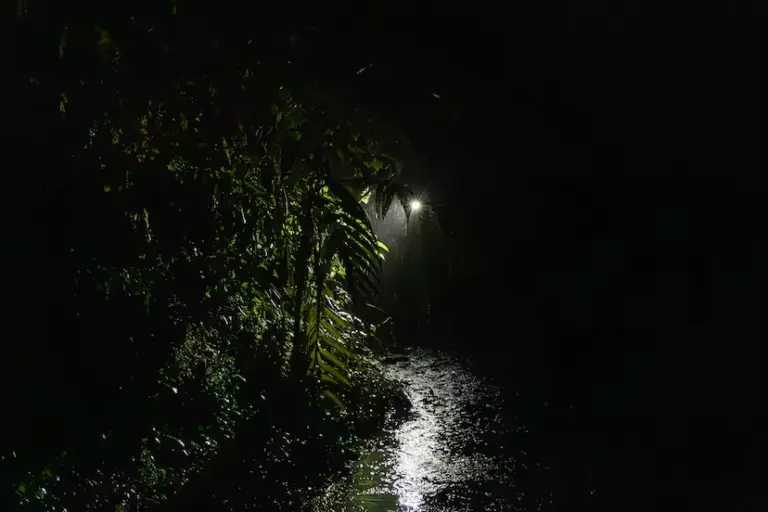
For a landscape (in this case, sound) to enter the World Heritage List, it must be presented by the corresponding State and meet at least one of ten technical criteria, including the aesthetic one. According to the UN, it must be a “superlative natural phenomenon or an area of exceptional natural beauty and aesthetic importance.” “If that is not beauty, then what is?” Gustavo asks, under a yarumo leaf that serves as an umbrella on this rainy expedition. This year, Ecuador proposed five projects. The soundtrack of this humid forest is one of them. Now begins a long list of protocols and field visits until the results are known, probably in two years.
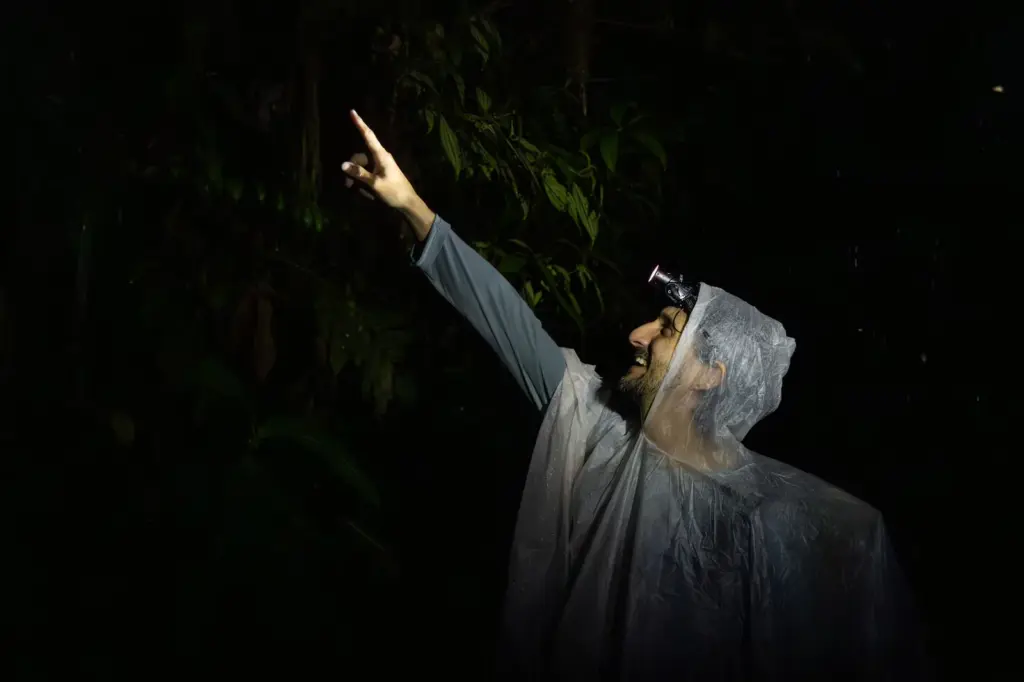
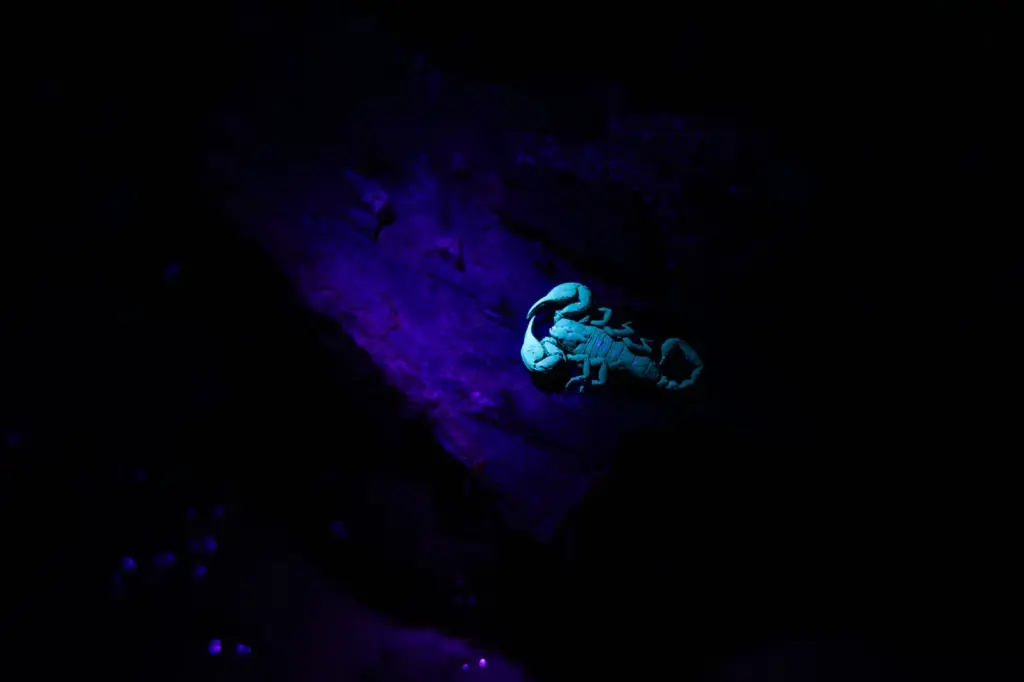
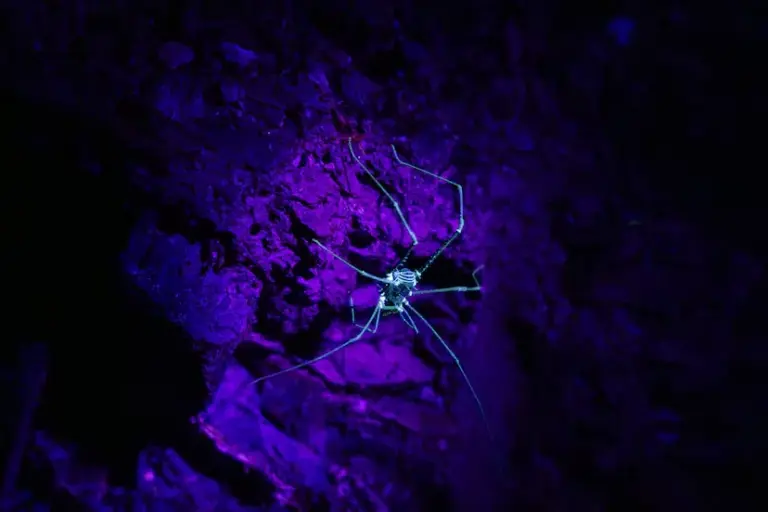
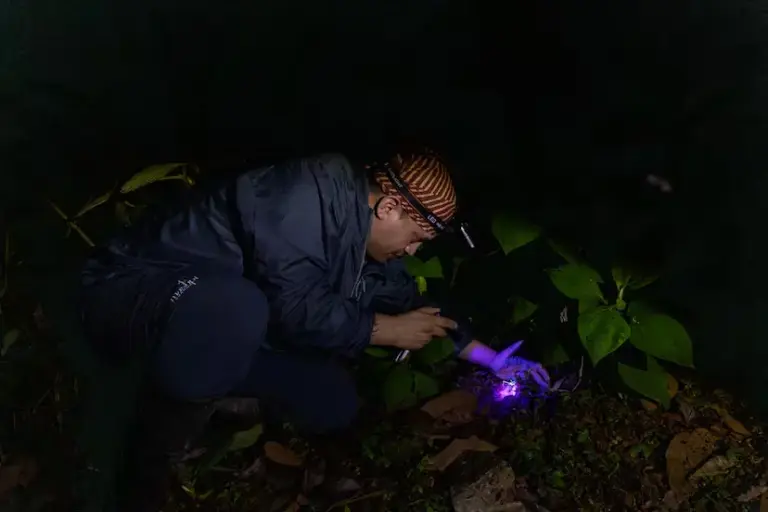
It is 6:45 p.m. in Mashpi Tayra. The entire palette of orange and pink tones is in the sky. A constant mist slips between the century-old trees. Esteban Calvache, entomologist, puts on swamp boots that cover him up to the knee, puts on the raincoat, and sets off. A few minutes later, the jungle fades to black, but his surgical eye is not hindered as night falls. He walks in the rain and darkness with a small ultraviolet laser with which he meticulously scans every corner. He sees it in seconds. A fluorescent scorpion hides from the rain in a stone den. “Aha,” he says. “I knew we were going to see it.” A few meters away, a spider also glows in neon green. It does so because of the compounds -beta-carboline and coumarin- in the skeleton it carries outside.
“The true protagonists of the night are the spiders,” acknowledges the arachnid specialist. The tarantulas leave their daytime refuge to look for food: other insects, small vertebrates – like frogs – or even a distracted sister tarantula. The lycosids – a hairy group known as wolf spiders – court females with small taps, and the giant fishing spiders (of the genus Trechaleidae) hunt a bug to use it as a nuptial gift for the female. While she eats it, the male takes the opportunity to copulate with her. Calvache narrates one by one the feats of his favorite insects with the same fascination as the first day he saw them in a book.
Read more Castro-style capitalism: Havana promises economic changes without giving up political control
Although much of the biodiversity of this reserve will take years to be in biology books, an unprecedented discovery was made a few weeks ago in these 3,200 hectares of primary and regenerated forest. In the heart of the Andean Chocó – a blessed area where the biogeographic Chocó and the tropical Andes merge – a scientific study based on genetic sequencing of insects was able to confirm that, in just one sampling point, there were 7,848 arthropods new to world science.
This research was the result of more than five years of partnership between the National Institute of Biodiversity of Ecuador (Inabio), Fundación Futuro, and the University of Guelph (Canada), which promoted the main methodology of the discovery. The Global Malaise Trap Program is a mechanism designed to understand how arthropod communities change over time and global warming. Today, these almost 8,000 flying insects already have an Ecuadorian “ID” and can be compared with other insects worldwide as this invisible biodiversity continues to be sequenced. While academia could start numbering biodiversity, it has not yet been able to reach another of the big questions of this team of biologists: How do they sound?
Conserving nature to keep hearing music
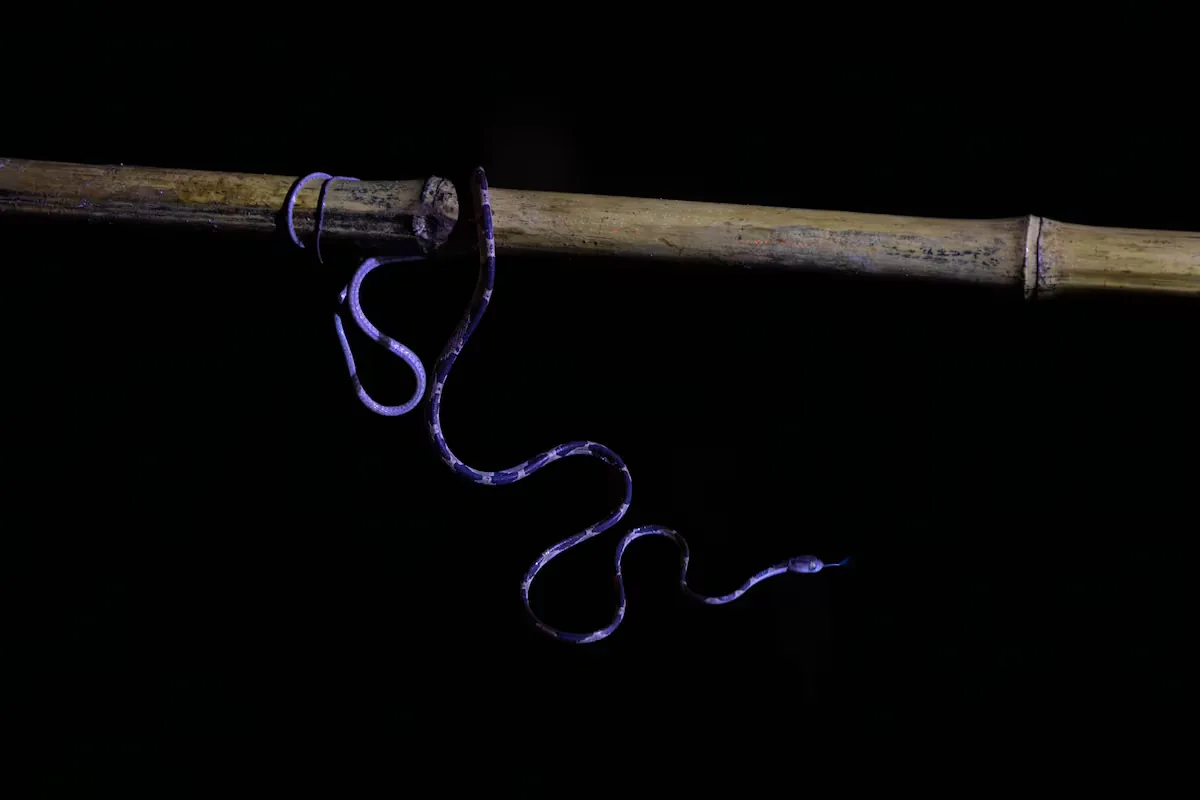
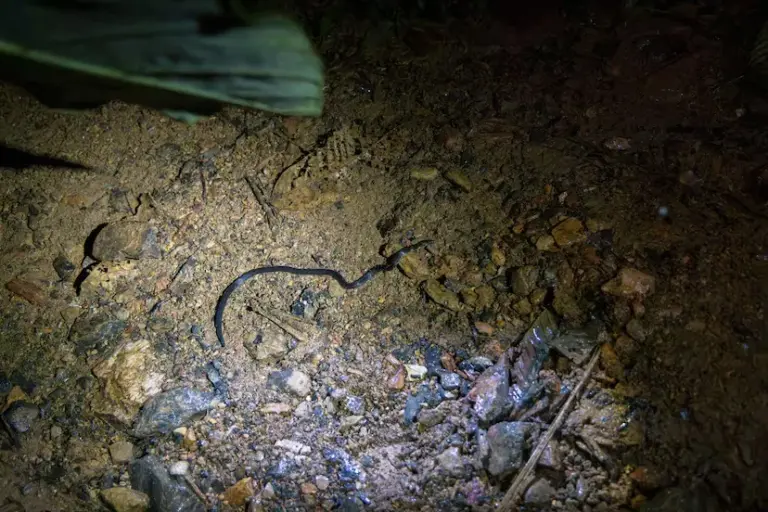
Gustavo smiles tenderly every time he recognizes the croak of a frog. He listens to several of the genus Pristimantis, a fox, opossums, and Imantodes snakes. “No jungle sounds the same, the thing is we don’t pay attention to it as it deserves. We are used to perceiving through the eyes, but everything sounds: ants walking, the vibration of insects…,” he says excitedly.
The excitement is contagious. Carolina Proaño Castro, biologist and executive director of Fundación Futura, talks about nature as one talks about poetry. “If one of the mosquitoes we found unique to this reserve ceases to exist, becomes extinct, it also stops being heard. And the music and harmony will be different,” she narrates. “Biodiversity must not only be defended rationally, for the impact on nature, which also matters. Taking care of it is also preserving its sounds.”
According to the academic, each animal recorded in the foundation’s recordings is a different ecological niche with endless dynamics alien to humans. At least, for now. “The reasons why they sing or croak or squeal we still don’t know. It could be because it’s scared, to find the female, or for echolocation… But it has a meaning. What is clear is that in music and ecology diversity is needed.”
Read more Vicente Fox: “People need training, not money to be lazy”