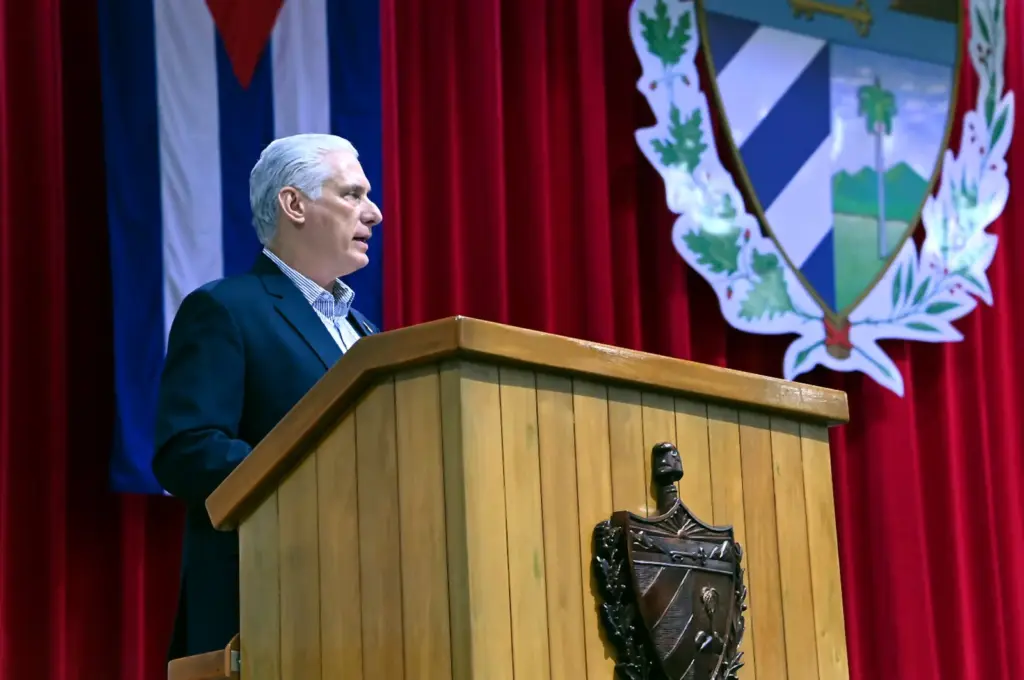
It seemed like a troop annihilated by history, announcing the news of its own failure. Cuba “is living the most difficult hours of this century,” said Cuban leader Miguel Díaz-Canel in June, before members of his Government. “Reality imposes urgent and necessary changes on us.” The moment they had avoided for decades was already here. They had indulged in several crises, more than one exodus, popular discontent, and until then postponed the announcement that Cuba, invariably, had to open up to the market. Díaz-Canel would later confess that it was a painful decision. “Of course it hurts me,” he said about the intentions to restructure the country’s economy to the Russian state channel RT en Español. It hurt because, he explained, the new measures went “against the concepts in which one has been forged, has been educated.” The leader was aware: they had just mortgaged, at least publicly, socialism.
Read more Vicente Fox: “People need training, not money to be lazy”
In the nineties, according to Díaz-Canel, Fidel Castro had to accept “practices typical of capitalism” amid the economic crisis they named, palliatively, the Special Period. Above what he would have wanted, Castro had to decriminalize the dollar, open the country to tourism, foreign investment, even allow some businesses he called “self-employment,” which later evolved into euphemisms like “non-state sector,” and later Cubans became “entrepreneurs.” If the ghost of the liberal world was communism, the Castros’ was private property.
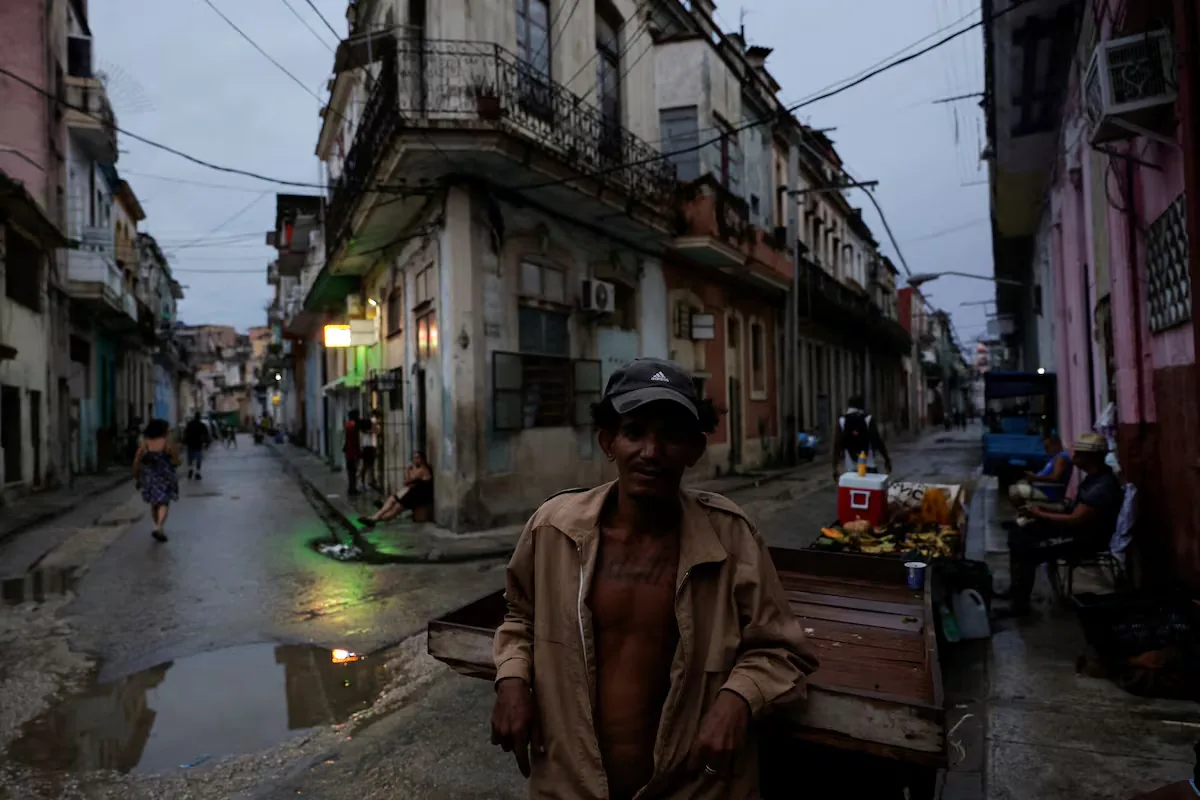
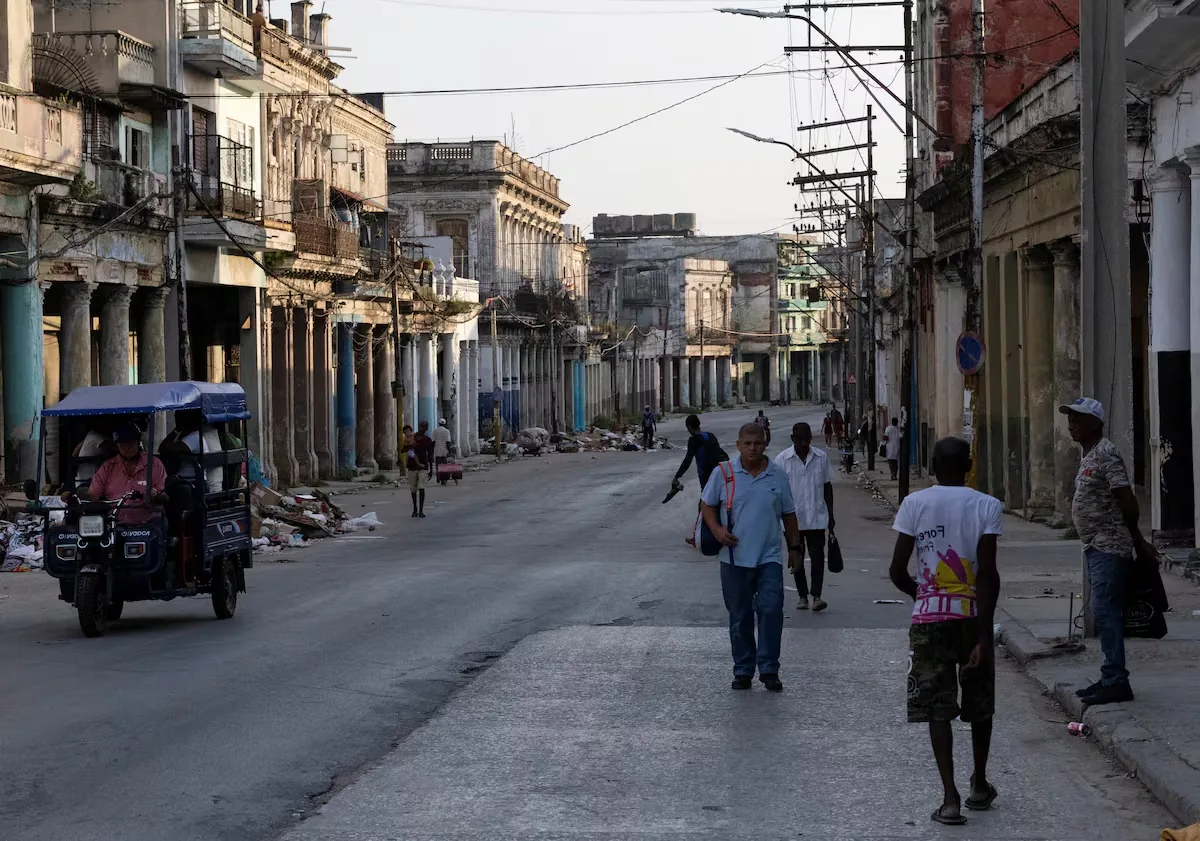
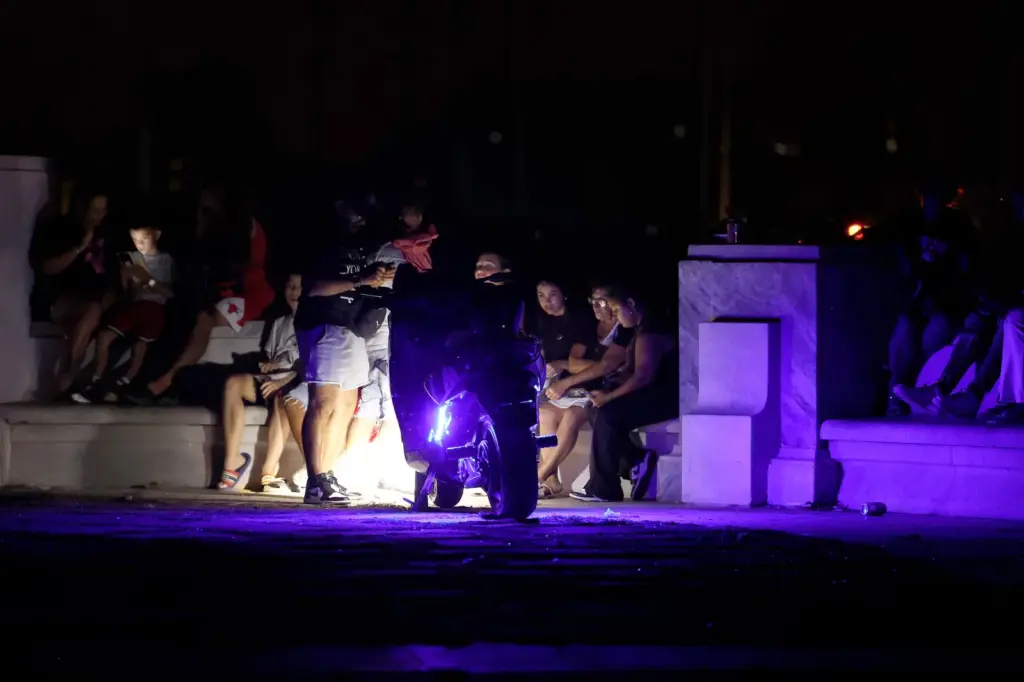
Now they faced unprecedented pressure from the United States Government and a seriously dying country. Since before the beginning of the year, when the White House intensified its pressure on Havana, life was already impossible: patients were dying due to lack of medical care, beggars had begun to inhabit the island’s streets, people earned little more than 15 dollars to buy food at prices inflated by inflation, and blackouts made them lose patience and take empty pots out of the kitchen to bang them in the neighborhood. However, U.S. pressure came as a catalyst: now, after the energy siege, there was less electricity, less tourism than before (only about 30,000 visitors in 2025), less transport, food, or medicine for the sick. State sources claim that the survival rate of children with cancer has dropped from 85% to 65% since Washington’s siege, and that even about 100,000 children under 7 years old no longer receive their daily liter of milk provided by the State.
According to Díaz-Canel, it was necessary to “save the Revolution,” even though for many the Revolution had long been over. And it was also necessary to please Washington, even though they claim that no change comes from pressure exerted from the White House. They announced a package of 176 economic measures, the most radical since 1959, with proposals that grant greater autonomy to state enterprises; authorize foreign investment in the private sector without government mediation; allow flexibility and decision-making on wages; give the green light to the creation of private banks; end universal subsidies and, among other things, open the country to the entry of private and foreign capital to invest in sectors such as energy.
More than half a century after Fidel Castro declared the socialist character of his Revolution, the world’s major headlines announced that Cuba was opening up to capitalism. The changes are, according to economist Ricardo Torres, former researcher at the Center for Cuban Economic Studies and professor at American University in Washington, “true breaks, symbolic and practical, with pillars of the classic socialist model.” “If applied as proposed, they will significantly change the configuration of the Cuban economic model: there will be more private property and more market, along with quite notable changes in the conception of social policy,” he explains.
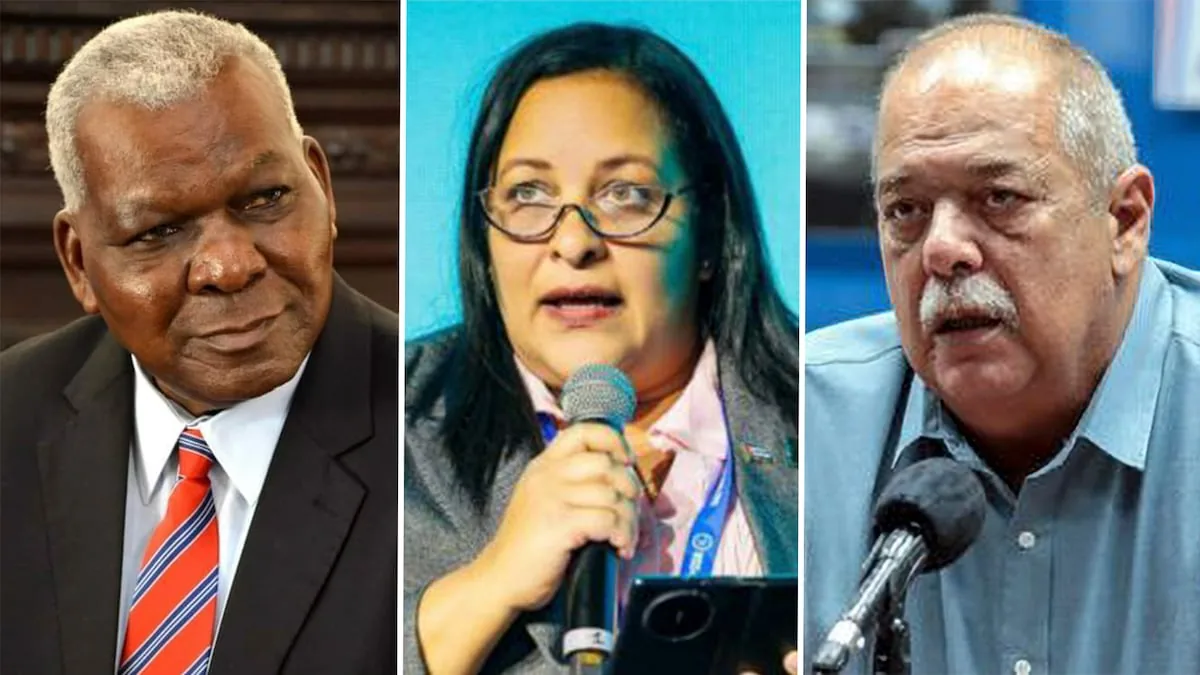
But Castroism maintains that the transformations seek, in any case, to “preserve socialism.” Its officials have repeated this several times. Prime Minister Manuel Marrero Cruz recently emphasized: “It is not a turn towards capitalism, but an update of the socialist model.” Díaz-Canel also insisted on this: “There is no betrayal of socialist construction, neither in principle, nor conviction, nor action.” Even Josefina Vidal Ferreiro, Cuba’s Deputy Minister of Foreign Affairs, highlighted it in an interview with La Jornada: “Property will remain in the hands of the Cuban people and that is essentially socialist.”
The possibility of real change for Cubans is debated between two power camps: Havana’s, which is not willing to negotiate anything that risks the stability of Castroism; and Washington’s, which demands changes without removing the multiple sanctions that keep the country under siege.
Economic changes without political changes
For some, Cuba is not opening up to capitalism now because, in some sense, it “always” was, says economist Miguel Alejandro Hayes. “The socialist magnate has functioned as a great capitalist with political and repressive power. Lenin was honest when he called his own [socialist] project state capitalism,” he insists.
Certainly, the Government has managed the country as a parcel of its property: it has restricted freedoms, exercised power and control over people, preserved comforts for itself, and created the military consortium Grupo de Administración Empresarial, SA (Gaesa) to concentrate profits coming from tourism, imports, or telecommunications. That is why Hayes says that “Cuba has not gone from socialism to capitalism, but from Soviet-style state capitalism to a more classic private property capitalism, with some reproduction mechanisms that were previously blocked.”
Cuba’s renunciation of its own socialist project came long ago, with the collapse of the pillars that had made the Revolution a promise of a country. Education, health, and social security were no longer guarantees in a place where schools operate halfway, with the few teachers left by migratory or labor exodus; little remains of the medical power Castro exhibited worldwide, and there is barely such a thing as social security on an island where no elderly person’s pension is enough. Cuba slipped out of Castroism’s hands, but Castroism has not been willing to let go of power. What changes now, with the new economic measures, are the legal forms to exercise “that despotic and authoritarian state capitalism” Hayes talks about.
After more than a month since the announcement, the biggest concern is that the Cuban leadership has not mentioned a change in the political system. Any “capitalism” or “liberalization” of its economy would come under the regime’s rules. “The question is: if property is in the hands of the Government, what kind of capitalism is that?” says Hayes. “Cuba is not liberalizing its economy. Liberalizing refers to real rights, not permits. In Cuba, private ownership of a business is totally reversible and arbitrary: a commission approves the activity, the power authorizes it, supervises it, and takes it away whenever it wants, for political or personal reasons. The owner of the rights over the economic activity remains the State; what is ceded is the use and the fruit, never the faculty to dispose. It lets you produce and keep the profit, but reserves the right to revoke, condition, and recover what was ceded at its discretion,” adds the expert.
Other issues occupy experts and Cuban businessmen, in a country where those who have the most privileges are those most linked to the power elite. In the future, who will receive licenses, sign with joint ventures, import from abroad, and who will have the approval to operate if the Government intends to maintain total control?
“I call it Castroist liberalism: it assumes a certain formality of a liberal State, but retains intact the authoritarian logic of power,” says Hayes. “If the same caste occupies the spaces that generate money, the economic and political actors are the same people.”
Read more Abelardo de la Espriella begins his Government with legislative majorities conditioned by Uribism
Distrust in the measures
It is not the first time Cuba announces economic reforms that have attracted investors or raised hopes in the private sector on the island. In 2011, with Raúl Castro as president, the so-called Guidelines proposed an “update of the Cuban economic model,” where the socialist state enterprise remained the fundamental axis, but with the intention that the island timidly opened to the market. With the restoration of diplomatic relations with the United States facilitated by the Barack Obama Administration in 2016, it was thought that the last communist bastion in the West was finally opening to the world. Everything went backward.
The 2019 Constitution recognized new forms of property in its design, including private property. And in 2021, the Ordering Task also promised transformations in a completely depressed country doubly hit by the covid crisis. None of these changes have guaranteed that some businessmen do not end up in jail, with their properties expropriated or under the watchful eye of the Cuban State.
That is why engineer Yulieta Hernández Díaz, CEO of the Pilares Construction Group, which provides services on the island, feels no confidence in the Government’s proposals. “This package reminds me of other moments of expectations in Cuba,” she says. “I do not feel safe, nor do I recommend any entrepreneur to invest capital. I am greatly concerned about the discretion and lack of transparency of this.”
Just two days after the announcement of the measures, some foreign investors began to show interest in Cuba. Businessmen from Qatar or Egypt did not hide their intentions to invest in tourism, aviation, the pharmaceutical industry, mining, or fertilizers. Guyana’s president, Irfaan Ali, urged his businessmen to come to the island in search of opportunities. On social media, announcements of sales of completely dilapidated houses or buildings in strategic places in Havana have also multiplied, practically abandoned structures in which an investor sees the business of the future, for laughable prices no longer handled in the world.
Engineer Díaz has the feeling that the Government is selling the country in pieces: “It would be terrible if Cuba lost the great heritage it has today. Cuba is one of the countries in the world with the most property owners who live in their homes.” “Can you imagine real estate developers with large capitals entering? Property owners in need of money would start selling and end up renting. And there are ways to do real estate development protecting citizens, but unfortunately I do not see the measures designed to protect citizens or local entrepreneurs. These measures are not designed for them,” she assures.
The diaspora is another key figure the Government counts on to boost a completely depressed economy. Although for years the regime has attacked Cuban exiles, now Díaz-Canel left them a message, almost as a plea: “This homeland, at this hour, does not have any good Cuban to spare.”
However, there is no guarantee that offers security to exiles today. Carlos Saladrigas, a 78-year-old Cuban-American businessman from South Florida, president of the Cuba Study Group, insists that “without political changes there is no seriousness or credibility in the measures.” “Without a significant change in the judiciary, so that there is a truly independent judiciary from politics, it does not work. Without fundamental changes in the system’s structure, constitutional changes, clearly stating that Cuba will open up, nothing works,” he maintains.
In a country where its Government has repeated that the socialist state enterprise will remain the main actor in the economy, the other problem experts raise is the legal guarantees for those who decide to invest in Cuba. “Cuba’s recent history shows that the problem has never been announcing reforms,” says Cuban jurist Eloy Viera, who sees the main problem in the system’s essence. “The Government has deliberately resisted modifying the Constitution. And that means it is also unwilling to transform what really conditions the functioning of any modern economy: the political system and the country’s institutional architecture. That is the real obstacle. The problem has been that when political priorities change, those same reforms can slow down, be reinterpreted, or even reversed. As long as there is no authentic separation of powers, as long as all institutions remain subordinate to political power, there will continue to be enormous legal uncertainty,” he explains.
The role of Washington in the change
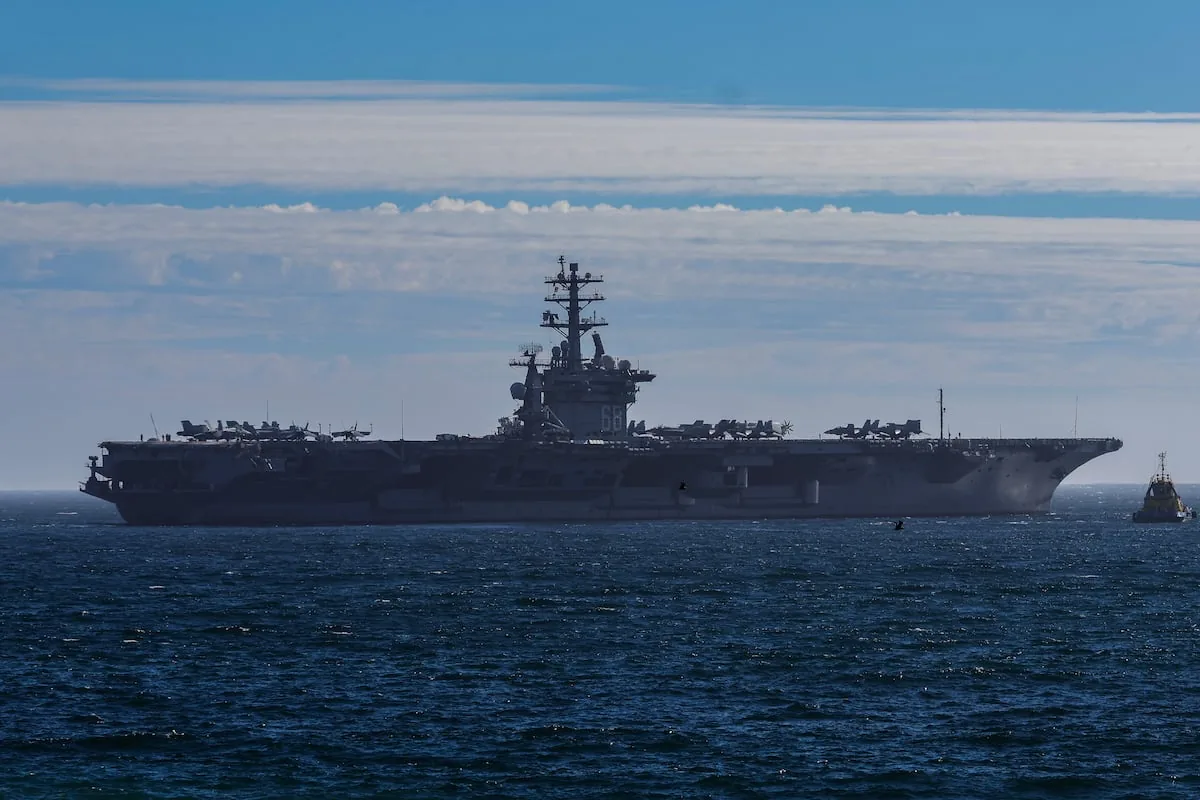
After the announcement of economic changes on the island, the United States imposed new sanctions against people and entities associated with Gaesa, the company that has been in the sights of Secretary of State Marco Rubio and his pressure policy against Havana. That package of measures was not what Washington was looking for; it wanted more. The State Department called them “gradual,” “modest,” said they came “late” and that, in any case, they were “superficial smoke signals from the Cuban regime.” Rubio himself said on X that the regime continued “prioritizing its own absolute control over freedom, opportunities, and the basic well-being of the Cuban people.”
Since late January, Cuba has become a country dependent on Washington: remittances from exiles remain one of the main supports of its economy, the little oil that enters the island comes from the United States, and shipments of food, vehicles, and other consumer goods have increased to alleviate the crisis. The Government has said more than once that it intends to carry out a negotiation, but without it being conditioned.
Many agree that there will be no economic changes in Cuba without a political transformation, but also a relaxation of Washington’s policies towards Havana. “Without resolving the conflict with the United States, big capital will not come, neither from the United States nor from other countries, although we might see small-scale flows,” says Torres. “All this is currently crossed by the energy crisis; to solve it, it is necessary to restore fuel supply and make million-dollar disbursements, because without energy there is no viable recovery. Added to that is the need for a restructuring of external debt and Cuba’s reincorporation into multilateral financial institutions such as the IMF and the World Bank, which today are the only source of stabilization financing at the required scale.”
Read more The secret behind ‘glazed’ effect nails: the chrome powders that are a hit this summer