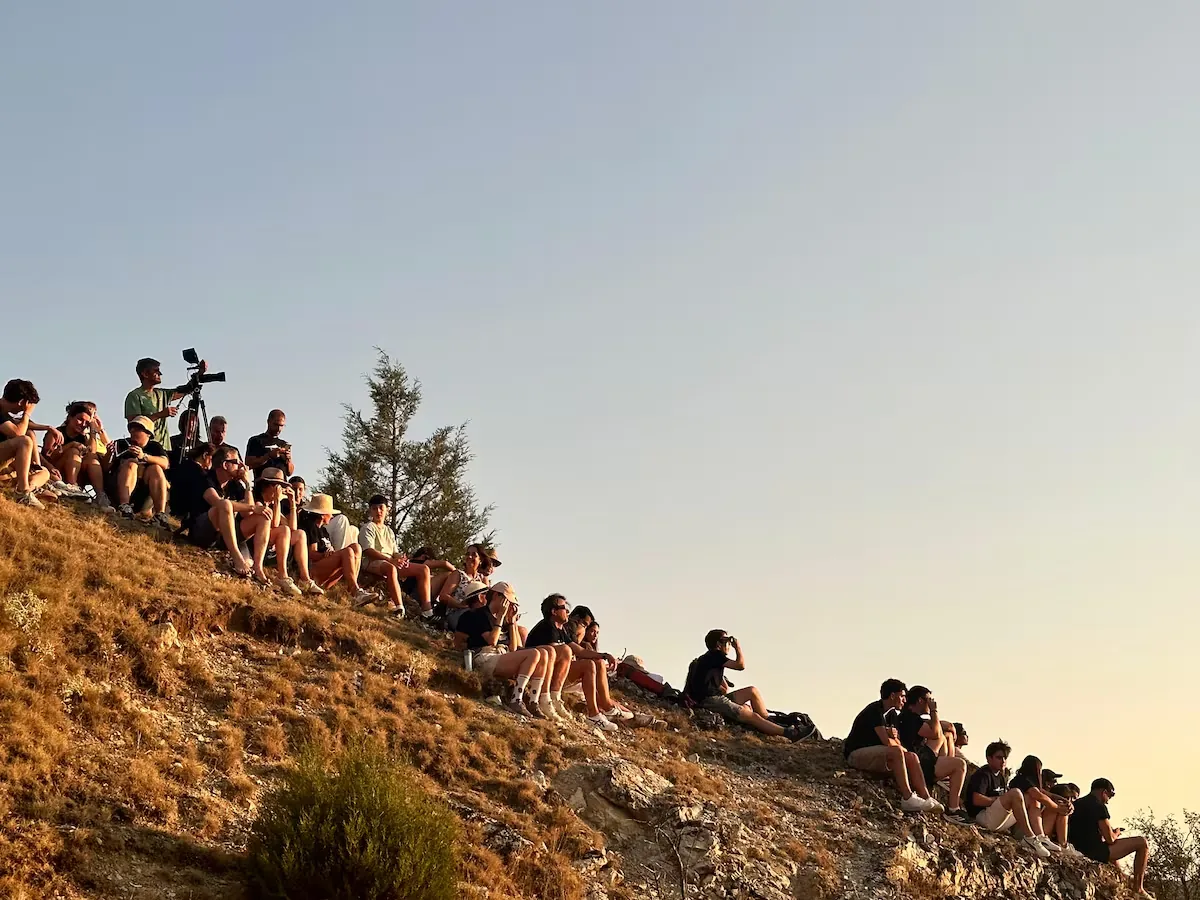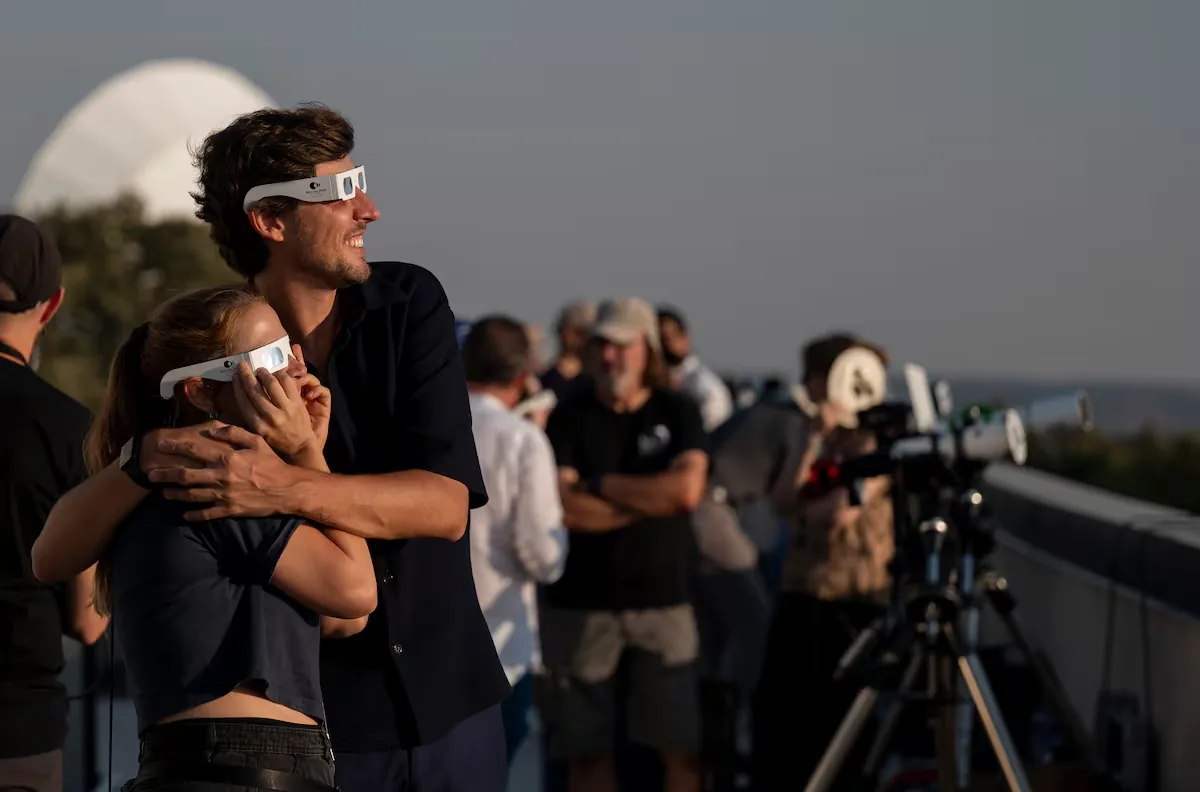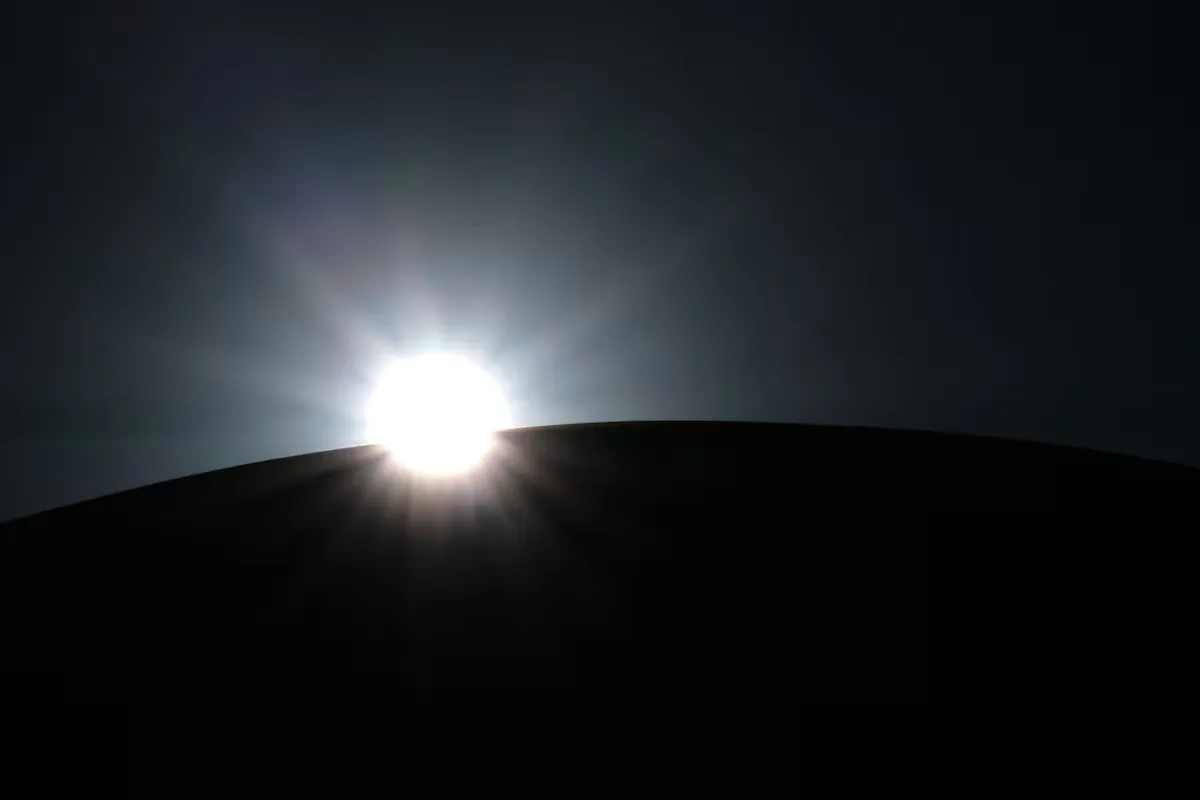
One of the biggest mistakes that can be made when choosing the place to watch the eclipse is to rely on the weather forecast of that place, warns Benito Fuentes, meteorologist at the State Meteorological Agency (Aemet), a paradoxical detail that is going quite unnoticed but is key to avoiding possible clouds. “Remember that, at the time of the eclipse, the sun will be low on the horizon, about five degrees. Do not check the forecast in your locality, but in the area located a few dozen kilometers to the west, since the clouds that can ruin the event will be those that come between your eyes and the sun, whereas those above your head will not bother as they are not in the line of sight,” recommends this expert.
Read more Lebanon becomes the first Middle Eastern country to ban the death penalty
This advice is also included in the special prediction for the eclipse published daily by Aemet since last Friday, which warns that “the cloudiness that could interfere will be located to the west and slightly to the north of the observation area, even several kilometers from the observer.” But how many kilometers?
The short answer is “a few dozen,” the long one is that “it depends on the type of clouds”: “If they are low clouds [green in the National Geographic Institute’s eclipse viewer], those about 10-15 kilometers to the west approximately will bother, and if they are mid-level clouds [blue], those about 20-60 kilometers to the west will.” The viewer shows a third type of clouds: high clouds (in pink). These last ones “look like torn veils and affect less as they let most of the sunlight through,” Fuentes explains to EL PAÍS. The ones that worry are the mid and low clouds, as they have enough thickness to hide the sun. “Today [Tuesday] will be similar to tomorrow [Wednesday]. Compare the clouds you see from your place with the satellite image, so you will know if they will bother you or not,” the expert indicates.
Once this point is clarified, the meteorological outlook for the eclipse remains marked, one day before the event, by “intense heat, high or extreme fire risk, and the possibility of certain clouds in very localized areas,” emphasizes Rubén Del Campo, Aemet spokesperson, in statements to this newspaper. “In general, we have been lucky, it is confirmed that it will be a stable day,” certifies the expert, adding that the forecast for D-day remains almost unchanged since the first special prediction.
The only exception “are the storms, which may develop more and leave some heavy showers, even some hail, in the Penibetic system.” Thus, in those southeastern mountain ranges ―Albacete, Murcia, Granada, and Almería― there are yellow warnings, the minimum. There could also be storms, although much more isolated and weaker, in parts of the province of Teruel and northern Castellón.
🌘 SPECIAL PREDICTION | Solar eclipse August 12.
— AEMET (@AEMET_Esp) August 11, 2026
🥵🔥Very hot and very high or extreme fire danger. Be careful!
➡️ Remember you can check if your area will be cloudy or clear in this viewer 👉 https://t.co/MNqxPcuoI6.
+ info 👉https://t.co/Tr0X82td2I pic.twitter.com/HYMKUPJGQF
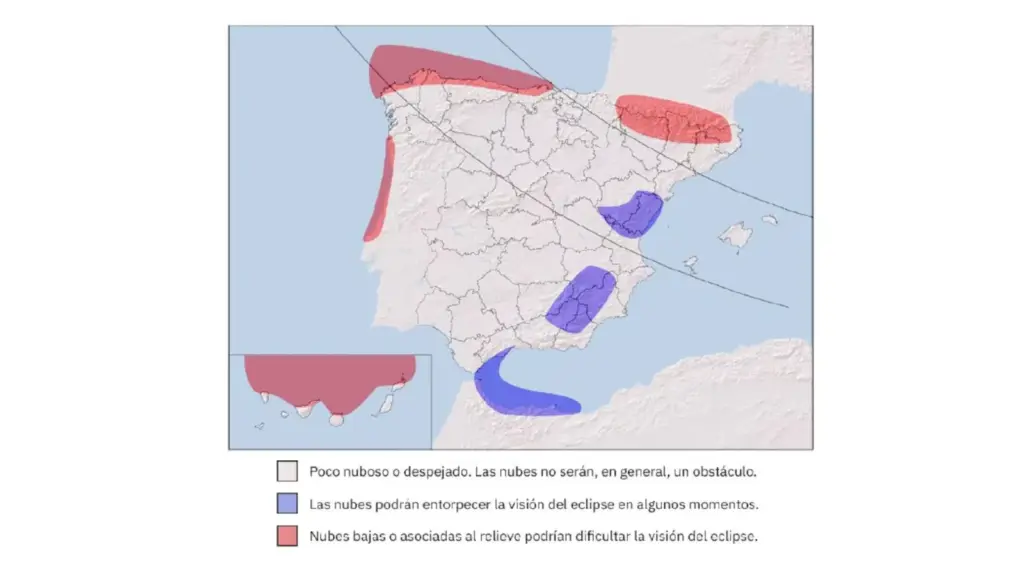
Regarding cloudiness, the zero cloud zone covers practically almost the entire country, except for some tongues to the north and east. “The good news is that almost the entire path of totality will be clear,” notes the expert, then detailing the less fortunate areas. The worst remains the Cantabrian region, which “will be receiving winds from the north, bringing moisture and cloudiness.”
Read more The Chilean frog defended by Leonardo DiCaprio that faces an electric project
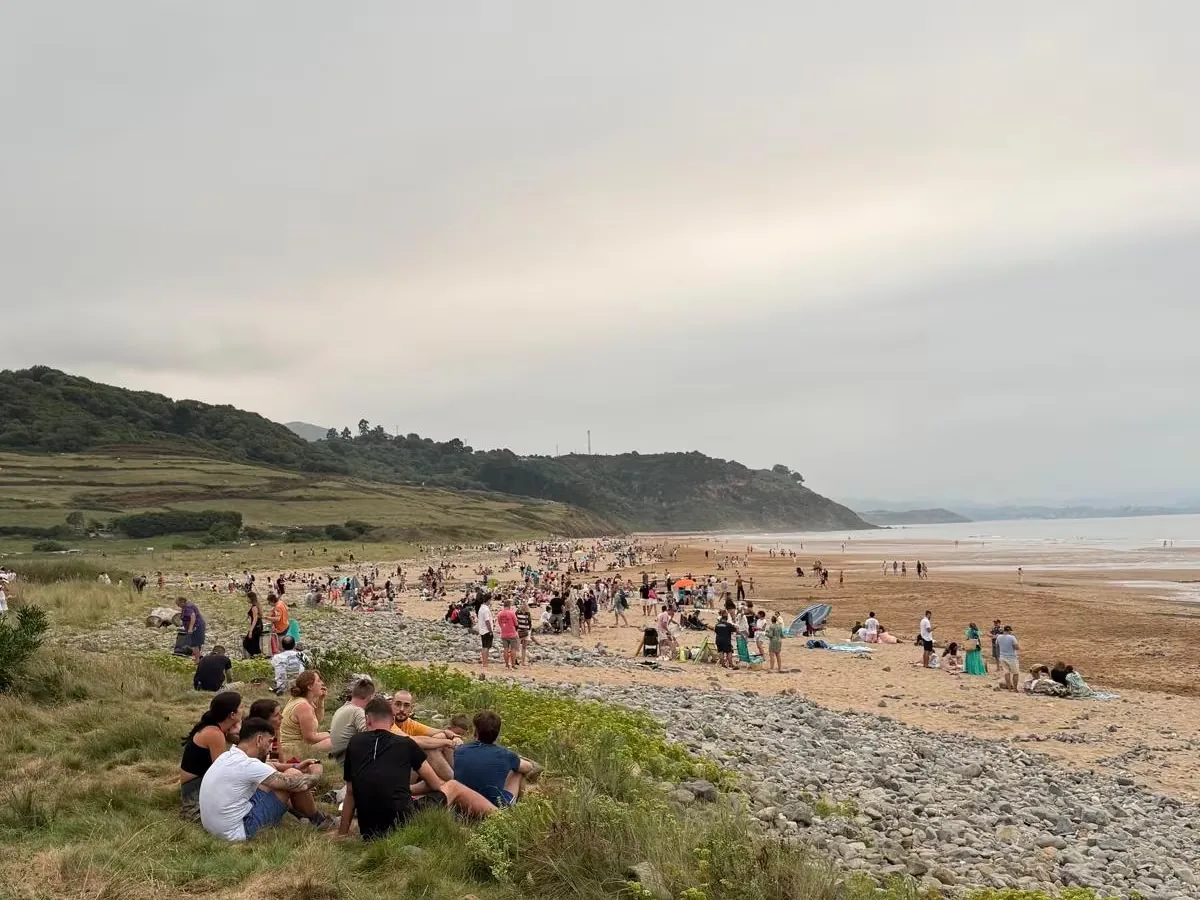
Thus, it is “likely that in interior and coastal areas of Cantabria and Asturias and on the northern coast of Galicia it will be very cloudy or even overcast and there will be low, compact cloudiness, so it may be difficult to see the eclipse.” “In the mountains of Asturias it will be clearer, but in the central and coastal area it will be cloudy and something similar will happen in Cantabria, where it will be clearer in the easternmost area and in the mountains,” details the Aemet spokesperson. The same will happen in the Canary Islands, where “there will be intervals of low clouds on the northern slopes of the higher relief islands.”
Thirdly, there is the Spain of the coin toss or uncertainty. “In any point of the Alborán zone, that is, on the Andalusian Mediterranean coast, there may also be low clouds and some fog, which could hinder viewing,” the meteorologist points out. Finally, there is the zone of developing clouds, which form from midday, as a result of the combination of surface heat and atmospheric instability which, although slight, is present. This will occur in the Penibetic systems, in the Iberian system of Teruel and northern Castellón, and in areas of the Catalan Pyrenees and eastern areas of the Aragonese Pyrenees. “The thing is that these clouds grow from midday, develop more in the afternoon, sometimes even releasing some storms, but as the afternoon falls they dissipate and only remnants remain. Pinpointing how many and where is complicated,” laments the expert.
🌒 Wednesday 12 | Take extreme precautions if you go out to see the eclipse.
— AEMET (@AEMET_Esp) August 11, 2026
🌡️ Very high temperatures. 38 to 40 °C in parts of southern Galicia, northeast, central and southern peninsula.
🔥 Very high or extreme fire danger.
⛈️ Locally strong storms in southeastern mountains. pic.twitter.com/Jh5S6Ubl12
Regarding temperatures, a lot of heat is expected: over 35° in practically the entire peninsula, except the Cantabrian region ―where highs will range from 25° to 30°―, in coastal Mediterranean areas ―where it could reach 30°, although the heat sensation will be much higher due to humidity― and in the Ebro, Guadalquivir, Tajo, and Guadiana valleys ―over 40°―. At the time of the total eclipse, around eight-thirty, “the temperature will have already dropped by two to five degrees depending on the area,” but Del Campo warns of the risks of being outdoors for several hours exposed to high temperatures while waiting for the event.
And as a consequence of the heat, the fire danger remains very high, so “precautions must be extreme, avoiding at all costs that a fire starts.” The risk is very high or extreme in much of the Peninsula and Balearic Islands, except for some areas in northern Galicia, the Cantabrian area, eastern Pyrenees, middle Ebro, eastern Andalusia, and southeastern peninsula, where it will be moderate or high.