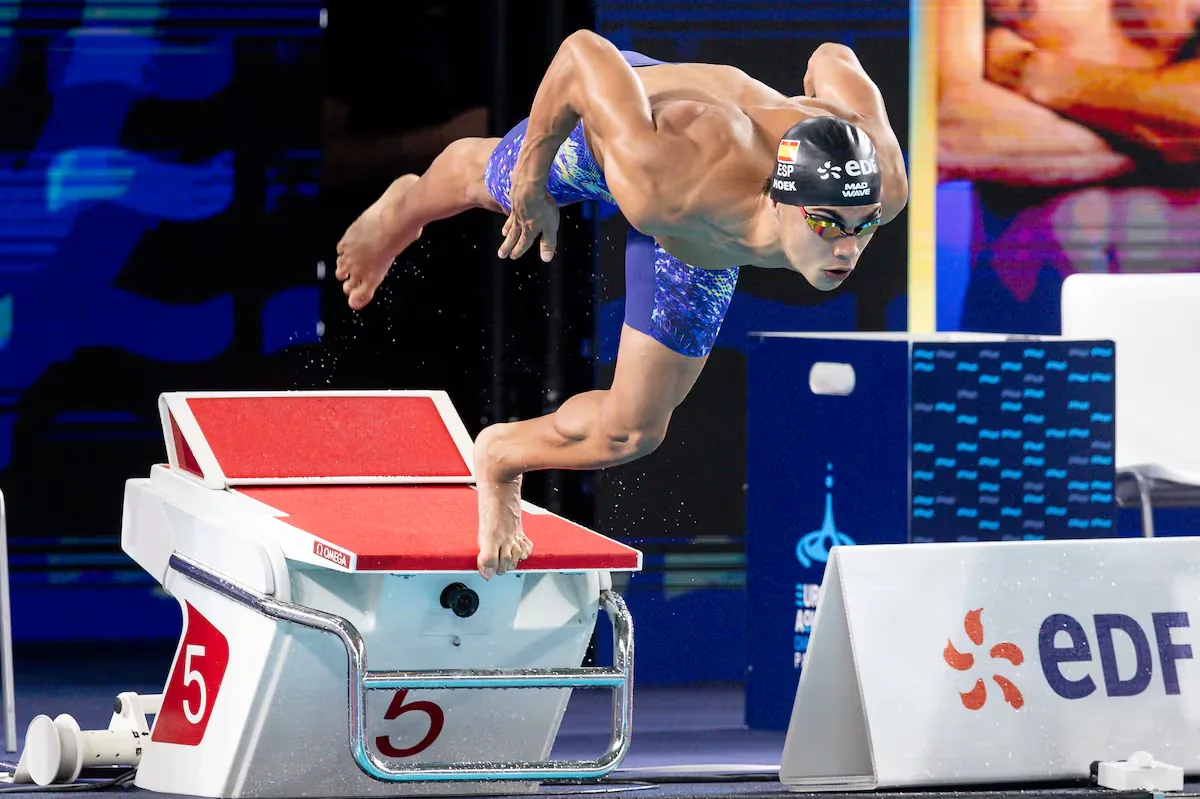
Luca Hoek crossed a border that seemed forbidden for Spain. Calmly, standing next to David Popovici, the second fastest swimmer in history did not intimidate him. He adjusted his black goggles as if he already lived in another dimension. Without complexes, convinced of his gifted nature to flow and armed with the quadriceps and glutes he built with weights in recent months, he recorded the shortest reaction time of the event and in 58 hundredths of a second he detached from the block before flying into the water like a torpedo. He is only 18 years old. But 47.26 seconds later he had transported Spanish swimming, by himself, to the first world of speed.
Hoek qualified yesterday for the final of the 100 meters freestyle at the European Swimming Championship held at the Saint Denis pool, on the outskirts of Paris. His entry into the final, scheduled for today at 18:50 (Teledeporte), is extraordinary. Only José Antonio Chicoy in 1970 and Eduard Lorente in 2004 precede him as finalists of the 100 freestyle at the Europeans. A specialty that seemed reserved for Slavic, Germanic, Australian, American, or Chinese giants, a distance forbidden to Spanish biotypes, has transformed into the ideal ecosystem for Hoek’s expression. He had just broken the Spanish record at the Mallorca Open in June. He had gone under 48 seconds. But after a year of progression and testing, the Paris exhibition consecrated him as a reference at the highest level.
“Well then! The truth is I felt great,” he said, coming out of the water. “I was seeing Popovici right next to me, and I thought he was slower. I didn’t like the start much. But I loved swimming with Popovici!”
Popovici will surely watch him very closely from now on. Because what Hoek did so naturally is within the reach of very few competitors. The management of the times of each fraction of the first and second lengths, the presence of mind, the technical adaptation of his curved stroke, like a propeller, and the balanced glide on the surface as he accelerated, gave him impressive dominance in a territory that usually affects young swimmers with fragile nerves. Swimming side by side with Popovici not only did not alter his course. It gave him a stimulus. Hoek stuck to the Romanian in the first 50, held on at the turn with 15 meters of very well executed underwater swimming, and then did the hardest part. Resisting the last 35 meters without deforming his swim, without giving the impression that exhaustion was slowing him down, was a real tour de force.
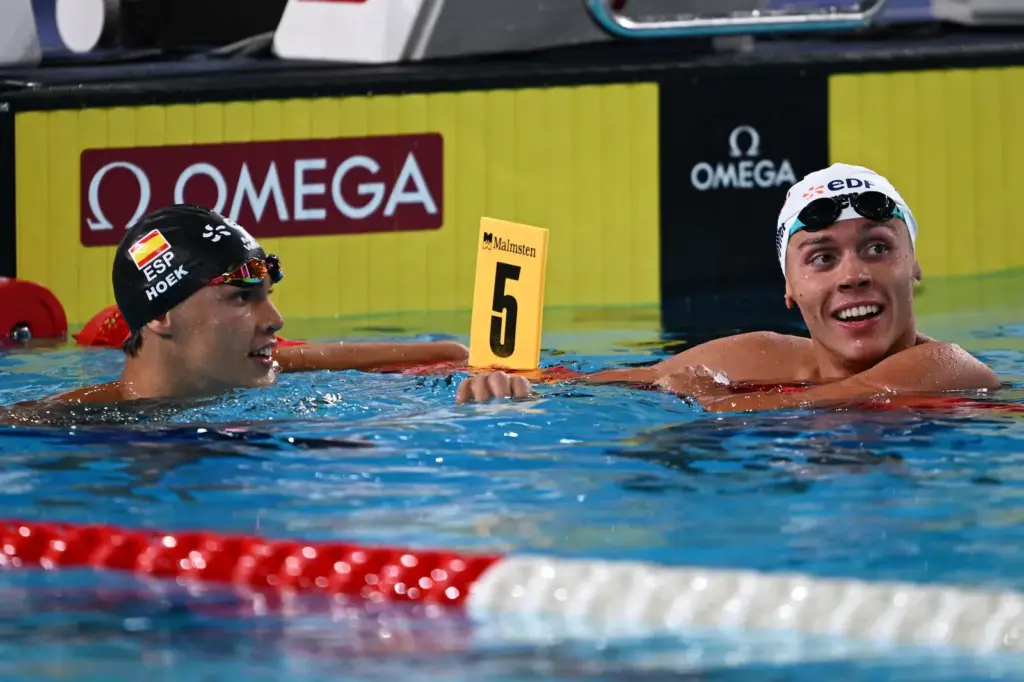
As if lactic acid did not seize him, he stretched the impulse to touch the last wall and broke that limit that usually sinks pure sprinters when they go from 50 to 100. Hoek, who specialized in 50 as a junior, must have gained endurance to sustain speed in the last meters. The result has been remarkable. If at the Mallorca Open he swam the first length in 22.63 seconds and the second in 25.09, in Paris he saved a few drops of fuel. He did the first 50 in 22.67s and returned in 24.59s, just two hundredths behind Popovici, a true finishing magician. The strike earned Hoek the improvement of his mark from 47.72s to 47.26s. The time is equivalent to a title. It qualified him with the second-best mark for the final, behind Popovici (46.72s) and ahead of Egor Krnev (47.27s). Now the Spaniard enters the club of the all-time best.
Read more Barça loses Roony due to a ligament injury
Swimming 100 meters freestyle in less than 47.26 seconds is something only 15 men have achieved throughout history. The progression of the world record from 47.60s to 47.20s only occurred in 2008 and with the mediation of full-body waterproof swimsuits that facilitated flotation, now banned. Only the Romanian Popovici, the world record holder the Chinese Zhanle Pan, Americans Jack Alexy and Caeleb Dressel, and the Russian Egor Kornev, went under 47 seconds without polyurethane swimsuits.
Hugo’s Melancholy in Kos’s Storm
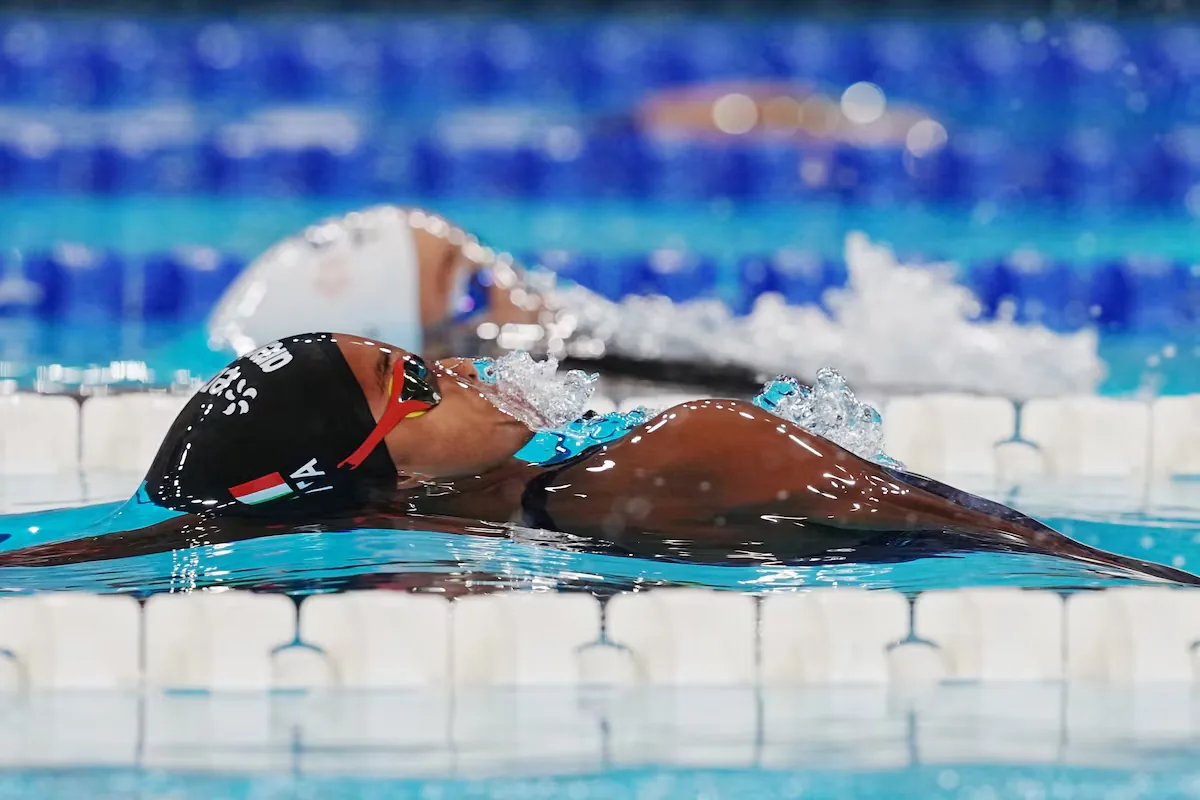
The second day of the European Swimming Championship ended with a Luca Hoek exhibition but started in the most disappointing way for Spanish swimming. Estella Llum Tonrath, who had just won two junior European titles and broken the Spanish record in 2m 8.03s in June, swam the 200 backstroke final in 2m 9.05s. A minute slower than her best version. A return to the past. Fifth place in one of the lowest-level events of the championships held in Paris. An easily accessible missed opportunity for medals. Bad omens in a setting that does not bring good memories for the Spanish delegation.
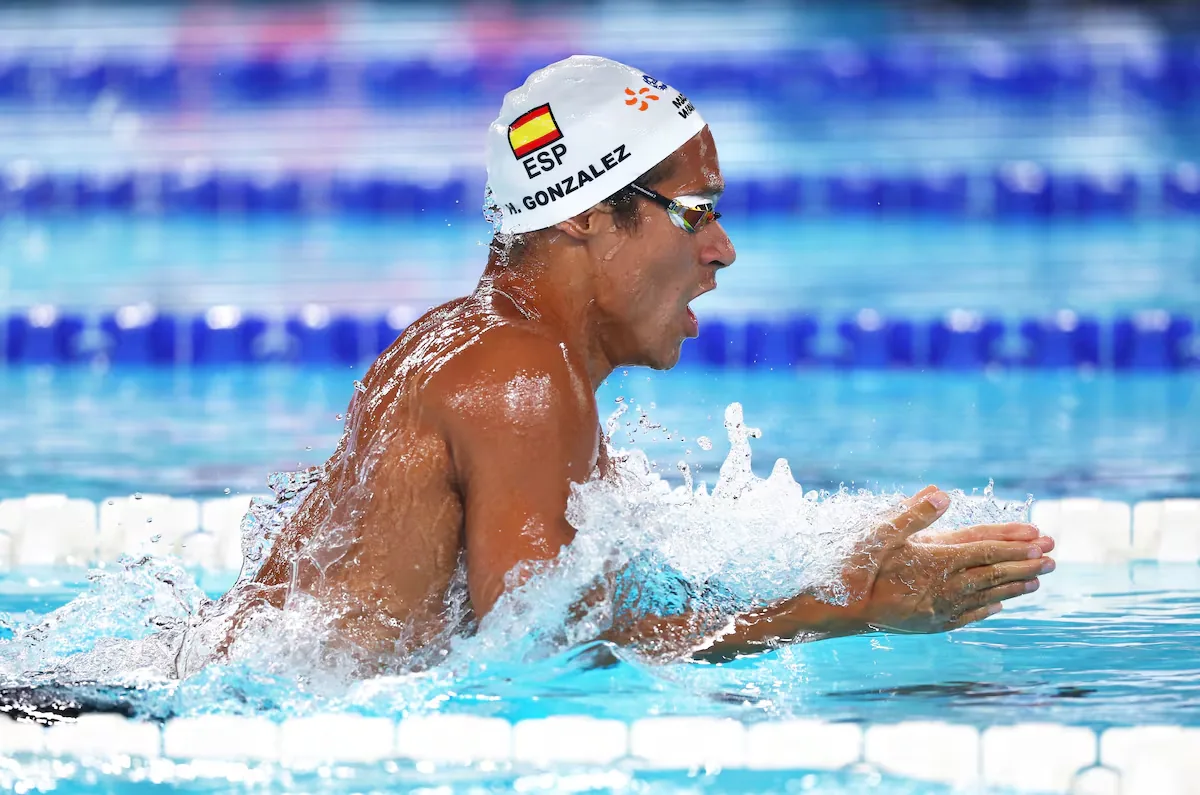
Estella is one of the representatives of the new generation. They are the ones responsible for pulling Spanish swimming out of the desert that opened with Mireia Belmonte’s decline after the Tokyo 2021 Games and her bleak projection in Paris 2024. The Spaniards who attended the 2024 event completed the worst Olympic participation in history: only two finals, two sixth places, and barely a single improved personal best (Carmen Weiler in 100 backstroke). The experience added disappointment to a gloomy five years. Since Hugo González won four medals at the 2021 Europeans in Budapest, Spanish swimmers have not scraped a single medal. Hugo’s own sad journey since then reflects a state of affairs. The Mallorcan qualified seventh for the 200 backstroke final. Three seconds behind the magnificent Hubert Kos, who threatened Peirsol’s record with 1m 52.30s.
Read more The Council of Statutory Guarantees endorses the Chambers law, including the “silver seats”