There is something, very little, but something on which the Government and the PP agree regarding the Ceuta crisis. And that something has to do with unaccompanied foreign minors, whom the Police have counted so far at 1,527, many of whom still roam the streets of the autonomous city almost two weeks after the massive entry. The Executive of Pedro Sánchez and the Popular Party converge in pointing to the priority solution for these children and young people as their family repatriation to Morocco, as Rabat also demands. The formalization of the files, however, requires set procedures that can be prolonged if the administrative teams assigned to this purpose are not reinforced.
Read more Who is Mohsen Rezaí, one of the new strongmen of Iran’s supreme leader
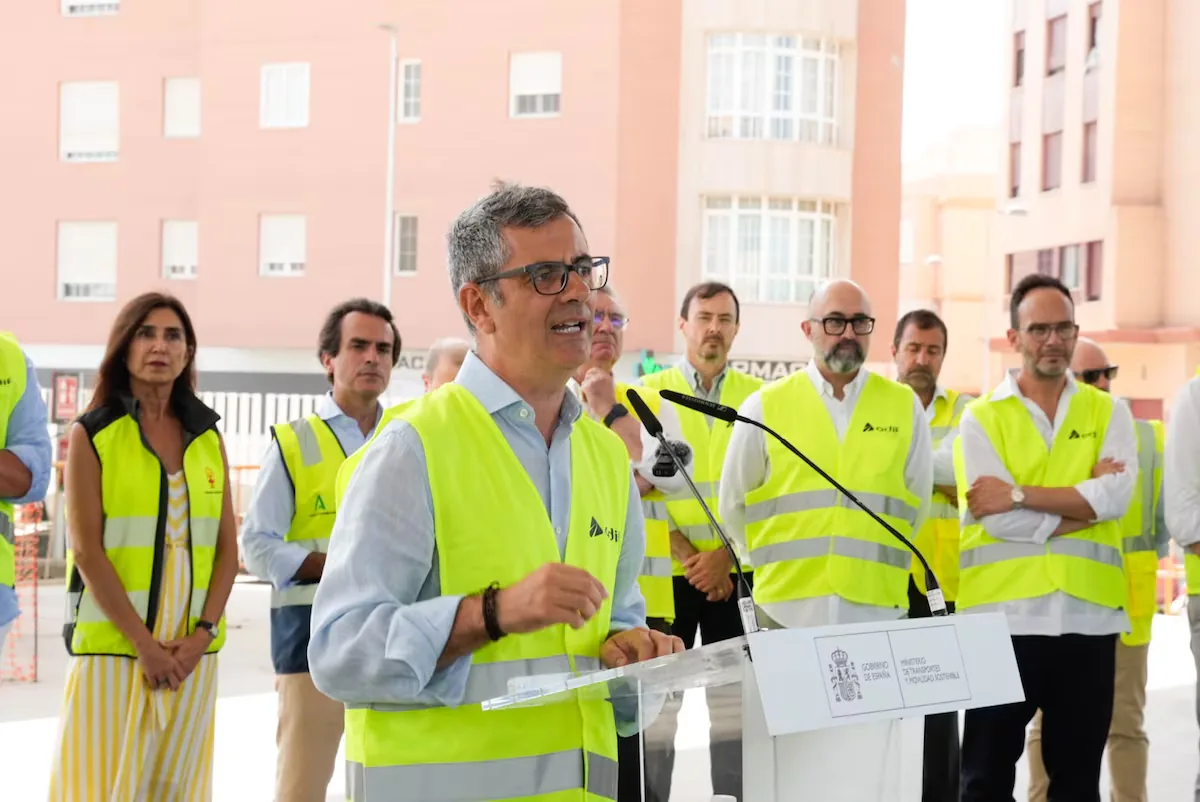
The Government has been expressing this line for days. “The absolute priority is that all minors can return with their families to Morocco,” said the Minister of Justice, Presidency and Relations with the Courts, Félix Bolaños, this Tuesday from Almería. “It is a process that is not easy, but it must be a priority to address it with the Government of Morocco and with their families,” expressed the Minister of Territorial Policy, Ángel Víctor Torres, after his meeting with the Ceuta president, Juan Jesús Vivas, a day earlier.
However, the PP overlooks that La Moncloa intends to promote this route, as it states, and insists on demanding the same over and over again. “The minors who are in Ceuta, who they have to be with is their families. The Government has to talk to Morocco,” requested the Deputy Secretary of Autonomous and Municipal Policy of the Popular Party, this Monday. “It requires making the files and returning them to their countries of origin; but it demands priority and not being on vacation. The Minister of Childhood is neither seen nor expected,” added the president of the Interior Commission in the Senate, Fernando Martínez-Maíllo, this Tuesday, ignoring that Sira Rego was in Ceuta on Thursday and Friday. And that, from there, she already advanced in an interview with this newspaper that La Moncloa’s priority is precisely family repatriation. The same as Génova proposes.
What is the first solution? “Family reunification. For this, we need a good individualized interview with each child to know their specific situation. This cannot be done with a broad brush,” responded the Minister of Youth and Childhood, from Sumar. “Some state that they want to return with their families and here a delicate and very thorough job must be done,” Rego emphasized. For those who remain in Spain, her ministry is already speeding up the procedures so that they are relocated in the Peninsula and Balearic Islands, a scenario resisted by PP and Vox. And this Thursday she has convened the first meeting with the territories to address the crisis.
It happens that the return of unaccompanied foreign minors is also what the Popular Party and Vox have promised in their last four government agreements. Both parties commit in those communities where they have forged coalition agreements —Extremadura, Aragón, Castilla y León, and Andalusia— to return the boys with their families in their countries of origin. But, in that case, it is an empty promise, because the competence over repatriation is exclusive to the State, not regional.
How the process is carried out
Repatriating a minor requires procedures that, if the administrative teams are not reinforced, as requested by the president of Ceuta, the Popular Juan Jesús Vivas, can be prolonged. Minors have to testify before the Prosecutor’s Office and all have the right to receive legal assistance. But, if they are over 16 years old, they can waive it. All unaccompanied minors are always heard. Their opinion is taken into account especially from certain ages. “Sometimes at 12 years or younger it is considered that they have sufficient maturity and their opinion is always heard,” explains Elena Muñoz, lawyer of the Spanish Commission for Refugee Aid (CEAR). And the Government Delegation in Ceuta, informed of all the procedures, will make the decision.
The Ministry of Foreign Affairs has to carry out prior diplomatic arrangements with Morocco, a country with which Spain has signed a bilateral agreement on the care of minors and cooperation in cases like these. It must be assessed that the return of the minor does not further violate their situation, that is, that in their country or family they are not suffering situations of poverty, abuse, and that they have dignified conditions for the proper development of childhood. In this regard, minors can declare that this does not happen and are heard by the Prosecutor’s Office. But, in any case, if there are checks in their country of origin and it is observed that everything is in order, it is possible that the boy is returned anyway, Muñoz continues. “All these guarantees are not obstacles, they are rights,” says the lawyer. Once all the paperwork is in order, it is the Immigration police station, that is, the Ministry of the Interior that takes charge of the transfer.
The migratory crisis that Ceuta experienced in 2021 led to processes similar to those being implemented now, but sufficient guarantees were not observed and the Government delegate of Ceuta, Salvadora Mateos, as well as the vice president of the autonomous city at that time, Mabel Deu, were convicted of an administrative prevarication crime. They had immediately repatriated 55 minors to Morocco, without taking the procedure into account, in a decision “not only arbitrary but manifestly unjust,” stated the sentence issued last year.
The magistrates already recognized then that the situation Ceuta was going through, similar to the current one, with “precariousness of means and resources” and with Ceuta society tense, not to mention the diplomatic crisis that was also experienced then, when the arrival did not even reach a quarter of that recorded this summer. But they ruled that the accused knew the legal procedure that had to be followed, but did not comply with it. It was not determined whether the situation of the returned minors was vulnerable and the best interest of the minor could be compromised by returning to their country.
This is necessary for any minor, but also, says lawyer Muñoz, it will be necessary to take into account that among all the boys there may be those who can apply for international protection for coming from countries with conflict or having fled some other violent or discriminatory circumstance. And all this can go down the drain if the situation of each one is not properly evaluated individually and in detail.
Read more Where to watch the solar eclipse in Spain? Hourly map and visibility at each point in the country