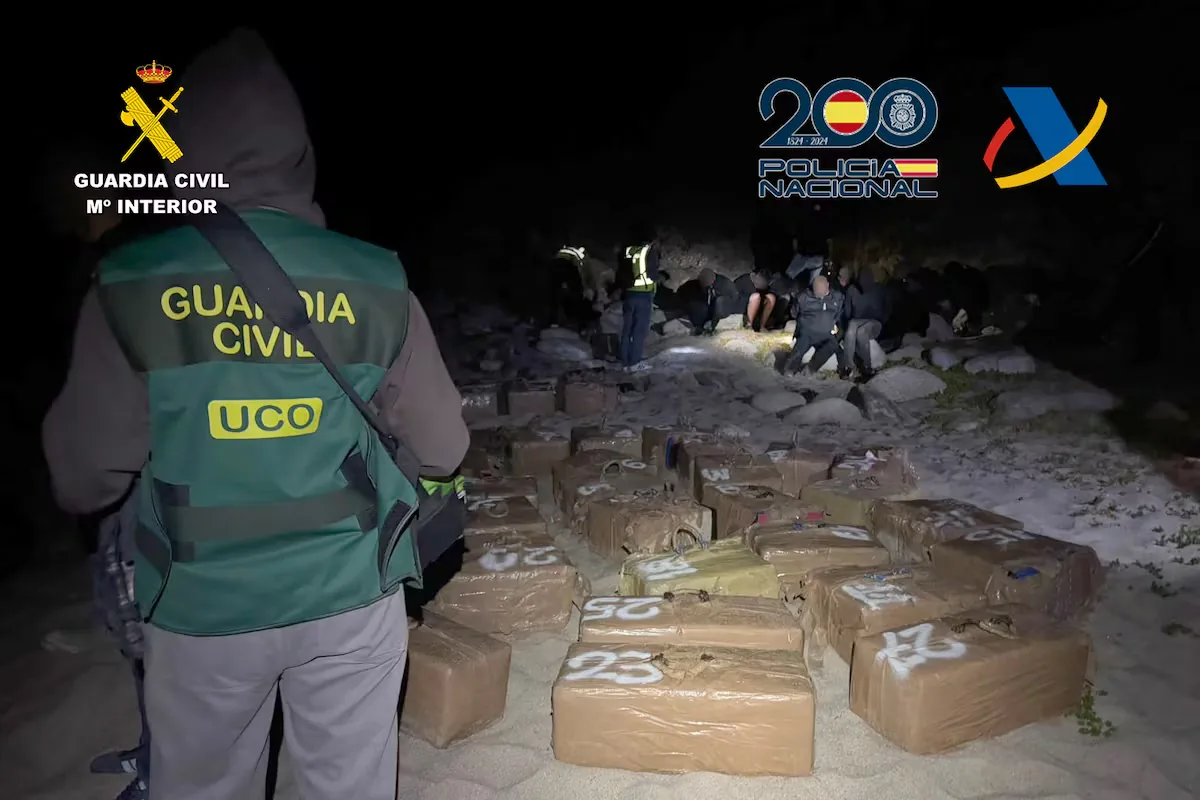
On January 22, 2025, a fishing boat operating near the Costa da Morte located a narcosubmarine adrift, supposedly abandoned after transferring its cargo to boats to take the shipment ashore. Then, the Civil Guard’s attempts to tow the semi-submersible to land were unsuccessful after it broke in two and sank. However, from that incident with no arrests or drugs seized, an investigation began that culminated in the early hours of last Monday in a joint operation by the Civil Guard, the National Police, and the Customs Surveillance Service, which allowed the seizure of nearly 1.6 tons of cocaine as it was being unloaded on a remote beach in the Os Muiños area of Muxía (A Coruña) and the arrest of at least 23 people (the National Police raises this figure to 26), including a Civil Guard non-commissioned officer, according to statements from the three forces involved in the operation.
Read more Inmates of Figueres prison access confidential information of the center
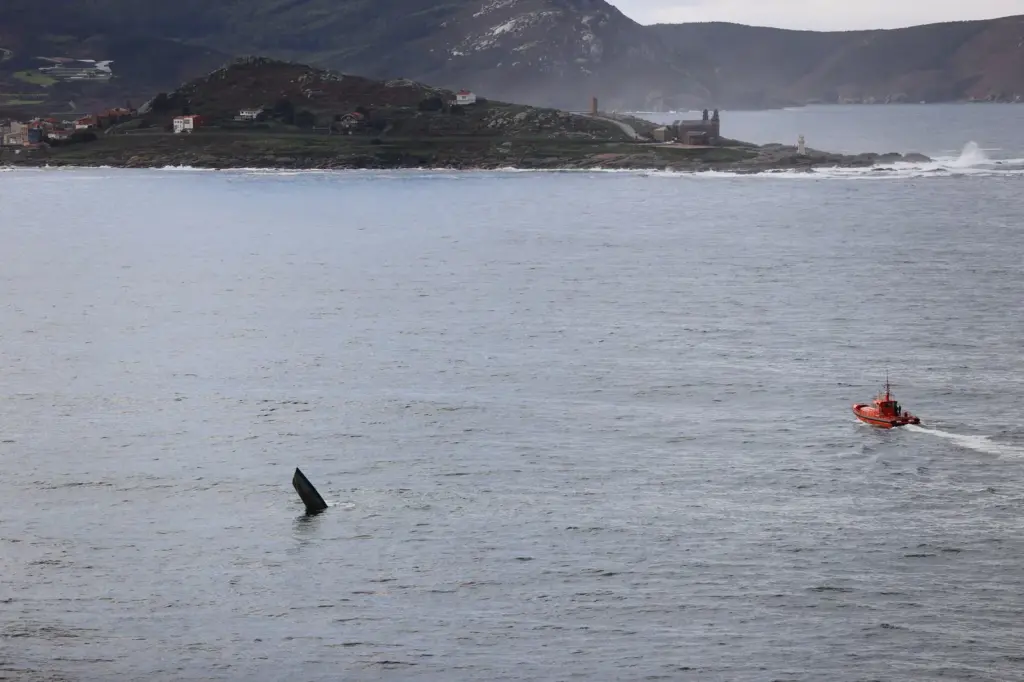
The inquiries that began after the discovery of the semi-submersible—a type of vessel known in police jargon as “low profile vessels,” LPV in English, since it never fully submerges—indicated that it could have transported up to 3 tons of cocaine to the Galician coast. A very large amount that required not only the existence of a criminal organization capable of chartering narco speedboats (known as High-Speed Vessels, HSV) to go out to sea to receive the drugs and quickly bring them to shore, but also that its members had a deep knowledge of the coastal area where it was found, with a peculiar orography where small isolated beaches open up to unload the merchandise.
In fact, from those initial inquiries, the first suspects emerged who were monitored for more than a year and a half in an operation described by police sources as “very complex” due to the precautions the alleged members of the criminal organization took, such as using applications that encrypted their phone conversations, using terminals registered to third parties, implementing numerous counter-surveillance measures to detect possible tracking, or holding meetings in remote places to prevent eavesdropping. Despite this, the investigation progressed and detected the alleged involvement of a member of the Civil Guard stationed at the A Coruña Command who was reportedly providing sensitive information to the narcos in exchange for money to facilitate drug unloadings on the coast.
Read more Robles issues a warning to Morocco: “Ceuta and Melilla are untouchable. They are very Spanish”
As a result of the surveillance, agents detected unusual activity by them last Sunday night and, subsequently, the approach to the coast of a narco speedboat with four outboard motors. A joint operation of the Civil Guard, National Police, and Customs Surveillance was promptly launched, heading to the small beach of Arnela, in Muxía, the point where the alleged unloading was supposed to take place, as the suspects were heading there. The arrival of the agents at the site allowed the seizure of nearly 1.6 tons of drugs that had already been unloaded from the vessel, as well as the arrest of 10 of the people who were busy unloading the bundles onto the sand. However, the narco speedboat, which still carried at least half of the cargo, managed to escape and could not be intercepted. The rest of the alleged group members, including the Civil Guard officer, were arrested in the following hours in different Galician towns. Two unlicensed firearms were seized during the searches.
In the investigation, led by the judge of the National Court Francisco de Jorge and the Special Anti-Drug Prosecutor’s Office, agents from the Organized Crime Team based in Galicia of the Central Operative Unit (UCO) and the Internal Affairs Service (SAI), both of the Civil Guard, participated alongside members of the Drugs and Organized Crime Unit (Udyco) of the National Police and the Customs Surveillance Service.
Read more Arrested for robbing a barbershop in Fuenlabrada using the ‘manhole cover method’