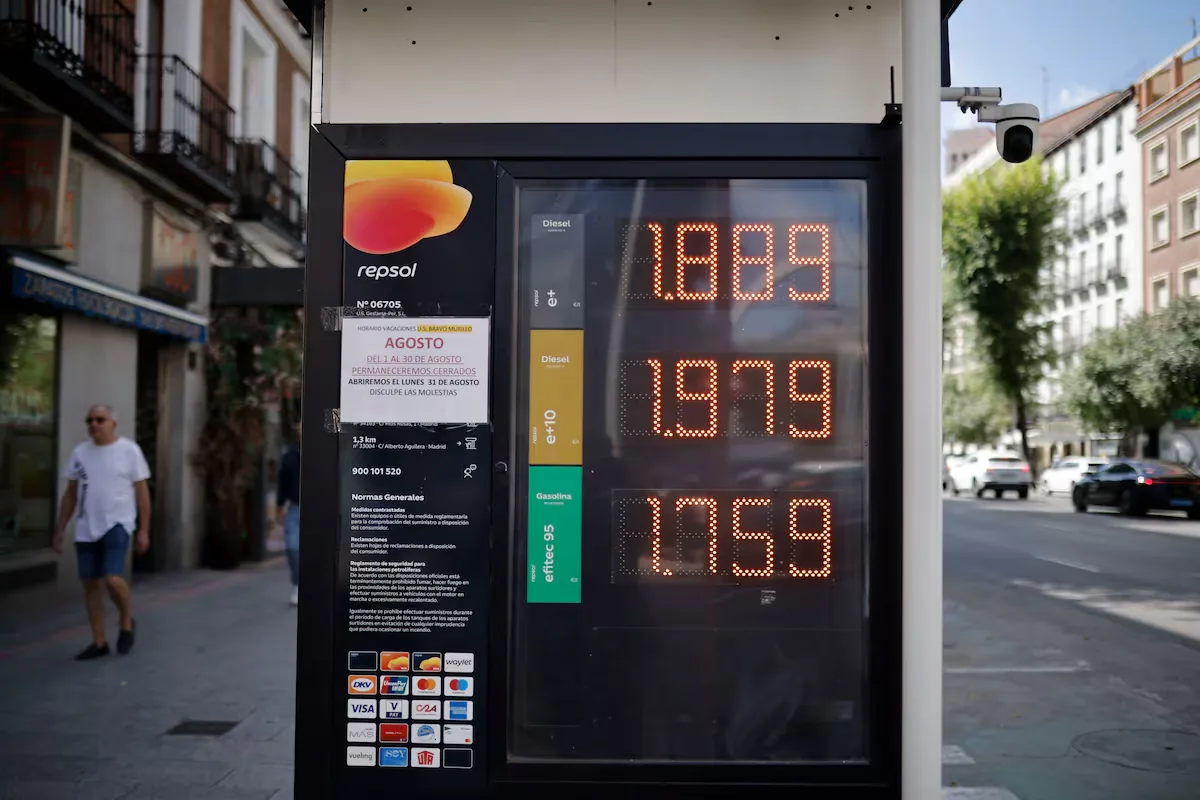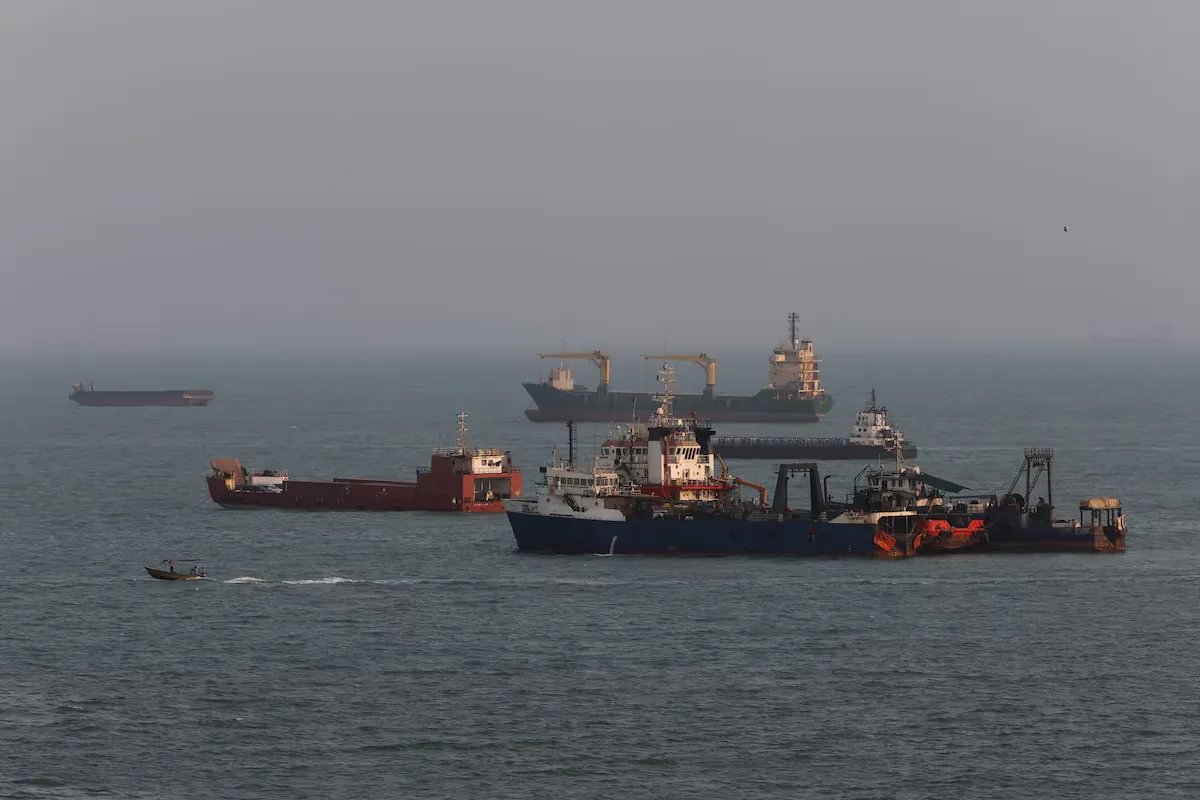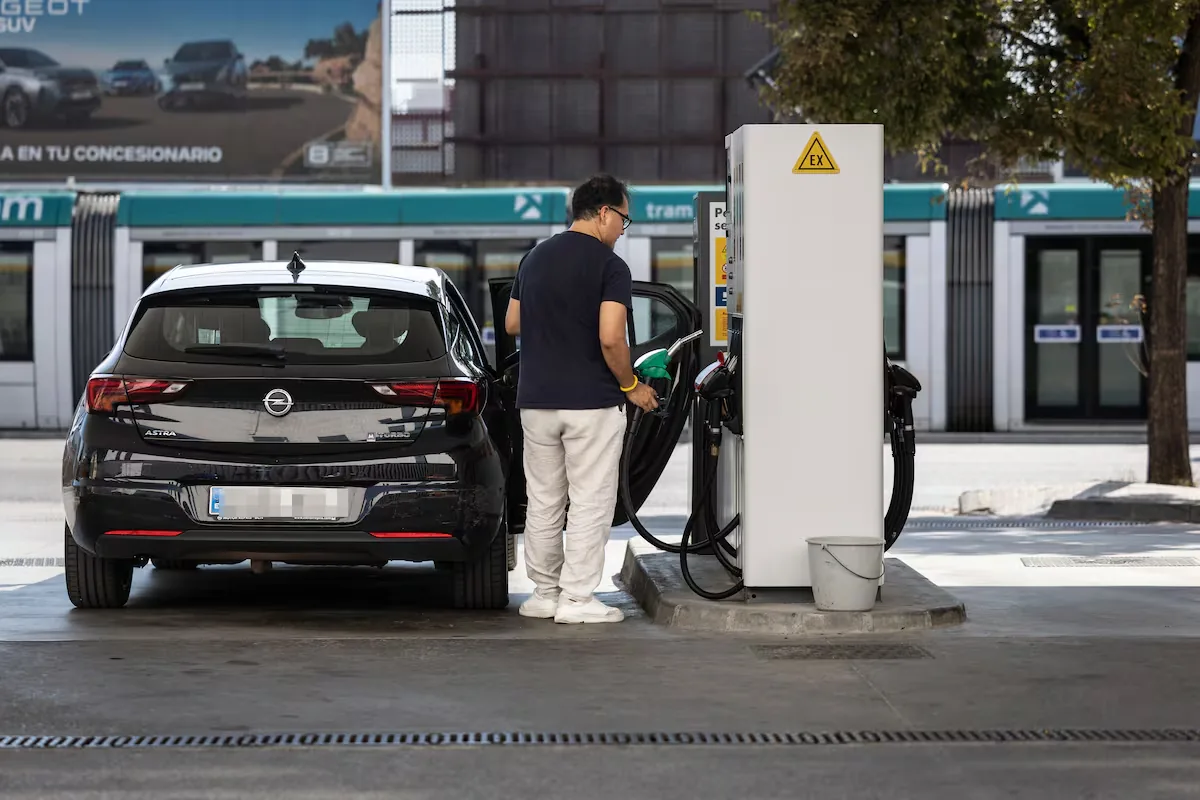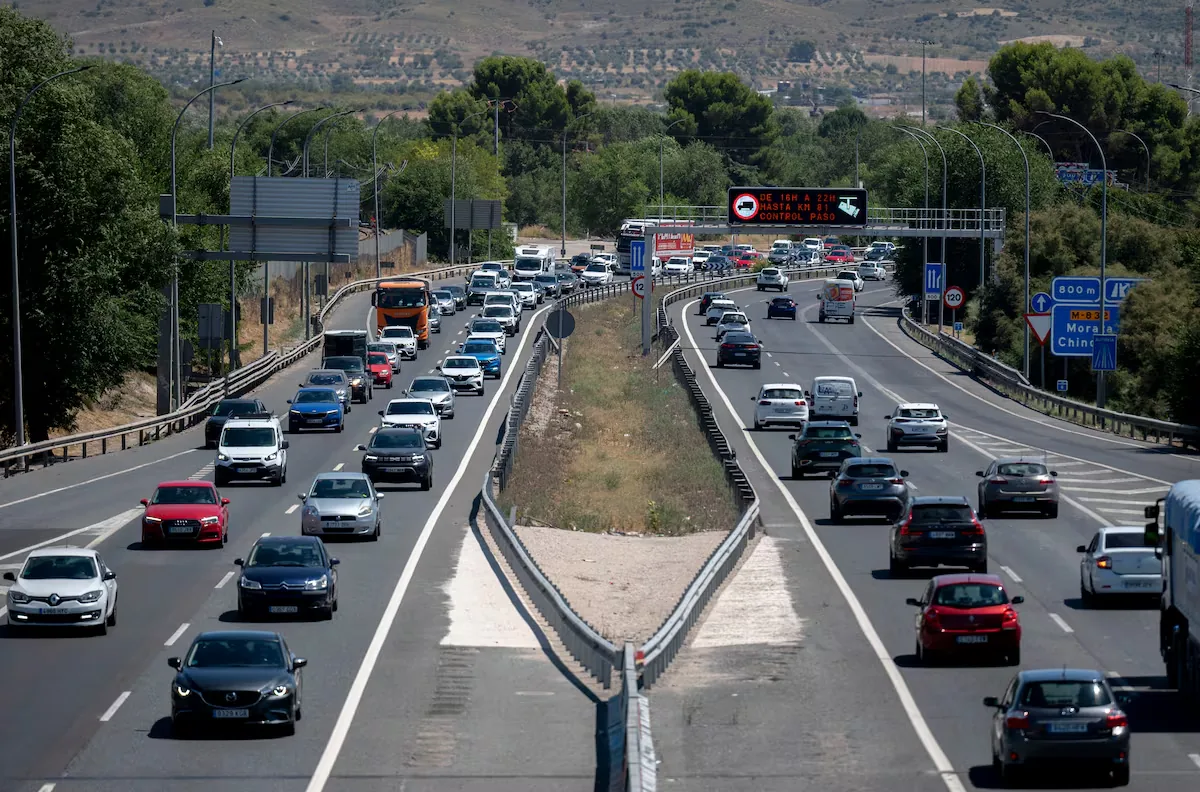
The price of fuels is approaching its highest level since the start of the war in Iran. The cost per liter of gasoline has exceeded 1.70 euros (1.702), a barrier not surpassed since the beginning of the US and Israel conflict with the Islamic Republic, according to the latest European Union oil bulletin published this Wednesday. This fuel has seen six consecutive weeks of increases, and this week’s figure represents the third highest price so far this year. Additionally, the cost per liter of diesel is also rising, standing above 1.80 euros. These increases coincide with one of the peak travel periods this summer, as many Spaniards begin their vacations or return home in mid-August. According to data from the Directorate General of Traffic (DGT), 54.5 million long-distance road trips are expected in August.
Read more Environmental Hoax Detector | Five Myths About Forest Fires
The price of the brent barrel, the benchmark for crude oil in Europe, has risen in recent days above 80 dollars in a context of growing estrangement between the US and Iran due to mutual demands for economic reparations. Meanwhile, gasoline in Spain is near its annual peak, recorded in the week of March 16 to 23, when the average price was 1.73 euros per liter. At that time, the government decided to approve a royal decree to mitigate this increase. To do so, among other measures, it reduced the VAT on gasoline and diesel to 10%. However, in July, the government modified these aids and restored this tax to 21%, but introduced a direct reduction of the special hydrocarbon tax, establishing a direct aid of 15 cents per liter in July, 10 cents in August, and five cents in September.
These tax changes are “one of the two main factors explaining the rise in fuel prices in recent weeks,” says Inés Cardenal, spokesperson for the Spanish Fuel Industry Association (AICE), the sector’s trade association. The second factor is “the rise in international crude and refined product prices,” which, according to the expert, is explained “due to the failure of negotiations between the US and Iran.”
Consumer associations acknowledge that the war in the Middle East and taxation have a significant impact on fuel prices. But they believe there are more factors behind it. Enrique García, spokesperson for the Organization of Consumers and Users (OCU), states that “geopolitical instability generates huge fluctuations in oil costs,” but reminds that “when oil prices rise, fuel prices also do, but when they fall, it happens more slowly.” Facua’s secretary general, Rubén Sánchez, is more forceful and claims that “the increase in fuel demand during the peak travel period is being exploited to improve profit margins of companies in the sector.”
Read more This is the folding vertical clothesline that is a hit in small apartments
The behavior of fuels in Spain has evolved this week differently from the average price in the European Union. The cost per liter of gasoline among the Twenty-Seven falls according to the oil bulletin by four cents compared to the previous week and stands at 1.91 euros per liter. Still, it is a higher amount than that recorded in Spain. The same happens with diesel, which in the EU has dropped to 2.01 euros but remains almost 20 cents more expensive than in Spain.
By country, the pattern of previous weeks repeats. The most expensive gasoline is paid in Denmark (2.46 euros), while consumers in the Netherlands face the highest diesel price (2.41). On the opposite side is Malta, whose gasoline price (1.34 euros) and diesel (1.21 euros) have remained frozen since June 2020 and are the lowest in the entire EU.
Read more The Boom Cake changes its face due to the sanction: «Hopefully one day we meet because of the food»