









Hoaxes and false news about climate change and the environment circulate on social media, messaging platforms, and websites. EL PAÍS tracks this misinformation to debunk and clarify some of the most widespread lies that often resurface. If you come across any of these hoaxes or any message you find suspicious, you can send it to bulosambientales@elpais.es.
Read more This is the folding vertical clothesline that is a hit in small apartments
Forest fires: neither eucalyptus trees are to blame nor is forest management prevented
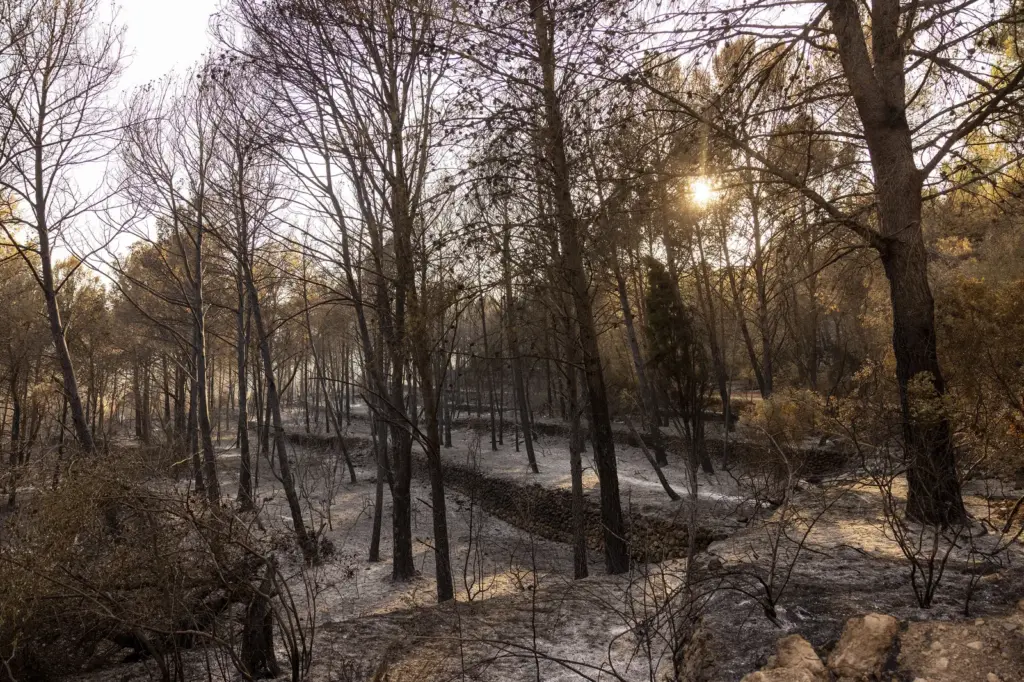
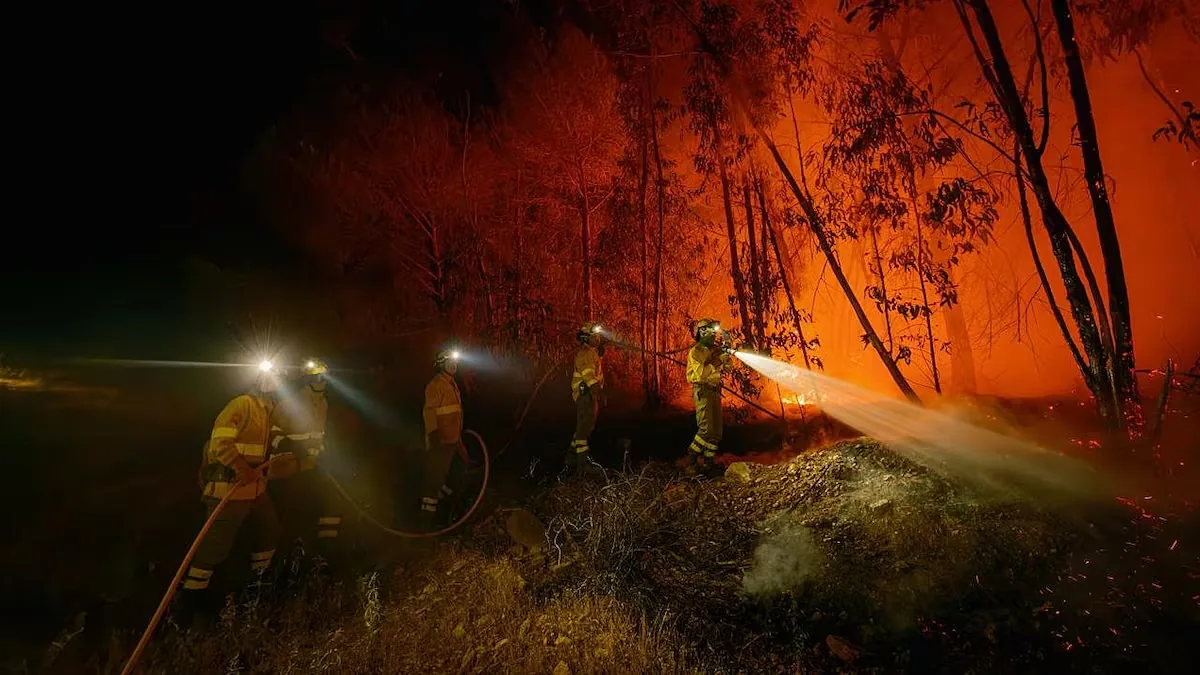
This 2026 is once again a disastrous summer for forest fires, and with the flames come the hoaxes. One of the most repeated falsehoods on social media is that the huge fires of recent years are the fault of environmentalists for preventing forest management and promoting the accumulation of flammable vegetation. This is not true, as environmental organizations themselves have been calling for increased forestry work for years, and legislation does not prevent it, quite the opposite. This is precisely one of the myths selected by the WWF in its latest report. Here is a selection of the collected hoaxes:
–The forest can and should be managed. “The forest law does not prohibit, it regulates forest uses, requires authorizations, and establishes limitations on activities with ignition risk during high fire risk periods,” emphasize the environmentalists.
–Arson networks do not exist. “The annual reports from the Environmental Prosecutor’s Office have been indicating for years that forest fires are mostly due to negligence, recklessness, and local conflicts, with no evidence of supposed criminal networks operating.”
–Fires are not started to urbanize or install renewables. “Although there may be isolated cases, there is no evidence to conclude that the large forest fires recorded in Spain in recent decades are generally for speculative purposes,” states WWF.
–Eucalyptus trees are not responsible for the waves of fires. “It is true that eucalyptus facilitates the accumulation of leaf litter and releases flammable oils that make this species burn very well, but many other factors also come into play. Weather conditions have a lot to do with it,” the report highlights.
–Protection of natural spaces is not responsible for the fires. “Less than 14% of the incidents affected protected natural spaces between 2005 and 2017, and only a very small percentage of fires originated within the protected area,” the environmentalists point out.
No, biofuels are not the best solution for transportation
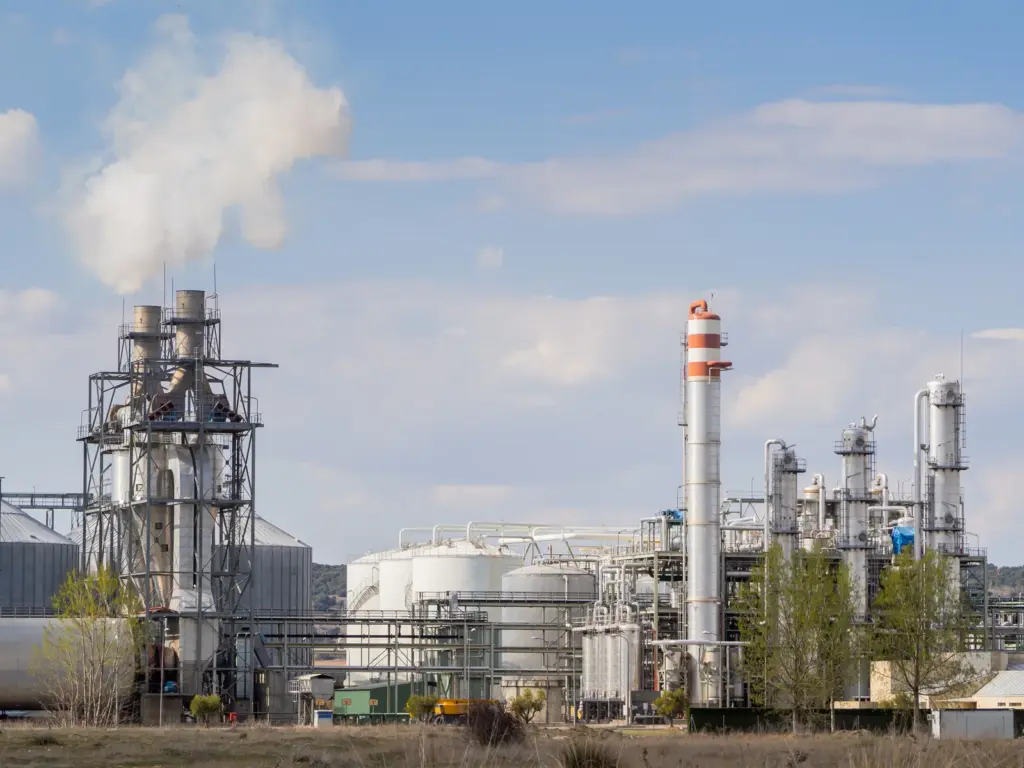
Some oil companies advertise at their gas stations “100% renewable fuels” as an almost magical solution to decarbonize road transport, while certain sectors consider these biofuels the best solution against climate change. Ecodes has prepared a guide to dismantle these and other myths that may slow down the electrification of cars, buses, and trucks, the fastest way to reduce CO₂ in mobility. Biofuels are fuels derived from organic matter. First-generation ones — like biodiesel — are obtained through crops such as palm or soy; second-generation, from organic waste; third-generation — very incipient —, from algae. According to the environmental organization, it is true they reduce emissions, but not as much as usually promoted — up to 90% —: “The emission reduction attributed to biofuels is not generalizable and depends on multiple factors, such as the raw material used and its geographic origin”; that is, current calculations underestimate the real carbon footprint.
They also cannot be considered 100% renewable. “That means ignoring an important part of the biofuels’ life cycle and the real supply capacity. There is not enough raw material in Europe to meet demand. Most of the cooking oil used is imported from Southeast Asia, and there are suspicions that palm oil is used instead of used cooking oil.” In fact, another myth claims that these types of fuels strengthen Spain’s energy independence. Against that, the NGO counters that 80% of raw materials for biofuels are imported, that raw material availability is limited, and that biofuels produced from crops generate competition for land use and affect food security. In contrast, the energy used by electric vehicles does not cause these effects, and in Spain, it increasingly comes from renewables, which continue to grow (in 2024 they reached 57% of the energy mix).
Moreover, combustion of vehicles with biofuels still generates atmospheric pollutants with negative effects on human health. “The hydrotreated biodiesel sold at gas stations is mixed with fossil diesel, which reduces its real contribution to decarbonization and feeds false perceptions about its sustainability.” Therefore, Ecodes points out that they are far from being the best solution to decarbonize road transport: “100% electric vehicles using renewable energies emit much less CO₂ than those using biofuels.”
Hoaxes related to the deposit, return, and refund system for containers
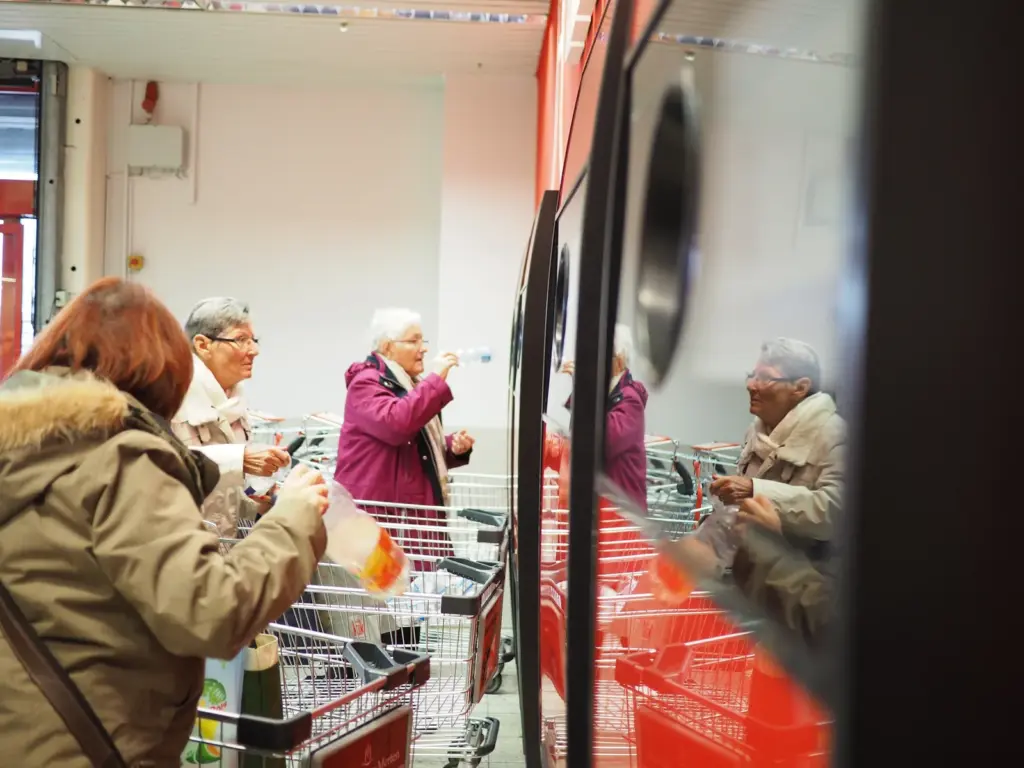
Beverage manufacturers and distribution companies are working to implement in Spain a deposit, return, and refund system (SDDR) for beverage containers. This important novelty means that plastic bottles, cans, and cartons of soft drinks or water must include in their sale price a deposit of at least 10 cents that consumers can recover by returning the empty container for recycling. While waiting to see if the November 2026 deadline for its implementation is met and the operating system finally decided, what this novelty is already causing is the spread of some hoaxes or misunderstandings. One of them is that citizens will now be paid to recycle or will make money by recycling, but in reality, the SDDR will return to users the extra amount they pay when buying the product. It is true that in other countries some people take advantage to collect containers abandoned on the street to collect the deposit, but this is a side effect of this type of system. In reality, the goal is precisely that consumers do not leave cans and plastic bottles anywhere and take care of returning them to recover their money. Another hoax circulating is that small retailers will have to pass on to customers the cost of the machines that must be installed for container recovery. This is not true. First, because the law establishes that beverage producers must bear the cost of implementing the SDDR. And second, because machines are not needed in small and medium stores to return the deposit, in case they are involved in the new system, one of the issues to be decided.
How can there be so many areas in the world warming faster than the rest
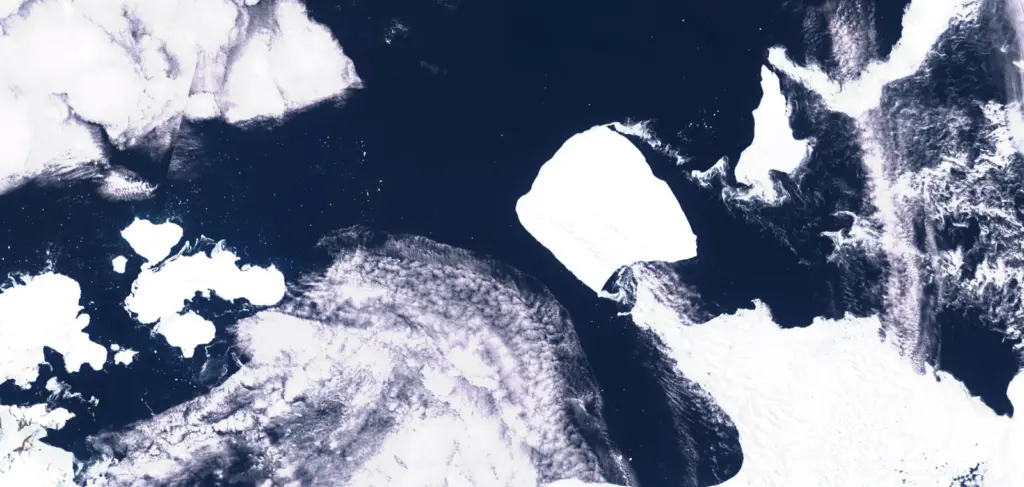
This week the European Environment Agency insisted that the European continent is warming the fastest due to climate change, twice the global average. However, if you search on Google, you will find many alerts from other places also warming faster than the rest: the Arctic, the Middle East, Africa, Russia, China, Australia, Canada, Mexico, the United States, Latin America and the Caribbean, Antarctica… This causes confusion and does not lend much credibility to the climate warning. As the American statistician William M. Briggs ironically says, “any place on Earth is warming faster than any other place on Earth.” So, one might ask: What is true about all this?
The reality is that, scientifically, it does fit that in all those places the temperature increase is greater than the average. This happens because these are land areas on a planet whose surface is more than 70% ocean. As María José Sanz, scientific director of the Basque Centre for Climate Change (BC3), explains, “water masses warm much more slowly than land areas, so it is obvious that the land surface warms faster.”
This explains the multiplication of warnings in land areas about the faster warming than the planet’s average; however, there are also differences among all these places. And, if we talk about continents, indeed, Europe is warming the fastest. As Sanz, also a member of the Intergovernmental Panel on Climate Change (IPCC) Working Group, points out, one of the most influential factors is the so-called “albedo,” which determines the proportion of radiation reflected by a surface. In places covered by ice or snow, most of the radiation reaching the surface is reflected. In contrast, in other (darker) areas where this does not happen, the heat is absorbed by the Earth, increasing temperatures. “Europe is in the northern hemisphere, and the closer to the North Pole, the Arctic, the more warming, because there are more changes with albedo. At high latitudes where there were more surfaces covered by snow or ice, as these disappear, albedo changes and they warm faster than before,” the researcher notes.
The false environmental disaster of solar panels
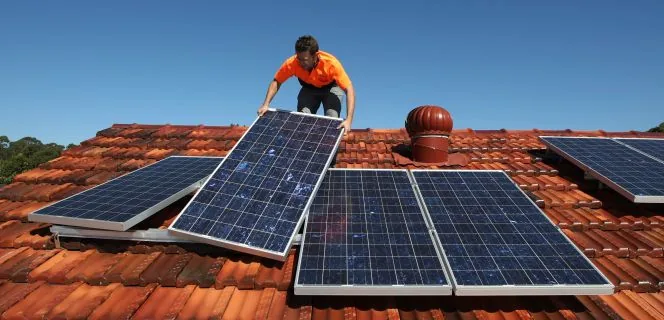
An “eco-disaster waiting,” “an unknown and gigantic ecological catastrophe,” “an environmental disaster” that “no one talks about.” In recent days, various articles have appeared in media pointing to solar panels as an alleged time bomb that will explode when in a few years all the panels currently being installed become waste. This hypothesis is false due to exaggeration. Where does this sudden alarm about solar panels as waste come from? The term “eco-disaster” first appears in an English article by the BBC, from which various Spanish versions derive, and all these publications cite as the main source Rong Deng, from the University of New South Wales, Sydney (Australia), who has calculated that there are currently around 2.5 billion solar panels worldwide. Some Spanish articles also claim she is a doctor expert in solar panel recycling. However, she is actually a researcher and does not agree with this catastrophic view.
“I have never used such strong words; solar energy is not an eco-disaster,” Deng complains by phone from Australia. “We need new solutions to manage solar panels once their useful life ends or they are replaced, but this is not even close to a disaster; it is simply a problem we need to solve.” According to this researcher’s work, more than 95% of the materials used to manufacture a solar panel can be recycled, with the most valuable parts being silicon, aluminum, or silver. However, as Deng emphasizes, current systems must be improved to increase the recovery of these materials and prevent valuable metals from ending up in landfills.
No, ants cannot predict the end of the drought
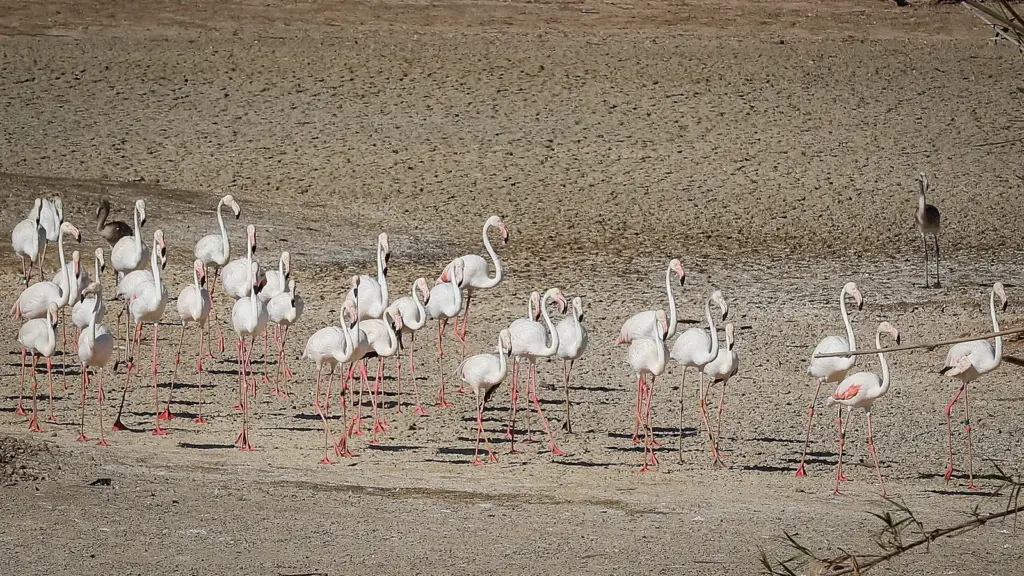
An alleged ancient weather prediction method that has nothing scientific has spread in recent years. It is the cabañuelas, used by shepherds before atmospheric physics or satellites existed. It consists of observing certain weather parameters — such as temperature, cloud shapes, and wind direction — and some animal behaviors — such as bird flight, presence of winged ants, and mule ear flicking — during the first 12 days of August in Spain — January in Latin America — considered the outbound days, and the next 12, the return days. Their results are projected over the 12 months of the year and are very abstract and local.
This method has gained great visibility thanks to the space given by many media to Jorge Rey, a 16-year-old presented as a meteorologist without, obviously, being one. Rey is an amateur who learned the cabañuelas from a shepherd in his town, Monasterio de Rodilla (Burgos), and combines them with weather model forecasts. He is falsely credited with having predicted Filomena, and every year insists there will be a new Filomena, although it never comes. Despite this, he is regularly interviewed on radio, television, and newspapers.
The boy has 65,400 followers on Instagram; Aemet (State Meteorological Agency), 22,300. True experts repeatedly emphasize that this system is a lie. “It is a folkloric tradition that has no rigor or validity, the horoscope of meteorology,” says Beatriz Hervella, from Aemet. “It is like predicting the end of the war in Ukraine with tea leaves,” exemplifies spokesperson Rubén del Campo, while supercomputing expert Daniel Santos Muñoz compares it “to Pennsylvania’s groundhog Phil, Eurocup’s octopus Paul, homeopathy, or tarot.”
Read more The Boom Cake changes its face due to the sanction: «Hopefully one day we meet because of the food»
No, drought in Spain is not being caused by geoengineering
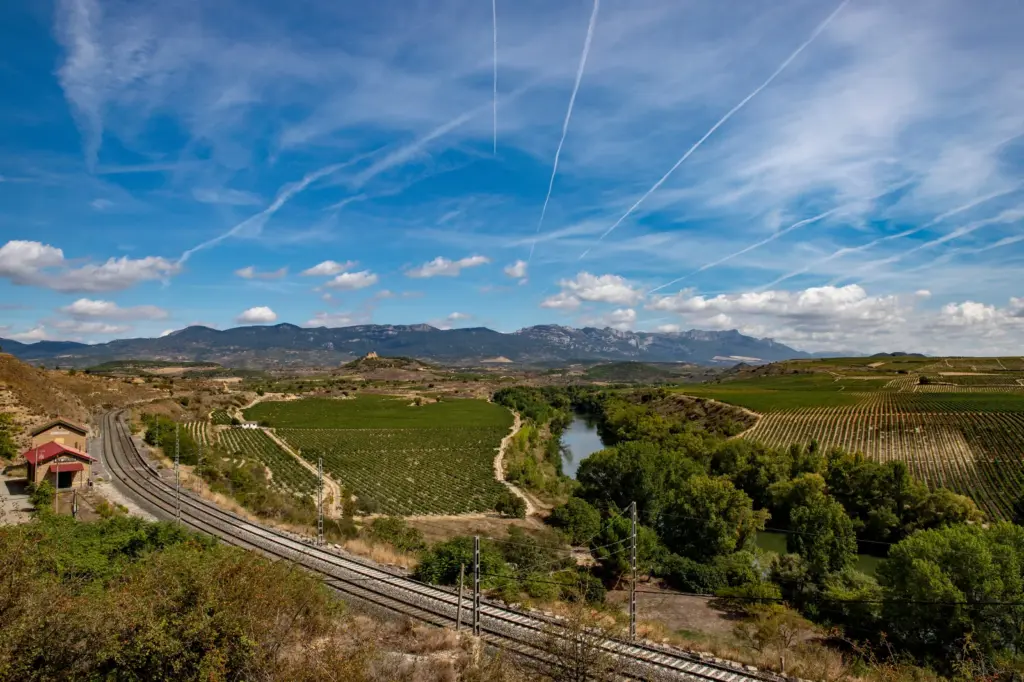
Periodically and for years, theories about contrails flood social networks. It is perhaps one of the most popular conspiracies, maybe because you only need to look at the sky to see the trail left by planes. But those contrails are not proof that chemicals are being sprayed on the population. Nor are they proof that rain is being prevented with geoengineering. This last lie was replicated during April and May, when the lack of rain was very pronounced on the Peninsula due to anticyclones blocking precipitation. This conspiracy, as has happened before, reached the Environmental Prosecutor’s Office, where dozens of complaints were filed (which are not accepted). A report from the Public Ministry clarifies that those contrails are nothing more than “ice clouds” and there is no secret plan to block rain in Spain.
The State Meteorological Agency (Aemet) has also been denying this supposed secret geoengineering plan for years. It details that “contrails are ice clouds, in the form of long lines, that sometimes appear when a plane passes, due to condensation of water vapor contained in engine emissions.” “Contrails themselves are simple ice clouds that cannot poison us,” concludes Aemet in that text.
No, hundreds of dams that could store water are not being torn down
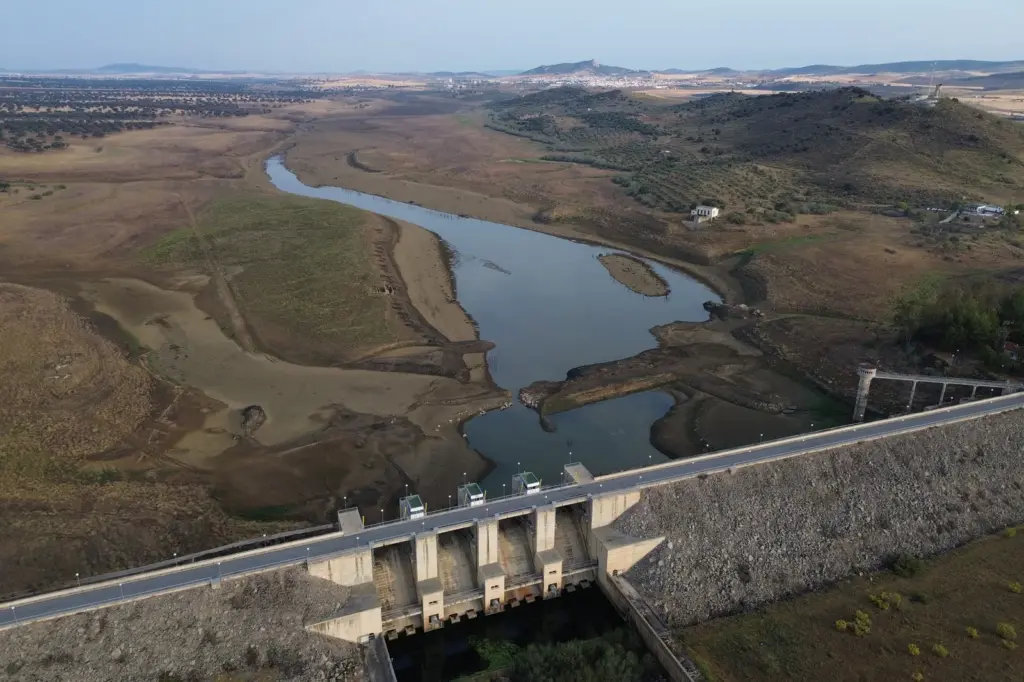
This is a hoax that takes on special dimension when launched in the context of a prolonged drought in Spain: the government is tearing down hundreds of dams and now they say there is a water shortage. No, it is not true; the reality is that the capacity to store water reserves in Spain today is greater than a few years ago, not so much because more reservoirs have been built but due to some heightening (expansion) works on existing ones. Today, there are infrastructures to store 56,069 cubic hectometers of water, 1% more than 10 years ago.
So why does the organization Dam Removal Europe consider Spain the European leader in demolishing this type of construction? The truth is that hundreds of obstacles blocking river flows are being removed in the country, but these are mostly weirs (much smaller constructions than dams to divert river water) and other small barriers that have become obsolete.
There are also obsolete dams worth removing from rivers because they no longer fulfill their function or do not justify maintenance costs to avoid becoming a danger. However, as explained in this special about removing artificial barriers fragmenting rivers across the continent, of the more than one million obstacles the Amber project estimated in 2020 in Europe’s river flows, two-thirds are less than two meters high. And, according to Carlos García de Leaniz, the principal investigator of this European initiative, one in four river barriers is out of use. Tearing them down has no impact on water reserves and is very positive for river recovery.
Reminder for the future: it is also not very useful to have many reservoirs if they end up empty (as shown in the image above, with Sierra Boyera, in Córdoba).
No, the 15-minute city does not mean locking people in their neighborhood
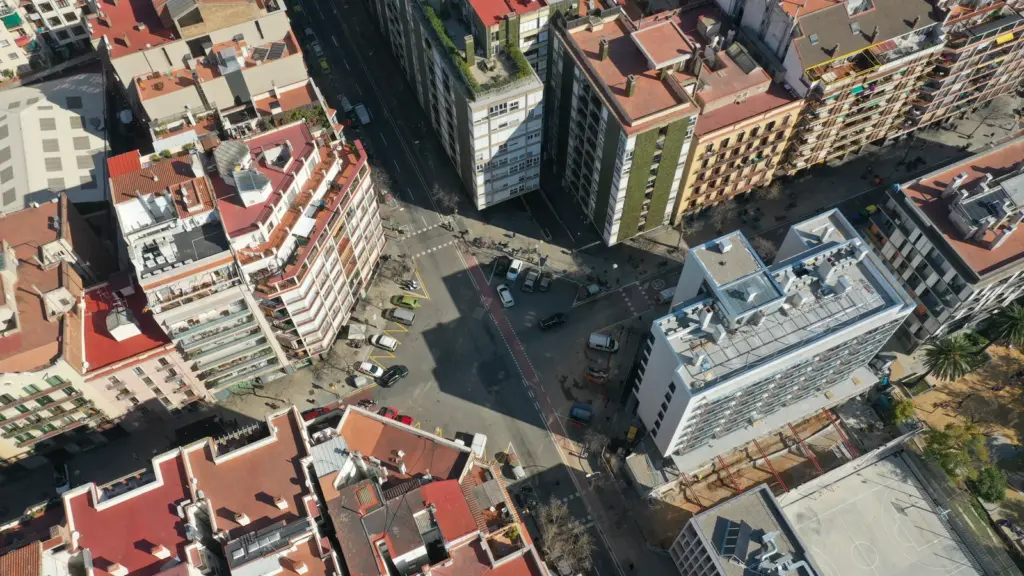
The 15-minute city is a model that aims to reorganize cities so that each person has close to them everything they need in their daily life (public services, schools, shops, parks…) and more facilities to walk and bike. A seemingly friendly idea that has generated thousands of hoaxes, fueled by far-right accounts.
The spark was lit with criticism of traffic cuts in streets of several Anglo-Saxon cities (because to facilitate sustainable mobility, space must be taken from cars), and the level rose: first, that the 15-minute city means closing streets to traffic and this takes away freedom of movement (which is false, as there are many ways to move in cities). Then, that it is a plan to lock the population in their neighborhood; later, that it consists of banning cars, dividing cities into identity ghettos, and controlling each citizen’s carbon emissions while the powerful continue traveling in private jets. Finally, that it is a plan to lock the population in their neighborhood, which is not only untrue but reverses reality: in fact, there are many new neighborhoods without services or shops, relying entirely on cars, taking away freedom from those who do not drive.
Carlos Moreno, the professor who created the concept, responds: “It is madness to say we are going to lock citizens in their neighborhood. The 15-minute city is the opposite, that you can move freely around your neighborhood on foot or bike, and then throughout the city by bike or public transport, which is the means to connect neighborhoods.”
Here you can learn more about the 15-minute city and its hoaxes.
What does it mean that producing one kilo of meat requires 15,000 liters of water?
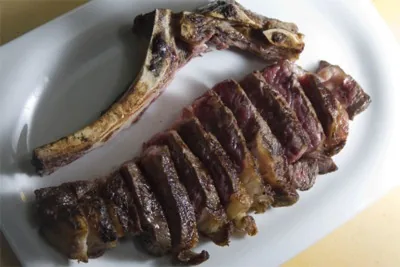
Message on Twitter on Saturday, June 10: “The hoax of 15,000 liters to produce 1 kilo of beef seems to have triumphed. It is repeated in any conversation involving criticism of livestock farming. Wait until they find out that this rainwater falls on fields with or without cows.” It is true that water footprint measurements tend to be misinterpreted, but what this tweet says is also a half-truth. When using this methodology created by Dutchman Arjen Hoekstra to calculate how many liters of water are needed to produce a certain food, it is important to note that the calculation includes both irrigation and rainfall. In the case of meat, most of the estimated water is related to irrigation or rain needed to produce the feed the cow ate (hence the very high amount). However, the real importance of the water footprint depends on where it is produced. If the livestock has fed on pastures in a rainy place, indeed, what is being counted is rainwater that falls with or without cows. But if the animal was raised in a dry region, during a drought, or with feed that required a lot of irrigation, then its impact is very different. Therefore, when referring to a calculation made with this methodology, it is key to know where that food is produced and what proportion of irrigation or rainwater was used there.
This measurement tool is very interesting but must be used cautiously. This post warned about errors in interpreting the water footprint more than 10 years ago but remains valid to better understand the methodology: The 1,216 liters of water in a margherita pizza.
No, bovine tuberculosis is not a hoax to favor the entry of meat from Morocco

Among the most recent hoaxes is one that says that the bovine tuberculosis that has caused such a stir these days in Castilla y León is a lie and part of a plan to favor the entry of meat from Morocco. Among those rejecting livestock movement restrictions due to this disease, the argument has arisen that European controls to prevent the spread of bovine tuberculosis are actually a way to increase meat imports from the North African country. This is not true, first because it is a very serious disease that can have a huge impact on livestock farming. And second, because legislation establishes that live animals cannot be moved if there have been cases of bovine tuberculosis, but meat sales are allowed.
It is very unlikely that the disease jumps to humans through food, so meat can be consumed after passing the relevant controls at the slaughterhouse. “It is perfectly suitable, as long as veterinarians indicate so,” explains Joaquín Gargallo, head of beef cattle at the COAG organization. There is no commercial ban in this regard that would facilitate the entry of meat from other countries. On the contrary, the opposite effect may occur: a ban on the sale of live animals from Spain to other countries, even from risk-free areas, due to distrust generated if these controls are not properly carried out in the country.
Yes, humans are the main cause of climate change
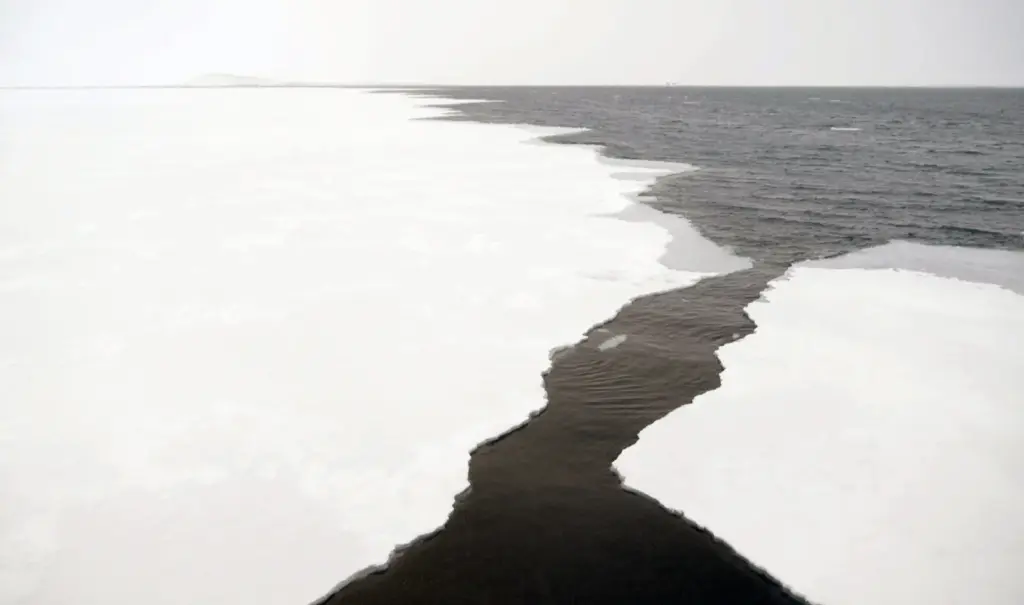
Climate change denial hoaxes are evolving. From denying the evidence of global warming (with arguments like it has always been this hot when a heat episode occurs) to rejecting that humans are the main cause of this crisis. One of the most widespread hoaxes is summarized as follows: climate changes have always existed, and the current one is not the responsibility of humans. The first part is true, the second is not. Indeed, in the past, climate changes have cooled or warmed the planet. But the difference in the current case is that the cause is humans due to greenhouse gas emissions generated by their activity (mainly from burning fossil fuels).
Science is clear, and thousands of articles support that humans are the main cause. The latest major review by the IPCC (the international panel of experts analyzing all scientific literature to establish the basis on climate change) was emphatic in stating that it is “unequivocal” that humans and their activities have “warmed the atmosphere, ocean, and land.” And this has caused “widespread and rapid changes in the atmosphere, ocean, cryosphere, and biosphere.” Its conclusions are ratified by nearly 200 countries (practically all in the world) participating in climate negotiations. And, although it may seem new, this international consensus on the matter has existed for decades, despite attempts to sow doubt. The still-valid 1992 United Nations Framework Convention on Climate Change recognized from the start that “human activities have substantially increased greenhouse gas concentrations in the atmosphere” and “this increase intensifies the natural greenhouse effect,” which will “result, on average, in additional warming of the surface and atmosphere.” And that warming has already occurred.
Here you can learn more about climate change, its causes, and effects.
You can follow CLIMATE AND ENVIRONMENT on Facebook and Twitter, or sign up here to receive our weekly newsletter
Read more Three sentenced to five years in prison for trying to kill a man with a screwdriver in Castellón