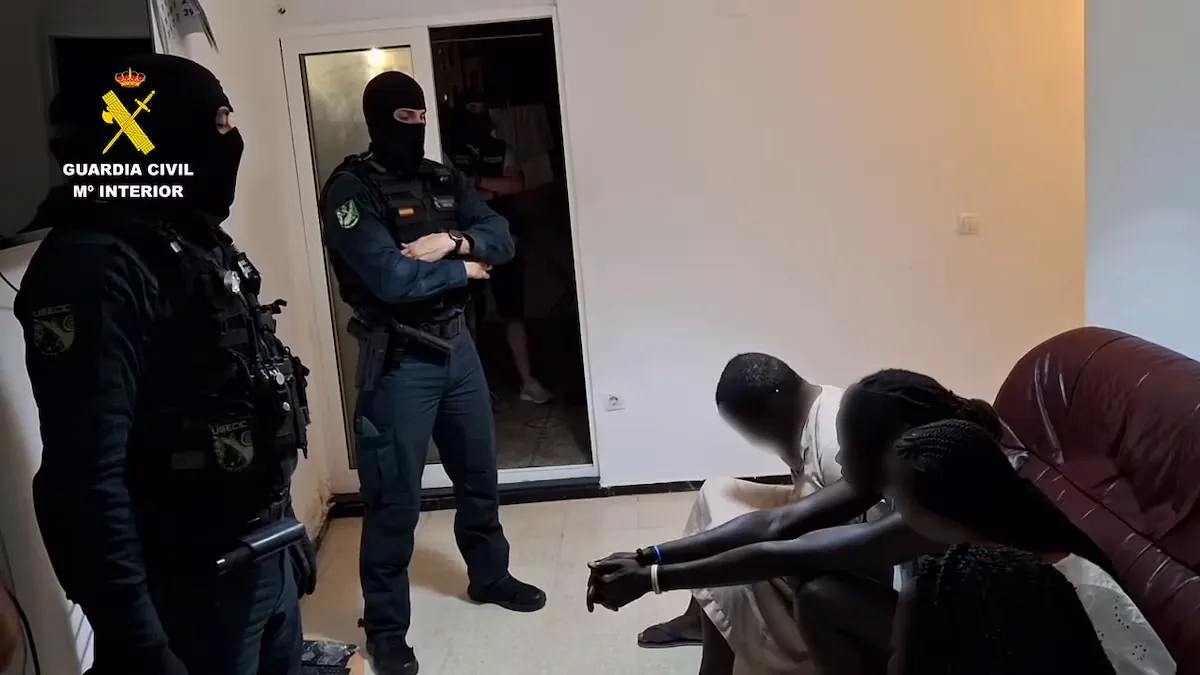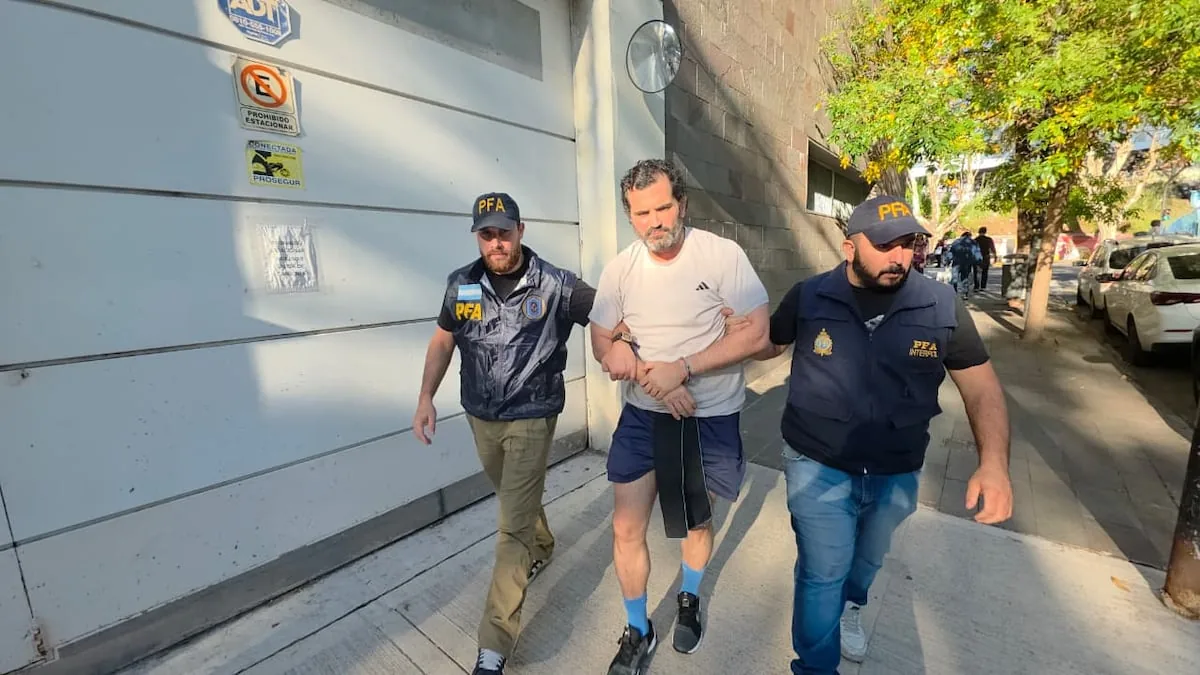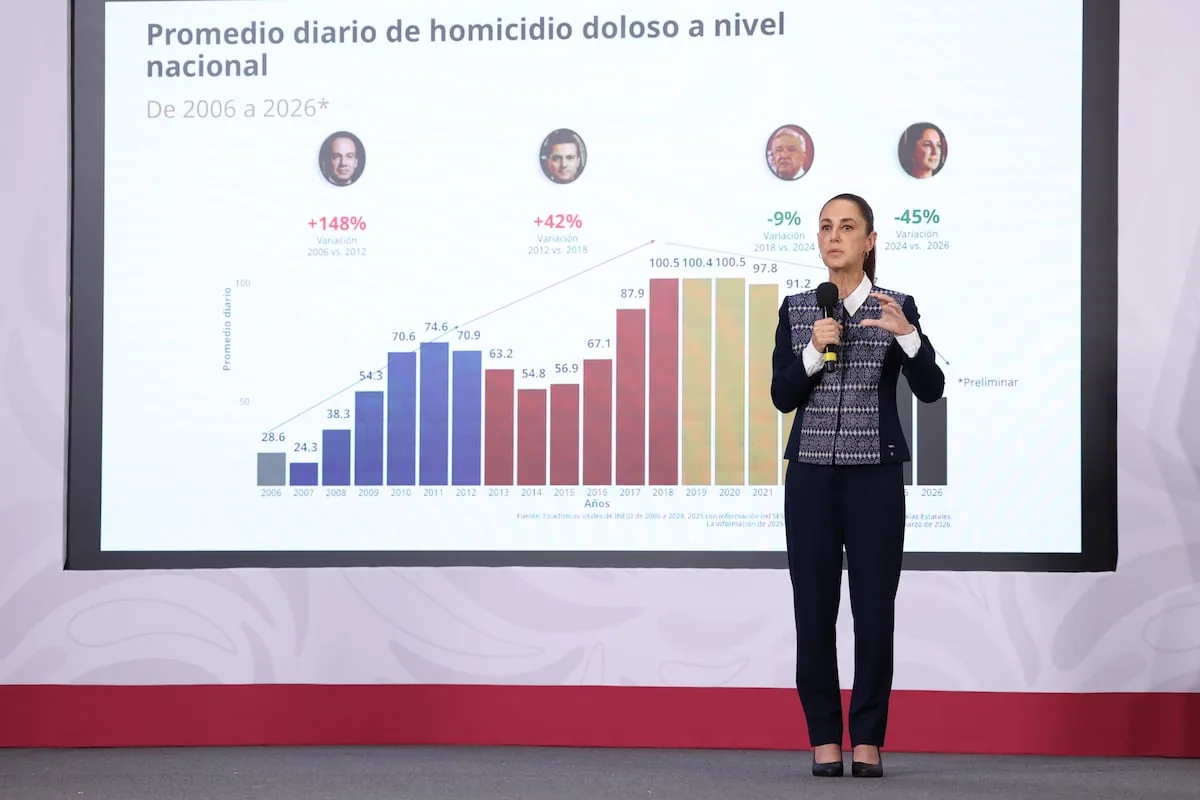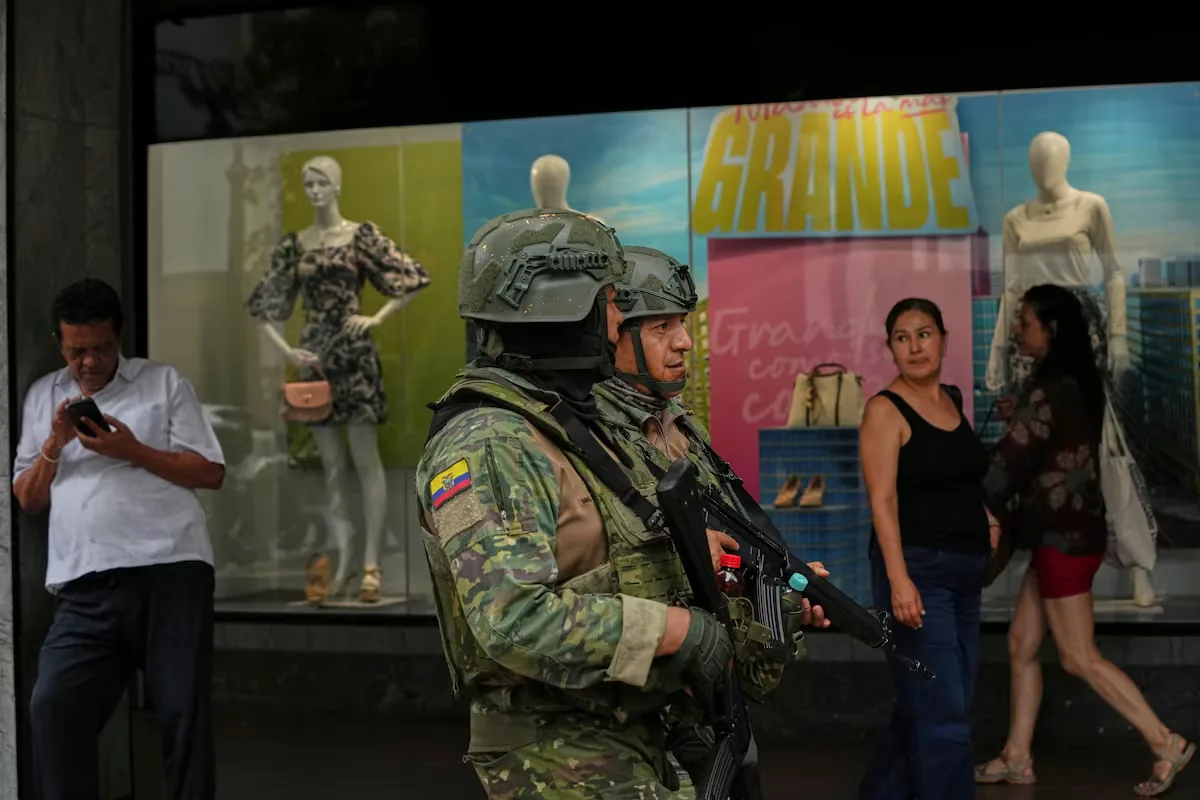
The government of Daniel Noboa hopes that the arrival of Abelardo de la Espriella to the presidency of Colombia will open a new phase of military and police cooperation along the 586 kilometers of border shared by both countries. Noboa has publicly stated that the presence of the military on the border “will be crucial” and that this issue “has been discussed,” referring to coordinated operations against drug trafficking and armed groups operating in the area. According to the president, this expectation was what motivated the tariff offensive with which he has spent months pressuring Gustavo Petro to activate the military contingent in the shared zone. But the military pressure carries a risk: it can push criminal networks toward the weakest link in the region.
Read more Brazil uses forensic science to combat illegal mining
The expectation in Quito is no less. Ecuador found itself trapped between the two largest cocaine producers in the world (Colombia and Peru) and became one of the main corridors for moving drugs to the United States and Europe. What for years was a peripheral border became a strategic territory for FARC dissidents and for gangs dedicated to trafficking drugs, minerals, explosives, fuel, and wood, as well as extortion and human trafficking. These transnational criminal structures found in the border provinces a space with scarce state presence and enormous opportunities for illicit businesses.
The corridor between Nariño, Putumayo, and northern Ecuador now functions as a single criminal geography. Illegal crossings not only move cocaine toward Pacific ports; they also bring in weapons, smuggled money, and machinery linked to illegal mining. The risk, warns Juan Carlos Buitrago, retired general of the Colombian Police, is that a simultaneous offensive by Quito and Bogotá against the dissidents and the ELN will not eliminate these structures but will push them to fragment, relocate, and increase violence against border communities. The phenomenon is known in security as the “balloon effect”: pressure on one area does not eliminate crime but displaces it to territories where the state has less control capacity.
Buitrago considers that one of the most immediate risks is in Nariño, where a dialogue process remains active between the Colombian government and the ELN’s Southern Communeros Front, outside the national command of that guerrilla. Although it has not produced definitive agreements, the mechanism has helped contain some of the violence on the border with Ecuador. “The incoming government will end that dialogue at its root,” says Buitrago, who believes this process has prevented the Front from committing violent acts. Its rupture, he warns, could “reactivate violence by this ELN structure on the border, with direct effects on Nariño and the Ecuadorian border area.”
Buitrago also questions the central premise of the strategy shared by Noboa and De la Espriella: that more force automatically equals more security. In his view, a coordinated offensive between Colombia and Ecuador against the ELN and FARC dissidents could trigger a violent response against civil society, communities, businesses, institutions, and public forces on the border. The problem, he insists, is structural: “Today we have a weakened public force, which has been working with past capabilities, without leadership or experience in fighting terrorism and without the necessary legal guarantees to sustain a prolonged offensive.”
The warning is especially uncomfortable for Ecuador, which since January 2024 — when Noboa declared the country in “internal armed conflict” — has faced precisely the same wear: permanent deployment of the military, insufficient intelligence, limited capacities to control border territories, and sustained expansion of criminal economies.
In this scenario, the promised regional war on drug trafficking — articulated under Plan Colombia 2.0, the hardline strategy with which De la Espriella replaces Petro’s “total peace,” and the Shield of the Americas, the military alliance led by Washington that Colombia will join with the new government — could end up strengthening the phenomenon it claims to fight by displacing violence to spaces where the state remains weak or nonexistent.
Buitrago’s warning is not only a projection about the future but a phenomenon with deeper roots. For retired Ecuadorian Army colonel and former intelligence chief Mario Pazmiño, Ecuador already experienced an earlier version of that criminal displacement. It happened with the first Plan Colombia, signed in 1999 and later deepened under former president Álvaro Uribe, which caused a regional reshuffle of drug trafficking.
According to Pazmiño’s account, the military offensive against the FARC prompted a meeting in Sinaloa among bosses from Guatemala, Mexico, and Colombia, who sought to respond to the Colombian state’s bombings and attacks against the guerrilla. “The bosses needed to articulate a strategy about where they could take their illicit businesses,” he recounts.
“They needed a country with permeable borders, close to coca production centers and ports, that allowed money laundering, with high levels of corruption and a justice system that raised the flag of impunity. Those countries were Ecuador and Venezuela,” Pazmiño lists.
With those conditions in their favor, armed groups consolidated in Ecuador and today maintain control over much of the binational border. They became, Pazmiño asserts, a threat that overwhelmed the capacities of both Colombia and Ecuador.
Ecuadorian intelligence agencies have identified, according to Pazmiño, at least a dozen criminal structures on the northern border, including the Oliver Sinisterra group, the United Pacific Guerrillas, the Southern Communeros Front, the Border Commands, and factions of the Second Marquetalia. These organizations act in coordination with other mega-structures, Pazmiño adds: the Sinaloa and Jalisco New Generation cartels, the Gulf Clan, and Brazil’s Comando Vermelho.
Both analysts agree that the problem worsened during Gustavo Petro’s government, which abandoned the policy of forced eradication to promote the substitution of coca crops with basic foodstuffs, a plan that, in their view, yielded no results. “Meanwhile, Ecuadorian ports — so close to the production zone, allowing drugs to be moved without complications — gained relevance in criminal structures,” Pazmiño points out.
For Daniel Pontón, security analyst and researcher at the Institute of Advanced National Studies of Quito (IAEN), another turning point in the increase of violence in Ecuador occurred after the peace agreement between the Colombian state and the FARC in 2016. “It was warned that some combatants and illegal economies could move to neighboring countries if there was no effective territorial control,” Pontón notes.
A decade later, Ecuador faces precisely some of those symptoms: presence of Colombian dissidents in Carchi, Sucumbíos, Esmeraldas, and Imbabura, expansion of illegal mining in the central Sierra and the Amazon, and growing coordination between foreign armed groups and Ecuadorian gangs.
“Nor does it seem that the new Colombian government is interested in a border development policy, in building infrastructure, in investing in changing the dynamic,” Pontón concludes.
Although Noboa and De la Espriella speak of “free peoples” and “progress” — slogans repeated in their campaign speeches — and share the idea that a hardline approach and war rhetoric will be enough to achieve it, neither has clearly proposed a strategy of social investment, territorial recovery, or life guarantees for indigenous populations that today contain part of the escalation of violence on the border. There are also no signs that the recruitment of children and adolescents by mafias, nor universal access to education in those areas, are part of their priorities. So far, no border territory has been recovered by the state.
The Ecuadorian government’s intervention in Colombia’s presidential elections — using tariff reductions as leverage in favor of candidates opposed to Petro — seems to have yielded the results Noboa expected, and now an ally willing to deepen the war against organized crime will come to power. However, the warning remains that Ecuador could end up paying the cost of this new hardline approach and consolidate as the fallback territory for the region’s criminal economies.
Read more It looks like a high-end smartwatch, but costs much less: now it has more than 70% off