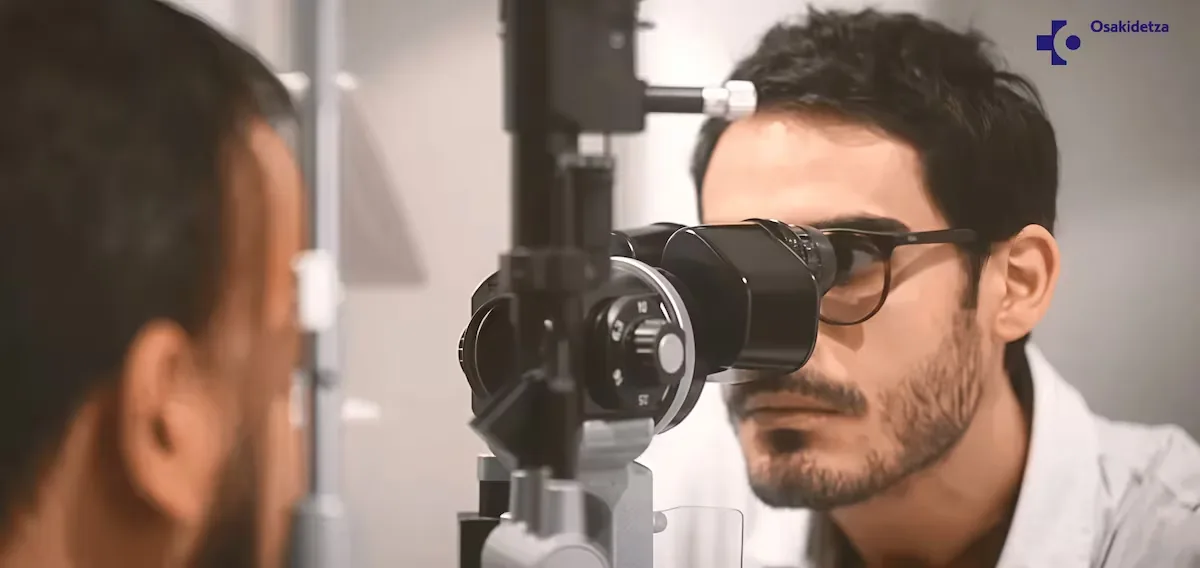
The emergency departments of many Spanish hospitals had been reinforced on Wednesday to attend to possible eye injuries from the total solar eclipse. In most of them, the activity was similar to the usual; others had a considerable increase in consultations, but the health departments of the autonomous communities barely report serious cases, although these may still take hours to appear.
Read more Istanbul will host the Spanish Super Cup for the first time
One of the hospitals whose activity increased notably was Gregorio Marañón, in Madrid. From the half dozen ophthalmological attendances on a normal night, they went to almost thirty last night. But none of the cases were a consequence of an injury from looking at the Sun, according to José Luis Urcelay, head of Ophthalmology at the hospital, who explains to this newspaper.
The characteristic injury in these cases is solar retinopathy, a burn caused by radiation that affects the macula, the area of the retina responsible for central vision and precision.
Most of the cases attended at Gregorio Marañón were people with itching, discomfort, irritation, sensation of sand in the eye… “None of these symptoms correspond to the possible injuries that solar exposure can cause. If there is really damage, it will manifest as loss of central vision or obvious distortion in image perception. But to reassure people, there is no accompanying subjective symptomatology,” says Urcelay, who believes that the increase in consultations is probably due to “overconcern” after witnessing the eclipse.
However, injuries caused by the Sun can take hours, even several days, to manifest, always in the form of these and other vision alterations, such as blurred vision, image distortion, changes in color perception, excessive sensitivity to light, difficulty reading, or the appearance of dark spots in the visual field. “When they occur, it is important to go to the emergency room, where we have protocols with drugs that can minimize the damage,” the doctor continues.
The bad news is that, without the tests performed in hospital centers, there is no way for a person to know if they have suffered injuries until they manifest. There are also no preventive measures beyond avoiding looking at the Sun.
Read more Traffic expects 5.6 million trips this weekend
The president of the Spanish Society of Retina and Vitreous (SERV), ophthalmologist Alfredo García Layana, explains to Europa Press that, although some injuries improve in weeks or months, there is no treatment that reliably repairs the damaged retina, and some people are left with permanent sequelae, especially spots or distortion in central vision.
Few and mild cases
Throughout the Community of Madrid, about a hundred attendances related to the eclipse have occurred, the vast majority of them mild: dizziness, doubts, discomfort, and the aforementioned eye problems. Only one of the hospitals consulted by this newspaper (Torrejón) has reported a serious case of eye injury.
The Basque Health Service (Osakidetza) has attended to 58 people for possible eye injuries related to the eclipse. Most patients went to Emergency for mild or very mild visual disturbances, such as the appearance of black spots, flashes, or small “sparks” in the field of vision, as well as itching or eye discomfort.
Other communities asked report a similar balance, with very few cases: four (all by phone) in Aragón, half a dozen in Navarra, about thirty in Murcia… all of them mild.
Read more MediaMarkt offers exclusive discounts on the new Samsung mobiles for a limited time