






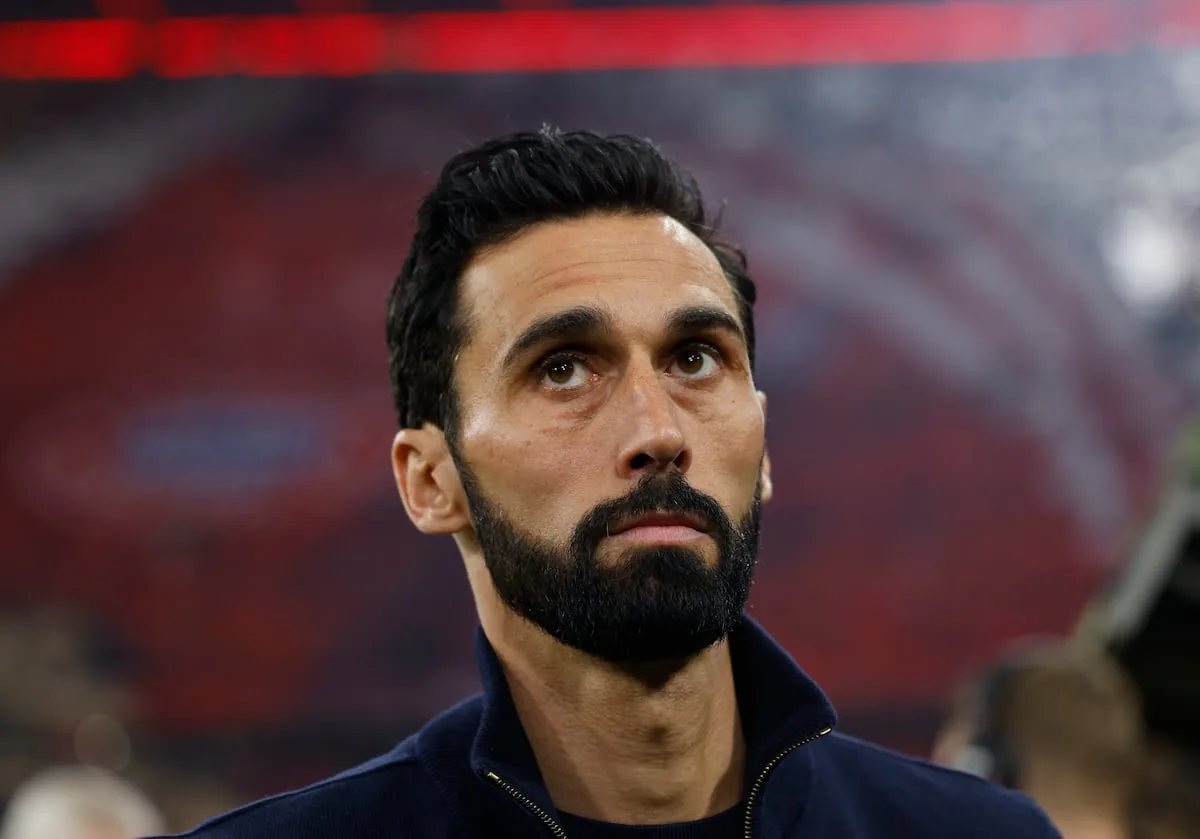
Let’s broaden the perspective. Florentino Pérez tried to intervene, but he changed the wrong wheel by dispensing with Xabi Alonso. The team was left in the hands of Álvaro Arbeloa and the power in the hands of the players. It didn’t work. The coach lost authority, the players became suspects, and the stands got irritated. Transition aborted from the start, with world-class players, but who gradually lost confidence.
Read more Choose a book for Sant Jordi
In football terms, little can be reproached to Arbeloa who, as César Luis Menotti recommended, put the toilet in the bathroom, the sofa in the living room, and the table in the dining room. He also tried to refresh the team with youth players due to lack of resources. There was little more he could do.
There are other traits of his leadership, between the emotional and the political, that deserve analysis. He was lenient with the stars, a gesture they would appreciate at home, but not on the field. He was functional to the club, attacking referees and pampering the cracks at a cost: complacency does not build authority. His discourse was relaxed, even in the worst moments, always appealing to pride, as if recalling history worked as an energy boost. He lacked the spark that Madrid needs like never before, because the team drags a deficit unworthy of its legend: it lacked soul in many matches.
The club has a clear authority, that of Florentino Pérez, a symbol of institutional power. That matters structurally and will remain as a legacy. Knowing who is in charge helps order. But his influence does not reach the dressing room, orphaned of figures who carry the force of their charisma. The last coaches have not been such, weakened by the club itself in a self-destructive dynamic. In elite football perception is decisive and players quickly distinguish between strong and weak coaches.
The dressing room has also failed to compensate for that void. Vinicius Jr. is not a leader, lost in external battles. Carvajal declined due to lack of football prominence. Courtois, Militao, Valverde, Bellingham, Mbappé remain… Great figures, but more technical leaders than emotional ones. The profile that Sergio Ramos or Raúl embodied in their time is missing, players with natural authority to make themselves heard.
Read more Why do you start exercising and then quit? The answer may lie in your goals
In calm times, these shortcomings go unnoticed. But Madrid is going through a results crisis (which is the mother of all crises), fueled by an unbalanced squad and also by a diffuse identity, with no body other than history. To recover the game, midfielders with judgment are needed. To regain command, perhaps the club will turn to an authoritarian coach, one of those Florentino likes: someone who serves as a refuge in the storm. A model that usually has a short and unsuccessful run in the club’s history.
Betting on methodical, reliable profiles with experience is a solution invalidated by the dismissal of Xabi Alonso, the envy of European football when he arrived and devoured by the club in record time. At Madrid, you have to win today. A cultural vice that is already law.
Two months of penance remain. Because playing without qualifying incentives is a sentence. But also, an opportunity to think. The players no longer have anything to say and Arbeloa seems amortized as a coach. All victims of the result, that absolute dogma. But the scenario, in a narrative-producing machine like Real Madrid, cannot remain empty. At this point, only Florentino can occupy it. And with decisions that promote a profound change.
Read more The 21st-century Spanish novel: the last great storytellers before artificial intelligence