


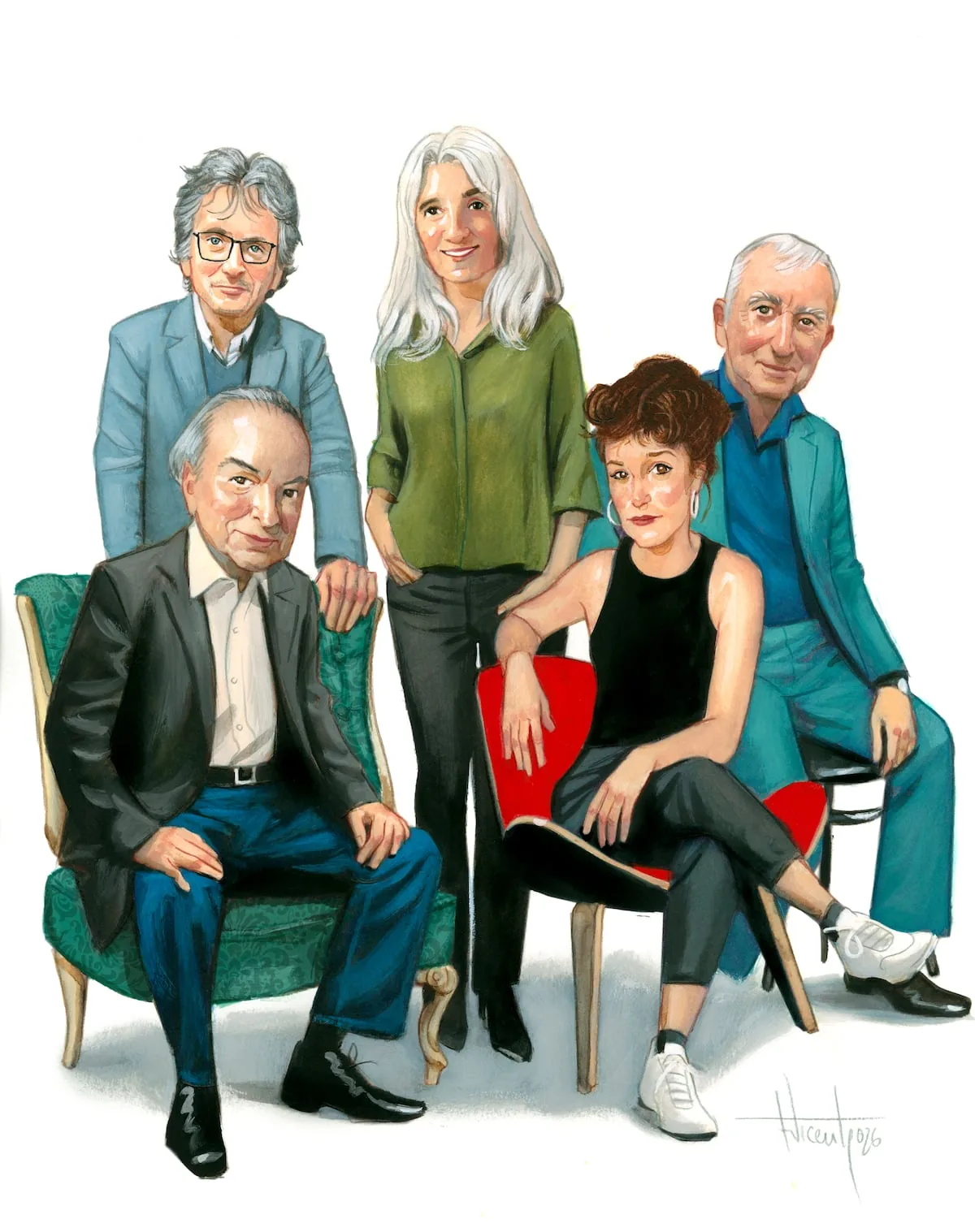
A quarter of a century may seem like an arbitrary measure to speculate on culture, but the period 2001-2025 is the last in which literature was produced and read without artificial intelligence, an element destined to imminently change many things. Two good excuses to propose a tentative map of Spanish novels of the last 25 years. A warning: this review does not include all valuable works and voices. Nor is it a canon.
Read more Mikel Oyarzabal, the footballer who appears when everything is decided
When does the 21st century begin?
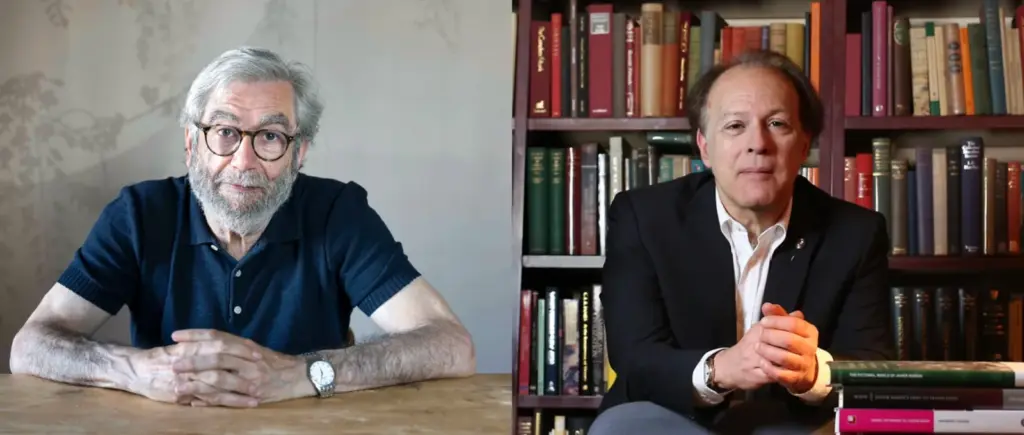
In 2001, three excellent novels were published: Romanticismo, by Manuel Longares, and Jugadores de billar, by José Avello, whose memory games confined to closed and declining worlds still place them in the 20th century for almost all purposes (structural, stylistic, etc.), and Sefarad, by Antonio Muñoz Molina, which is largely a book about the 20th century. Something similar could be said about the Faulknerian trilogy Verdes valles, colinas rojas, by Ramiro Pinilla, published between 2004 and 2005, or Familias como la mía, by Francisco Ferrer Lerín (2011).
Javier Marías’s case is different. The three splendid volumes of Tu rostro mañana (2002-2007) may also not inaugurate anything, and we are talking about a writer who already defined the end of the previous century, but it turns out that, as much as some may find it fun to argue or resist the evidence (and that’s fine, why would anyone need any form of unanimity?), Marías’s hypnotic and unmistakable writing is one of those cases where an indisputable, extraordinary classic is formed. Moreover, the author’s effect will still persist in two different ways: the first is his subsequent books, which experience a relative decline until closing his career with a wonderful diptych, Berta Isla (2017) and Tomás Nevinson (2021).
The second is that his work opens a space that allows the visibility of other related writers. I think of José Carlos Llop, who is to French literature in Spain what Marías is to Anglo-Saxon literature, from whom I would mention the little-remembered El mensajero de Argel (2005), with its prophetic atmosphere that turns the Mediterranean into Saigon, or Reyes de Alejandría (2016), a revisitation of 1970s Barcelona. Or the exquisite Vicente Valero, who between Los extraños (2014) and Enfermos antiguos (2020) has managed to turn Ibiza into a measure of the world.
Three lines for the early moments of the century
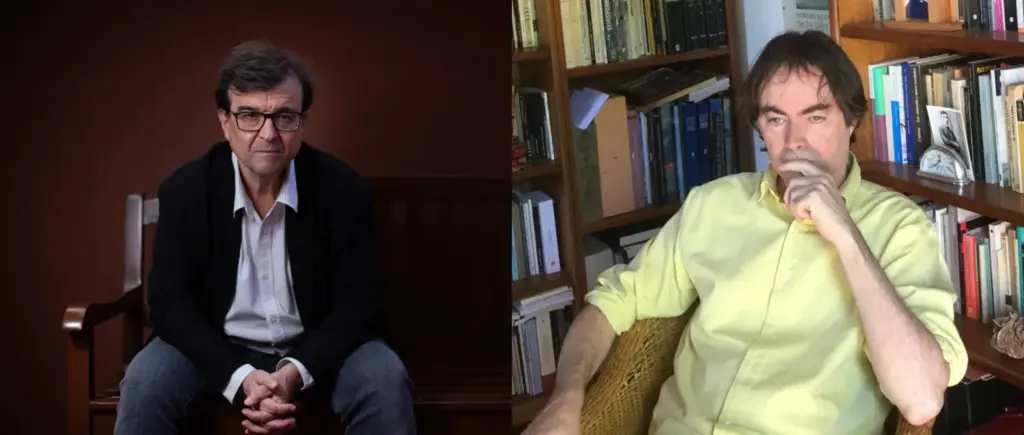
You will never obtain an absolute truth when you insist on delimiting periods, as if something magically changed in 2001, or when drawing trends with rulers and then insisting on fitting everything in there. What do we do with authors who started writing in the eighties, or earlier, and have continued producing good books? Some examples: Muñoz Molina delivered La noche de los tiempos (2009), a significant contribution to the representation of the Civil War (a topic that later experienced some disappearance from the scene until rescued, with notable craftsmanship and in an untimely magical realism key with La península de las casas vacías, the big hit by David Uclés published in 2024), or Como la sombra que se va (2014), and Soledad Puértolas, from whom I will mention Historia de un abrigo (2005), has never ceased to be a top class. The Galdosian honesty of Ignacio Martínez de Pisón gave us La buena reputación in 2014. Etc. But, for mapping the era, it is undeniable that in the first decade of the 21st century there are three authors who will mark the immediate future of Spanish narrative.
1. Enrique Vila-Matas gave us four consecutive books whose metaliterary, autofictional, avant-garde, and slapstick grace is unforgettable and influenced many later authors, from Agustín Fernández Mallo (who included him as a character in Nocilla Lab, 2009) to Mario Aznar, who dedicated a very nice novel-essay, Too late, in 2022. We are talking about Bartleby y compañía (from 2000, so including it is an excusable cheat), El mal de Montano (2002), París no se acaba nunca (2003), and Doctor Pasavento (2005).
2. Javier Cercas will be another precursor of autofiction, as well as literature based on real events, with the event Soldados de Salamina (2001), which anticipated many things, both in terms of literary techniques and the debate around national reconciliation, a question that would return in his best book, Anatomía de un instante (2009), precise like the best clockwork mechanism, moving and very well documented, and a master piece of the argument in favor of the Transition, that is, inevitably controversial.
[Autofiction: a massive tic of the 21st century. The self everywhere, though with uneven results. Let’s mention some cases that are well worth it. There are two great novels by Carlos Pardo, Vida de Pablo (2011) and El viaje a pie de Johann Sebastian (2019), which are a portrait of the middle class with admirable intelligence and elegance. And the moving La hora violeta (2013), which Sergio del Molino dedicates to the death of his son, is closer to memoirs, but how could it not be mentioned here].
3. Rafael Chirbes is totally different. It would be a simplification to talk about “realism,” but his attention to the most rotten aspects of national reality led to two perfect, painfully lucid novels, Crematorio (2007) and En la orilla (2013), to which a beautiful confessional coda can be added, París-Austerlitz (2016). When the supposed Spain of wonders revealed itself as a moral wasteland, Chirbes became the most lucid writer of his generation. And the language accompanied him.
The Nocilla moment
In 2006, the young publisher Candaya published the novel Nocilla Dream, by Agustín Fernández Mallo, a man trained as a scientist who pays the same attention to literature as to music or contemporary art. The book is fragmentary, pop, intertextual, clever, indie. And it became a huge success, as well as a Trojan horse (some used this image as criticism; not my case) for a new generation of authors to suddenly enter the literary circuit.
Journalist Nuria Azancot, quick and skillful as she has always been, coined a term: Nocilla Generation. It is not intended to be an academic label (there are others for that: mutant literature, afterpop…), and neither the roster it includes nor the defining characteristics of the movement (was it a movement?) will ever be clear, but let’s try. The names, debatable, could be: Jorge Carrión, Vicente Luis Mora, Eloy Fernández Porta, Juan Francisco Ferré, Javier Calvo, Laura Fernández, Germán Sierra, Mario Cuenca Sandoval, Manuel Vilas, and Fernández Mallo himself. The traits: fragmentarism, openness to new currents and disciplines, theory and technology, allergy to various customs or outdated realism, sampler and decentering, interstices…
Read more Waiting lists, the eternal promise
The real key is that the 21st century is knocking at the door: anthologies and magazines, vindication of new paradigms, the Internet as an agitator. Huge controversies. Rarely have such deep hatreds, such Olympic disdain from some seniors, or such fun things as that photo-novel based on The Village of the Damned that circulated online parodying the who’s who of those years been seen again. But the “Nocilla moment” was brief. The economic crisis and new feminist waves were going to drag the discussion to other latitudes. On the other hand, the best fruits of the above-mentioned roster would come later, after the mutant effervescence.
Thus, the best novels by Agustín Fernández Mallo are probably Trilogía de la guerra (2019) and Madre de corazón atómico (2024). Vicente Luis Mora’s is Centroeuropa (2020). Mario Cuenca Sandoval’s sensational and vampiric Los hemisferios (2014). I am enthusiastic about Robert-Juan Cantavella’s Y el cielo era una bestia (2014). As for Manuel Vilas, novels like Aire nuestro (2009) will remain among the most imaginative of that moment, but his flagship book is Ordesa (2018), in which he reoriented the balance between the heterodox and the sentimental to evoke his parents, fuse them with an emotional idea of the country, and achieve a great book and a huge popular success.
Other worlds exist
Let’s focus on two names: Laura Fernández and Javier Calvo (the author who most resisted his supposed belonging to Nocilla). Each in their own way, their voices represent the appearance of a powerful imaginative vein in Spanish literature: fantasy, horror, gothic, weird… Between Mundo maravilloso (2007) and Piel de plata (2019), Javier Calvo has built a charming and dark imaginary. We owe Laura Fernández several lavish and magical novels, as well as a variation of the Spanish language that is exclusively hers, but the success of La señora Potter no es exactamente Santa Claus (2021) was somewhat definitive: the fantastic was already settling permanently in the front line.
Here some authors must be vindicated. Daniel Miñano, better known as Colectivo Juan de Madre or Manuela Buriel, is an unclassifiable and brilliant novelist, as demonstrated by Animales feroces (2020), related in several points to Piel de plata (Barcelona, adolescence, magic). In 2016, Francisco Jota-Pérez published Homo tenuis, a speculation about creepypasta phenomena that has become the Holy Grail of the occult.
A crisis and two explosions
Between 2008 and 2010, everything gets out of control, from the risk premium to democratic institutions, and the world changes. With it, literature. Publishing catalogs will never be the same: the presence of women writers takes an unprecedented and irreversible turn. It is a matter of quantity and quality, but also of complicity with the reading public, increasingly female and feminist, queer, committed, willing to weave meeting spaces. A key figure will be Sabina Urraca, not only because she is the author of two extraordinary novels, sometimes equivocally classified as autofiction, Las niñas prodigio (2017) and El celo (2024), but because her visibility and impact help generate the space in which other great narrators like Rosario Villajos (La educación física, 2023) or Elisa Victoria (El evangelio, 2021) move, as well as acting as an editor with notable insight: think of the phenomena Panza de burro, by Andrea Abreu (2020), or Seis mil, by Laura C. Vela (2025). And at this point, we should look higher to find another important figure, Elvira Lindo, who in the 21st century has given her best novels (for example, A corazón abierto, 2020), and who, above all, represents a rare case of attention to new women writers and generosity towards them.
Then there is that dynamic that we could relate to Chirbes, which I already mentioned. This does not mean that Chirbes leads it nor that the following voices are identical to each other: as before with Marías or Urraca, I refer to how some works facilitate the opening of territories that many others will later urbanize (just as La mala costumbre, by Alana S. Portero, also opened paths in 2023). There is an indisputable name, Marta Sanz, who with La lección de anatomía (2008) or Clavícula (2017) has named a significant number of modern concerns and anxieties, until occupying a mastery position accepted by a whole later generation. There is an early and anonymous experiment, the collage El año que tampoco hicimos la revolución, by Colectivo Todoazen (2005), made with press scraps. There is Isaac Rosa with El vano ayer (2010). I remember La trabajadora (2014), by Elvira Navarro, as a chilling almost gothic fable about precariousness. And, of course, there is Cristina Morales, different from everyone, whose Lectura Fácil (2018), a strong candidate to be the Spanish novel with the greatest impact of the last decade (masterful, indomitable, crazy), tends to overshadow another magnificent book of hers, Terroristas modernos (2017). Another essential one: Aixa de la Cruz and the arc her narrative forms, with its highlights in the early Cuando fuimos los mejores (2007) and the penultimate Las herederas (2022).
Finally, I consider the work of Belén Gopegui very relevant, an author who was already very important in the nineties, and among whose 21st-century books the early two-thousands ones usually stand out, such as Lo real (2001), so attentive to the collective, to possibilities of transformation. It happens that, from the thriller Acceso no autorizado (2011) to the recent Te siguen (2025), Gopegui ventures into a peculiar register, unpretentious, free from narcissism, of transparent generosity in her attempt to narrate all of us, to go in the opposite direction, downwards. And I suspect that this writing causes the kind of bewilderment typical of a true autonomous position regarding the literary system.
In a very different way, Gonzalo Torné has also founded his own space, renewing the old idea of “novel about Barcelona” so well represented by the excellent Francisco Casavella (El día del Watusi, 2002). In his hands, the city becomes a place where dialogues are more ingenious and Anglo-Saxon than ever, ironic at full speed, without the ridiculous ceasing to be present, and lineage and urban design merge into a chronicle about what this country is and what being human is. Two titles? The already mythical Hilos de sangre (2010) or the American airs of Años felices (2017), for example. Recently, journalist José Antonio Montano wrote that Torné is the only novelist left in Spain. That is not true, of course, but it was funny, because he is indeed the only representative of a certain form of novel. That said, if Sara Mesa is not purely a novelist, with her dry, ambiguous stories specialized in generating discomfort, like La familia (2022), who is?
What is left out, and the future
What is left out: heterodox works, little visible authors, peripheries. Rescue El estenotipista en la Academia Universal, by Alberto Escudero (2002), pay attention to the unclassifiable novels of Luis Rodríguez (any, but let’s say Mira que eres, from 2021). Who remembers the Barojian, autofictional, loser and charming Curso de librería, by Fernando San Basilio (2006)? Let no one forget the delicate and wise world that Begoña Huertas built between El desconcierto (2017) and El sótano (2023). And with its giallo title, the gigantic fresco in occupied Paris, Mil ojos esconde la noche (2024-2025), by Juan Manuel de Prada, is an unavoidable delight coming from a place foreign to any line pointed out in this text. Finally, one of the few masterpieces of this quarter century is surely Noche y océano (2020), by Raquel Taranilla, a novel I once described as an “overflowing exercise of assisted breathing to the Great Literary Tradition,” and I stand by it.
As for the future, it is impossible to say anything. Or almost nothing. I will settle for some bets: the speculative fiction of El árbol viene, by Munir Hachemi (2023), points in the right direction and is the fruit of remarkable intelligence. Los escorpiones (2024) and La chica más lista que conozco (2026), by Sara Barquinero, reveal an important writer who has somewhat broken the predictions about what her generation seemed destined to write.
And there is more, but you know: space is running out.