









The century dawned with an impressive constellation of leaders from traditionally progressive formations in power in Europe: Blair, Schroeder, D’Alema, Jospin, Guterres, Kok, among others. The president of the European Commission was Romano Prodi and the managing director of the IMF was Michel Camdessus, a Frenchman close to the socialists of that country who, along with figures from the Paris consensus like Delors and Lamy, greatly influenced the world after 1989. In the United States, Bill Clinton was in charge. The second quarter of the 21st century dawns, however, with a bleak outlook for European progressives, who hold executive power in only two significant European countries: the United Kingdom and Spain. What happened?
Read more Real Madrid: the weight of the invisible
The analysis of the decline is, of course, complex. One relevant aspect is undoubtedly the tendency of many of those leaders who identified with the model called the Third Way to give too much free rein to predatory capitalism, under a political premise that focused more on the redistribution of created wealth than on regulating how it was created. Over the years, the outbreak of economic crises and financial scandals and the wear and tear caused by job outsourcing and other issues led those parties to suffer the damage of being considered co-responsible for building a globalized economic system that inflicted considerable collateral damage. Significant segments of the working classes stopped believing in social democracy as a protective force.
Social democracy neglected its role as a controller of capitalism and its core action in the class struggle. Instead, it focused more on defending groups in asymmetrical disadvantage, whether women — due to the intolerable inequality they still suffer — or minorities based on sexual orientation, etc. It tried to connect these separate interests under one umbrella, but lacked the collagen of the class element. And so it went from being a reference for the working classes to being supported by a smaller core: urban social sectors with education.
Moreover, it failed to develop an effective discourse in response to the challenges posed by intense migratory flows. In some cases, it preferred to ignore legitimate concerns; in others, it ended up adopting political frameworks from the right. The result is that it failed to prevent certain socioeconomic discontent from morphing into an even more dangerous identity-based discontent. The bomb was set: large segments of disappointed, precarious working classes, burdened with resentments, especially among their male segment, first middle-aged, and later also youth.
This was probably also contributed to by some problematic fringe of the feminist movement, capable of achieving extraordinary successes but also, naturally, carrying unresolved aspects that have facilitated the outbreak of reactionary initiatives. Certain extremes have complicated its establishment as a majority movement — the place where advances settle best — instead causing suspicion among some and backlash from others.
Read more Choose a book for Sant Jordi
Another fundamental failure was the delay in thoroughly understanding the mechanisms of the technological revolution and its impact on political debate. The far-right exploited them very well to spur a simplistic, emotional, mobilizing discourse, while some progressives remained anchored in nuance, rationality, and moderation. All great, but losing.
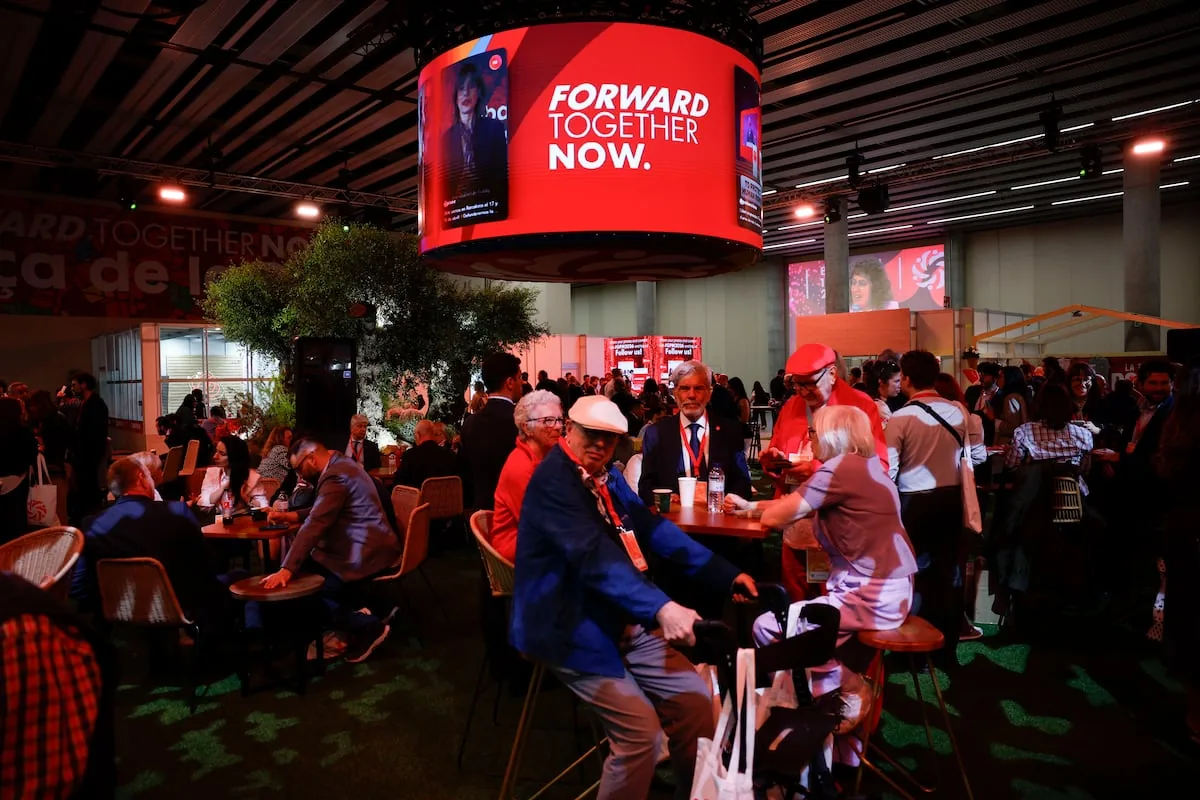
Correcting problems in these and other areas is crucial for progressive forces to become truly attractive again. Reflection on adapting to a new era is the subject of a major meeting organized in Barcelona, the Global Progressive Mobilization. Many ideas flow here, and, of course, each sensitivity has its preference. But there are arguments to consider that for progressive forces it is essential to be perceived again as credible agents of protection for the working classes, as demanding managers in the regulation and imposition on big companies and great fortunes.
It is crucial to develop a new political language that, without yielding to the temptation of polarization, manages to inspire emotion and that, without surrendering to the trivialization of language, succeeds in connecting with people and not only with those who have university degrees. It is necessary to articulate new ideas that maintain internationalism but recognize that interdependence has become a weapon in the hands of the most powerful, and this requires the development of safeguard measures; that defend multilateralism but accept that it is now largely unfeasible and thus minilateralisms must be explored; that promote pacifism, but not in the outdated version that consists of leaving an attacked party at the mercy of the aggressor, or just praying that a beast does not decide to attack. Furthermore, it is imperative that all this be done protecting institutions, whose deterioration is the defeat of any progressive project, avoiding heavy-handed colonization when in power and offering loyal collaboration to facilitate their functioning when in opposition. Victories achieved by widening abyssal fractures within societies may have the sweet taste of short-term relief and a very bitter aftertaste in the long term.
Read more Why do you start exercising and then quit? The answer may lie in your goals