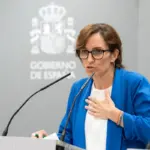





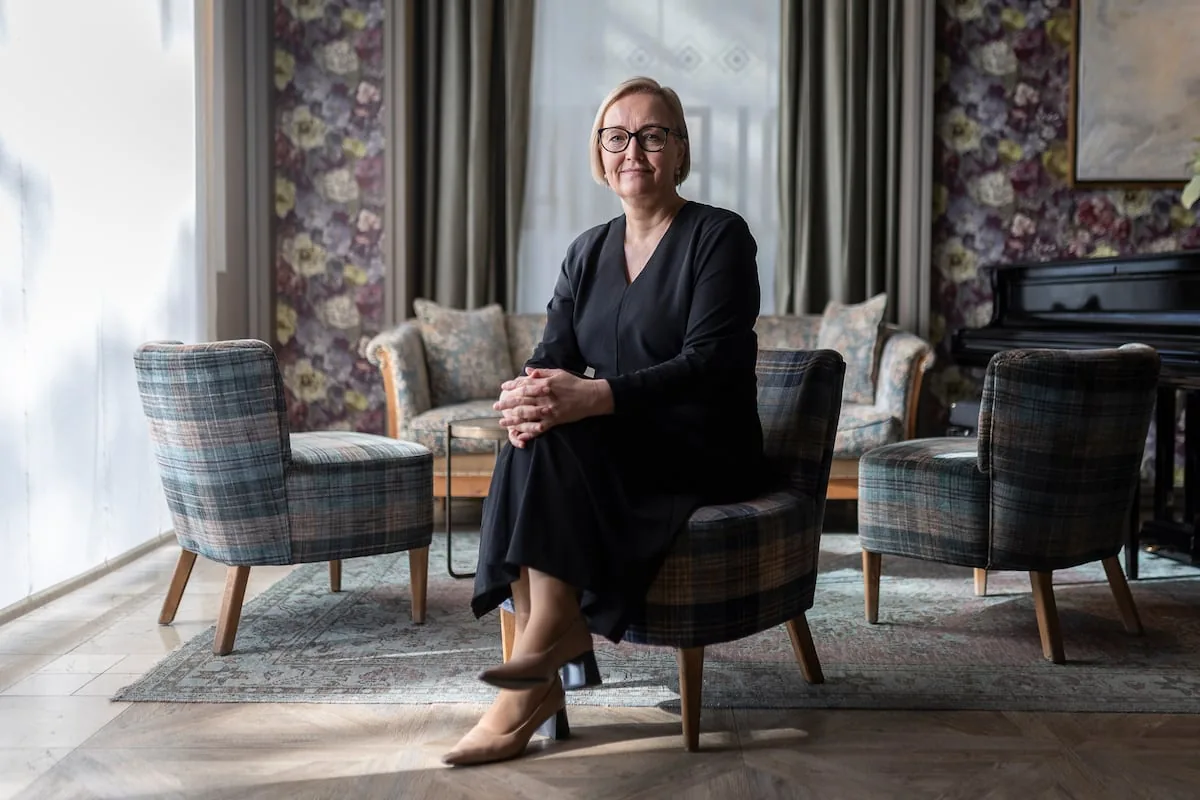
Aspire high and work hard. This is the premise that underpins Estonia’s education system and which, according to its Minister of Education, Kristina Kallas (Kiviõli, 50 years old), is one of the reasons it has succeeded in the PISA educational quality exams. It is the first European country and fourth in the world (after Singapore, Japan, and South Korea), despite a slight setback. The low diversity of students in classrooms, the great autonomy of schools and teachers ―which implies a minimally interventionist government―, a large staff, and well-prepared and respected teachers complete the kaleidoscope of its success. They also present a reality opposite to that of Spain. Kallas, who has been in office for three years, meets EL PAÍS in Barcelona before participating on April 10 in the European Pulse Forum 2026, where she presented the plan to safely deploy Artificial Intelligence in schools.
Read more How the Left Lost the Pulse (and How to Regain It)
Question. What defines Estonia’s innovative AI plan?
Answer. Two years ago, when AI was already on all phones, the ministry began debating its impact on education, as teachers were concerned because students were already using this technology for homework or exams. The main concern is the risk that AI use could cause a decline in students’ cognitive abilities, memory, comprehension, and knowledge. We know this risk exists, so we have to change the way we teach. In Estonia, we have integrated AI into learning processes, guided by teachers, but implementing more difficult challenges, exercises, and more complex cognitive processes. It’s like when calculators entered the classroom and mathematical processes became more ambitious. The same with AI: you can use it, but you will perform tasks that require much more complex thinking. We have developed a plan on AI learning concepts in schools with neuroscientists, as well as a tool in collaboration with Open AI. Teachers have already been trained under these criteria, and the new tools will be given to secondary school students, from 16 years old onwards.
Q. Is there an age limit to introduce AI?
A. No, we have focused on secondary education, but the idea is to extend this new tool to lower grades, although in one way or another they are already using AI.
Q. What control mechanisms have you imposed?
A. It has the risk of biases and hallucinations, and we can design AI so that this does not happen. But teachers and students must be aware of these risks and the real capabilities of AI. What it can and cannot do.
Q. Let’s talk about PISA. What is the secret to Estonia’s success in these tests?
A. There are several aspects. In PISA, students are asked if they believe intelligence is genetic or achieved through studying. 80% of Estonians believe that intelligence can be achieved through study. It is the highest percentage in the world. It is an important value: schools, parents, and society must believe that education gives you the possibility to become whatever you want. In Spain, 40% of students think being good at math is genetic; thinking you will never be good does not help. If you have high expectations of students, you will achieve good results. If you tell them it is not worth making an effort, they will do the minimum. You have to believe in students’ abilities and demand the maximum. That is why we do not separate students by performance levels; everyone goes to the same class.
Another element is that we have a very demanding curriculum; students have to study a lot and very complex concepts. We have the principle: aspire high and work hard. The negative consequence is that, compared to other countries, Estonian students show high levels of stress.
At seven years old, they do not have to know how to read or write; their brain is not ready
Q. At what age does school start?
A. At seven years old. The key is what happens in early childhood. We have public preschools, very cheap. They are not nurseries but schools with curricula, teachers, and pedagogues. But academic content is not taught there. At seven years old, they do not have to know how to read or write; they are taught self-regulation or socio-emotional skills. That is, being able to concentrate, follow instructions, communicate, ask and answer questions, but also recognize letters and numbers, know the day, or the route from home to school. They are prepared for learning because when they start, the level is demanding; they must learn to read and write quickly.
Another reason for starting school at seven is that it allows equalizing levels. In preschool, families of different origins and conditions arrive, and delaying entry to primary school allows everyone to reach the same level.
Q. Is your school inclusive?
A. Yes, even in preschool there are special pedagogues who monitor children’s development and alert if there is any disorder, and support is provided as needed. There are different levels of support, and in cases of great needs, the student will study in small groups of 4 or 5 students, or even with individual support. Schools organize this, distributing students according to the support they need. It requires many resources, but it is common practice in Estonia.
You have to believe in students’ abilities and demand the maximum
Q. How many days and hours do they have classes?
A. In Estonia, we have 175 school days, one of the shortest calendars, like in Spain. Regarding class hours, the first year is four daily, increasing over the years up to a maximum of seven hours. But schools have the freedom to organize their schedules and even implement online class days, especially in secondary education.
Q. Is that level of stress worth it?
A. There is always debate about whether there are too many exams and homework, but we have the argument that the brain does not develop if it is not under stress, and learning is a stressful exercise. The question is for how long. If it lasts too long and there are no breaks to relax, stress becomes negative. Another aspect debated in Estonia, and this is a pending issue, is extracurricular activities, such as sports or music, which keep students away from sitting in front of a screen at home.
Q. Do students have computers or books?
A. Both. But the ministry does not determine the learning tools; it is a decision of the teachers. Most use both, prioritizing books and handwriting.
Read more Real Madrid: the weight of the invisible
Q. So, are screens not limited?
A. No, it is school autonomy. Our education system is bottom-up, which means all pedagogical decisions related to students are made as close to them as possible, so the teacher makes the decision. The ministry does not interfere here, and I believe politicians should not interfere because we train teachers as experts in pedagogy; they are the professionals and those who know the students.
Q. Do you have subjects or work on projects?
A. Both. The ministry designs the curriculum and determines what should be learned at each stage, but how to do it is decided by each teacher; they choose the tools and pedagogical methods.
Q. Teachers with so much power must be well trained.
A. University training is very demanding. They have to study psychology, the subject they will later teach, communication, finance, project management, didactics… It is expected that they have knowledge in many areas because they are professionals and will be autonomous in their decisions.
Q. They must be very respected.
A. Yes. Incidents may occur, but what teachers teach and say is not questioned by families.
Q. Are they well paid?
A. Teachers have an average state salary of around 2,200 euros. There is always debate about whether they should earn more, but then you look at neighboring Finland, where teaching is the most prestigious and demanded profession, and they also earn an average salary. But it is not all about salary; working conditions and job opportunities are also important. If young people do not choose the profession, it is because it is a stressful job, because parents are demanding, because of fights with children, because their work is not recognized, or they cannot choose their schedule, but not because of the salary.
In a class with 25 students, you need two teachers
Q. What do you attribute Finland’s setback in PISA to?
A. Because the student profile is more diverse. In the last decade, many immigrants and refugees have arrived, which has made classrooms more diverse, and that is always a challenge. We also see this happening in Estonia, but we still have a low level of immigration and very homogeneous classrooms. Education systems are failing immigrant children. We are doing something wrong because we are not achieving education as a social elevator for them. If we look at PISA, these students have the lowest results, so we have to change things or we will see unrest in the next generation of immigrants.
Q. Estonia’s immigration rate is not that low either, 15%.
A. We have few immigrants, but a large population of Russian origin (25%) who do not speak Estonian. They are not immigrants, but they are still segregated and need the language to integrate. We are working hard because we fear a decline in PISA results.
Q. And how do you work with this diversity?
A. By giving more autonomy to teachers and schools. The more standardized and regulated the system is, the less it serves the student. If in a class you only have Spanish students, you can regulate homogeneously because they all come from the same culture and speak the same language. Then you can have a regulated curriculum or standardized methods. But for diversity, the teacher must have the freedom to diversify learning. And you need more teachers; you cannot have one for 25 students, you need at least two.
Q. Is there school segregation?
A. Yes, in public schools. We have Russian schools and Estonian schools. But we are fighting segregation and have instructed all Russian schools to adopt the Estonian language and curriculum. Also, many Russian children are moving to Estonian schools, and it is true that this is causing complaints from parents that there are too many Russians in their child’s class.
Q. Can the success of Asian countries be replicated?
A. They also have this mentality of “aspire high and work hard.” That is what makes them strong, but I will not judge whether it is too much or not. But there is a cultural difference; Asian society is very disciplined, but European society is more chaotic, and for teachers, teaching in a chaotic environment is difficult. You need students to be calm and focused, and that takes time.
Read more Choose a book for Sant Jordi