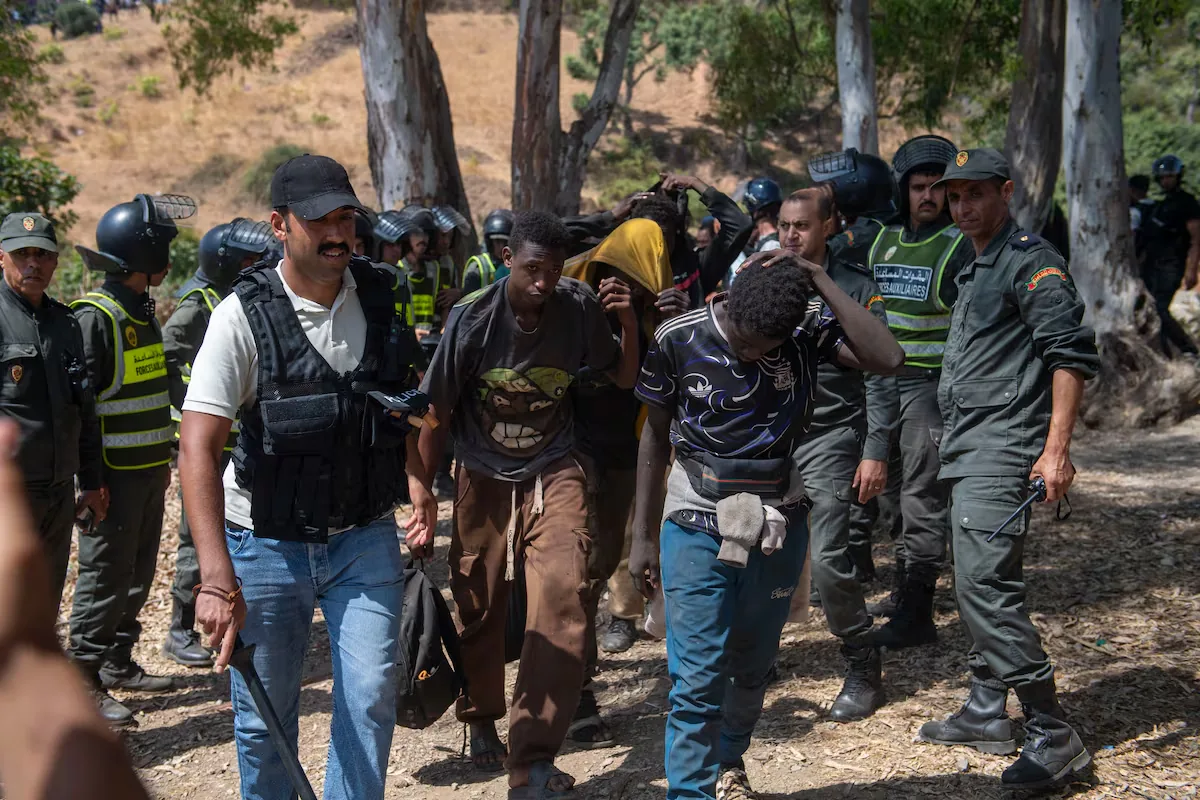
Morocco displayed the utmost political and security strength this Saturday as the ultimate guardian of the Ceuta border. In an unequivocal demonstration of who exercises total control over the last outpost of the European Union in Africa, the authorities in Rabat sealed the external border with an unprecedented police deployment to thwart the passage of hundreds of sub-Saharan migrants and some dozens of Maghrebis. They had been called from social networks to repeat the avalanche that on July 30 and 31 overwhelmed the territory of the Spanish autonomous city with up to 80,000 migrants in the face of the passivity of the Moroccan agents.
Read more At least 11 dead in the deadliest Israeli attack since the ceasefire in Lebanon
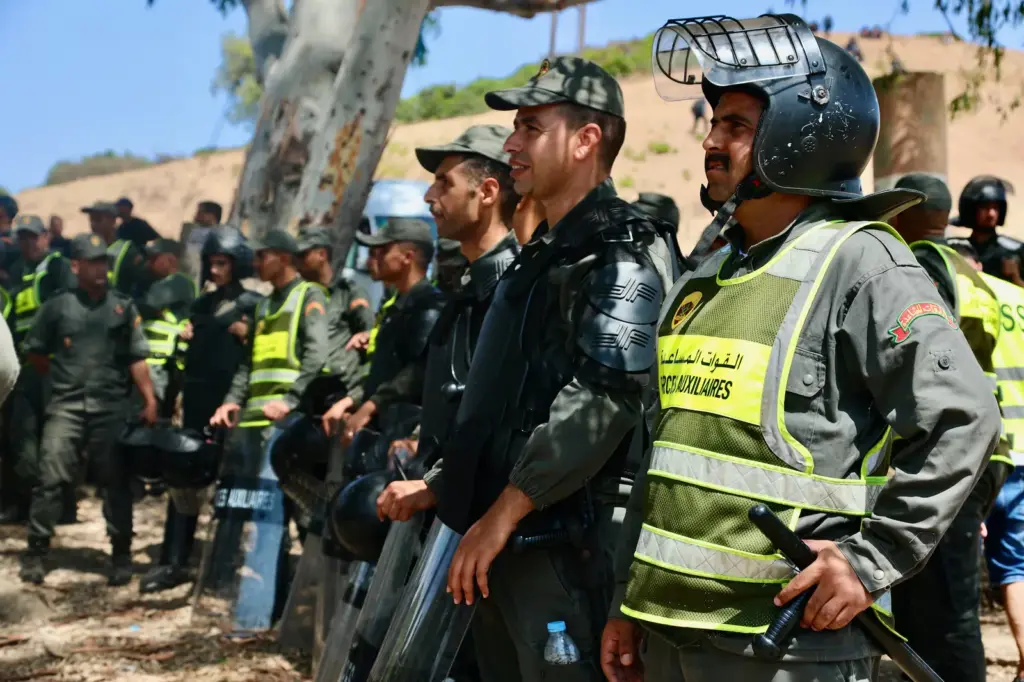
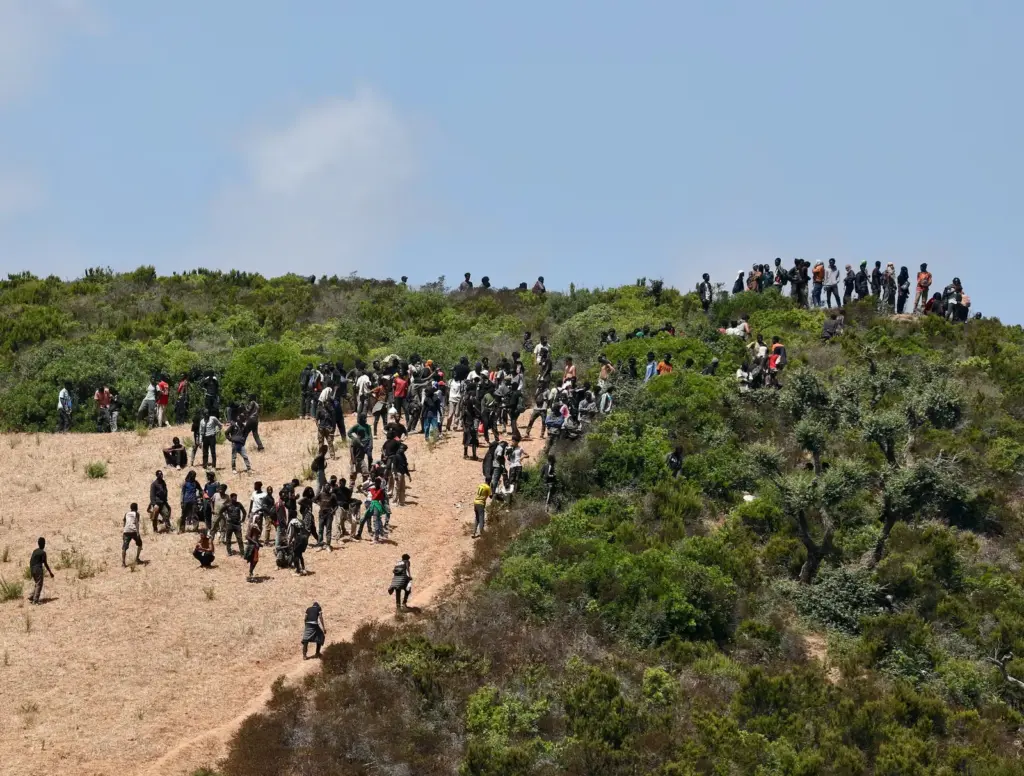
Like in a nineteenth-century battle, the security forces had deployed in large numbers, arranged in sectors like Roman legionaries at the foot of a ravine. On the heights of a hillside that separates the forests of the Ceuta border from the peripheral neighborhood of La Cerámica, at the edge of Castillejos closest to the autonomous city.
According to a statement from the prefecture of Tetouan, on which Castillejos depends, the number of irregular migrants detained in the city of Fnideq and its surroundings reached 294 by early Saturday afternoon, when the clashes on the outskirts of the border city ceased. Most of those detained are sub-Saharan migrants (248), although 46 Moroccan, Algerian, and Mauritanian citizens were also intercepted.
These figures are provisional, the statement specified without offering details on possible casualties. Most of those detained were forcibly transferred by buses chartered by the authorities to cities far from the south of the Maghreb country, such as Ouarzazate, more than 800 kilometers from Ceuta.
After maintaining a war of positions from dawn until early afternoon, riot units of the Auxiliary Forces (paramilitary) charged in formation to push back the lines of sub-Saharan and Maghrebi migrants with tear gas. They tried to set fire to the mountain to cover their retreat, but the harassment of a helicopter and several drones from the Gendarmerie scattered them three kilometers from the border fence, frightened by the barking of police dogs.
After the pitched battle in the Cerámica ravine, on the urban limit of Castillejos, the sub-Saharans who escaped the police siege of thousands of agents marched defeated towards the forests of Belyunes, a coastal city west of Ceuta. From the air, a Gendarmerie helicopter watched their steps, without the black Africans feeling pursued on the ground. In the shade of a tree in the rural neighborhood of Bnin Salah, three young men sheltered from the sun, visibly exhausted after clashes with the security forces.
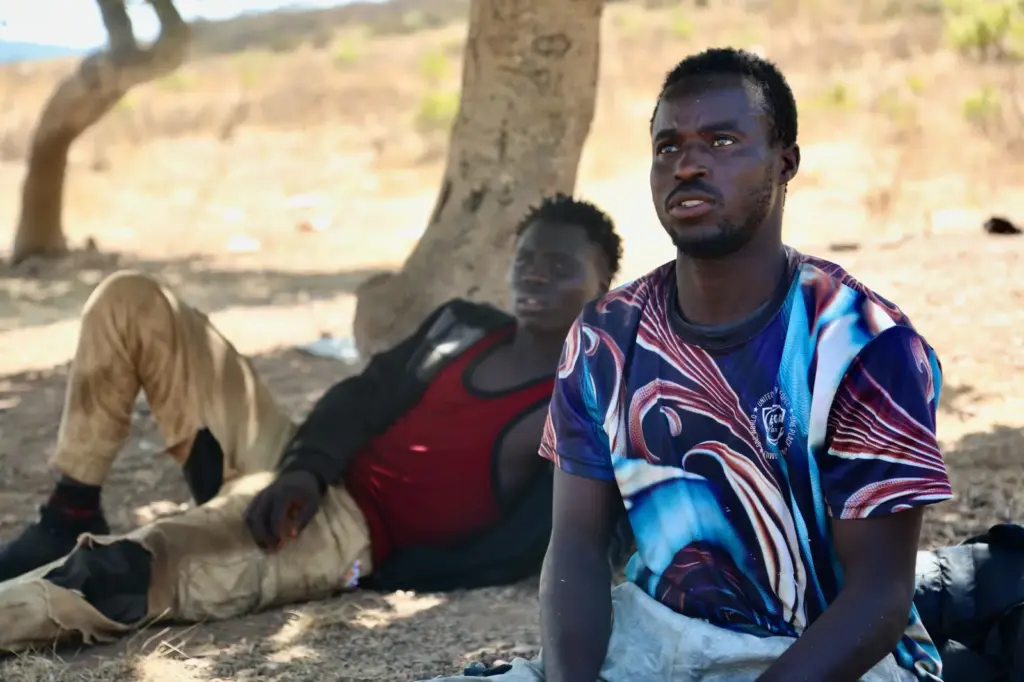
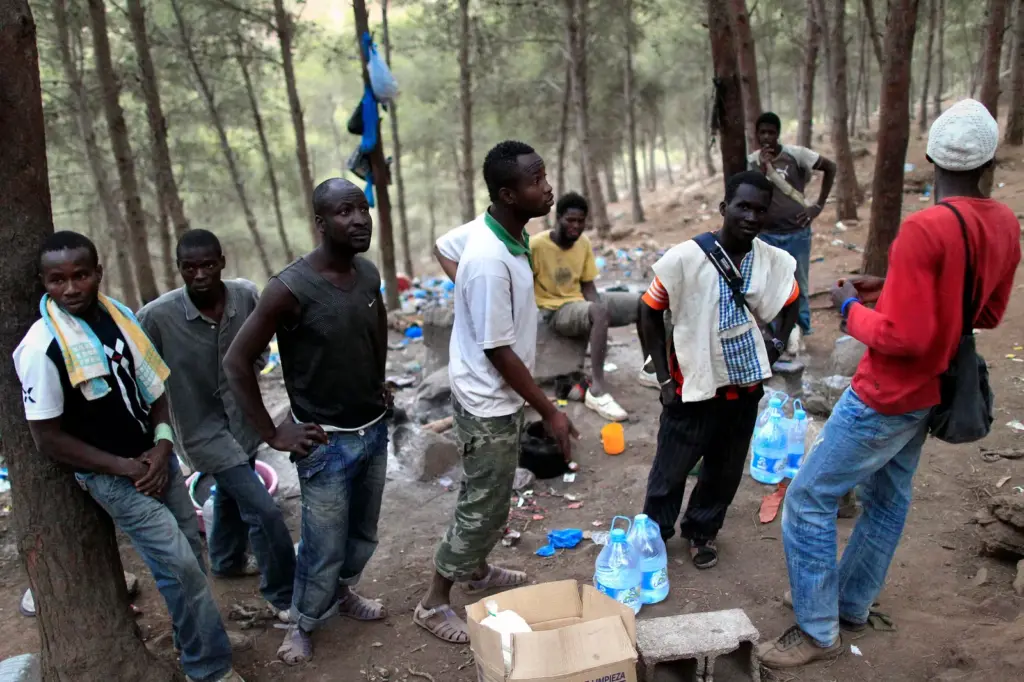
“My dream was to reach Ceuta, no matter what,” admitted Ali Kuné, 28, a bricklayer from northern Chad who two weeks ago became obsessed with images of the successful avalanche of tens of thousands of sub-Saharans. He left his wife and two young children in the Sahel and crossed Libya and Algeria in a few days until entering Morocco a few days ago. “In the forest camps, about 400 Africans have taken refuge,” he explained. “Our only hope is to reach Europe. Let us enter Ceuta!” he pleaded. Beside him, Nigerian Amadou al Mayar, 15, seemed infinitely exhausted after crashing against the Moroccan police barrier in Castillejos. Along the way, two masked sub-Saharan youths headed towards the border fence equipped with hooks to climb the Moroccan and Spanish barbed wire fences that divide the Global North and South. More composed, Moroccan Abdulah al Beij, 24, renounced his past in the city of Beni Melal, in the interior of the Maghreb country. Dressed in a djellaba that was once blue, he defied his own fate: “I have no future here. I’m leaving with my African brothers to try again to jump the Melilla fence. I have nothing to lose.”
Melilla also awaited this Saturday with concern a possible entry, which also did not occur. The city, with 86,780 inhabitants, woke up calm while the Civil Guard maintained its presence at several points along the nearly 12 kilometers of border perimeter, especially around the South Dock, through which on July 31 a large part of a contingent of more than 1,300 people managed to enter, a much smaller incursion than that recorded at the same time in Ceuta.
On the other side of the border, Morocco had prepared a much larger device. In Beni Enzar, next to the only passage from the Maghreb country to Melilla, several dozen soldiers and police occupied the side of the avenue leading to Spain: around 60 or 70 personnel, according to a visual estimate on the ground, many in camouflage uniforms. Under several jaimas (a kind of tent), about 50 cots remained where they had spent the night and, perfectly arranged on the ground, dozens of semicircular shields and helmets with protective mesh for riot control operations were piled up.
Morocco has once again demonstrated this Saturday that it has the capacity to firmly control both the land and maritime border with Spain, to the point of preventing any migrant from approaching El Tarajal. No one could approach the 500-meter floating barrier that Spain installed two days later to provide legal coverage for future hot returns of those who try to enter by sea, in application of the Supreme Court ruling. Nor the fences newly topped with spirals of barbed wire and steel blades on the Moroccan fence of Fnideq, (Castillejos, in the Spanish colonial denomination).
Distant witness of the pitched battle
The call on social networks in recent weeks to attempt a new massive jump to the autonomous city came to nothing on the Spanish side of the border. On this occasion, the security forces were distant witnesses of the battle fought in a field in Castillejos. In Ceuta, there were 880 national police and 714 civil guards this Saturday, as detailed last Thursday by the Minister of the Interior, Fernando Grande-Marlaska, who also had the support of 2,000 soldiers. In total, about 3,600 personnel, of which only a small part was at the border during the day.
Until July 30, the permanent surveillance of the fence in Ceuta rested on 60 personnel from the Reserve and Security Group (ARS) and six Civil Guard boats. It was this device that was quickly overwhelmed that day by the massive entry of migrants. This Saturday, in which calm was the constant, it would have been enough.
Read more Morocco thwarts the attempt of hundreds of sub-Saharan migrants to reach Ceuta
Police sources insist that what happened this Saturday confirms the reading they have long made about Morocco’s key role in preventing the avalanche recorded in Ceuta on July 30 from happening again. That day, Moroccan security forces refrained from stopping the passage of tens of thousands of irregular migrants — more than 80,000 according to the latest estimates — towards the autonomous city. “Now they have gone all out and none have arrived. This shows that Rabat, when it wants, closes the passage to irregular immigrants trying to reach the border,” emphasizes a senior police officer.
This change comes after more than two weeks of covert diplomatic skirmishes between the two countries, which have included new sovereignty claims over Ceuta and Melilla, threats to suspend the extradition agreement, or accusations of mistreatment of migrants, including minors, by State Security Forces by a public body.
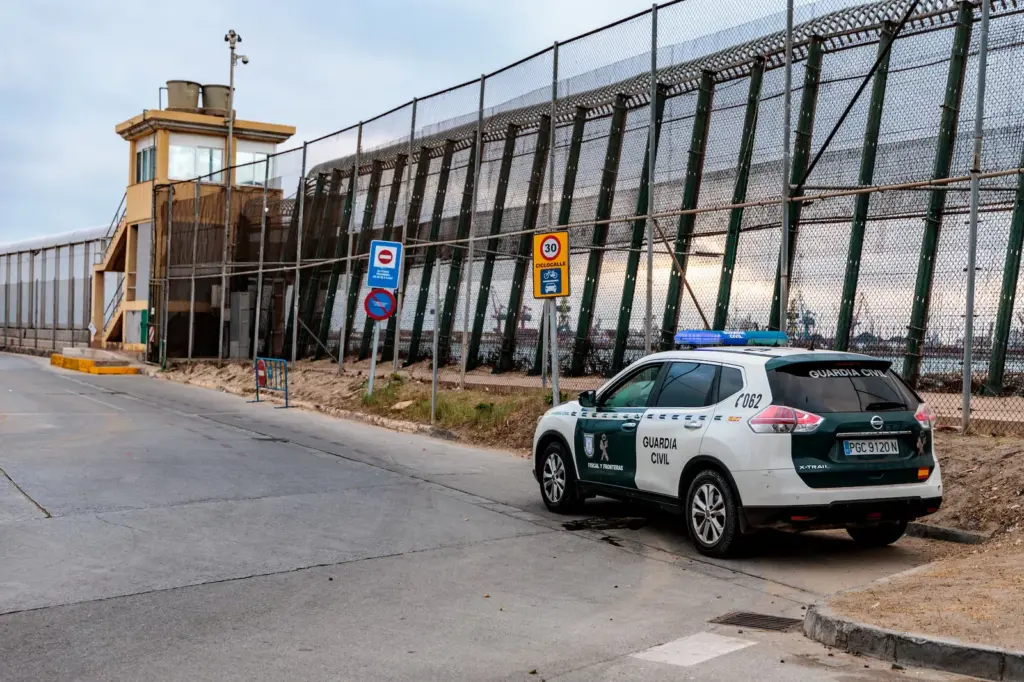
Opposite, except for the Minister of Defense, Margarita Robles, the PSOE ministers have worked to temper the relationship between both governments. Grande-Marlaska has made the greatest efforts in this regard, both discreetly with his Moroccan counterpart, Abdeluafi Laftit, and with his public statements. The Interior Minister has repeatedly refused to blame Morocco for what happened or to make any gesture that could upset its authorities. To this end, he has insisted again and again that cooperation with the Maghreb country is “extraordinary, exceptional.” On Thursday, he assured that this help — which from the Government partner, Sumar, and the opposition has been repeatedly questioned — is what allowed “more than 90%” of those who entered irregularly in Ceuta that day to return to Morocco within the next 24 hours.
However, police sources recall that, although the risk of massive entry on this August 15 has been overcome without problems, the crisis is not over. Grande-Marlaska himself acknowledged on Thursday that Ceuta will still take time to recover the normality prior to July 30. There remain the improvised camps, the more than 80 corpses waiting in the morgue (which add to the other 64 counted by Moroccan NGOs on their side of the border) and, above all, at least 5,000 irregulars — 9,000 according to the government of Juan José Vivas — who remain in the city more than two weeks later.
Minister Grande-Marlaska has sent a message trying to reassure the Ceuta population that “those in irregular status will be returned as soon as possible.” However, those expulsions will still take time. The reason: those who entered and still remain in the city can no longer be subject to hot returns because this is only possible in the moments immediately after access after having overcome the “containment elements.”
Therefore, the National Police has initiated an individualized process for each immigrant that includes their identification (many arrive without a passport) and the opening of a file with all legal guarantees to proceed with their expulsion. To this end, the Interior Ministry has sent 26 police experts to Ceuta to speed up the process. More complex is the possibility of returning the 1,898 unaccompanied minors who arrived and have already been registered. In these cases, reports from Morocco are required to determine their family circumstances and the need for a fiscal report endorsing the actions.
Rabat expels Efe and RTVE from Castillejos
In the heat of the migratory battle of Castillejos, much less bloody than the colonial operation fought by the Spanish general Juan Prim in 1860, Morocco has expelled journalists from the Efe agency and RTVE who were covering the information on the ground. A representative of the Moroccan Ministry of the Interior ordered reporters from both Spanish media to leave the border city. According to the Efe Agency itself, the expelled journalists were covering a charge by Moroccan riot police to disperse, “by using tear gas and batons,” hundreds of migrants, mostly sub-Saharan, who were trying to approach the border. The Spanish Government, which has defended freedom of the press “at all times and in all parts of the world,” has indicated that it is seeking a solution for the journalists.
Government sources have assured that the Spanish Embassy in Rabat is in permanent contact with the affected journalists and Moroccan authorities. RTVE reporters who had settled in Tetouan were expelled again by Moroccan authorities, who late last night ordered the correspondents to return to Rabat.
The Spanish agency reported around 3:50 p.m. this Saturday that, during coverage in Castillejos, the highest local representative of the Ministry of the Interior, Youssef Hajji, had told the Efe correspondent that he had to leave the town immediately. According to the newswire, the Moroccan official did not offer explanations about the reasons for the decision and limited himself to saying he was “following instructions.”
Hajji warned the correspondents that their professional accreditations and work equipment could be withdrawn if they did not leave Castillejos. The Spanish agency contacted the Moroccan Ministry of the Interior and the Director of Communication of the Ministry of Youth, Culture, and Communication, who said he was trying to clarify the situation.
The hotels where the journalists were staying informed them that they had received orders from local authorities to leave the establishments immediately. Faced with this measure adopted by Morocco, the Efe Agency and RTVE have defended the right to freedom of information in the exercise of journalism in their coverage in this country.
Read more The Spanish rhythmic gymnastics team wins a historic world gold 35 years later
With information from José Manuel Abad Liñán and Virginia Martínez.