









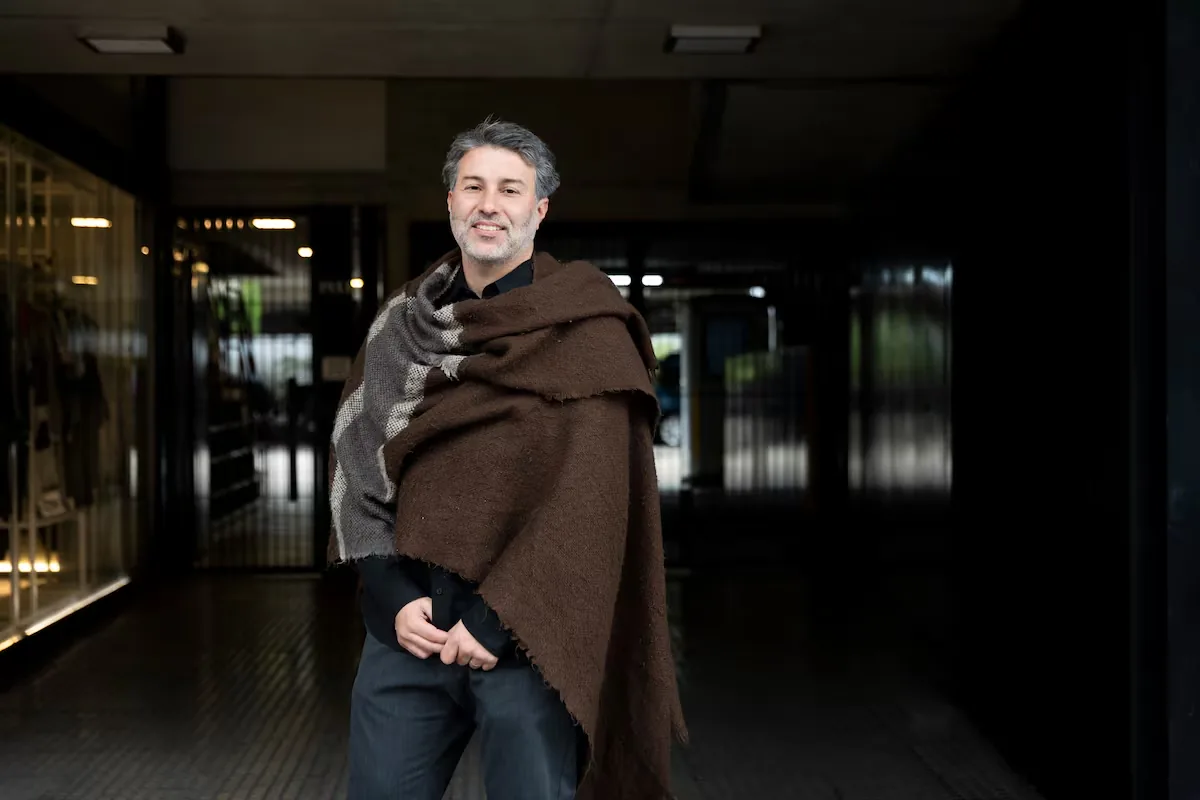
The cycles of history are broader than governments, asserts Argentine international analyst Bernabé Malacalza (Ensenada, 1979), researcher at the National Scientific and Technical Research Council (Conicet), university professor, and author of the book The Crusades of the 21st Century. With these words, he relativizes what President Javier Milei insists on calling the “blue wave,” referring to the right-wing and far-right governments leading much of the countries in America. “A wave implies something unstoppable, a constructed hegemony, and the reality is that these are fragile governments that arrived through very contested elections and with very precarious economic and social situations. If you look from the domestic politics perspective, it’s more of a little wave than a blue wave,” he challenges. But, although it may seem otherwise, Malacalza does not minimize the phenomenon; rather, he aggravates it, shifting the protagonism from political leaders to actors operating in the shadows who are not only more powerful but also more enduring than them.
Read more Bad news
—Donald Trump? A minor figure —he quips, sitting in a café in Palermo, Buenos Aires, where he has set up his office this afternoon—. Trump represents an oligarchy that comes to power, he is a magnate, and that is something we have already seen many times in the region. What is underlying are the technoplutocrats who control a significant part of the Pentagon, with CEOs of major tech companies in management or as colonels in Detachment 201. If before the powerful influenced political processes, today what they seek is the capture of the State and to shield their power with regulations like those Milei included in his RIGI [Regime of Incentives for Large Investments], which grants 30 years of stability to their investments and the possibility to litigate in international courts if anything changes. Peter Thiel, Sam Altman, Elon Musk are educated people, organic intellectuals who think about state power because they seek monopolies. They are not free-market advocates nor liberals in that sense.
Question. Even so, they are also pieces within an ecosystem.
Answer. This historical cycle is characterized by a tense transnational network where there is no single leader and four dimensions can be identified. The first is geopolitics. There the emblem is the White House and this idea of “this hemisphere is ours.” A medieval crusade logic, in the sense of a crusade against China and conspiracy theories around which all kinds of war tools are enabled. The second node is the military-security one, where Nayib Bukele may be the image, in which, under the excuse of attacking organized crime, the suspension of constitutional guarantees is enabled. The third is cultural, civilizational: the idea that Christian Occident (but not the modern one, which is characterized as woke, but the one prior to the Enlightenment) is superior to all civilizations and all these right-wing groups agree on that, although perhaps Jair Bolsonaro (and his wife, Michelle) is the image of that battle. The fourth is the technological-financial, which we spoke about earlier and where Milei’s figure stands out, generating a corpus of laws and decrees to grant access to data and shield this techno-libertarian machinery.
Q. Just as with the image of the crusades, in that network you also find a parallel between the present and the Middle Ages.
A. Yes, because these four nodes are not separate but intertwined. For example, Silicon Valley finances wars; Palantir is in the security surveillance system. It is a dense network similar to what we had in the crusades, with a cross-border network —because there were no nations in the Middle Ages—, a kind of Christian international that brought together the papacy, the Templars, and all the military, religious, political, technological, and financial or economic elites of that time.
Q. Do you think this framework would remain equally solid in a scenario where the “wave” is reversed and progressive governments return to power in the region?
A. I think progressivism has to understand that power has changed and seriously consider strategies to address the technomagnates, but also the funds that finance them and that, in turn, control the rating agencies that score countries and determine their possibilities to go into or out of debt. Actors who, as we said, also limit governments’ maneuvering capacity due to regulations that allow them to litigate in international courts. At this moment, all that kind of sovereignty surrender must be avoided in Congress, by any means necessary. And if progressivism comes to power, it must think of a strategy on how to stop them.
Q. How can they be stopped?
A. Globally. Regulations are needed for artificial intelligence, environmental regulations, regulations for rating agencies and investment funds. And to regulate them you need a global alliance.
Q. And ideologically aligned governments, but in the opposite sense to the current one.
A. You need a different scenario, but there are examples like the tobacco companies, which had great power and in 2003 the World Health Organization established, with country agreements, a series of regulations for health protection and forced them to warn about the risks, to admit that cigarettes posed a danger. There was education, there were campaigns, and there were international regulations that made them lose weight. Similarly, climate change today is an important issue because there was the 1992 Rio Summit and social organizations pushed the agenda to put it on the table. Transnational civil society and public opinion are needed.
Read more Earthquake in Colombia: How prepared was the country?
Q. Your stance risks being accused of being anti-artificial intelligence, anti-development.
A. Not at all, I use artificial intelligence, but I am aware that there is a danger. I put it this way: those sustaining this ecosystem are all men and they love war. If we don’t stop them, wars won’t stop, the destruction of the planet won’t stop. Politics has to establish a humanistic policy, put people at the center, and establish where, for example, automation is needed and where it is not. That is a political discussion.
A Balkanized region
Q. Returning to the supposed blue wave, it is not seen that Latin American governments, beyond ideological affinity, are interacting much among themselves. The feeling is of a radial link with the United States.
A. Or with China, yes. The communal ethos has been lost, if it ever seriously existed, and also common positions. On the other hand, economic interdependence is lower. What Brazil sells to the region, for example, today weighs less than Asia.
Q. But for Argentina, Brazil is still a central relationship and yet insults Lula and triggers a diplomatic crisis.
A. Milei insults Lula because he believes that this way he is consistent with his foreign policy of alignment with Trump, he thinks this type of message helps capture attention and mobilize emotions in electorates. He is not thinking about the relationship with Brazil because he does not believe that bilateral relationship serves any purpose. He is interested in Bolsonaro winning, although if the regional leadership that Milei believes he has in the “blue wave” wins, it would vanish, because Brazil will be geopolitically more important to the United States. It is an asymmetry that Lula himself makes clear when he answers his insults by saying “Who is that guy?”. The point is that Milei can intervene in electoral processes or insult opponents in the countries he visits and the cost is low because no government in the region is working for regional integration or to strengthen regional chains, whether productive or of any kind.
Q. Since no one thinks about that, anything goes.
A. However, there is a manifestly very harmful effect for everyone: the balkanization of the region, the fracture, the enmities fueled by the United States generate the feeling of a fragmented region. And that is precisely what it wants and what allows Trump to intervene in the region without even the care for forms that he had at other times. It is what allows the installation of neoprotectorates, the capture of a leader, or an open-air war that no one talks about, with 221 murders in attacks on alleged drug speedboats in the Caribbean and the Pacific.