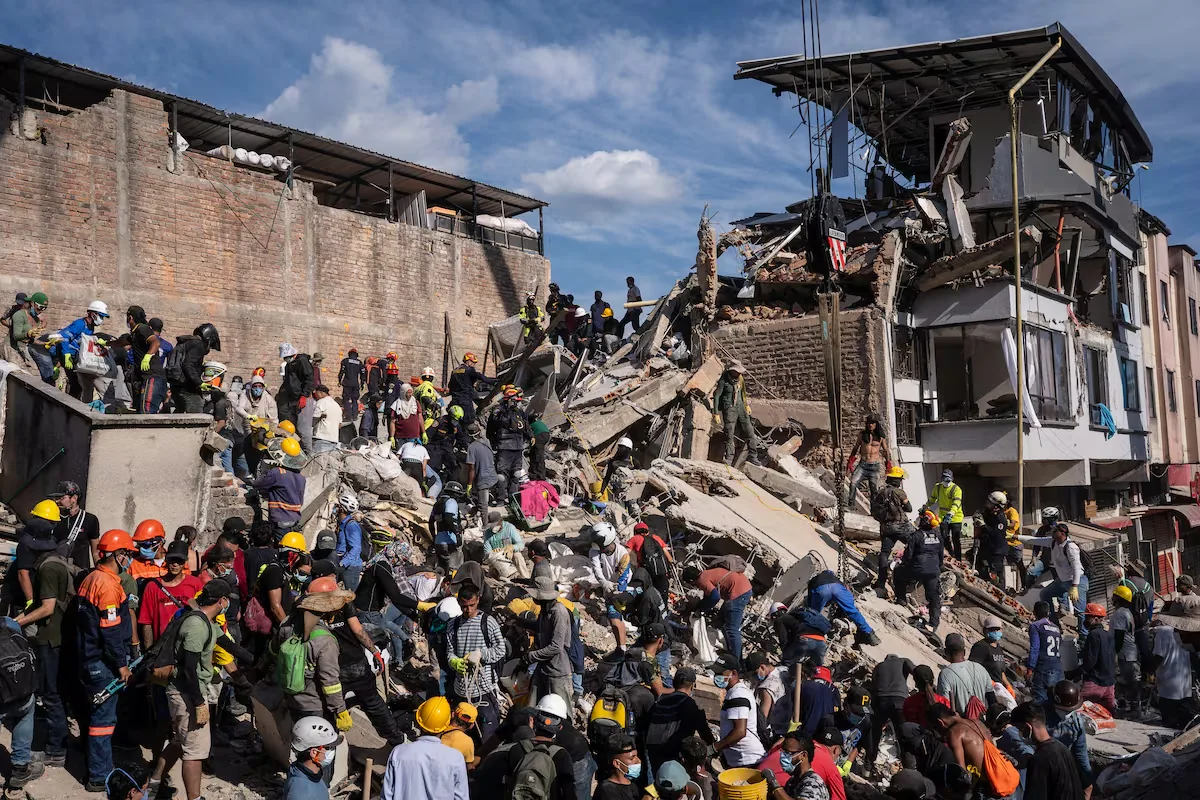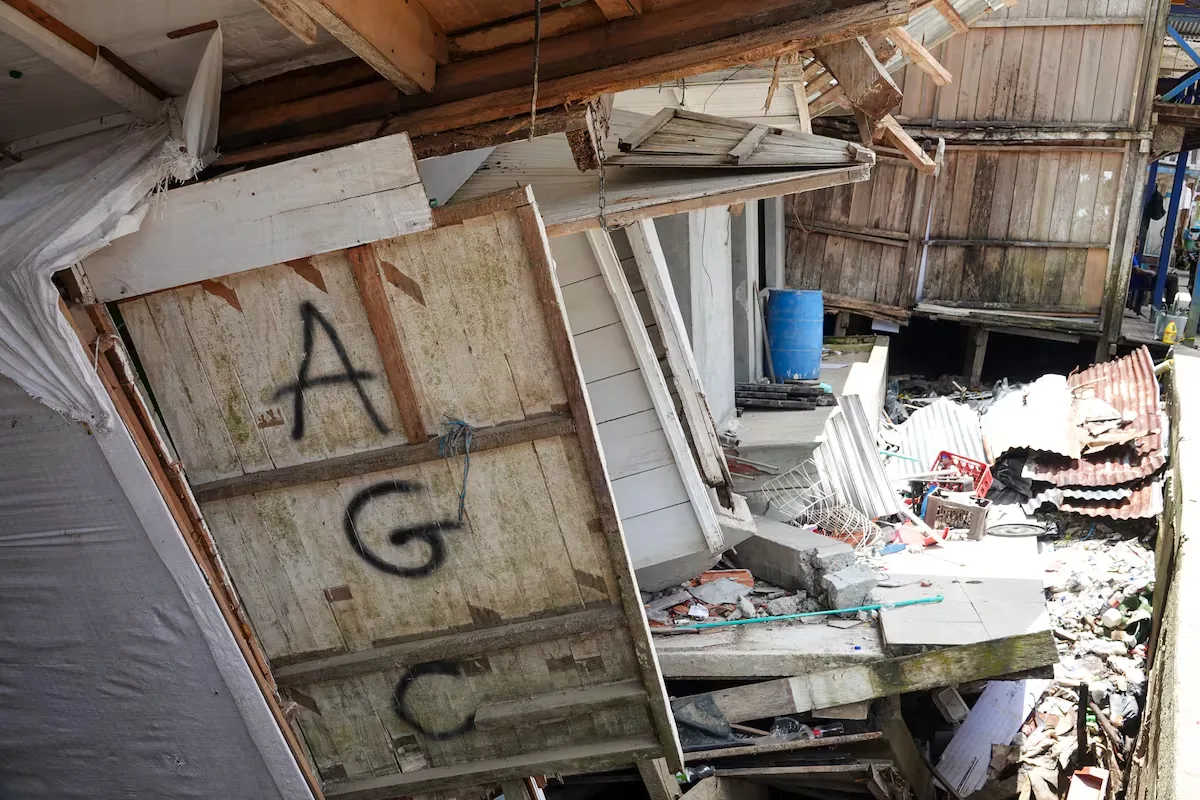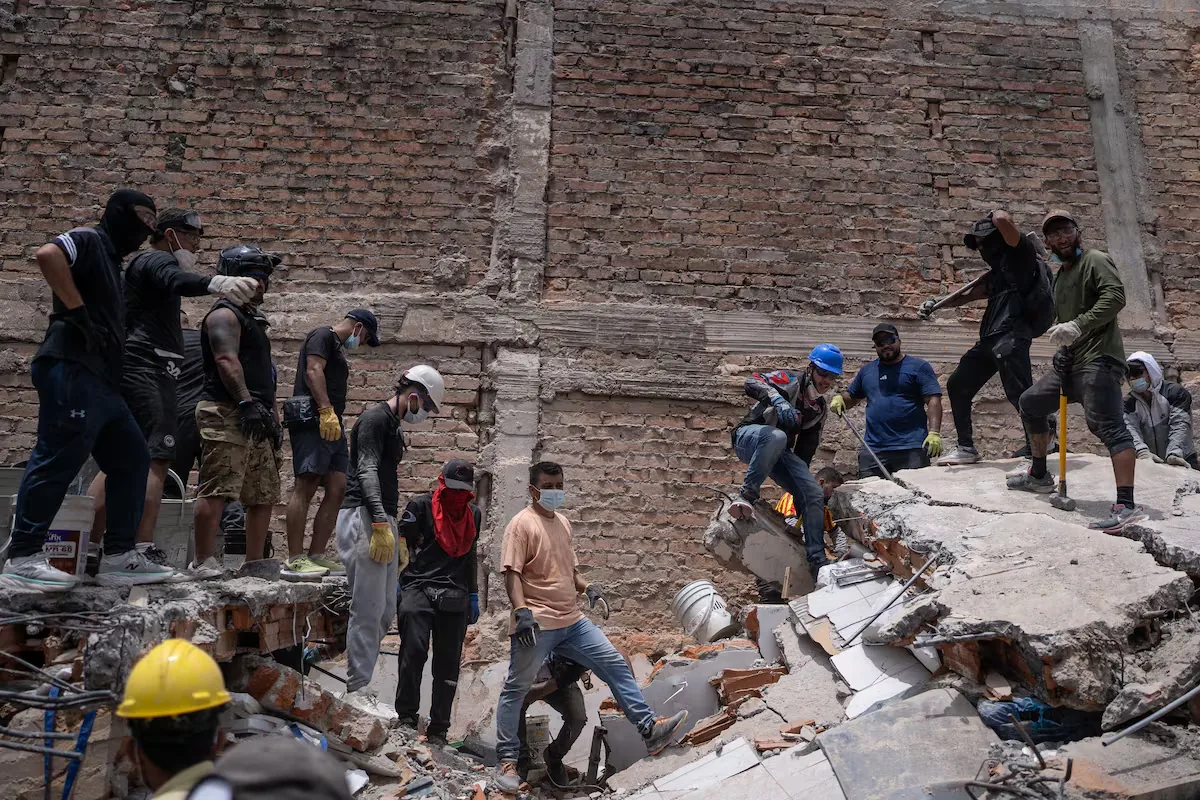
The magnitude 7.4 Mw earthquake that struck Colombia last Monday, August 10, had effects over a wide strip of the central and western parts of the country. With its epicenter in the department of Chocó and a depth of 110 kilometers, the earthquake caused known damage in about 450 municipalities, with 288 people dead, at least 12,500 homes affected, and damage to more than two hundred schools and health centers.
At 7:34 in the morning on Monday, when millions of people were starting their day, the earthquake shook large areas of the country for about two minutes. At least 172 buildings collapsed and many more will need to be evaluated to determine if they can be reoccupied, require repair or reinforcement, or will have to be demolished.
The disaster also coincided with a special political moment: it occurred just three days after Abelardo de la Espriella was sworn in as president of Colombia. The emergency found much of the outgoing Gustavo Petro government officials practically with their suitcases at the door and the new administration just settling in, a particularly sensitive transition in the National Unit for Disaster Risk Management (UNGRD), a central piece of national coordination when the country faces a catastrophe.
There is a striking recurrence in this. Although risk management never takes a central place in electoral campaigns, recent governments have had to face emergencies very early that end up putting the issue at the center of their agendas. In August 2010, Juan Manuel Santos’s first trip outside Bogotá as president was to La Mojana, then hit by severe floods, a prelude to a rainy season that would mark much of his first government. In 2018, just a week after taking office, Iván Duque toured Puerto Carreño and Inírida amid floods affecting more than 55,000 people in the Orinoquía. Gustavo Petro began his term in 2022 amid a prolonged La Niña season.
De la Espriella faced an even more abrupt test: a large magnitude earthquake when his government had barely completed its first hours. The coincidence made the earthquake a unique test. More than examining the capacity of a government just starting, it tested a public risk management policy built over decades and which is an asset of the Colombian state. Colombia has advanced on two fronts in recent decades: the progressive incorporation of risk management into practices and citizen culture, and the construction of an institutional architecture to understand and reduce risks and respond when they materialize.
That architecture today takes the form of a decentralized system, with risk management councils in departments and municipalities, responsibilities at different levels of government, and participation of sectoral entities, relief organizations, Public Force, and technical institutions. Its strength lies in a capacity distributed across the territory that is activated recurrently. The earthquake therefore found a new government, but not a state starting from scratch.
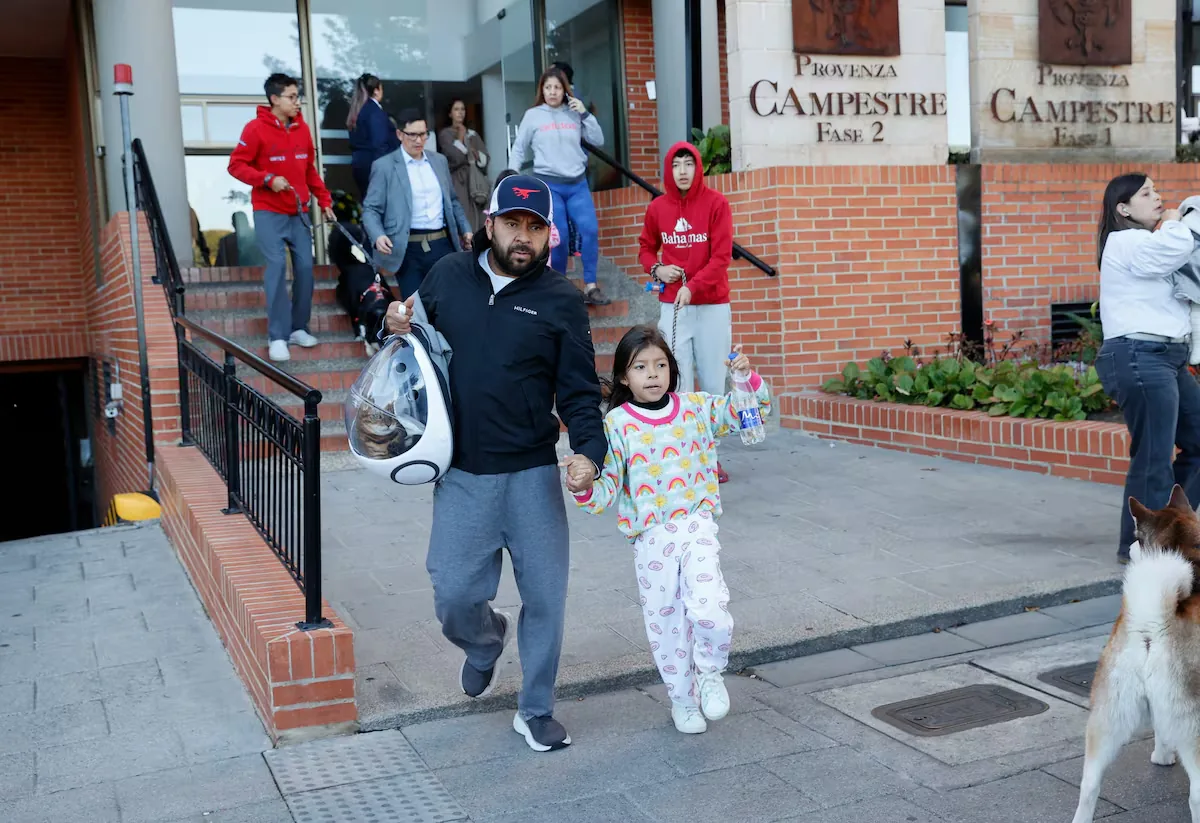
A first expression of that accumulated capacity could be seen in the behavior of the population. Since the 1990s, within the framework of the International Decade for Natural Disaster Reduction, Colombia began strengthening education and preparedness for risk, including in schools, and since 2011 has conducted national evacuation and emergency response drills. This sustained practice has made procedures such as evacuating a building after the movement, going to meeting points, or following emergency protocols familiar to part of the population.
The 288 deaths recorded so far, compared to 12,500 affected homes — 43.4 per death — raise a question that must be evaluated more rigorously: how much could that preparation have contributed to containing the number of victims. It is not yet possible to establish a causal relationship, but the rapid reaction observed in many places allows one to wonder if decades of risk education and preparedness exercises may also have contributed positively.

Civic solidarity was another capacity that was quickly activated. In the first hours, neighbors and communities participated in the search for trapped people and supported relief efforts, while in the rest of the country networks of volunteers, collection centers, and aid chains began to organize. Although there were also episodes of improvisation and disorganization, the scale of the mobilization was considerable: Barranquilla reported sending 180 tons of aid, in Pereira more than 120 tons had been gathered, and collection centers in Bogotá received another 40 tons in a single day. Added to this were campaigns by companies, universities, social organizations, and citizens in numerous cities.
This reaction reminds us that a country’s capacity in the face of a catastrophe is not limited to its institutions and relief organizations. It also depends on the capacity of its communities to organize, help each other, and support those affected while institutional response arrives. The earthquake showed that Colombia retains an important reserve of social solidarity; the challenge is to ensure that this spontaneous mobilization is articulated with the organized response, so that aid reaches those who need it most and does not become, due to lack of coordination, an additional logistical problem.
Read more The delicate global financial balance
However, solidarity and self-help have a limit. When people are trapped under collapsed structures, technical capacities, specialized teams, and logistics capable of mobilizing them quickly are needed. There began another test for the Colombian system: to use capacities among numerous institutions and territories in a national response operation.
The magnitude and dispersion of the earthquake mobilized significant operational and logistical capacities from firefighters, Civil Defense, Red Cross, Police, and Military Forces from the first hours, along with specialized urban search and rescue (USAR) teams, from different regions to the places with the greatest needs.
Colombia has considerable specialized capacity. The country has 23 urban search and rescue (USAR) teams, belonging to different institutions and distributed across various territories. At the international level, it has the national team in the medium-range category, COL-01, of INSARAG, which is the United Nations system that establishes international standards for search and rescue operations in collapsed structures. Colombia, Chile, and Ecuador are currently the Latin American countries with teams with this elite classification, prepared to carry out complex operations of locating, accessing, and rescuing trapped people.
That capacity was quickly put into motion: three days after the earthquake, only in Cali and Pereira 331 people had been rescued alive, while teams from other cities reinforced local operations. Bogotá firefighters deployed 60 personnel to Cali and teams from Tunja arrived in Pereira, where, still two days after the earthquake, rescues were achieved.
But search and rescue were only part of the challenge. As the emergency progressed, pressure increased on other essential capacities, especially health services. And there appeared an additional difficulty: the earthquake not only multiplied the demand for care but also struck part of the infrastructure needed to provide it. A total of 216 health centers were affected and several had to go out of service, reducing care capacity precisely when it was most needed.
Cali showed this problem particularly clearly. An analysis conducted after the earthquake by Willian Andrés Burbano and Andrés Velásquez, from the OSSO Corporation, revisited previous studies on the city’s seismic threat and pointed out that much of the high-complexity hospitals and clinics are concentrated in communes 19 and 10, around the Cañaveralejo basin, an area where seismic wave amplification effects have historically occurred. The concentration of health services in that sector generates a “high operational vulnerability”: damage or saturation of hospitals and access roads can compromise the care capacity of the entire city. The earthquake thus returned to an old warning: knowing the risk is not enough. That knowledge must translate into decisions to locate, reinforce, and protect hospitals and other essential infrastructure as a priority. When risks known for years are not corrected, their consequences during a catastrophe can end up being measured in lives.
But having capacities does not mean having unlimited capacities. The real test for Colombia was not to check if it had rescuers, ambulances, hospitals, aircraft, or logistical capacity, but how many resources it could mobilize simultaneously, how quickly, to how many places, and for how long. The earthquake thus leaves a complex answer to the question of whether the country was prepared. Colombia arrived at the catastrophe with capacities built over decades, territorial institutions, relief organizations, Public Force, and a population experienced in preparedness exercises. That allowed a response from the first hours. But the extent of the disaster also exposed the system’s limits: overwhelmed local capacities, national resources distributed among numerous fronts, and essential infrastructure affected precisely when it was most needed.
The experience also leaves an institutional lesson. A prepared country needs strong and recognized institutions, clear responsibilities among different levels of government, protocols that have been practiced, and operational capacities that can be mobilized and sustained during a prolonged emergency. But preparedness cannot be measured only by the number of rescuers, ambulances, hospitals, or planes available. It also requires protecting the indispensable infrastructure to respond and, above all, turning the accumulated knowledge about risks into decisions that reduce vulnerabilities before the disaster occurs.
The earthquake arrived when a government was just beginning, but the response could not start with it. That is precisely the raison d’être of a state policy: to accumulate institutions, knowledge, and capacities capable of being maintained through political changes. Colombia showed this week that it has built an important part of them, with strengths and also with limits. The most difficult debt remains before the emergency: to turn what the country already knows about its risks into decisions capable of reducing them before the next disaster arrives.