






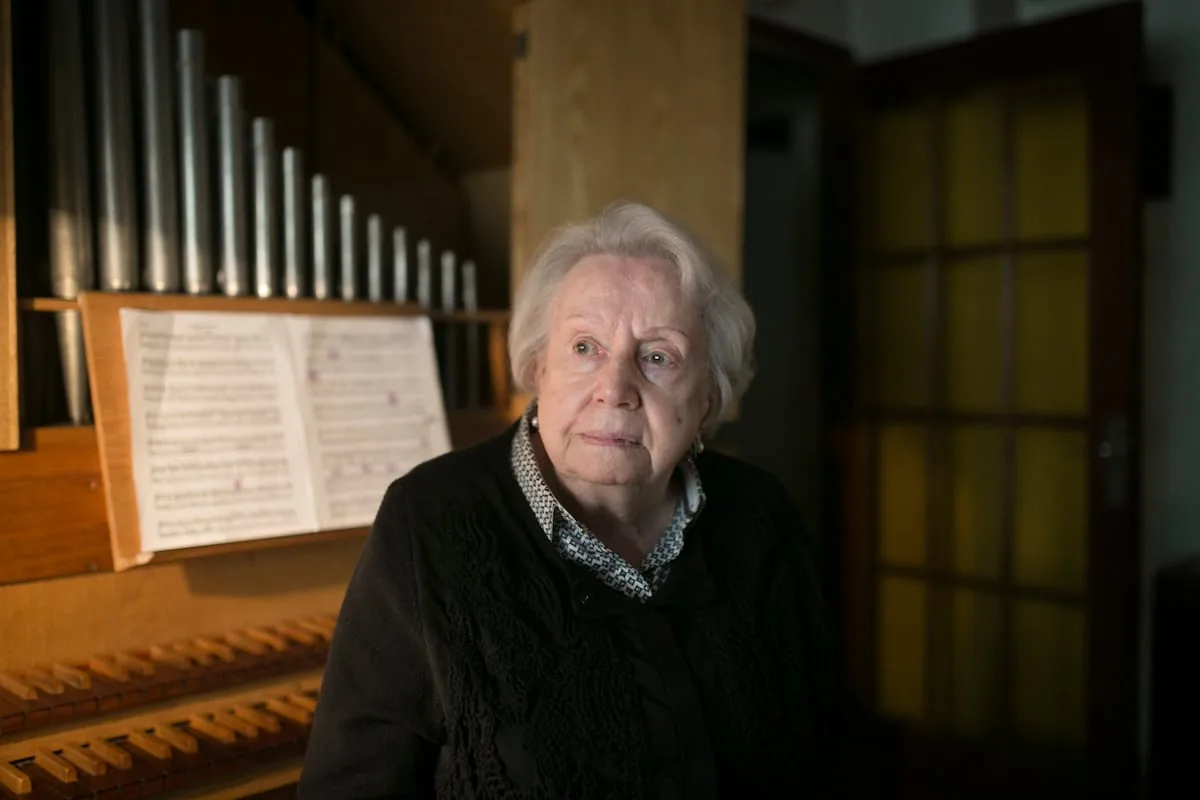
Montserrat Torrent (Barcelona, 100 years old) is known as the lady of the organ, but her unparalleled mastery deserves another distinction. She was born on April 17, 1926, four days before Elizabeth II of England, which means she has been reigning on the pedalboard of temples for more than seven decades. The equivalent of 1,700 concerts, with moments of ecstasy and torment. “One day my life changed,” the organist tells a recorder, as her deafness prevents her from answering calls. “I heard a Bach chorale and was struck like being thrown off a horse by such overwhelming music.” She was then 12 years old and lived “among kids and rabbits” in Santa Coloma de Farners. “My family stayed in Barcelona until a bomb fell so close that I felt the blast on my face,” she recalls.
Read more Spain steps on the accelerator of solidarity in the face of a world that puts the brakes on it
Her mother, who had been a student of Granados, gave her her first piano lessons. “She put a five-cent coin on my knuckles and gave me a reward if I finished the piece without dropping it.” Her promising career as a pianist was cut short by the war, but fate had a surprise reserved for her in the out-of-tune, “almost twelve-tone,” organ of the parish of Sant Esteve, which she tried during her brief rural exile. “I immediately knew that was my place.” A scholarship from the French Institute allowed her to study with Noëlie Pierront in Paris. “It was no longer just the music that moved me, but also the way the instrument made it grow.” Upon her return to Spain, many historic organs had been burned or destroyed. “I decided that would be my great battle: to bring them back.”
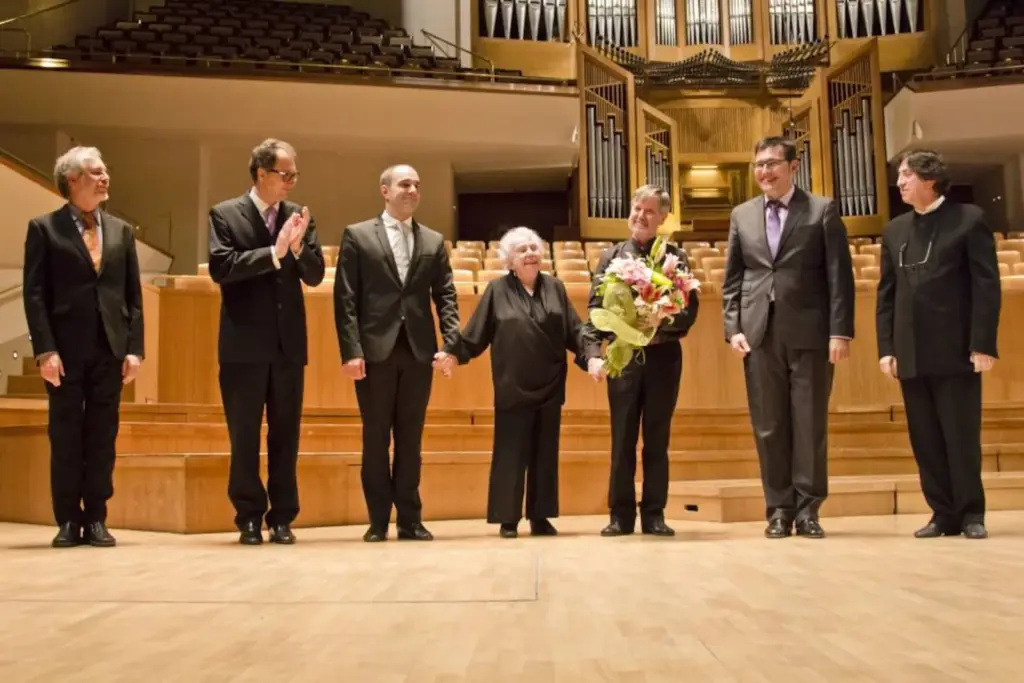
At the end of the sixties, Torrent set out to recover the Baroque-inspired organ of Sant Felip Neri, in the Gothic Quarter, a five-minute walk from her home. She called dozens of offices, struggled with the indifference of politicians, and even dedicated a good part of the National Music Prize she was awarded in 2021 to the cause. “Until very recently I considered it the great unfinished work of my life,” she assures. “Today the lowest pipes are finally in place, those that seemed impossible to locate due to lack of budget,” she celebrates. “Their voices are round, full, none piercing…” The instrument, which bears her name, will be inaugurated by herself on May 18 as part of the very full schedule of tributes for her centenary. “It is the best birthday gift I could have dreamed of.”
She says this and corrects herself: “Actually, I think it’s too many things,” she admits. “I would have preferred my anniversary to go somewhat unnoticed…” She refers to the exhibition at the Museu Diocesà de Barcelona that kicked off the Torrent Year in March (followed by another at the Museum of Music) and the fifty or so concerts she will headline throughout Spain, such as the morning marathon she will offer with twenty of her disciples at the Palau de la Música Catalana (this Saturday), a recital at the National Auditorium of Madrid (April 25), and the premiere of a work by Carles Prat at the Palau Güell (December 10). “I thank God, and the organizers, for so much attention,” she emphasizes. “But I wouldn’t want people to think: this woman again, as if she were the first to turn 100!”.
Read more Rodalies does not detect landslides or fallen trees on the train tracks
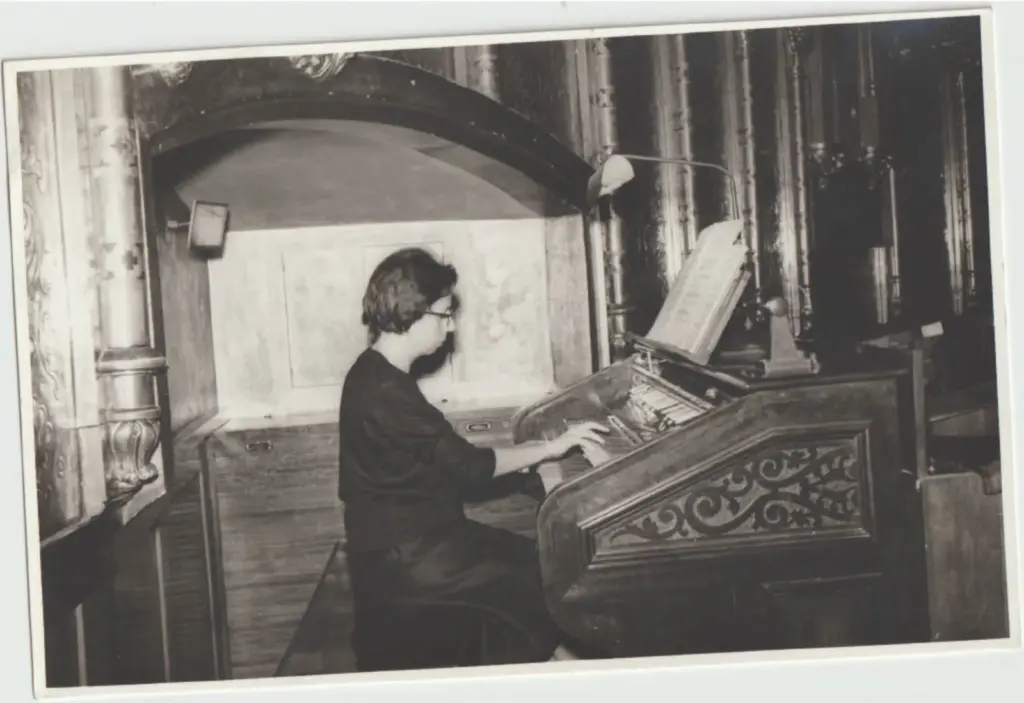
These days Torrent has continued getting up at five in the morning to study, in front of the small organ in her living room, the works of Bach and Francisco Correa de Arauxo that make up the tour program. “My neighbors don’t complain because I play quietly.” She began to lose hearing in 1980, after the very loud tutti at the reopening of the organ of the National Palace of Montjuïc. “The volume took its toll and the medications prescribed for a kidney infection didn’t help either.” Earlier, during a rough landing in Stockholm, she suffered a perforated eardrum. “I never considered stopping playing, as I had internalized the works so much that I ended up developing a horizontal, rhythmic listening technique, note by note. If I make a mistake I realize it instantly: I have everything recorded in my head.”
In the pages of The Lady of the Organ, the memoirs written by Albert Torrens, some of the many humiliations she had to endure for venturing into an almost exclusively male territory are recounted: insults, incendiary letters, and rosary prayers that interrupted her rehearsals. “I bear no grudge against anyone and I would like to be remembered for what I was: a performer who always respected the composers, who did not add a single embellishment where they did not ask for it, and who returned Iberian music to the world as it was conceived.” And one last note: “At my funeral I don’t want the organ to be played. Let me be farewelled with Gregorian chant,” she writes in a voice thread. “After that, the first thing I will do when I arrive in paradise is kneel before Johann Sebastian Bach.”
Read more 091 transcend that 20th century they declared dead