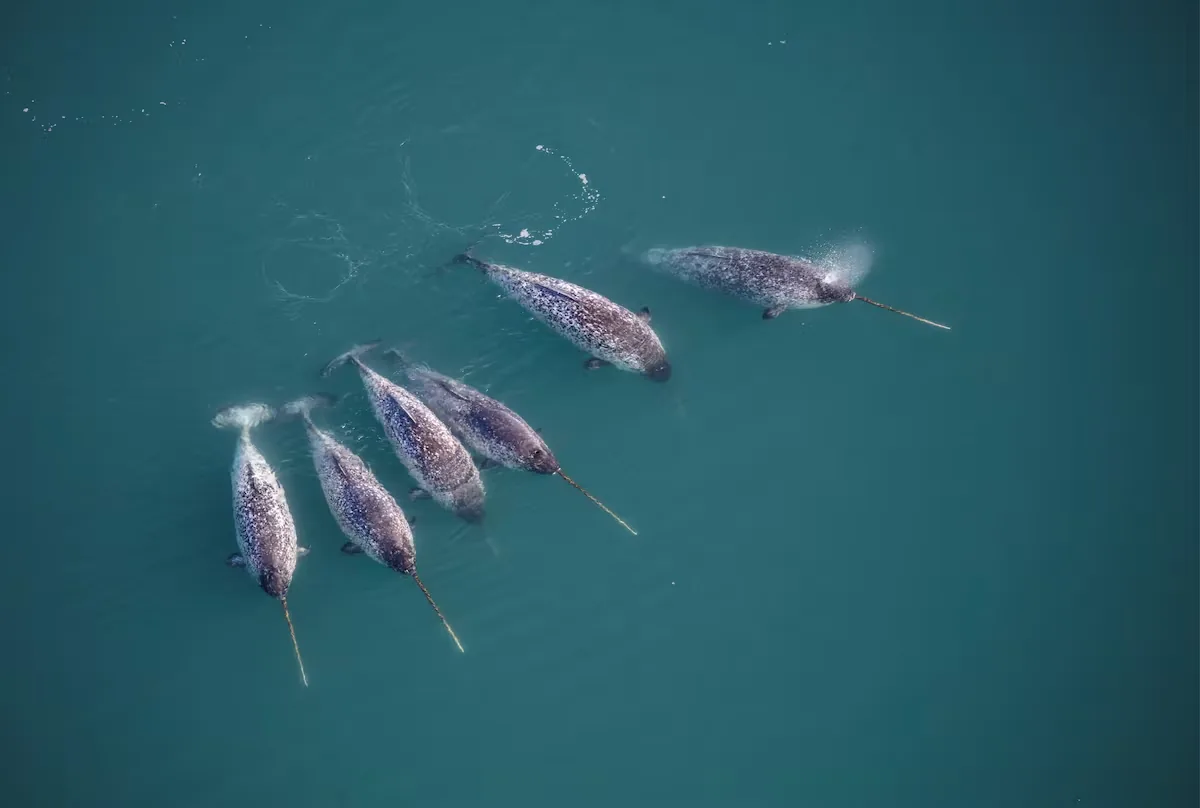
For centuries, unicorn horns plagued the exotic collections and cabinets of curiosities of the Renaissance nobility and bourgeoisie. By crushing these strange pieces, they also believed they could obtain a powder to combat poisonings. At the beginning of our era, Pliny the Elder described in his famous Natural History the monoceros, a being with the body of a horse and a horn on its forehead. And its existence was not questioned until the 17th century, when the skull of a marine animal with a huge helical “horn” was described. The effects (whatever they were) of the traditional “unicorn powder” and this one turned out to be the same, which raised suspicions. We have long known that it is the narwhal, an elusive cetacean related to belugas, but science is still fascinated when one of these giant tusks falls into its hands.
Read more Mathilde Favier, the woman with the best agenda in Paris, dies in a traffic accident
Instead of mortars to extract its magical properties, scientists now use sophisticated imaging techniques to look inside the tooth of Monodon monoceros. They investigate its molecular qualities with a more prosaic purpose: to understand the formation of such an unlikely protuberance. “When colleagues from the Greenland Institute of Natural Sciences offered us narwhal pieces, we did not consider rejecting the opportunity to study it,” says Adrián Rodríguez-Palomo. This materials engineer from Getafe passed through Sweden, Denmark, and France, from where he speaks to EL PAÍS, collaborating with a multidisciplinary team that today reveals in Nature Communications the microscopic structure that gives the straight and spiral shape to this unique tusk in the animal world.
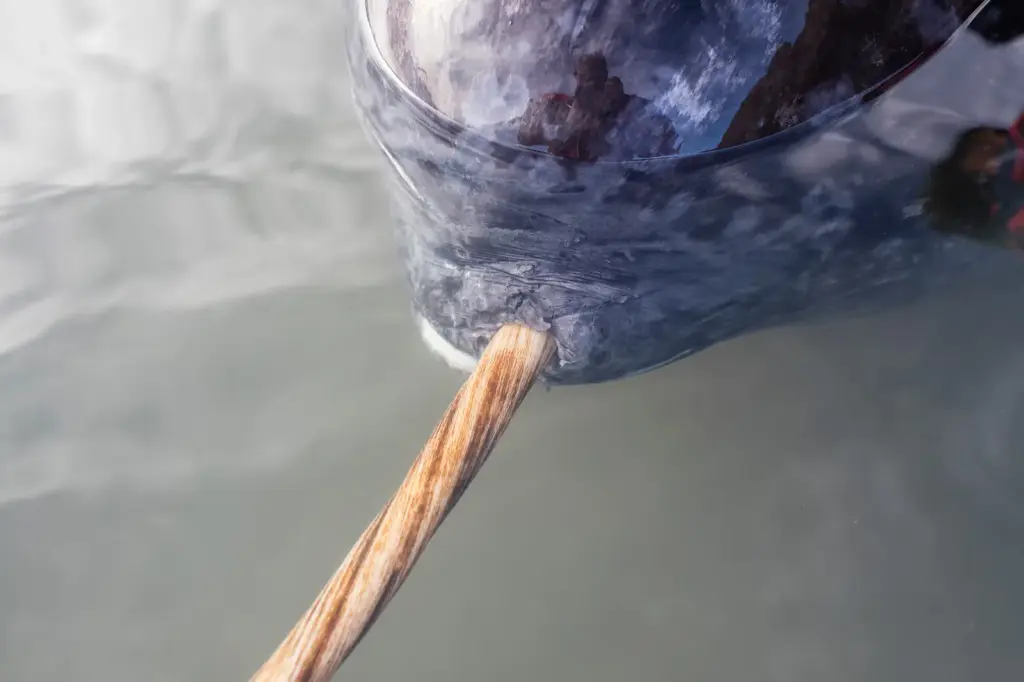
“The narwhal is, as far as we know, the only animal with tusks that has only one, the left one, which grows straight and always twists to the left,” explains the first author of the article. Thanks to the pioneering combination of multiple 2D and 3D imaging techniques, they mapped from the nanoscale to the macroscopic the structure of this piece that reaches two or three meters, is only present in males, and in very rare cases has a right pair, which also twists to the left when it exists, breaking the symmetry that reigns in bilateral beings, like us.
They launched into the project without knowing what they would find, but with a clear question: why does the narwhal’s tusk twist to the left, how are its components arranged at the microscopic scale, crystallized collagen nanoparticles with calcium phosphate, to give rise to the spiral visible to the naked eye. But, at first, they did not believe what they found. “When we combined the four initial experiments, the first thing we thought was that we had made some mistake,” recounts Rodríguez-Palomo about the main finding: while the dental cement layer grew in a spiral to the left, the adjacent dentin layer, more internal and much thicker, showed the twist to the right.
Incredulity forced them to reanalyze all the data and delay the project. “In terms of data volume, we had about 40 or 50 terabytes of information and it took us several months to reprocess everything to make sure we were not wrong this time,” the researcher continues explaining. But the double helix of opposite directions appeared again. “Then, we had a panic meeting Marianne, Henrik, another colleague, and I,” he recalls. They needed as many eyes as possible to dispel all doubt about their discovery. “We had to believe it because everything was correct, but we would never have imagined it,” admits the researcher.
The necessary spiral growth
Henrik Birkedal is one of the main authors of the study and highlights how important it has been to have Adrián on the project, in which chemists, materials experts, and imaging technique specialists have worked hand in hand. Biologists have also participated, experts in these marine animals, 4 to 5 meters in wingspan not counting the tusk, which inhabit the Arctic and North Atlantic oceans. “It took time to form such a group, but it is what has allowed us to merge a classic question of organic chemistry, why some molecules twist to the left and others to the right, with what interests us in my group, ‘strange’ biological materials,” explains the chemist from Aarhus University (Denmark).
This team has drawn an important conclusion: “We must not underestimate the power of small changes that repeat many, many times,” explains Birkedal. With their methods, they have seen how it is possible that a structure that grows in a spiral results in an absolutely straight piece, showing how nature, in its unstoppable evolution, solves almost all the problems it encounters. During the constant growth of the root of a tooth in the jaw, it is very difficult for all cells to deposit tissue exactly at the same time and in the same proportion, so one solution is to make it twist. “We apply that principle in projectile shooting, like bullets, but we also see it in plants that have to grow straight,” notes Birkedal.
Such a large protuberance, which grows throughout the life of the male narwhal, has to do so this straight to not be a burden in the water. “Moving with something that is half the length of your body can be a problem, imagine swimming with an arm always extended to one side,” points out Rodríguez-Palomo. And the double helix of opposite twists solves another challenge of water resistance. “It is a structure subjected all the time to bending and it would crack if the direction of its fibers were straight, like when we break a handful of uncooked spaghetti,” explains the materials engineer. That is why, he continues, it is also no good for all its components to twist in the same direction. “That is also how we build windmills or pole vault poles, with layers in different directions so they bend without breaking,” he concludes.
Growth rings, like trees
But that is not all they have seen through this unique combination of multiple advanced imaging tools. Analyzing both the 2D “slices” of the tusk, obtained by tensor tomography, and the 3D arrangement of its components thanks to various X-ray techniques at large particle accelerator synchrotrons—DanMAX (Sweden) and the European (France), they show that the narwhal’s tusk presents growth rings like those of trees.
This had been seen before, but they are verifying that the mineral properties change in each layer. “This must mean that its formation process depends on the time of year and could be explained by the seasonal migrations of narwhals,” reveals Birkedal. They are still studying it, but they believe it may be related to changes in diet patterns, combined with variations in the growth rate of the tusk at different times of the year.
Nature arrived earlier at ingenious solutions
It is the first time that such a large natural structure following this growth pattern that gives it so much resistance has been observed, like a plywood at the nanometric or micrometric scale, which is present in other tissues, such as our bones or in the cellulose that makes up wood. We humans have been using this same strategy for only a few decades. “We thought this brilliant idea was ours because we had not seen that nature was already doing it long before us,” comments Rodríguez-Palomo.
And Birkedal also gives all credit to the life that preceded us, fascinated to have verified how biological tissues “organize their components into specific structures that give them highly optimized properties.” The chemist hopes that their work will advance the design of structures and 3D prints that combine material properties as efficiently as those that give resistance to the narwhal’s tusk.
“There is much interest in trying to artificially reproduce natural structures that are useful to us,” explains Rodríguez-Palomo, who has been interested for years in what is known as “bioinspired” materials. The researcher is quite convinced that in the future it will be possible to reproduce the “super special” mechanical properties of the narwhal’s tusk. For him, these cases are proof of how nature is good at validating human ideas, like when we believe a new structure can work. “If it has been doing it for millions of years, it is worth continuing to explore in that direction,” he concludes.
Read more Why has Granada shaken again? “The two earthquakes are closely related”