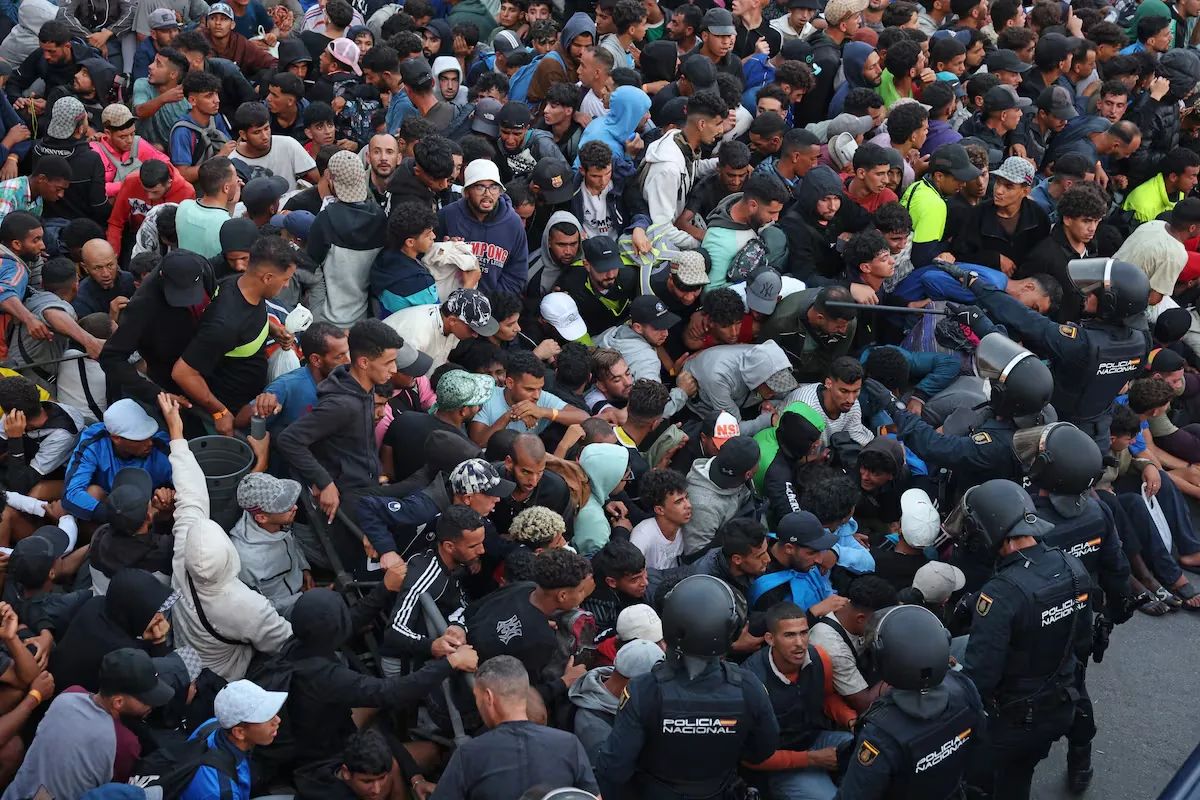









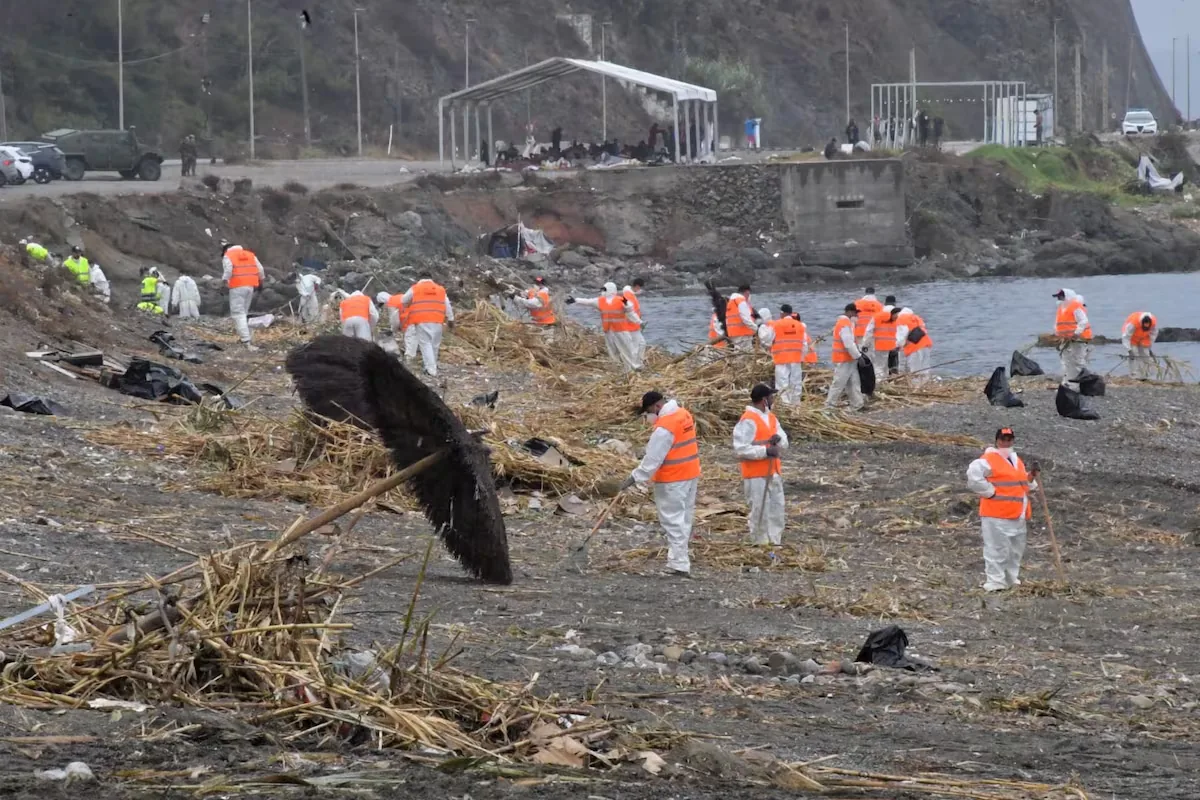
The Secretary of State for Youth and Childhood, Rubén Pérez Correa, trusts that the urgent transfer plan to the Peninsula of the 500 girls who remain in Ceuta can begin in “a few weeks.” However, he admitted that the Government has not sent the Ceuta executive, as requested by its president Juan Manuel Vivas, a concrete proposal for the transfers. Meanwhile, in Ceuta, cleaning work on El Trampolín beach resumed early in the morning to remove the makeshift shacks. When the cleaning services finished, dozens of migrants returned to the area. The police began yesterday the transfer of about 1,400 people from El Trampolín beach to a military enclosure and a parking lot set up to accommodate them. In the afternoon, around 500 returned, which forced the cleaning work on the beach to be halted.
Read more Iván Vargas: the artisan who creates the sound of the biggest party in La Paz
EL PAÍS offers the latest news on the migration crisis free of charge. If you want to support our journalism, subscribe.

MIGRATION CRISIS
Expansion | Mafias charge migrants 9,000 euros for the mass entry in Ceuta by taking them by boat to the Peninsula
Hours-long journeys in small boats, at night, overcrowded and without life jackets or safety measures. A painful and dangerous trip, but also very expensive to go from Ceuta to the peninsula. Human trafficking mafias have found in the massive entry of thousands of migrants in Ceuta on July 30 and 31 a goldmine to increase their already lucrative business. The National Police have arrested in recent days five alleged members of two criminal groups who charged up to 9,000 euros to those irregular migrants who want to clandestinely cross the Strait of Gibraltar to reach the Andalusian coasts, according to the Ministry of the Interior on Friday. The latest official estimates put at 5,000 the migrants who remain in Ceuta out of more than 80,000 at the end of July. Of these, more than 2,000 are minors.
You can read the full information here

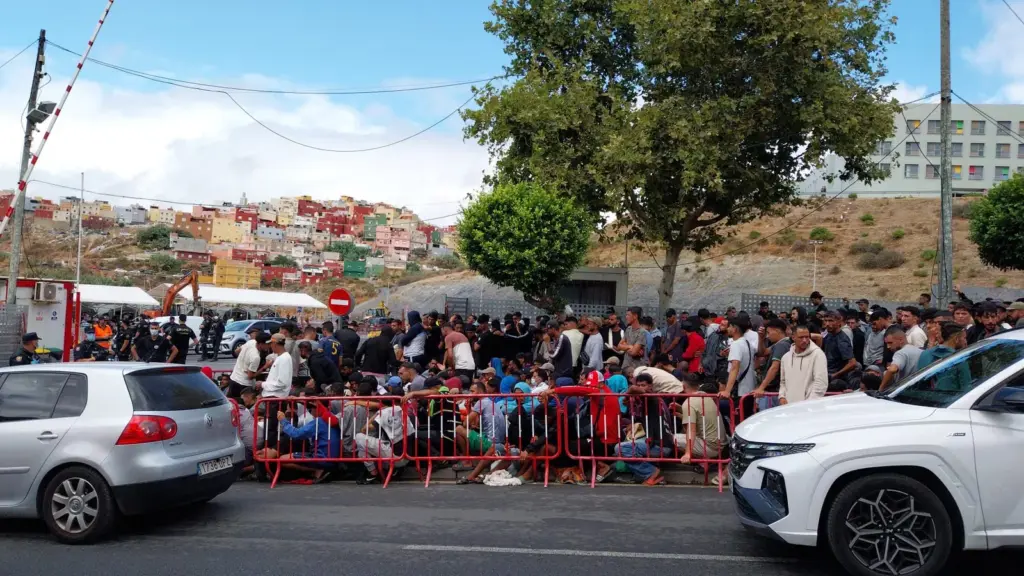
At the entrance to the Loma Colmenar parking lot, in Ceuta known as the bottleneck, more and more Maghreb migrants are accumulating. / Juana Viúdez
The group of Maghreb migrants gathering at the gates of the Loma Colmenar camp grows
The group of Maghreb migrants waiting at the entrance of the Loma Colmenar center, enabled on Thursday by the Government to house some of those evicted from El Trampolín beach, is growing by the moment, amid a strong police deployment stationed to prevent problems. About 200 Maghrebis, mostly Moroccans, were taken to the Loma Colmenar center, while around 1,200 sub-Saharans were taken to the center set up in Loma Margarita. This morning, many Maghrebis who remained in the neighborhood near this point have approached the center. The president of the neighborhood association says they had been assured that the Loma Colmenar center would be for the Maghrebis wandering the neighborhood, not for those evicted from El Trampolín beach. Already this Friday, new migrants have begun to enter the center.

Hundreds of migrants remain on El Trampolín beach or nearby
Hundreds of migrants continue to roam around El Trampolín beach in Ceuta and its surroundings after the cleaning of the beach carried out in the morning, as can be seen in the live images broadcast by TVE. Some have reinstalled tents and many of them wander or remain seated on the edges of the beach, amid rumors that being there is a first step to be transferred to one of the spaces set up to house them, such as those inaugurated on Thursday in Loma Colmenar and Loma Margarita.


Migrants waiting crowded at the entrance of the Loma Colmenar enclosure, on August 21. / Juana Viudez
The Loma Colmenar center gradually receives new occupants
A large group of migrants waits crowded at the entrance of the Loma Colmenar enclosure enabled by the Central Government and where the first occupants spent the night yesterday. The president of the neighborhood association of this neighborhood, Rafael García, is with them and explains that they are already beginning to enter, seven by seven.
García complains that the first to access were the migrants from El Trampolín beach and not those wandering the neighborhood since the massive arrival on the 30th. “They promised us it would be for them,” he complains. The neighbors of the nearby neighborhoods organized a protest yesterday to ask that the migrants from the neighborhood be able to access. “These are ours, but others have also come because of the call effect, the word has spread,” he details.
Two illicit migrant trafficking organizations fall from Ceuta to the peninsula
The National Police have dismantled, with the arrest of five people, two organizations allegedly dedicated to illicit migrant trafficking from Ceuta to the peninsula, which used small boats and charged up to 9,000 euros per person.
In one of the operations, four people were arrested, two in Ceuta and two in La Línea de la Concepción (Cádiz), who are charged with the crimes of criminal organization and facilitation of irregular immigration, the National Police said in a statement on Friday.
In the second investigation, a man was arrested as an alleged member of an organization also dedicated to illicit trafficking of people from Ceuta to the peninsula, who was sent to pretrial detention.
One of the investigations detected the activity of an organization operating between Ceuta and La Línea de la Concepción that transported small boats from the Cádiz coast to the autonomous city to pick up irregular migrants and transfer them to the peninsula. (Efe)

Migration crisis
The law and jurisprudence equally protect immigrant and Spanish minors
When an immigrant child enters Spain, it does not matter where they come from or whether they entered regularly or irregularly; they are, above all, a child, and the laws protect them as such. Although repatriation is possible if circumstances allow, a mass return is not lawful, as a Supreme Court ruling in 2024 made clear, which declared illegal the return of 55 unaccompanied minors who entered Ceuta in August 2021.
You can read the full information here
Childhood trusts to transfer the girls “in a few weeks” but admits it has not yet sent a concrete proposal to Ceuta
The Secretary of State for Youth and Childhood, Rubén Pérez Correa, trusts that the urgent transfer plan to the Peninsula of the 500 girls who remain in Ceuta can begin in “a few weeks.” However, he admitted that the Government has not sent the Ceuta executive, as requested by its president Juan Manuel Vivas, a concrete proposal for the transfers.
Read more Security and Rule of Law: efficiency and guarantees in the balance
“If what the Ceuta government wants is a concrete proposal, of course it will have it,” Pérez Correa responded in an interview on RNE when asked if Vivas lies when he said that no transfer plan for the girls has been presented to the autonomous city, which is responsible for the guardianship of unaccompanied minors. Correa specified that Vivas said he had received nothing at a “very complex” press conference with Alberto Núñez Feijóo, but that the initiative was “transferred not only to the counselors of the Ceuta Government but also to its own president.”
“We have been working since this week with companies and social entities and, obviously, we will make a concrete proposal, even with the allocation of part of those funds that we have made available to the city, we understand that it must be embodied in an agreement that the city must sign with the entity, as has already been done on numerous occasions,” he argued. He also explained that individualized files for each girl are being prepared “because in a situation of saturated resources, it is especially dangerous for the girls.”
Regarding deadlines, he explained that this procedure “is much faster than the Royal Decree law” and gave as an example the one carried out when the Supreme Court forced the State to take charge of the minors from the Canary Islands who had applied for asylum, when the transfer of 600 children from the Canary Islands was achieved in one month. Pending the Ceuta Government’s approval of the proposal, “it is feasible, if we roll up our sleeves, to have these girls in resources within a few weeks.” (EP)
Migration crisis
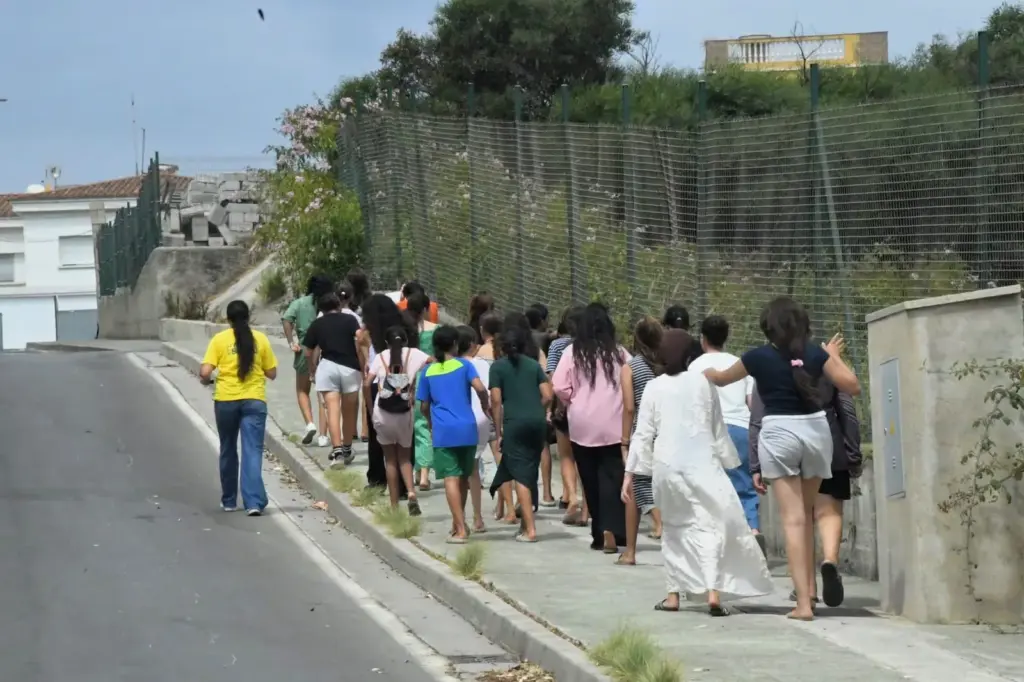
Why transfer 500 minors from Ceuta to the Peninsula: immediate basic care and response to mental health
This Wednesday it became known that the Government is working on finding a formula for the transfer of at least 500 migrant girls from Ceuta to the Peninsula through the Ministry of Youth and Childhood. Also this Wednesday Alberto Núñez Feijóo asked “what is happening in Ceuta for the Government to consider this morning, not until now, that 500 girls should be sent to the peninsula?” The answer lies in the scientific literature of the last three decades. Thousands of studies, investigations, meta-analyses, reports from governments and national and international organizations have pointed out that girls and adolescents are a population group that needs to be attended to as a priority in risk contexts: whether wars, natural disasters, or political and humanitarian crises like that of Ceuta.
You can read the full information here
The PP criticizes that the Government “is concerned about evicting a beach that has been invaded again”
The PP’s Deputy Secretary of Finance, Juan Bravo, criticized in an interview on Cope the “lack of response” of the Government to the migration crisis in Ceuta and assured that “what worries them is to evict a beach that has been invaded again,” referring to El Trampolín beach, which was evacuated on Thursday, although about 500 migrants returned later.
Bravo has called for a medium- and long-term economic strategy. “The blow has been evident,” he said, referring to the impact on tourism, commerce, and businesses. “Families are scared, and that undoubtedly affects from an economic point of view,” he assured

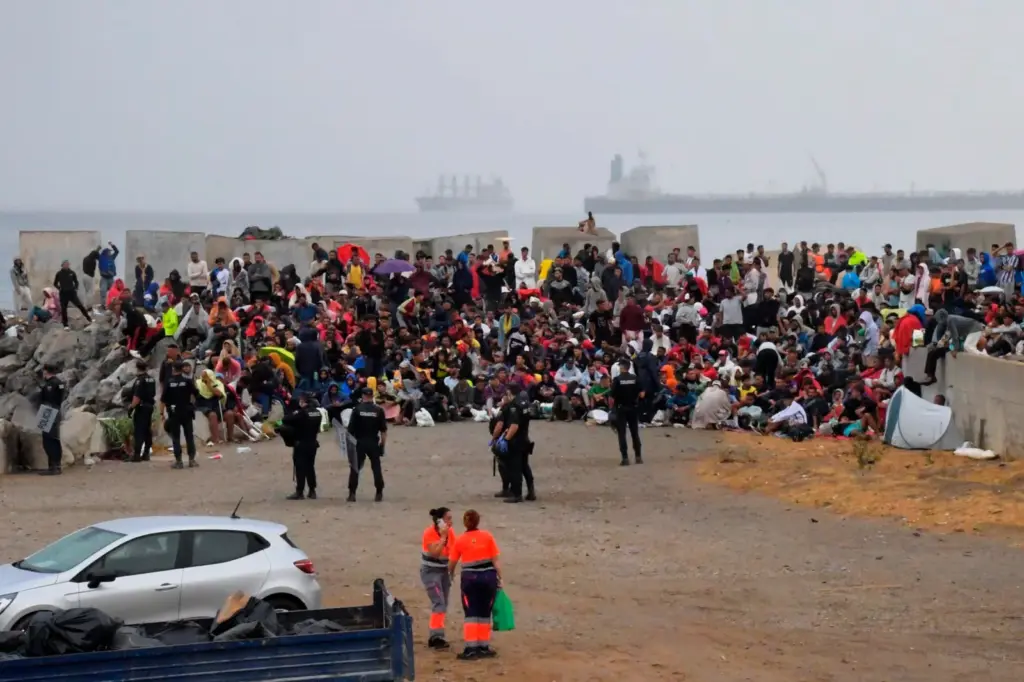
The police have grouped a thousand migrants near El Trampolín beach. / Joaquín Sánchez
Cleaning tasks resume on El Trampolín beach
This morning, cleaning work on El Trampolín beach in Ceuta resumed, according to sources from the city government. Yesterday they were suspended because the Police and Civil Guard operation withdrew and the workers feared for their safety when migrants began to arrive to rummage through the hundred makeshift huts and tents.
One of the people responsible for the operation, Mina Mohamed Laarbi, Deputy Minister of Environment, urges the workers to hurry. “We started at seven in the morning and in half an hour I estimate we will have finished,” she explained to EL PAÍS. A cleaning brigade of about twenty people cleans the beach and an excavator removes the remains of the hundred makeshift shacks, mostly reed mats and branches.
According to the person in charge, migrants will not be able to approach this place until they finish. Afterwards, they will be allowed to return, she adds. The police operation is planned for a limited time. The police have grouped a thousand migrants and do not let them move. There is a strong deployment and it is starting to rain.
Health crisis
The great eviction of El Trampolín beach: “It’s not to go to Morocco, it’s a good jaima”
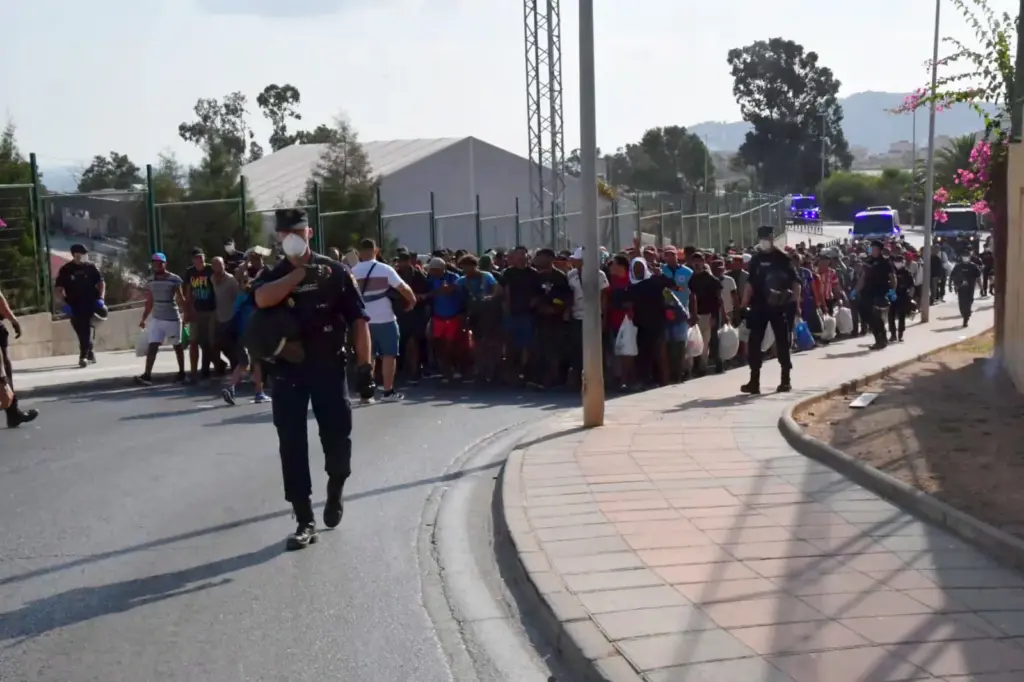
A young man walks disoriented along El Trampolín beach, where until this Thursday about 3,500 migrants who arrived in Ceuta were concentrated. The area, where a large community of sub-Saharans lived in more than a hundred makeshift tents and where Maghrebis who sleep in nearby hills to collect food offered by different organizations also came, had fallen silent at 10:00. Among logs still glowing from the night, rickety chairs, and food remains, the voice of an agent from the Civil Guard’s Reserve and Security Group (GRS), specialized in maintaining public order, is heard. “What’s wrong with you? Did you fall asleep?” he says to the boy. “Friend, over there!” he points out. The guard points to a group of about 200 people waiting to leave for one of the two enclosures that the Ministry of Inclusion, Social Security, and Migration has prepared for them for humanitarian reasons and so that the autonomous city recovers the space and, with it, some normality.
You can read the full information here
Migration crisis
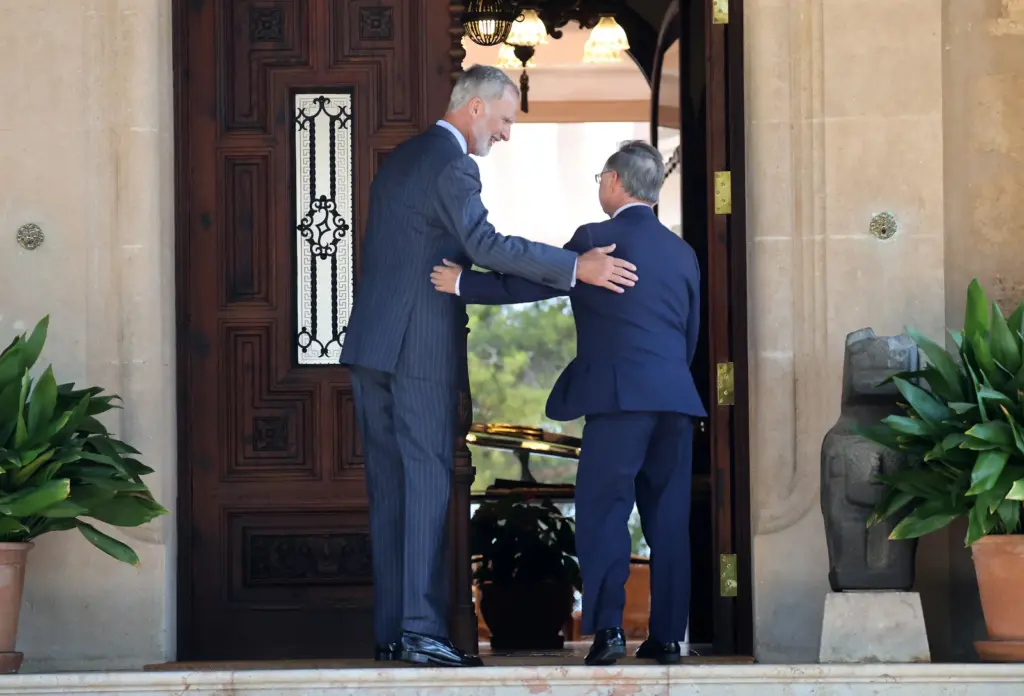
The Government consulted the King about the opportunity to make a call to Mohamed VI over the Ceuta crisis
The Government consulted Felipe VI through a minister about the opportunity for him to make a call to the King of Morocco, Mohamed VI, to talk about the Ceuta crisis, according to sources from the Executive and the Royal House confirmed to EL PAÍS. The call has not taken place “so far,” according to the same sources. The Royal House is waiting to see how the events that began with the massive entry on July 30 and 31 evolve, pending action by the Government, and they are evaluating the opportunity of the call or even a visit to the autonomous city “when it is useful and reasonable” and requested by President Pedro Sánchez, something that has not happened.
You can read the full information here
Good morning. Three weeks after the arrival of tens of thousands of migrants in Ceuta, efforts continue to house those who have stayed in the autonomous city. The controversy around the reception of the hundreds of unaccompanied minors who arrived from Morocco also continues.
Read more Video | Comfort food for gray days