









EL PAÍS offers the América Futura section openly for its daily and global informative contribution on sustainable development. If you want to support our journalism, subscribe here.
Read more The cheap accessory that helps keep the oven clean for longer
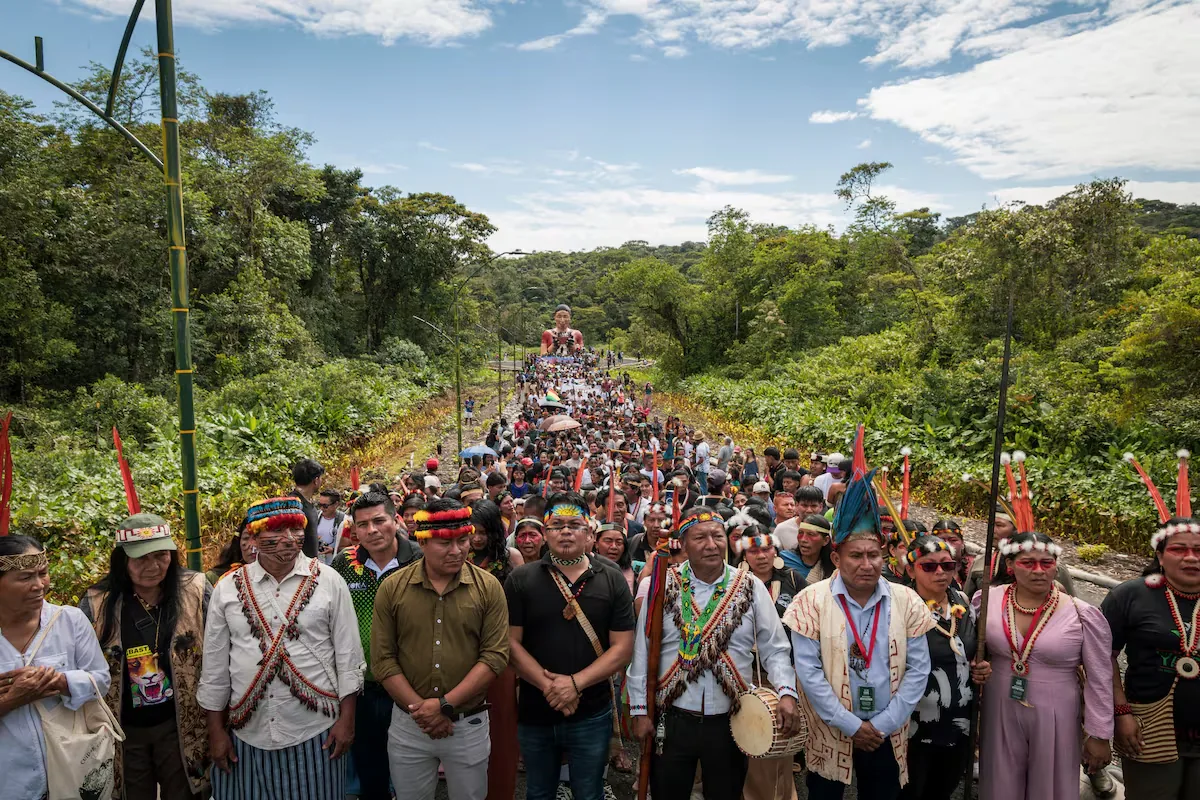
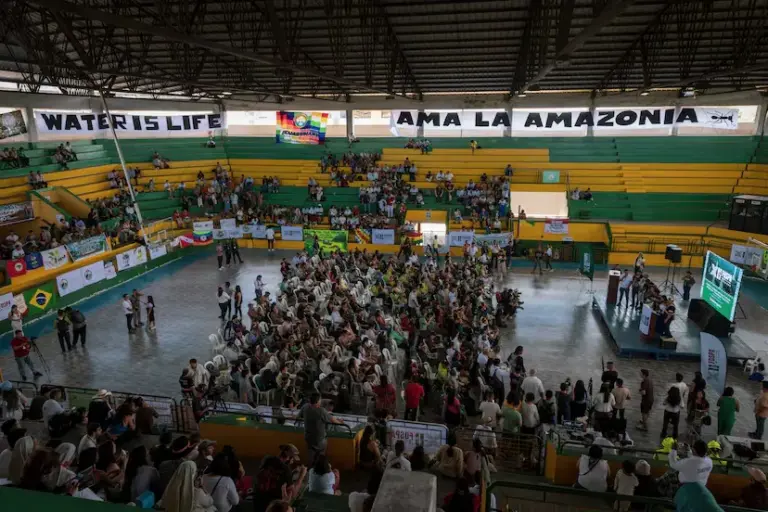
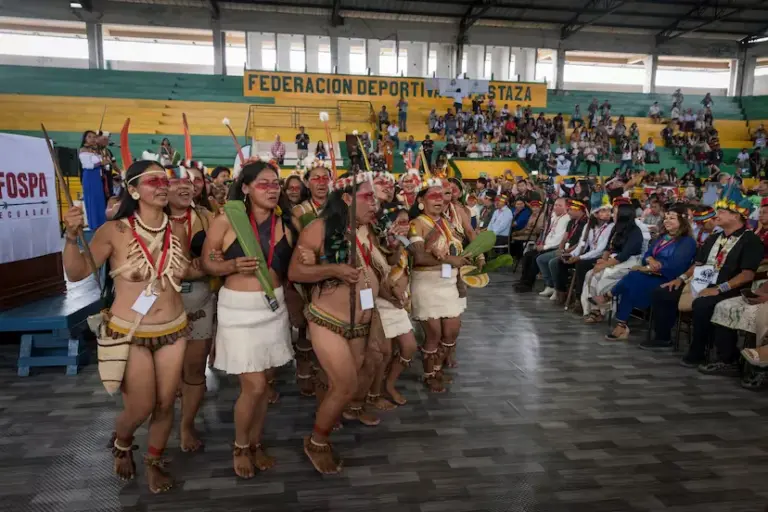
Dressed in her traditional skirt, a banner covering the upper part of her body, and a multicolored crown on her head, the indigenous Ene Nenquimo entered the Sports Pavilion in Pastaza (Ecuador) accompanied by about thirty women. Her hands rested on the shoulders of the woman in front of her, while those behind imitated her movements. With the sound of their footsteps and songs, she welcomed the 2,500 attendees who came to the Amazonian city of Puyo for the twelfth edition of the Pan-Amazonian Social Forum (Fospa).
“That dance is an action to demonstrate our culture, to tell them they are stepping on our territory, where our ancestors were, and that we have to defend it,” explains Nenquimo, vice president of the Waorani Nationality of Ecuador (NAWE). The organization represents one of the 11 indigenous peoples living in the Amazon of this country and one of the seven in the province of Pastaza, the host of this biennial meeting.
Since 2002, Fospa has brought together indigenous peoples, Afro-descendants, local communities, social movements, academia, and civil society from the nine countries of the Amazon basin to coordinate efforts to confront activities threatening the region and guarantee the rights of its inhabitants. “This edition is special because it is the first time it is co-organized by indigenous peoples,” says the Waorani leader. Unlike previous editions, where civil society or academia led the meeting, the seven nationalities of Pastaza were co-hosts.
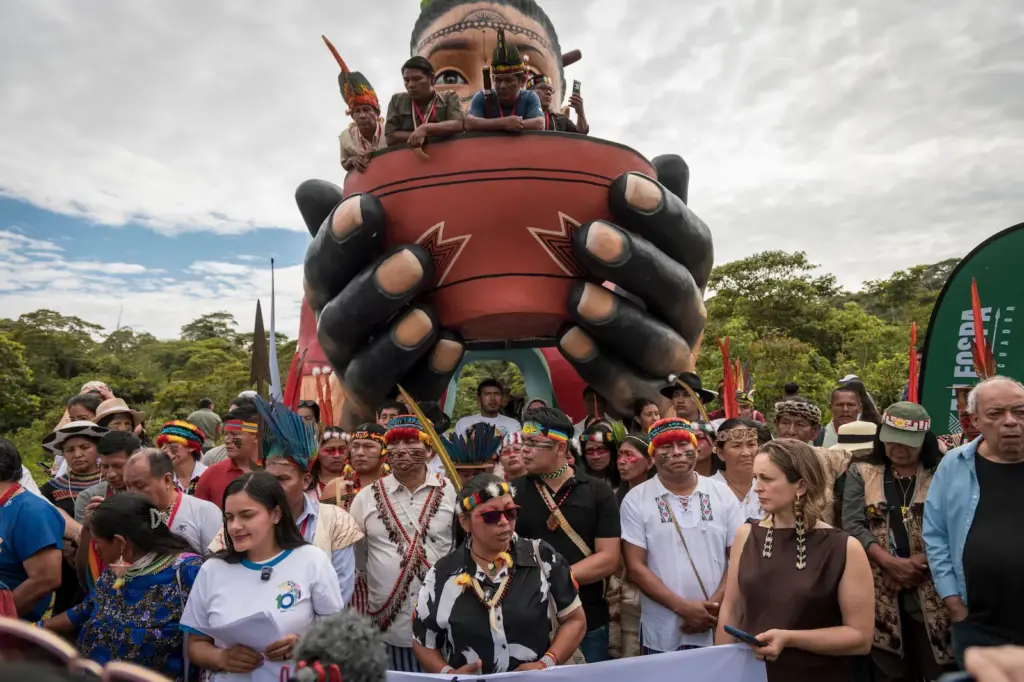
Throughout the week that Fospa lasted—from August 16 to 21—the indigenous peoples built various agreements that were reflected in the Political Declaration of Puyuk and the Action Plan: two documents that will also guide actions until the next Fospa, which will be held in Mocoa, Colombia, in 2028.
A declaration against extractivism
The Fospa dynamic consists of dividing participants into working tables called “houses.” In this edition, four themes were chosen: the impacts of extractivism, the sovereignty and self-determination of indigenous peoples and nationalities, economies for life and climate justice, and the violence faced by women defenders of the Pan-Amazon.
The commitments and demands agreed upon in each house were included in the Political Declaration of Puyuk, which refers to the original name of Puyo. There they demand the legal recognition of Amazonian territories as extractive exclusion zones, the reversal of mining and oil concessions, and the elimination of mercury use. The role of indigenous guards for the protection of their territory and ancestral knowledge to promote environmentally respectful economies is also recognized.
The document also denounces the advance of “false solutions,” including carbon markets, and emphasizes the need to act against the deterioration of the forest. According to data from the Scientific Panel for the Amazon, released in Puyo, 18% of the region has already been deforested and another 38% is degraded. The forum also warned about the territorial control exercised by organized crime in the basin, linked to extractive activities such as mining.
“This is the first Fospa in which an action plan is made,” adds German Niño, director of the Transformative Economies working group in the Latin American Network for Economic and Social Justice (Latindadd), referring to another innovative aspect of the most recent edition. Among the highlighted actions are the formulation of a joint lawsuit for the impacts on all the rivers of the Amazon basin, the creation of an early warning network and legal support for communities to respond in a coordinated manner to threats, and the emphasis on considering the Amazon as a fossil fuel exclusion zone.
Read more Do you have the washing machine on the terrace? This outdoor cover protects it from rain and dust
In the case of the economy house, for example, Niño says that the creation of a “network of transformative economy experiences” was agreed upon. So far, there are 50 organizations that are part of this network with initiatives proposing alternatives to oil or mining extraction and including the active participation of women and youth. The idea is to add other enterprises by the next Fospa.
For her part, Denisse Chávez, president of the Women and Climate Change Driving Group, explains that in the women’s house they focused on specific axes such as democracy and fundamentalism, sexual and reproductive health, defense of defenders, criminalization of protest, ancestral actions being impeded, and community economy. One of the main results of this house was the construction of a plan with actions by country. They also created a WhatsApp chat with the 250 women who discussed the topic to continue informing what happens in their communities. They will have virtual meetings two or three times a year.
The plan is to evaluate the first results of the Action Plan next year and review all agreements in 2028.
March for the Amazon
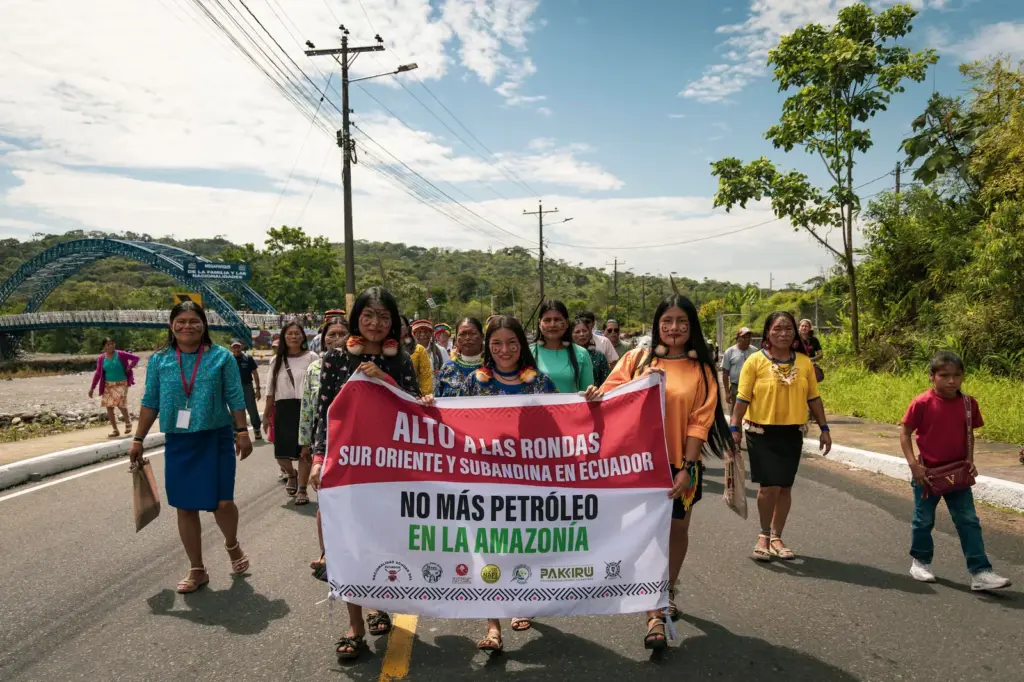
“This event was not just about writing, but about acting and building,” said Nenquimo before starting the march on the last day of Fospa. The Waorani leader positioned herself in the front row alongside her companions, followed by representatives of other indigenous peoples, Afro-descendants, peasants, and local communities of the region.
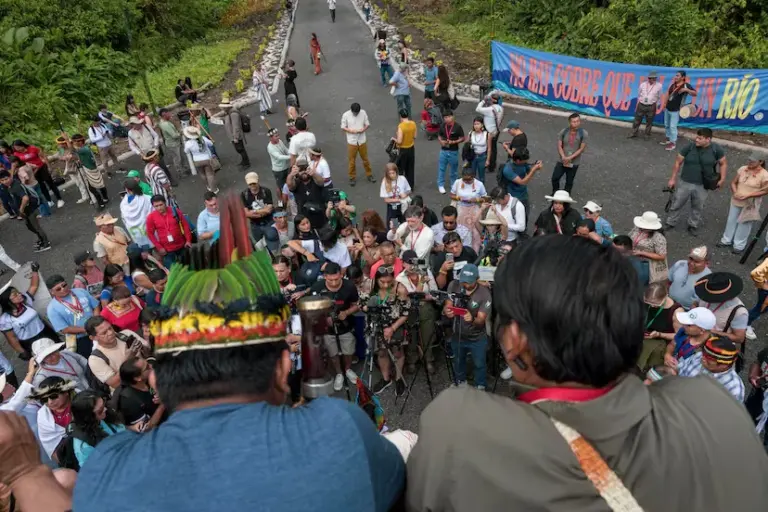
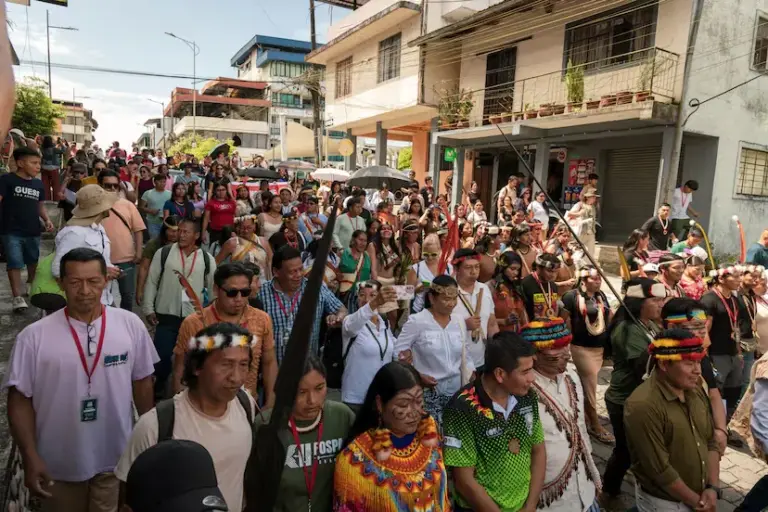
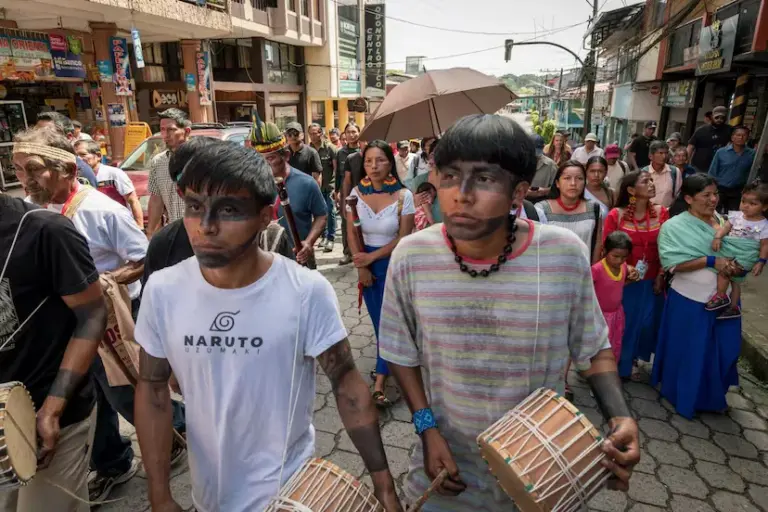
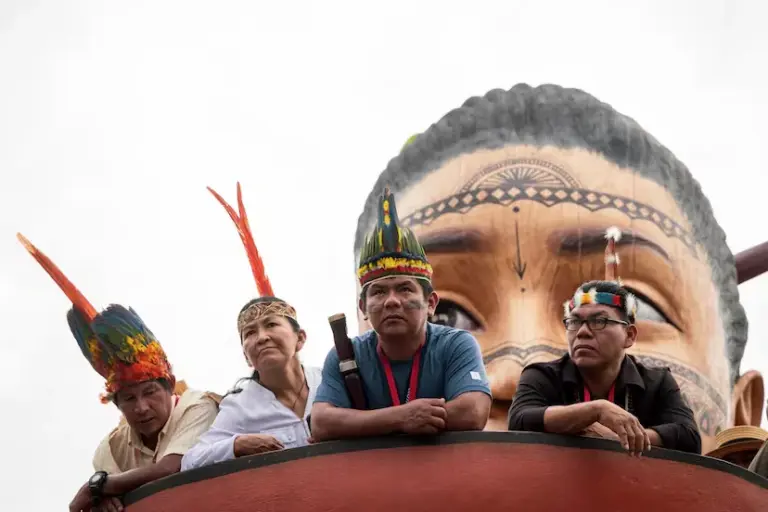
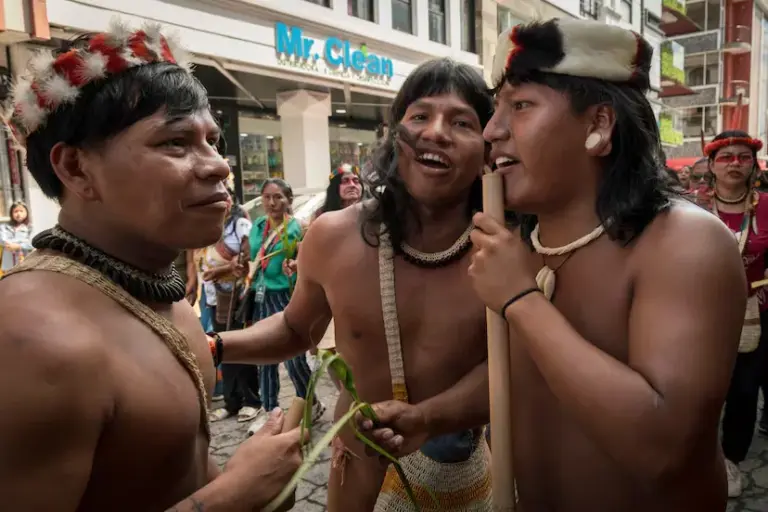
Carrying a spear, she walked through the streets of Puyo until reaching the Government Palace. There, the presidents of each nationality handed over the Action Plan to the Pastaza Government, the entity representing the Ecuadorian government in the province. Once the document was delivered and after more than an hour of walking under the 28 °C sun, the marchers arrived at a cultural space in the city. From that moment, they ceased to be the hosts of Fospa. However, their path in fulfilling the agreements is just beginning and, as Nenquimo says, although they have already passed the baton to Colombia, “we will not rest until the States respond and fulfill protecting our common home.”
“This is the most important space for regional coordination for the Amazon,” adds Natalia Greene, director of the Global Alliance for the Rights of Nature and part of the Ecuador Committee, the organizing body of this Fospa edition. The process to hold the meeting in Puyo began in 2024, at the forum in Rurrenabaque, Bolivia, where Juan Bay, president of NAWE, made the formal request. However, Colombia also applied at that time, and it was not until December 2025 that it was decided Ecuador would be the host in 2026.
“Normally it is organized every two years and we had six months to achieve it, but it has been a successful event,” adds Greene, who expected 1,500 attendees and sees positively that more arrived. In fact, 2,500 people traveled to this Amazonian city five hours by vehicle from Quito, the capital of Ecuador.
Read more Negotiations between the US and Canada to stop the imposition of Trump’s tariffs fail