This report has been produced by MindSite News, a nonprofit news website that reports on mental health and publishes a free newsletter. It was produced in collaboration with CatchLight as part of their three-year Mental Health Visual Reporting Initiative.
Read more The ranch in California of the new CJNG boss, which the Trump Government seeks to seize
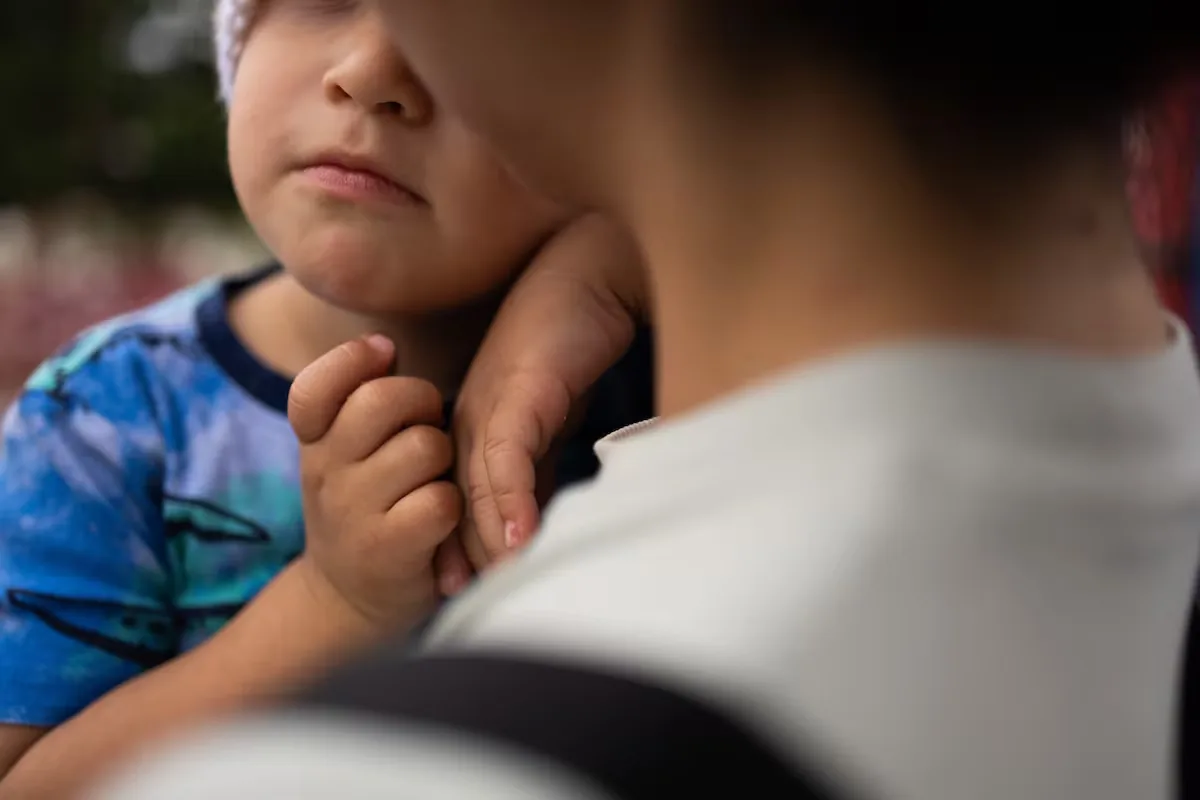
When Carlos Carino*’s father, a preschool-aged child, was detained in Los Angeles last September by ICE agents and taken to a detention center in California’s Central Valley, the changes in Carlos were immediately evident.
He refused to participate in activities at his daycare. He cried frequently, both at school and at home. And he started calling everyone “daddy.”
For six months, the family endured the separation while fighting in court for the release of Carlos’s father, Miguel Carino*. They had reasons to hope… or so they thought.
Carlos is like one in five children in California: he lives in a mixed-status family where at least one member is undocumented; nationwide, there are about 4.7 million mixed-status households. While these families face aggressive immigration enforcement policies, the detention of a parent can plunge them into multiple levels of trauma, battered by events beyond their control.
The consequences are severe: a report by six psychiatrists published in Psychiatric News noted that prolonged separation between children and their immigrant parents “can undermine the security of the attachment bond and increase children’s vulnerability to anxiety, depression, and behavioral problems.”
Carlos’s father had lived in Los Angeles for nearly 25 years, owned a small construction business in his East Los Angeles neighborhood, and employed other workers. Jazmín, his wife of five years, is a U.S. citizen, and Miguel had applied for an “adjustment of status” based on their marriage. Then he was detained during what his lawyers assumed would be a routine visit to the U.S. Citizenship and Immigration Services (USCIS).
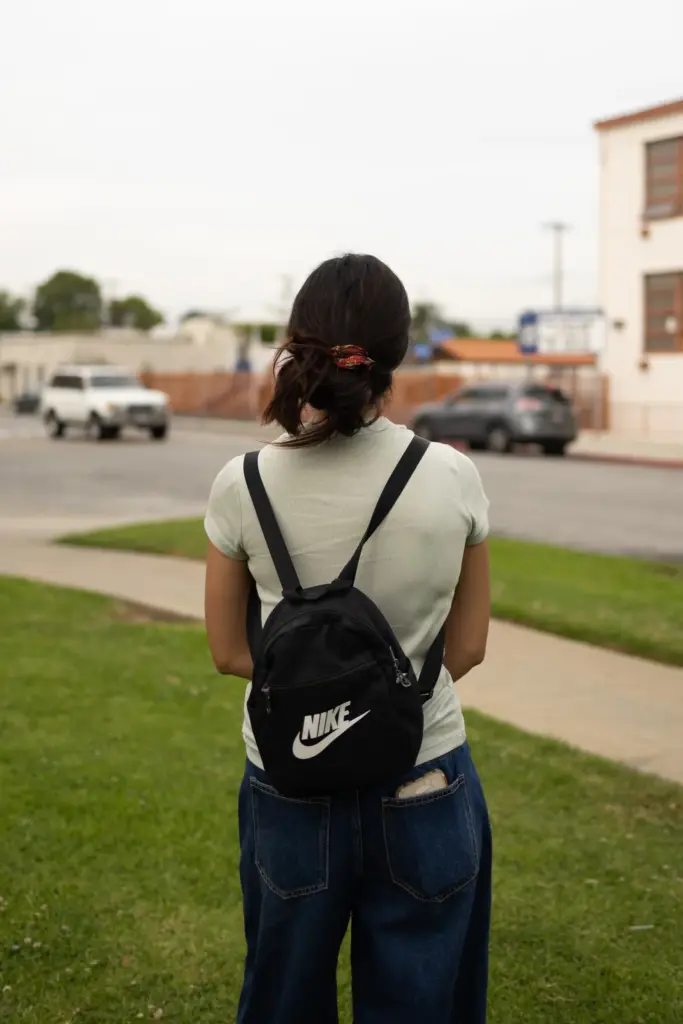
Jazmín, 24, tried to keep the family together while taking extra house cleaning shifts. She and Carlos began making the five-hour round trip to the Central Valley twice a month. But the visits were painful and distressing for the child. “We couldn’t hold hands, we couldn’t get up from our seats,” Jazmín recalls. “When it was time to say goodbye, my son didn’t want to let go.”
But after a while, even these limited visits seemed to help Carlos. One morning, he arrived at daycare wearing a hand-knitted hat his father had made for him.
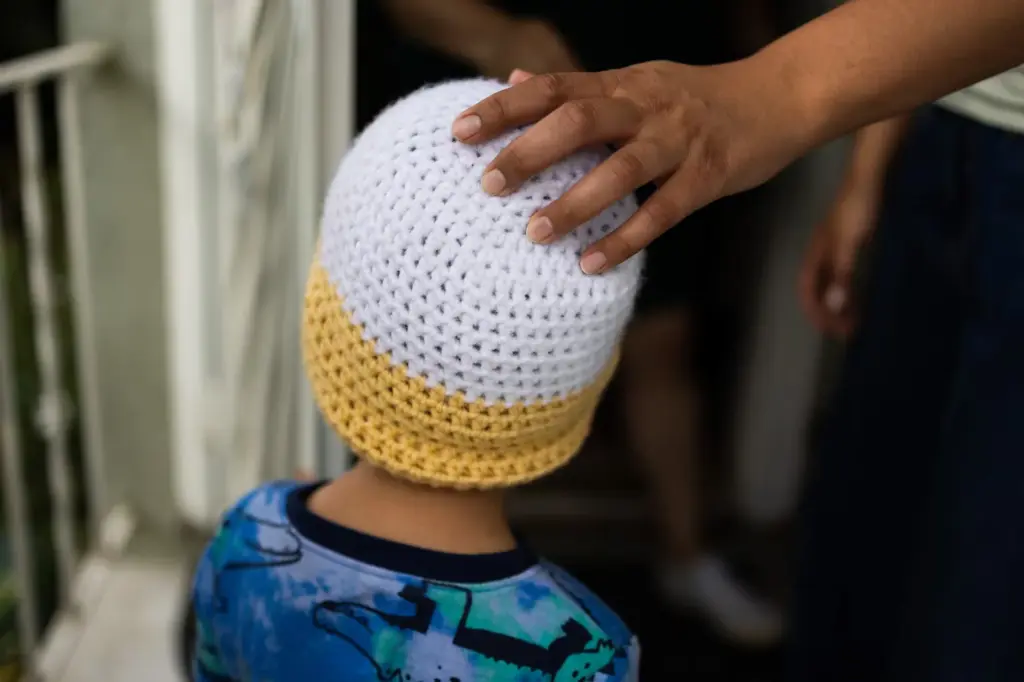
“He kept it on all day and was happier than ever,” recalls Ana Soto*, a preschool teaching assistant. He wore the hat daily, as if carrying a part of his father with him.
“One day, I called him: ‘Daddy, come here,’” Soto says. “He looked at me and said, ‘I’m not Daddy, I’m Carlos.’” For Soto, that meant a greater sense of security.
But in March, facing the prospect of probable deportation and exhausted by the brutal conditions of the detention center, Miguel decided to self-exile to Tijuana, Mexico. Jazmín tried to cope by taking Carlos to visit him in Tijuana. Then, in April, Miguel moved further south to Mexico City to seek work and support himself. Mexico City is very far, and the family lacks the resources to fly there. Carlos has gone three months without seeing his father in person, and it’s unclear when he will see him again. Now the family must try to stay in touch through video calls and phone calls, and Carlos’s trust and calm are fading again.
When a parent is taken away, a child’s world collapses. Forced separation of family members can cause emotional dysregulation and worsen insecurities, says Tatiana Londoño, assistant professor of social welfare at UCLA’s Luskin School of Public Affairs. Her work analyzes how Latino immigrants cope with and adapt to detention, deportation, and family separation.
Read more Mara Salvatrucha gang members claim they buried 200 people in Bukele’s political cradle
“Even a brief separation from parents, no matter how short, can affect that child’s well-being and development,” Londoño says. “We are leaving a long-term mark that could extend across generations in these families.”
Children learn that one of their parents—the person they trust most—is “no longer my secure base,” Londoño explains. “They learn that no one is safe for them. They might have problems in future relationships, or they might not be able to distinguish a healthy relationship from an unhealthy one.”
Studies show that exposure to harsh immigration enforcement and separation from a primary caregiver constitute a form of “toxic stress” that increases future risks of physical and mental illness. These risks are compounded by “prior exposure to violence, poverty, and loss of family members in countries of origin,” according to the Psychiatric News report.
A 2022 study published in the Journal of Policy Analysis and Management examined how children of immigrants living near Morristown, Tennessee, were affected during the year following a massive immigration raid in that community. Researchers observed “a substantial increase in school absences in the month of the raid and a significant rise in exclusionary disciplinary measures, as well as diagnoses of substance use disorders, depression, self-harm, suicide attempts or suicidal ideation, and sexual abuse.”
Another study, published in 2020 in the Journal of Traumatic Stress, analyzed 458 migrant children and adolescents treated in mental health centers and revealed that 43% were diagnosed with post-traumatic stress disorder (PTSD) and 24% with depression. Of these, nearly half the children—49%—reported three or more problematic behaviors, ranging from academic problems, school absenteeism, or misbehavior at school to substance use, suicidal thoughts or attempts, or physical aggression toward others.
In a commentary published in March in the New England Journal of Medicine, a team of doctors and researchers stated: “For physicians, mental health professionals, and public health practitioners, the evidence is unequivocal: separating parents and caregivers from young children causes preventable trauma, driven by policy, with long-term consequences for child health and development. Separation is not simply stressful for young children: it is toxic.”
To make matters worse, at the same time ICE raids are causing trauma, the Trump Administration is also cutting food aid and other services that help support families in need. Londoño and other advocates urge the State of California to help fill this gap by increasing funding for organizations working to meet the basic needs of immigrant families, so parents can be “emotionally available to their children.”
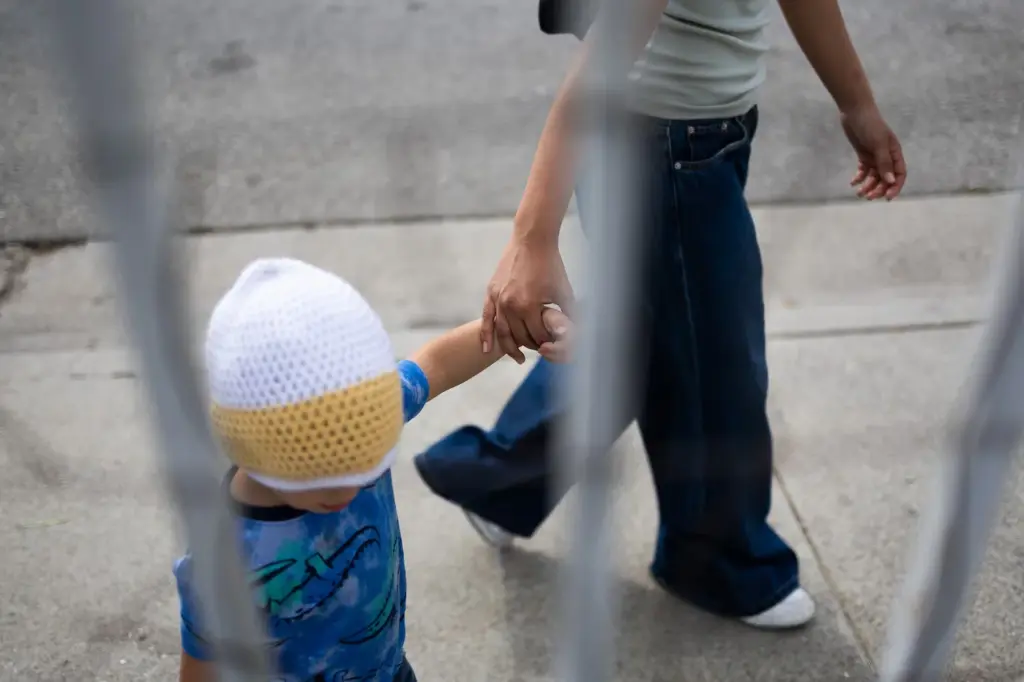
She also knows her family is far from the only one in this situation. She has seen families from as far away as Florida waiting to visit their spouses in the lobby of the Central Valley Annex, the huge detention center run for ICE by GEO Group, the private prison company.
“I remember a woman with six children, including a child with autism and a newborn,” Jazmín says. “I saw newborns from other states who came to visit and whose parents held them for the first time.”
Carino hopes to bring her husband back to the United States someday and reunite her family. For now, however, she focuses on economic survival and easing the emotional impact on Carlos, who turned three in May.
His daycare threw him a party, and the family celebrated via video call with Miguel, who was in Mexico City. For his mother, it was a bittersweet moment: it was Carlitos’s first birthday without his daddy.
Read more Chilean youth do not believe in the Church: tarot, reiki, and astrology create a new spirituality