









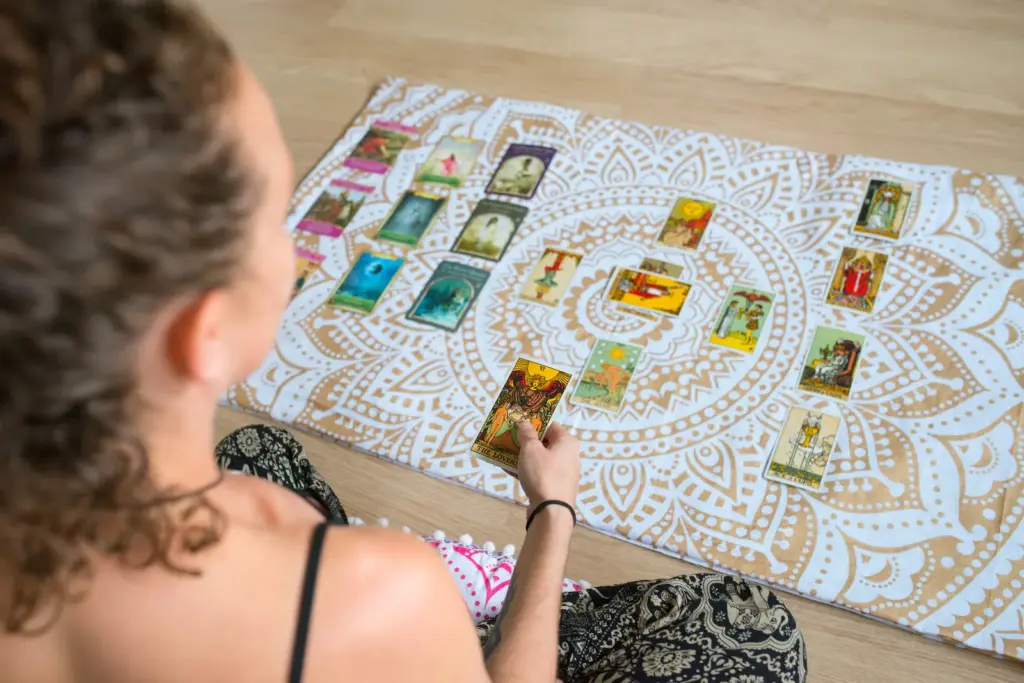
Chilean Gabriela Strahalm was 18 years old in 2008 when she consulted the tarot for the first time. Her mother, she says, had problems with alcohol and they had already talked to a psychiatrist about admitting her. Gabriela had to decide whether to stay in Santiago, the capital, or go live with her grandmother. She turned to her best friend’s aunt, who read cards, and asked how her mother would be if she left.
Read more The Pan-American Congress seeks future projects and responses to the advance of the right
The reading, she recalls, helped her decide and Gabriela left. Three months later her mother died. Over the years, that first consultation became associated with a different way of seeking guidance in difficult times.
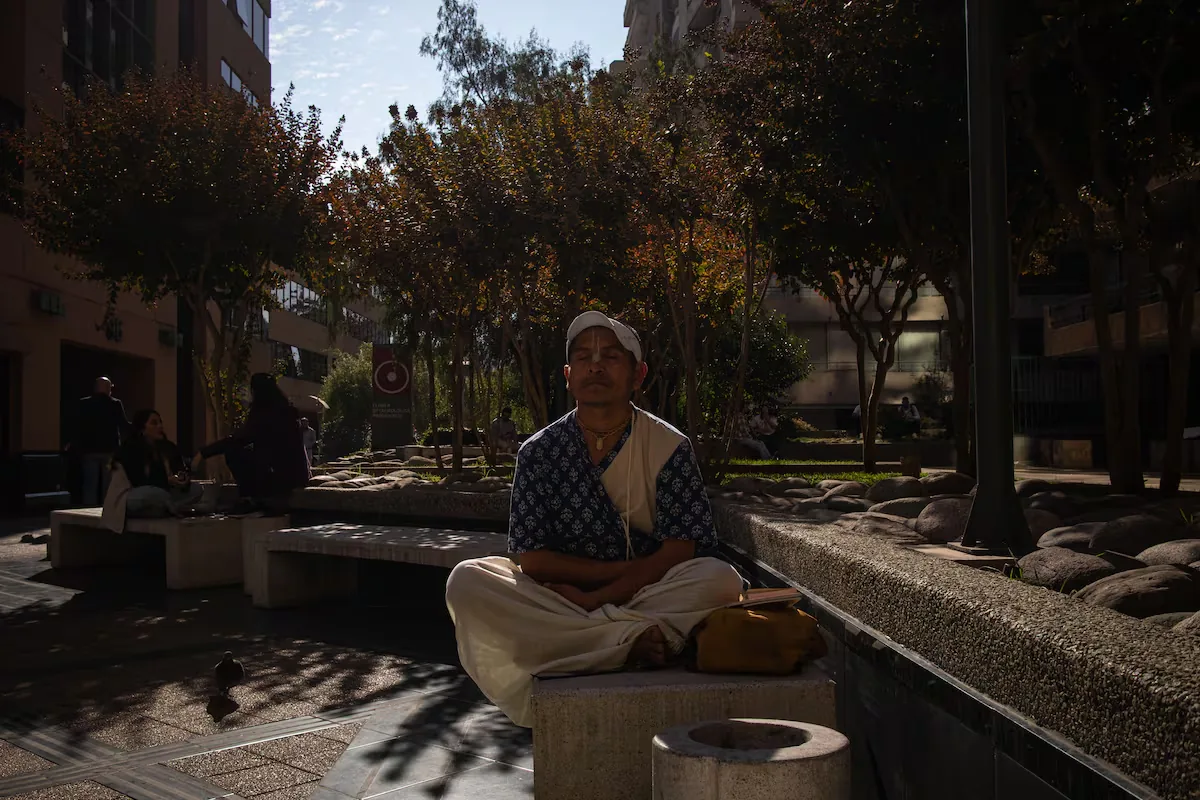
Since then, almost two decades have passed and religious affiliation has changed strongly in Chile, especially among young people. In 2006, 19% of people aged 18 to 34 said they had no religion; by 2025 it was already 51%, according to the UC Bicentennial Survey. In that same age group, only a third declare themselves Catholic.
If we zoom out, the picture is similar. In 2002, for example, 8.3% of people aged 15 or older said they did not profess any religion or creed. In the 2024 Census it was 25.8%. Those without religion are also almost eight years younger on average than those who do belong to one.
The 2024 Public Studies Center (CEP) survey shows a separation between affiliation and belief. Among those who declare themselves without religion, 55% still believe in God and 67% say they have their own way of connecting with Him.
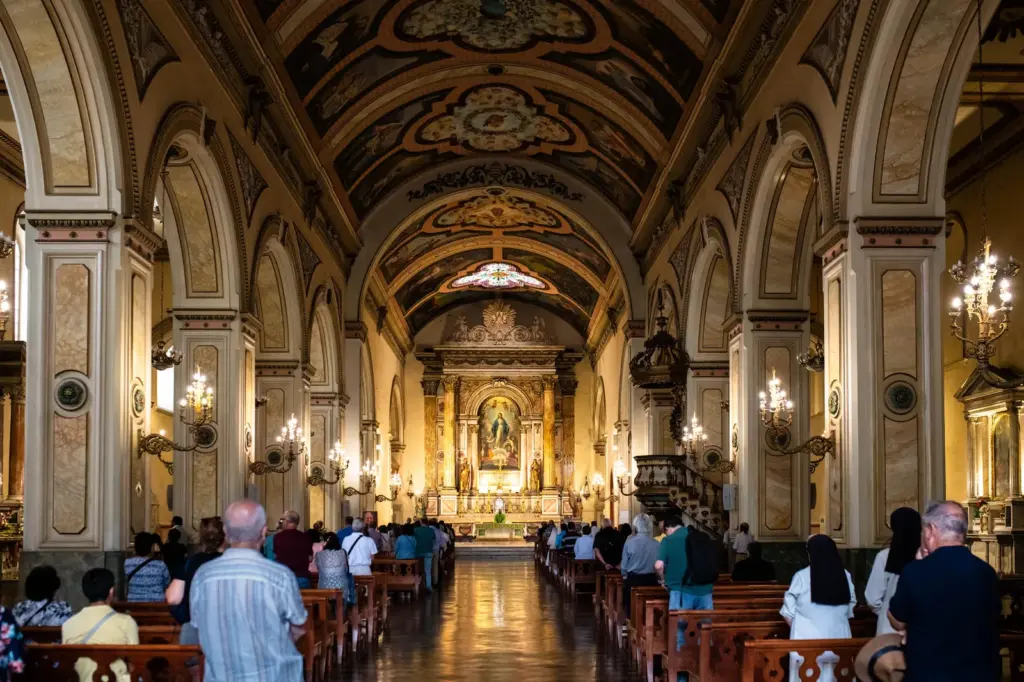
Maureen Neckelmann, sociologist of the Interdisciplinary Program in Religious Studies at the Catholic University, says that a traditional view of secularization assumed that the loss of religious influence would be accompanied by a greater predominance of scientific explanations. In her opinion, what happens today goes beyond that explanation. “More than a process of secularization—in the sense of a replacement by scientific, rational views—people, especially young people, increasingly begin to cultivate individualized spiritual forms,” she says.
That individual way of believing also appears in the general population. The same 2024 CEP Survey shows another fact: 76% of Chileans believe in God and 74% say they relate to Him without the need for the church.
For Neckelmann, the change is also in who has authority over belief. What used to come as doctrine can now become a path chosen à la carte by each individual. “What appears inconsistent actually has a consistency, but it is individual,” says the sociologist. “If you ask someone what their beliefs are, they will probably try to make a consistent discourse about why they believe in God and believe in astrology, for example.”
A personal path
Before that first consultation, Gabriela’s only approach to something spiritual had been the Catholic Church: she made her first communion. At 15 she began to hang out with a school friend with whom she talked about UFOs, extraterrestrials, energy, reiki, and chakras.
The biggest turn happened during the pandemic: a cousin told her she could communicate with her deceased mother and mentioned memories that helped her heal. That, she says, was her “spiritual awakening.”
Around those searches, courses, meetings, and congresses have also been organized. Majo Arévalo, for example, a psychologist and event producer, came to tarot through her own search and ended up organizing spaces for others.
Over time, that search crossed with something she already knew how to do: produce. She organized courses of astrologers who visited Chile and tarot and oracle meetings. From that journey was born the Tarot Congress Chile.
The Congress also teaches how to work as a tarot reader and charge for a reading, presenting it as a job opportunity.
Read more A lawsuit for pollution and against extractivism: what the peoples of the nine Amazon countries seek
“These therapies help you get to know yourself better, they put your power inside you, while religion puts the power outside of you,” she says.
René Gallardo, psychologist and academic at the Institute of Psychology of the Austral University of Chile, has observed that emphasis on new spiritualities. In one of his studies they found a search for fulfillment, empowerment, and reluctance towards formal institutions.
The authors relate these traits to a neoliberal logic that places responsibility for well-being on each person. They talk about a “spiritual consumer,” who chooses practices according to their needs, and a “spiritual entrepreneur,” focused on working on themselves. Gallardo explains: “There is an imperative of ‘treat yourself, heal yourself to then heal others.’”
Healing and charging
Gallardo and Rodrigo Navarrete, also a psychologist and academic at the Institute of Psychology of the Austral University of Chile, have studied holistic therapists in the south of the country. They call “therapeutic spiritualities” practices that combine a spiritual explanation with techniques that, according to those who offer them, seek to relieve physical or emotional problems.
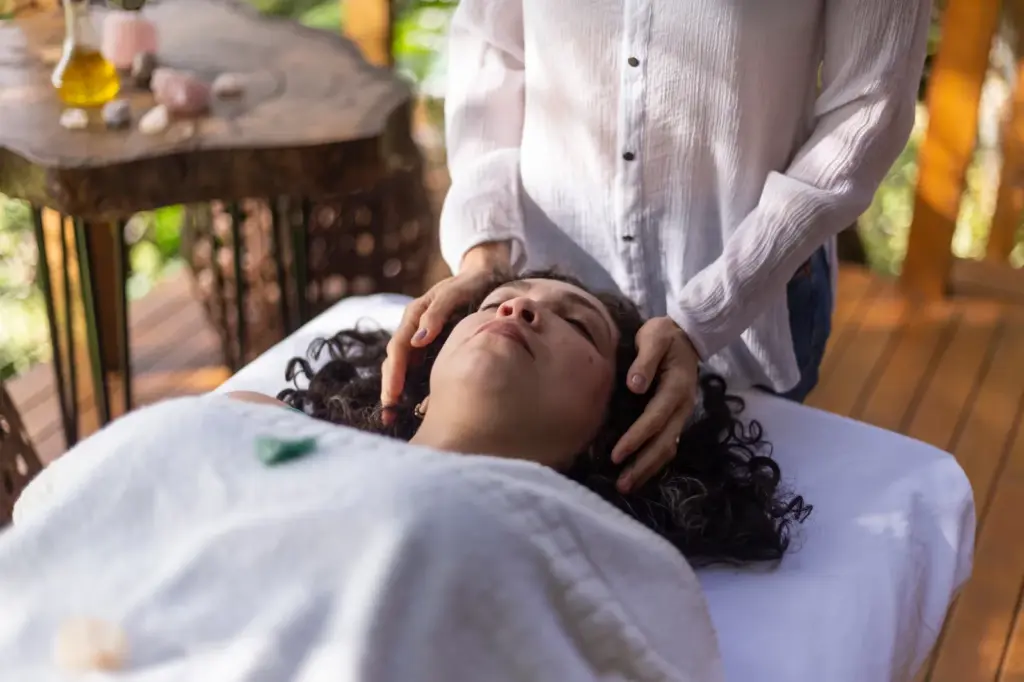
Wilma Flores came through that path: a crisis led her to seek outside Catholicism. She found reiki, left her administrative job, and today presents herself as a quantum healer, reikist, and medium. She charges, she says, 70,000 Chilean pesos per session (about 76 dollars). “Mine is not a business. I do it because it is a way where I understood that my meaning of life has to do with helping others,” she says.
That coexistence between conviction and economic support also appears in the interviews of Gallardo and Navarrete. Some therapists told them they earned more than a psychologist; many preferred to talk about compensation, adds Navarrete.
Navarrete found another tension: “There is no therapeutic failure, but there is something in the subject that is not doing, that is not developing, something that he is not achieving.”
For the psychologist, that logic can end up being “quite perverse.”
The limits
According to the Ministry of Health, in Chile there has been a regulation for alternative medical practices since 2005. Reiki has no professional health recognition and can be supervised when offered in the health field.
Arévalo believes there should be an ethical code for tarot readers: avoiding predictions about death or health, the use of fear, and interference in the decisions of the client. She also considers it reasonable that they pay taxes.
Gabriela first consulted the tarot and then wanted to learn to interpret it: she trained in reiki, Egyptian tarot, and astrology. In 2021 she began charging for her readings. In the afternoons, after her work as a journalist, and on weekends, she opens a deck on the same desk where she writes her pieces. Her clients write to her on WhatsApp; she photographs the cards and sends audios.
“Yes, it generates income for me and it is something I am very proud of because it is through something I like. But the line is very thin and it is extremely dangerous, because you are playing with people’s expectations,” she says.
She warns her clients that the cards can be wrong and that her interpretation can be too. She reminds them that decisions should not be based solely on the tarot and, in serious problems, she recommends psychotherapy or medical care. “If you don’t believe, you don’t believe and the matter ends. I—Gabriela—am not going to evangelize you.”
Read more The cheap accessory that helps keep the oven clean for longer