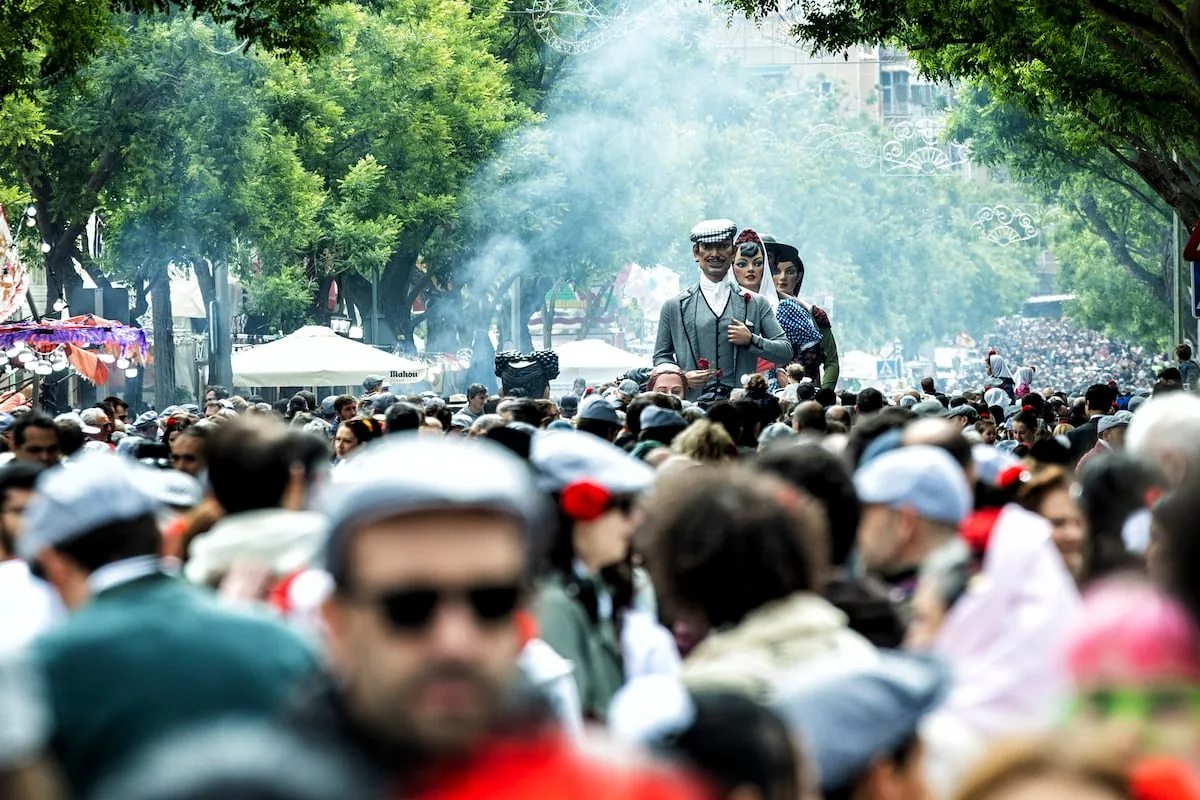
This weekend, music and celebration return to the municipality of Fornelos O Bolo. The effort and involvement of the neighbors have made it possible, once again, to celebrate their patron saint festivals, those of San Bartolomé.
Read more This is Casa Cantal: 15,000 bricks, cross ventilation, and a courtyard against the heat in Málaga
Fornelos is one of the 18 parishes that belong to the rural municipality of O Bolo in Ourense. According to the latest INE data from 2022, 25 people reside there during the year, but in summer, especially in the second half of August, the local festivals arrive and the population multiplies: “In summer we are about 250 people,” says Isabel Pérez, a neighbor who was born in the village and now lives outside it. Her grandparents were the last generation of the family born there, although like almost the entire village, they had to leave in search of work.
The summer festivals have become a tradition for all those people who, like Isabel, maintain a close relationship with Fornelos. She lives in A Coruña but has been organizing the festivals for four years: “I didn’t want the tradition to die,” she explains. Those days are the occasion to reunite every year with those old neighbors and friends from the village. However, organizing a festival up to standard, capable of attracting those who left the village for a few days, is not an easy task.
Hiring orchestras for the festival is not free, especially if you have limited budgets from municipalities with just a few dozen inhabitants. Most groups usually charge between €5,000 and €15,000 per performance. Large-format orchestras, such as the famous Panorama or París de Noia, charged between €25,000 and €41,000 in 2025, according to data from the Ministry of Finance’s Contracting Platform analyzed by EL PAÍS.
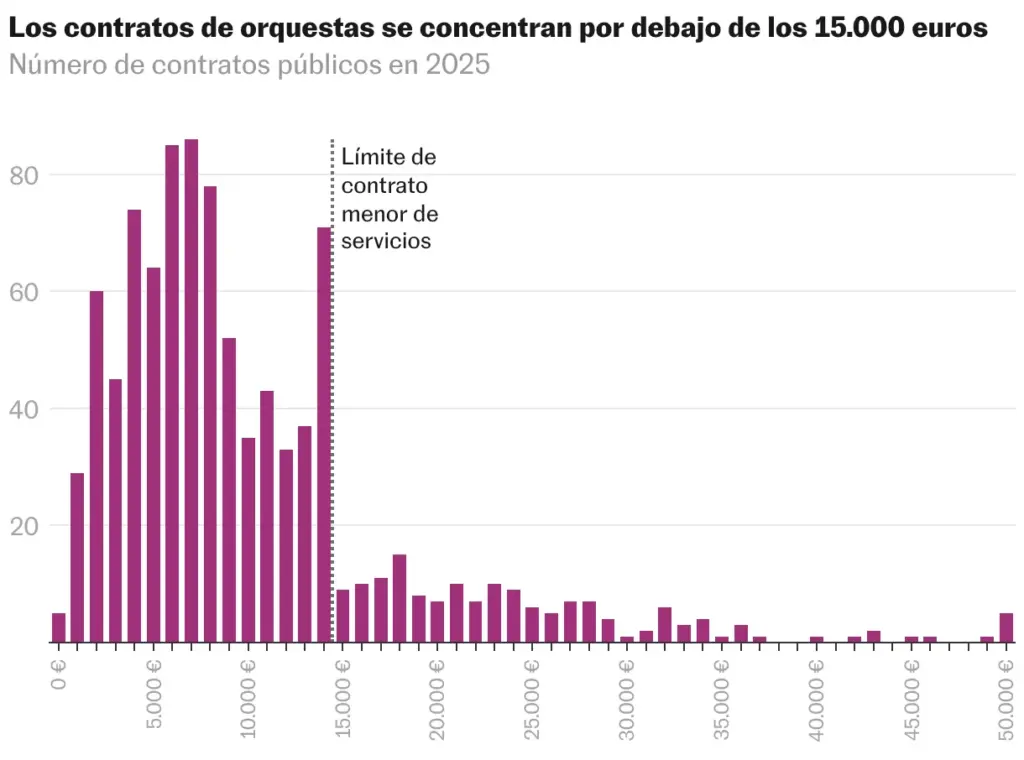
The price includes transportation and stage setup. This rate difference depends on the infrastructure, the number of singers, and the group’s fee. Panorama is one of the best-known groups throughout Spain. It has 22 artists plus workers dedicated to transportation, management, and setup. Meanwhile, more modest orchestras may have between four and twelve people on stage. This means that large formations have greater capacity to perform nationwide.
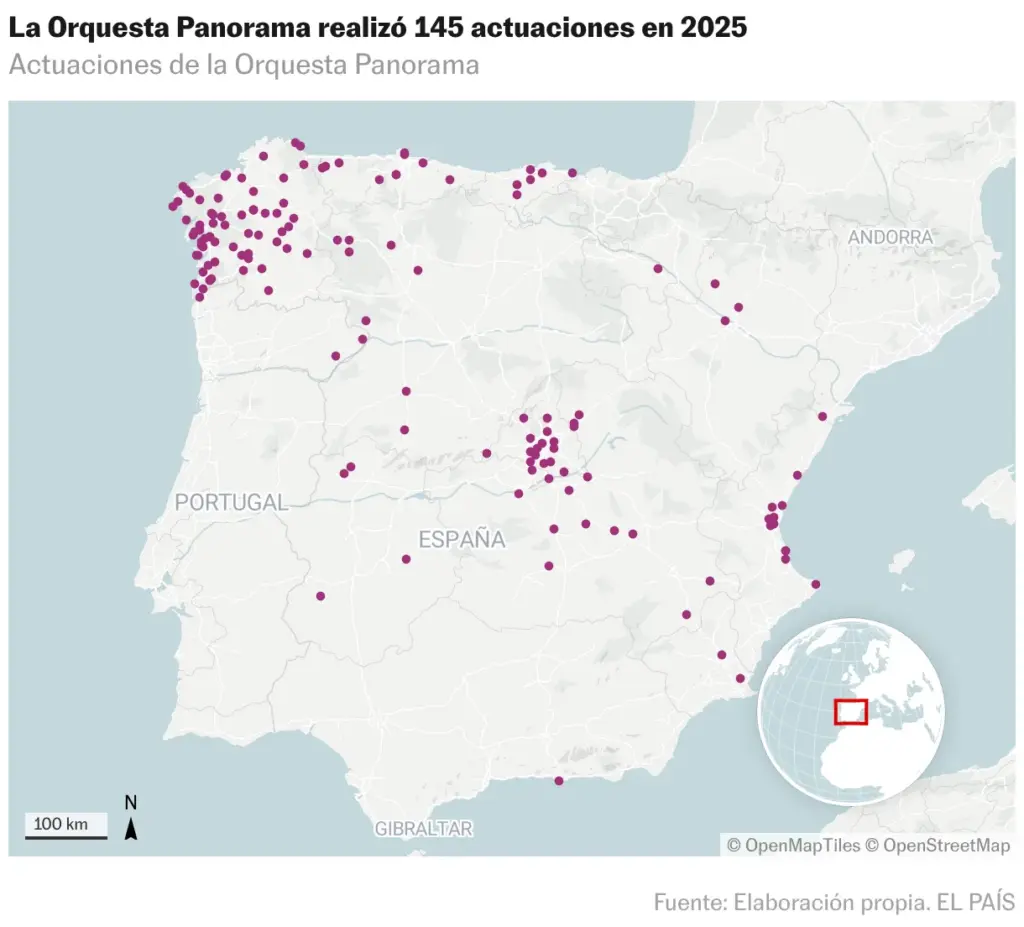
A large band like Panorama is never short of work: in 2025 it performed in 145 different locations.
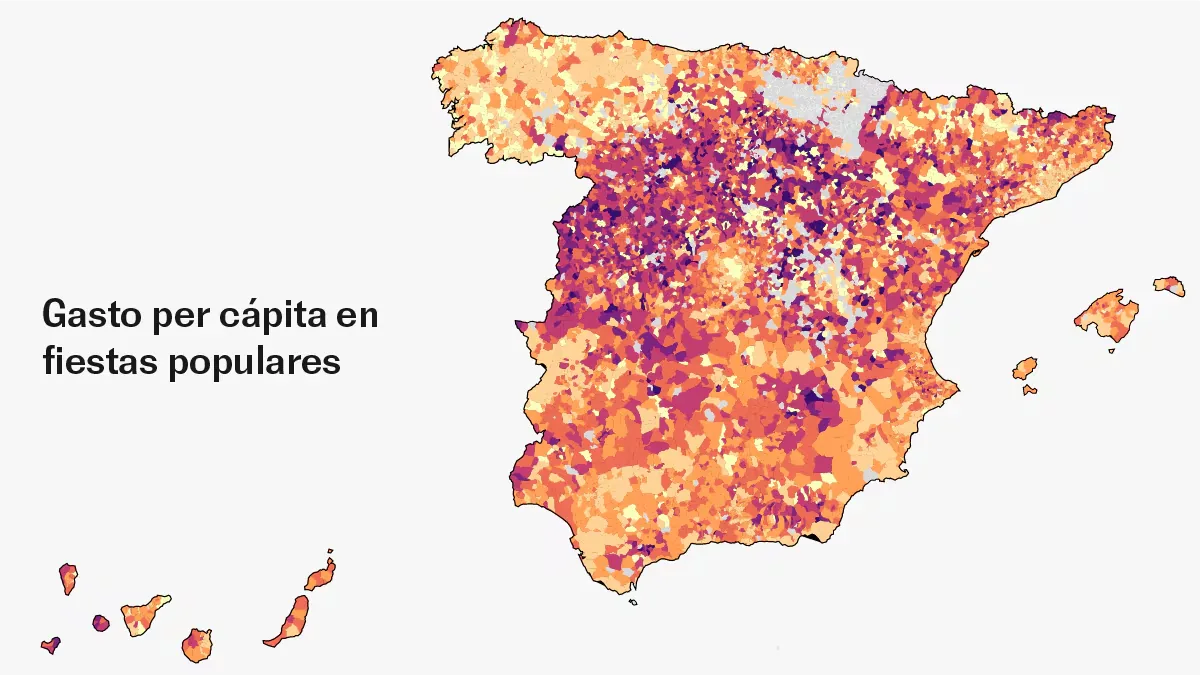
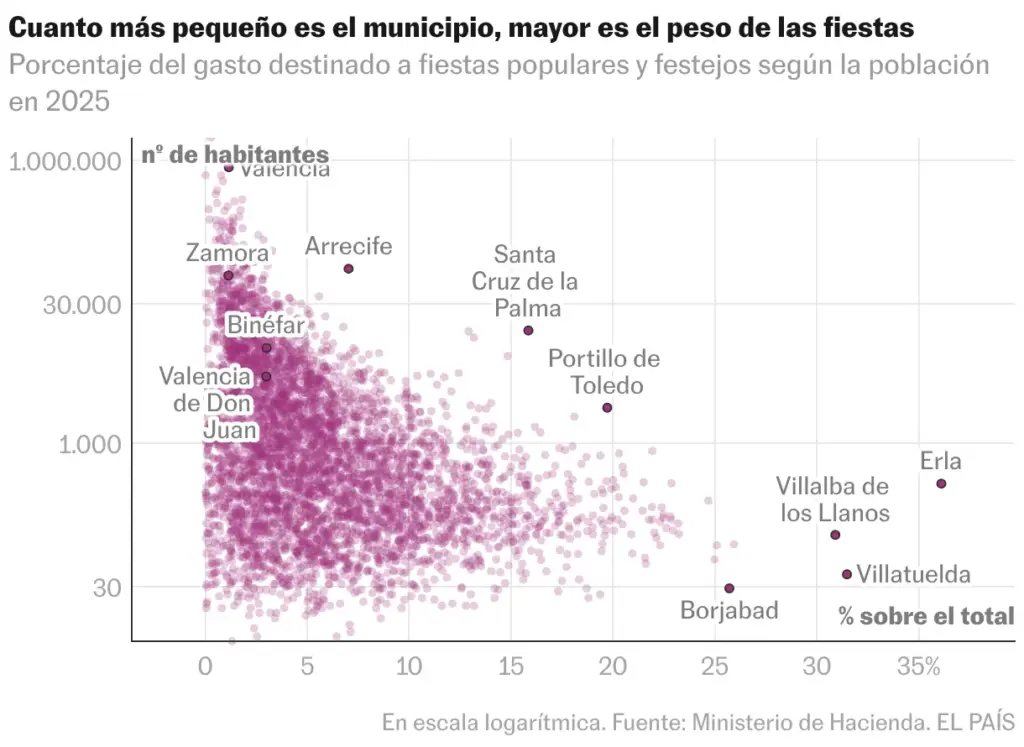
But the festivals are not just orchestras: carrying out an event like this in a small municipality with less than 1,000 inhabitants means spending up to 5.4% of the annual budget – that is, five times more than the average of a city with more than 100,000 inhabitants (0.9%). The ratio decreases progressively as the population increases, as seen in the following chart.
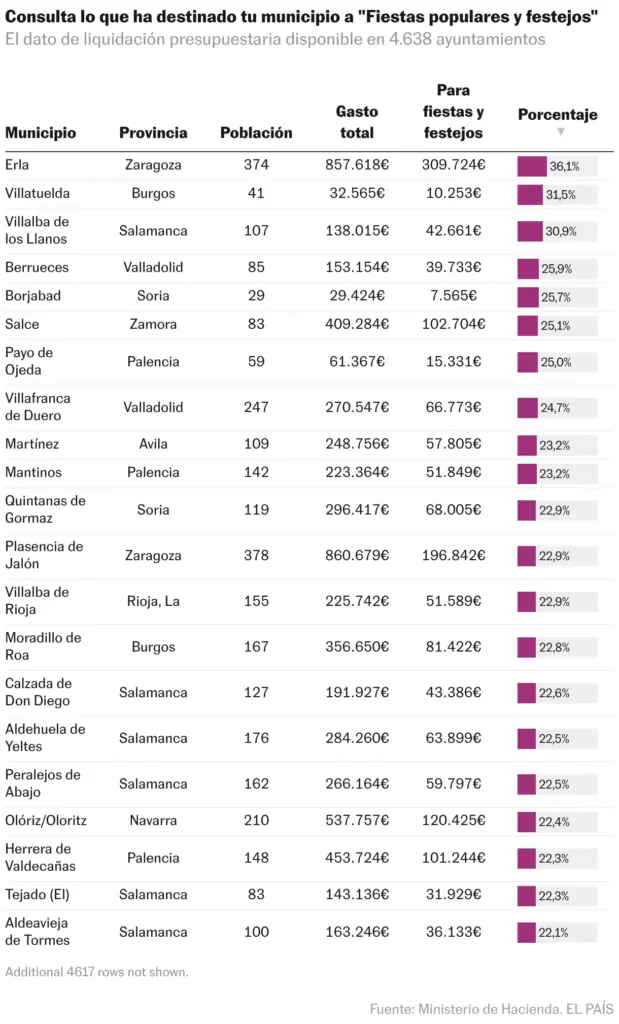
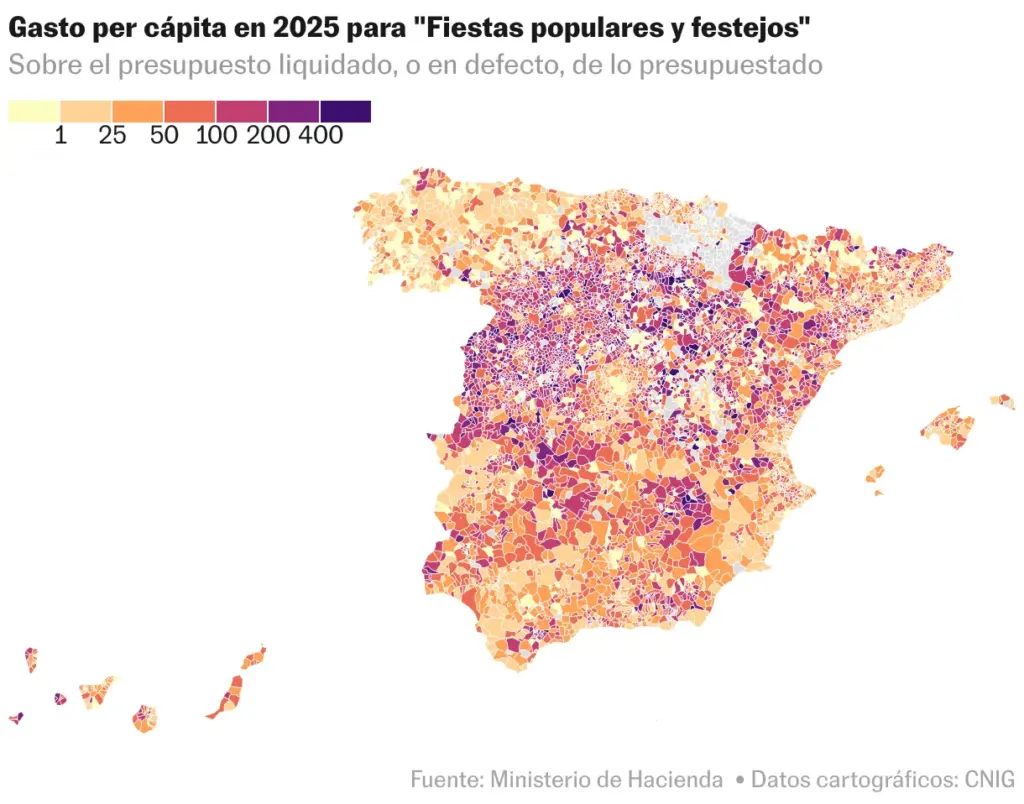
The difference increases when the expense is divided by the number of residents. Localities with fewer than 1,000 inhabitants allocated a median of €121.96 per neighbor to the festivities. In cities with more than 100,000 inhabitants, it was €11.90: ten times less.
This does not mean that villages spend more money in absolute numbers: the median spending on festivals was about €23,600 among municipalities with fewer than 1,000 inhabitants, compared to €2.27 million among cities with more than 100,000. But the distribution per number of neighbors is greater. Also, the statistics use the registered population and do not count those who return during the summer, precisely when many patron saint festivals are held. The cost may seem dedicated to only a few dozen neighbors, but it should be remembered that during the celebrations there are several hundred or even thousands of attendees. They are an occasion, as Isabel sums up for the case of Fornelos, “for everyone to return to their roots.”
Rates are usually not fixed. According to Javier Saavedra, director of the Galician orchestra ‘Los Satélites’, groups know the budget that town halls allocate to their festivities, and based on that, they set the rates. Seasonality is also a determining factor for the amount that councils will spend on hiring them: a performance at Christmas is not the same as at Carnival, or the most expensive case, in the second half of August.
Within the sector, there is consensus that these shows have become more expensive. In Galicia, the sector’s epicenter, the Tax Agency changed the rules of the game. For Saavedra, the price increase was noticed from 2021, when the Treasury forced them to become companies and comply with all the administrative and labor requirements that this implied: “We went from paying about €30,000 a year in Social Security to paying about €120,000.” Also, as has happened in the rest of Spain, the increase in fuel costs, the rise in the CPI, and the professionalization of the activity have not been accompanied by an equivalent increase in the municipal budgets dedicated to these events.
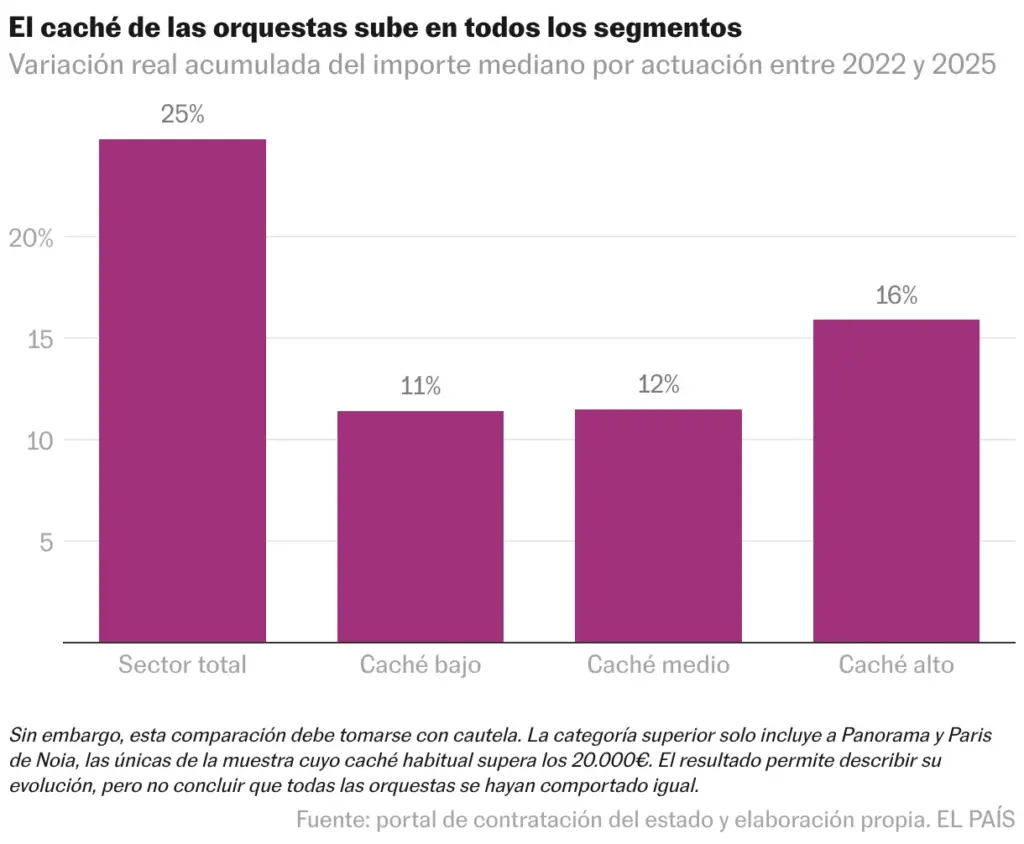
The public contracts analyzed by EL PAÍS confirm the increase in cost of hiring these services. The monitoring of 39 orchestras hired every year between 2022 and 2025 shows that their median fee rose from €8,739 to €10,500 per performance, an increase of €1,760 (20.1%), once inflation is discounted. The sample points to a greater increase among high-fee orchestras: 14.4%, compared to 9.8% for medium and 5.9% for small ones.
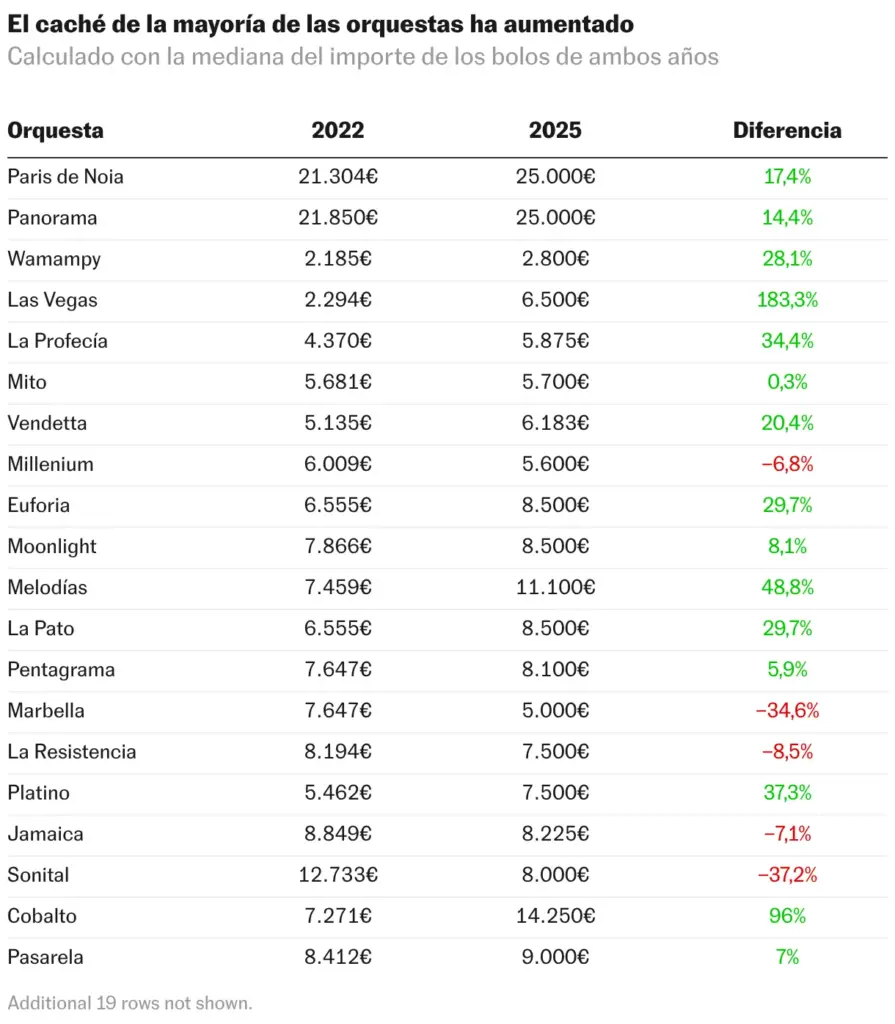
And the rest of the fees?
Although their hiring has become more expensive, orchestras remain one of the best options for many localities that cannot allocate so much budget to their celebrations. The fee to hire commercial or “current” artists is exorbitant for many localities. For example, for this year’s popular festivals in Torrejón de Ardoz, the council has allocated €2,553,434 for hiring four artists: Hombres G (€841,584), David Bisbal (€740,889), rapper Saiko (€565,122), and DJ Tiësto (€405,875). The Madrid city council has budgeted €7,432,179 in the culture portfolio.
Some localities refuse to pay these “immoral” fees, in the words of David Gago, deputy mayor of Zamora. This year, for the San Pedro festivals, they have opted for a change of model due to the price increase. “We brought Siloé when no one knew them, and as openers Ultraligera. Siloé the following year had multiplied their fee,” he says.
For Gago, the orchestra sector has also experienced an increase, especially medium-sized formations that are already “over €10,000.” However, he considers that increase “manageable,” because it responds to salary improvements and increased demand. On the other hand, what has most caught the council’s attention is the rising cost of large concerts. Therefore, the council has chosen to go against the tide and build a festival lineup based on local groups, emerging artists, and orchestras.