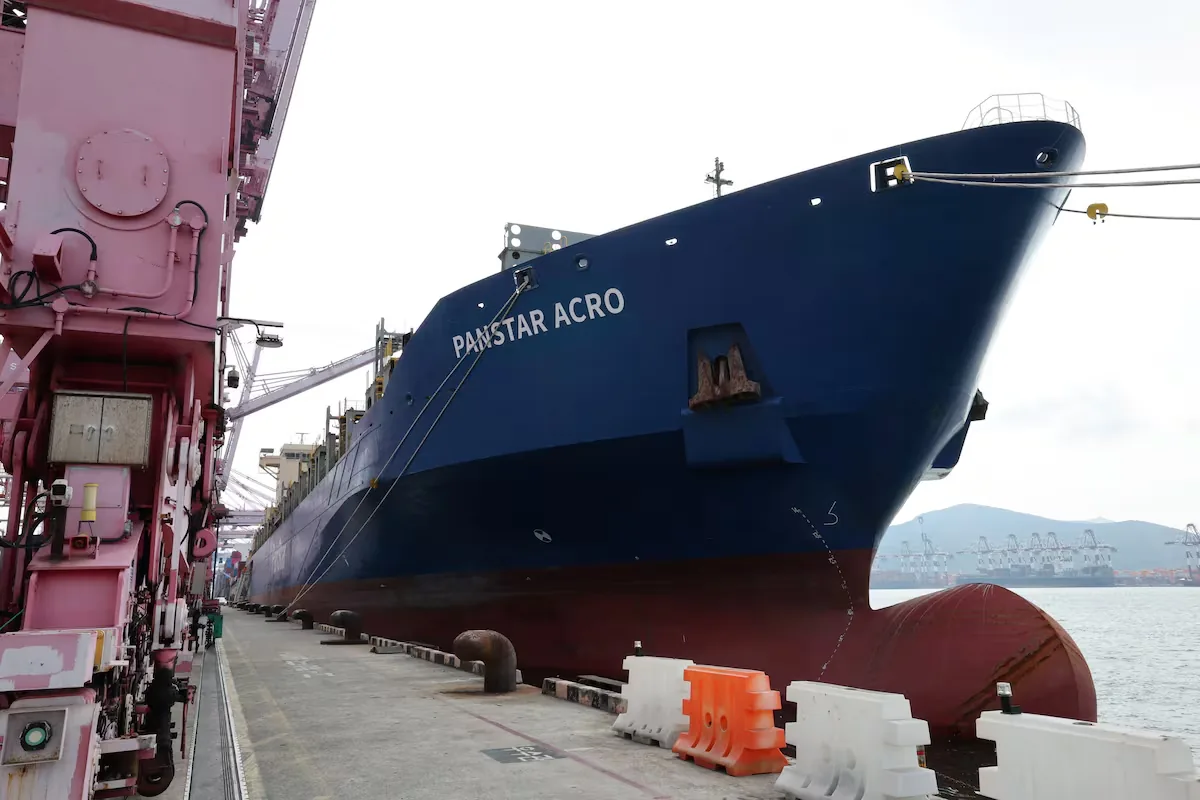
The conflict between the United States, Israel, and Iran and its repercussions in the Middle East have battered maritime transport since February, and some countries are seeking alternative solutions. One of them is South Korea, which this Saturday is sending a container ship for the first time from the port of Busan to Europe via the Arctic, a new route that opens for a few months each year taking advantage of the thaw and that could become a viable maritime solution.
Read more Health calls the autonomous communities this Monday to send vaccines to Ceuta
The PanStar Acro will sail north, cross the Bering Sea, and take the so-called Northern Sea Route, stopping at Felixstowe in the United Kingdom, Rotterdam in the Netherlands, and Gdansk in Poland before returning, on a trip expected to last between 40 and 45 days, Reuters reported, citing South Korean official sources. The container ship carries car parts, chemicals, and about 100 empty containers.
A week ago, China already sent an aircraft carrier, the Dubai Tower, along this same route from the port city of Ningbo. The traditional maritime route between Asia and Europe runs through the Suez Canal, but traveling through the Arctic can shorten the journey by about 7,000 kilometers and allows avoiding the Red Sea area, where ships have been attacked by pro-Iranian Houthi rebels from Yemen.
South Korea’s Deputy Minister of Oceans, Nam Jae-hon, stated that this route, which the country can begin to use thanks to a recently approved law, “is destined to become an alternative,” as geopolitical risks and technological advances make it increasingly competitive.
Read more How much does each town spend on bringing the orchestra? The cost of keeping the festivals alive
However, the use of this route causes discomfort in some Western countries as it would involve coordination with Russian authorities, who are subject to European sanctions due to the war in Ukraine.
The Arctic route can only be used from June to late October, when the thaw allows ships to navigate, but environmental organizations warn that increased traffic on this route will accelerate global warming. Last year, 103 trips (counting both outbound and return journeys of the same ships) were recorded on this route, mainly from Russia and China, according to the Norwegian institution Centre for High North Logistics (CHNL), which studies maritime routes in this part of the world.
Read more This is Casa Cantal: 15,000 bricks, cross ventilation, and a courtyard against the heat in Málaga